
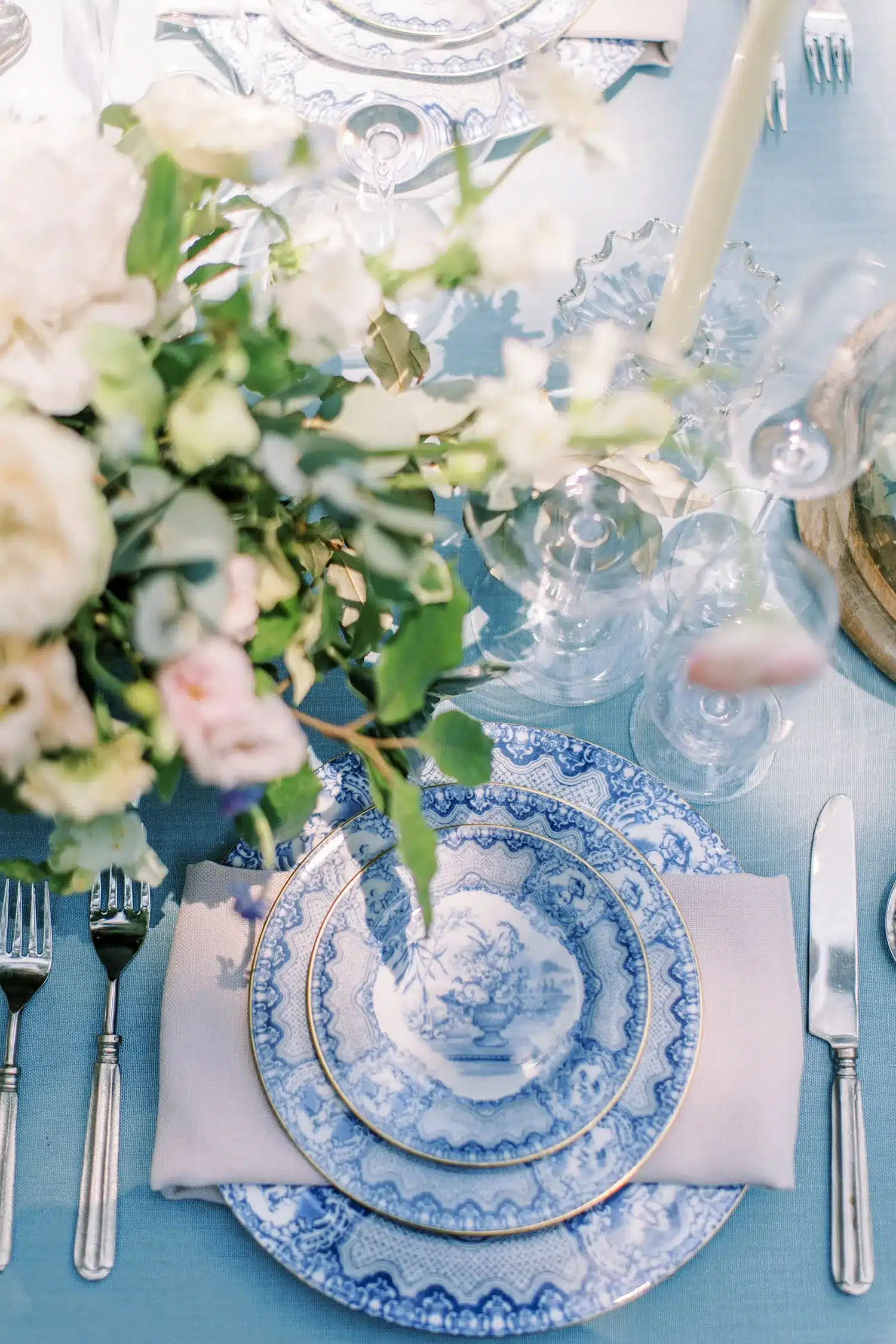
Planning the right tableware quantities for holiday buffets or plated celebrations is essential to achieving a seamless dining experience. Accurate estimates ensure every guest is served with ease, service flows without interruption, and the presentation remains elegant from the first course to the last. This guide provides clear, event-tested guidelines for determining the ideal number of plates, flatware, and glassware based on your guest count, menu style, and service approach.
Many hosts and planners find it challenging to anticipate extras for second servings, replacements, and unexpected guests. Here, we explain how to build a smart inventory buffer, match quantities to buffet or plated service, and plan serving equipment for efficient turnover. You’ll also discover curated comparison tables, simplified estimation examples, and checklists designed to make tableware planning both precise and effortless. Whether you’re coordinating an intimate holiday dinner or a grand gala buffet, these insights help you blend practicality with polished presentation, creating a celebration that feels seamless, intentional, and beautifully executed.
How Many Plates Do You Need for Holiday Buffets?
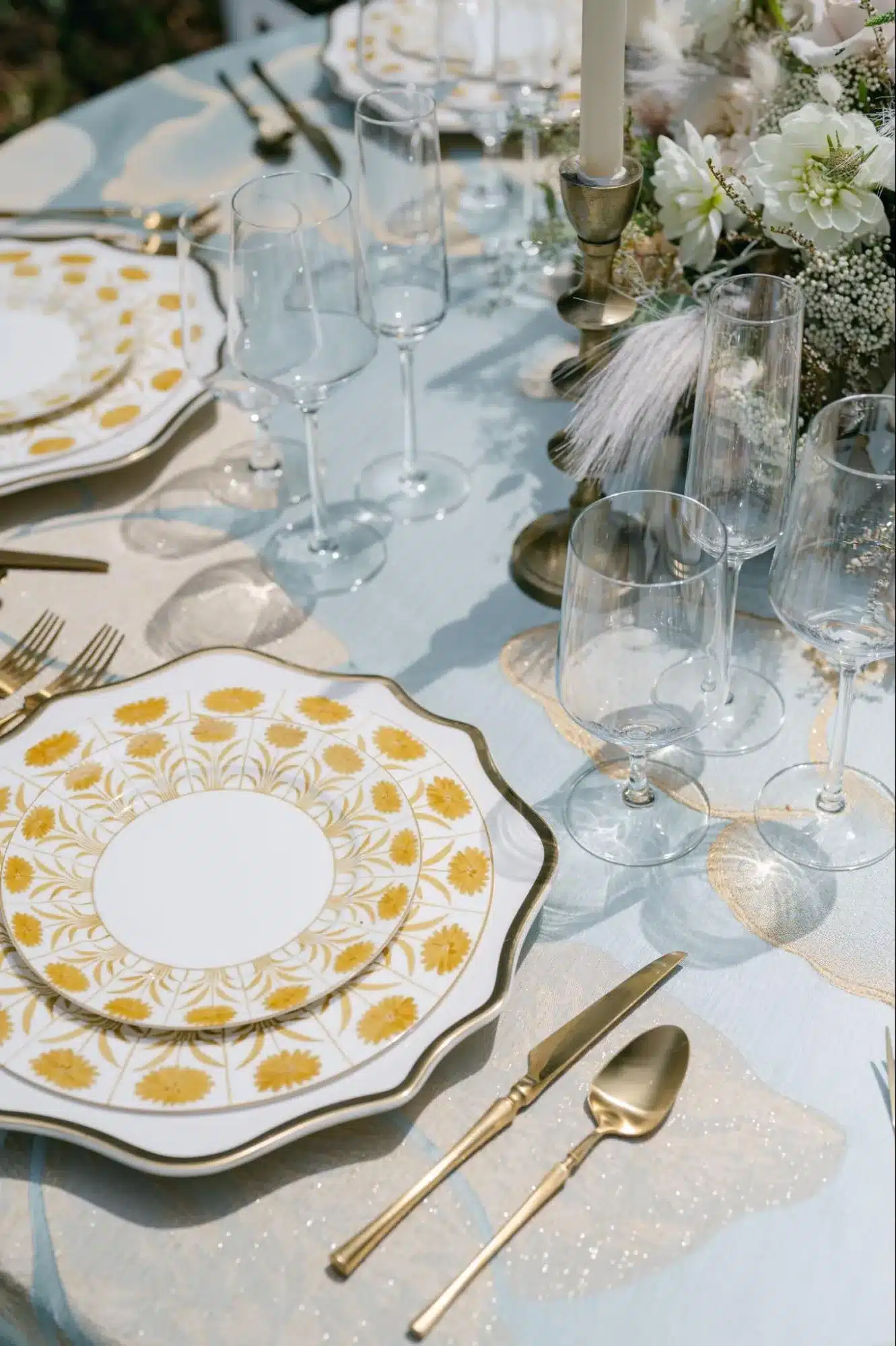
Estimating plates for a holiday buffet begins with understanding your guest count, menu structure, and how guests will move through service. Start with a base estimate and adjust for seconds, course count, and turnover speed. As a general rule, plan 1 to 1.25 dinner plates per guest for casual buffets and 1.5 to 2 plates per guest when serving larger portions or expecting seconds. Always include a 10–20% service buffer to accommodate replacements and last-minute additions.
The buffet layout also affects quantity, single-line service requires more plates since guests hold them longer, while multi-station layouts allow faster turnover and fewer plates in circulation.
Dinner plates typically set the baseline for your total count, while smaller plates scale according to whether appetizers and desserts are plated or self-serve.
What Is the Recommended Dinner Plate Count Per Guest for Buffets?
Dinner plate quantities depend on portion size, menu style, and guest behavior. For lighter buffets or stations with smaller portions, estimate 1 to 1.25 plates per guest. For traditional holiday menus featuring hearty mains and sides, plan for 1.5 to 2 plates per guest to ensure smooth service. For example, a buffet serving 100 guests with a full entrée selection and likely seconds would require 150–200 dinner plates before applying your buffer. Plate diameter also matters—10–11 inch plates suit most meals, while 11–12 inch options offer more surface area for generous servings and help prevent spills.
How Many Appetizer, Salad, and Dessert Plates Should You Estimate?
Smaller plates should align with how these courses are served. For self-serve hors d’oeuvres or light salads, 1 to 1.5 appetizer or salad plates per guest is sufficient. If starters or desserts are plated and served, increase to the higher end of that range. For dessert service, plan 0.8 to 1.2 plates per guest, adjusting upward for plated desserts or guests likely to enjoy seconds. Stackable or nesting designs save space and simplify service flow, particularly for larger events with multiple stations.
Why Add a 10–20% Buffer to Your Plate Quantity?
A 10–20% buffer protects against unexpected changes—breakage, late RSVPs, or guests returning for additional servings. To calculate, multiply your base total by 1.10 or 1.20. For instance, if your base estimate calls for 150 dinner plates, order 15–30 additional plates as a safeguard. Outdoor venues and high-traffic buffet lines typically benefit from the higher end of that range. This small addition ensures your staff can make quick replacements and maintain service efficiency throughout the event.
How Does Buffet Style Affect Plate Quantity Needs?
Buffet format directly influences how many plates you’ll need. Single-line buffets generally require more plates due to slower flow, while multi-station layouts or hybrid plated-and-buffet formats promote faster turnover and reduce plate demand. Hybrid service—where entrées are plated but sides are self-serve—can lower dinner plate totals but increase the need for serving dishes. When planning your buffet, consider guest circulation, line spacing, and staff replenishment timing to optimize efficiency and prevent service delays.
Partnering with Curated Events for Reliable Dinnerware Rentals
Curated Events provides a wide range of premium dinnerware collections designed to meet both buffet and plated service needs. With multiple plate sizes, stackable options, and cohesive design lines, our inventory helps hosts achieve both functional precision and aesthetic harmony. Our rental model also supports service buffers, offering additional sets and quick exchanges to keep your presentation flawless. Partnering with a trusted rental provider like Curated Events ensures that your event remains seamless, elegant, and fully prepared for every guest.
What Tableware Is Essential for Plated Celebrations?
A plated celebration requires a cohesive collection of dinnerware, flatware, glassware, and linens that together form a polished, multi-course presentation. A well-designed place setting balances visual refinement with practical service flow, ensuring guests experience comfort and elegance with every course.
A standard formal setting includes a charger, dinner plate, salad plate, bread plate, flatware set, and glassware for water and wine. The charger anchors the composition, framing each course while protecting the linen beneath. Begin your quantity planning with one complete setting per guest, then add specialty glassware or utensils as required by the menu.
Intentional selection of each piece ensures visual consistency and smooth transitions between courses—hallmarks of a truly refined dining experience.
What Are the Components of a Formal Dinner Place Setting?
A formal place setting begins with the charger as the visual foundation, followed by plates and utensils arranged to match the service sequence. The dinner plate sits atop or in front of the charger, with salad and bread plates placed according to standard etiquette. Above the knives, arrange glassware—typically water, red or white wine, and, for toasts, a champagne flute. Flatware is positioned from the outside in, aligned with each course. This structure creates an intuitive rhythm for guests and a predictable flow for servers, ensuring elegance and efficiency at every table.
How to Estimate Flatware Quantities for Multi-Course Meals
To estimate flatware needs, align each course with its corresponding utensil and total per guest. Plated events generally require more pieces than buffets. A typical multi-course setting includes one dinner fork, one salad fork, one dinner knife, one soup spoon (if applicable), and a dessert utensil—averaging four to six pieces per guest. For 100 guests, that equates to 100 complete sets, with an additional 10–20% buffer for replacements. Specialty utensils, such as steak knives or seafood forks, should be ordered separately and scaled to the menu’s specific courses.
Which Glassware Should You Include for Plated Events?
Glassware selections depend on both beverage service and event formality. Every guest should have one water glass and at least one wine glass; add a champagne flute or a second wine glass for multi-wine pairings or toasts. Formal dinners often follow the setup: water + red wine + white wine + champagne, while more streamlined events use water + one wine glass. To maintain service flow, plan for one water and one to two wine glasses per guest, and minimize mid-event glass swaps to preserve table harmony and efficiency.
How Do Linen and Napkin Styling Impact Tableware Selection?
Linen texture, weight, and color dramatically influence how plates and chargers appear on the table. Textured or heavy fabrics like velvet or jacquard lend depth and luxury but may require larger chargers to maintain visual balance. Crisp, neutral linens, on the other hand, allow patterned or colored china to stand out. Napkin styling—whether placed on the charger, folded beside the plate, or finished with a ring—also affects table composition and utensil spacing. Plan linens early to ensure plate and charger proportions complement the chosen fabric and overall theme.
Coordinating Rentals with Curated Events
Curated Events simplifies the process of designing and sourcing complete place settings. Our coordinated rental collections feature matched chargers, plates, glassware, and flatware that work seamlessly together in both scale and style. Our team provides styling consultations to align linens, napkin treatments, and tableware selections with your vision, ensuring every element contributes to a cohesive and elegant tablescape. With our extensive inventory and professional planning support, you can confidently achieve a refined dining experience that’s as functional as it is beautiful.
How to Estimate Flatware and Glassware Quantities for Holiday Events
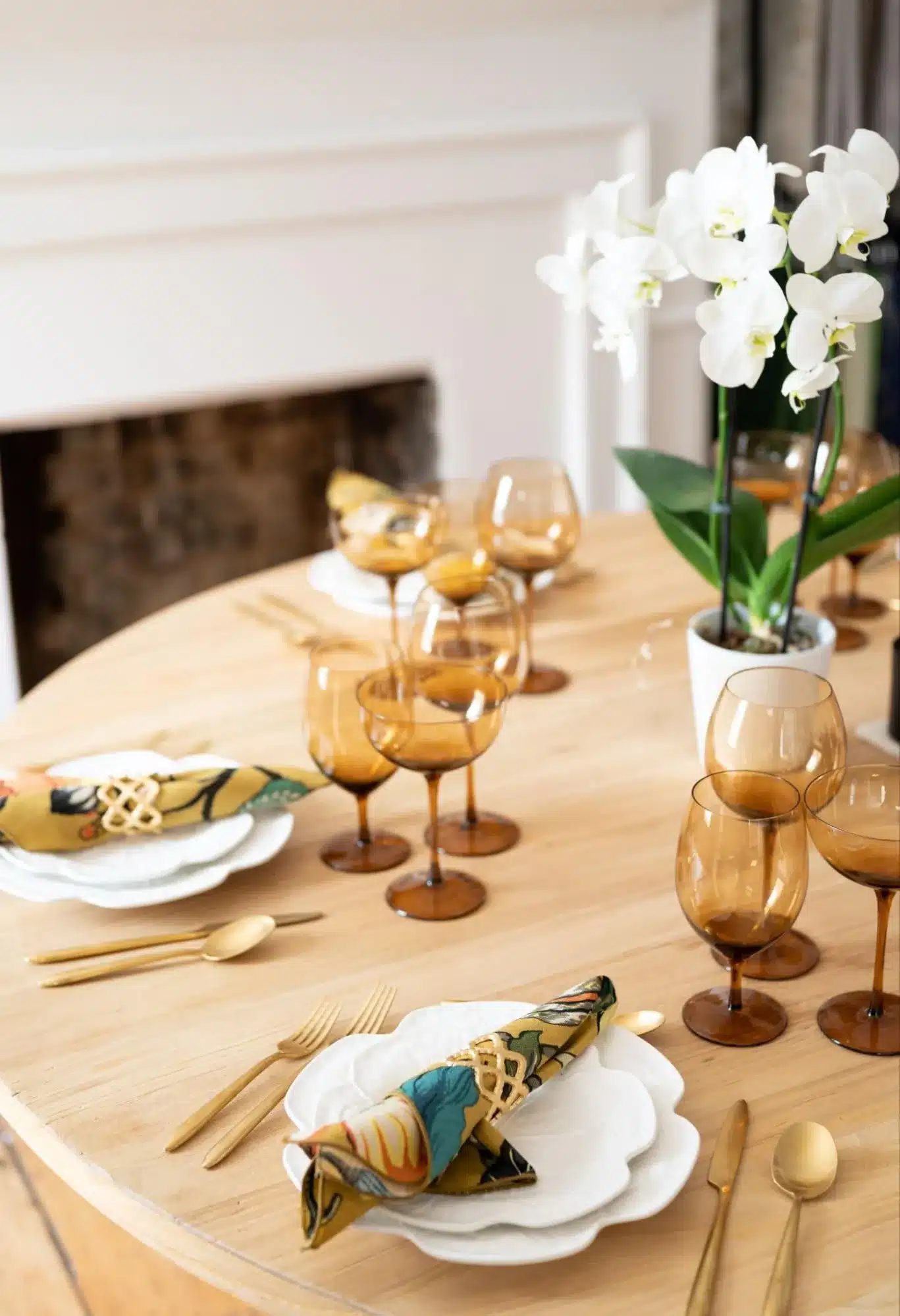
Flatware and glassware planning begins with understanding your event format—buffet or plated—and your beverage program. These two factors determine per-guest quantities and the need for specialty pieces. Buffets typically require fewer utensils since guests serve themselves and may reuse flatware, while plated dinners demand a complete, formal setting for each course. For glassware, plan one water glass per guest and add wine or specialty glasses according to your beverage selections.
Plated dinners require a full set per guest, while buffets can adjust based on menu complexity and service layout.
How Many Forks, Knives, and Spoons Are Needed Per Guest
Map your utensil counts directly to your menu. Each course typically requires its own utensil, especially for plated service. For a three-course dinner (salad, main, dessert), plan one salad fork, one dinner fork, one dinner knife, and one dessert utensil per guest—approximately four pieces per setting, with soup spoons added as needed. For buffets, scale down slightly to 0.8–1.0 forks and knives and 0.5–0.8 salad forks per guest. Always include a 10–20% buffer for breakage or late additions.
What Glassware Quantities Are Recommended for Buffets and Plated Dinners
Glassware counts depend on the variety of beverages offered. Every guest should have one water glass, plus wine or champagne glasses as needed.
- For moderate beverage service (water + one wine), budget one wine glass per guest.
- For multi-course or fine-dining service (water + red + white + champagne), plan up to two wine glasses and one flute per guest.
At buffets or bar stations, use glass pooling and order 15–25% additional glassware to maintain rotation and avoid shortages. Selecting versatile stemware that suits both red and white wines can further streamline quantities and setup.
How to Account for Specialty Drinkware at Holiday Buffets
Specialty glassware—such as cocktail coupes, highballs, beer glasses, or hot-drink mugs—should be calculated by station rather than by guest.
- Cocktail bars: Add 25–50% more glasses than the number of expected servings.
- Beer stations: Plan one pint glass per beer guest, plus a 10–20% buffer.
- Hot beverage stations: Allocate one mug per drinker, using insulated glassware for outdoor settings to reduce breakage.
Organizing by station minimizes waste, ensures proper distribution, and helps maintain flow during peak service hours.
What Serving Dishes and Utensils Are Needed for Holiday Buffets
Serving-dish planning follows a straightforward principle: one primary serving vessel per menu item, plus backups and coordinating utensils for each dish type. Choose chafing dishes, platters, bowls, or specialty vessels based on portion size and service style. Hot dishes should always be held in chafing dishes or other heated alternatives to maintain safe serving temperatures.
Equally important, serving utensils must suit each dish’s consistency—tongs for rolls, ladles for gravies, and slotted spoons for vegetables—while placement should encourage smooth flow and prevent cross-contamination.
Below is a checklist to guide vessel and utensil planning for most holiday buffets:
Using this checklist allows planners to translate the menu directly into a vessel-by-vessel inventory, ensuring smooth service and easy scalability for any guest count.
How Many Chafing Dishes, Platters, and Bowls Should You Rent
As a rule, rent one vessel per menu item, plus backups for popular dishes or large guest counts. For example, a traditional holiday buffet featuring carved turkey, two hot sides, two cold salads, and desserts would need at least six primary vessels and two backups.
For events of 100 guests or more, allocate two chafing dishes for main proteins to keep replenishment efficient. Side dishes can often share chafing units if service is staggered. Use full-size chafers for main courses, half-size chafers for lighter sides, and large bowls for salads and cold dishes. Platters should accommodate one full serving run or be quickly swapped with pre-warmed backups to maintain flow. This planning method ensures efficient replenishment and a consistent visual presentation throughout service.
What Serving Utensils Are Required for Buffet Lines
Select utensils based on dish type and keep one to two utensils per item to prevent slowdowns.
- Tongs for rolls, pastries, or finger foods
- Large spoons for casseroles and baked dishes
- Slotted spoons for vegetables or dishes with excess liquid
- Ladles for gravies, sauces, and soups
Always plan redundancy—at least one spare utensil per station—and position utensils so guests can serve themselves comfortably. Label utensils for allergens and maintain separate serving tools for vegan or vegetarian dishes to avoid cross-contact.
For large or high-traffic buffets, consider assigning an attendant to key stations to assist with replenishment and ensure utensils remain clean and properly placed.
How Do Serving Pieces Affect Overall Tableware Estimation
Serving vessel size and layout influence the total number of plates and flatware required. Large platters or slower-moving stations can cause guests to linger and hold plates longer, increasing the number of plates in circulation. Conversely, multiple smaller stations promote quicker flow, reducing per-guest plate counts and turnover stress.
When designing your buffet, coordinate serving vessel sizes, line spacing, and plate quantities together. This ensures a steady pace of service while minimizing both waste and rental excess.
How Can You Style Tableware to Elevate Holiday Buffets and Plated Celebrations?
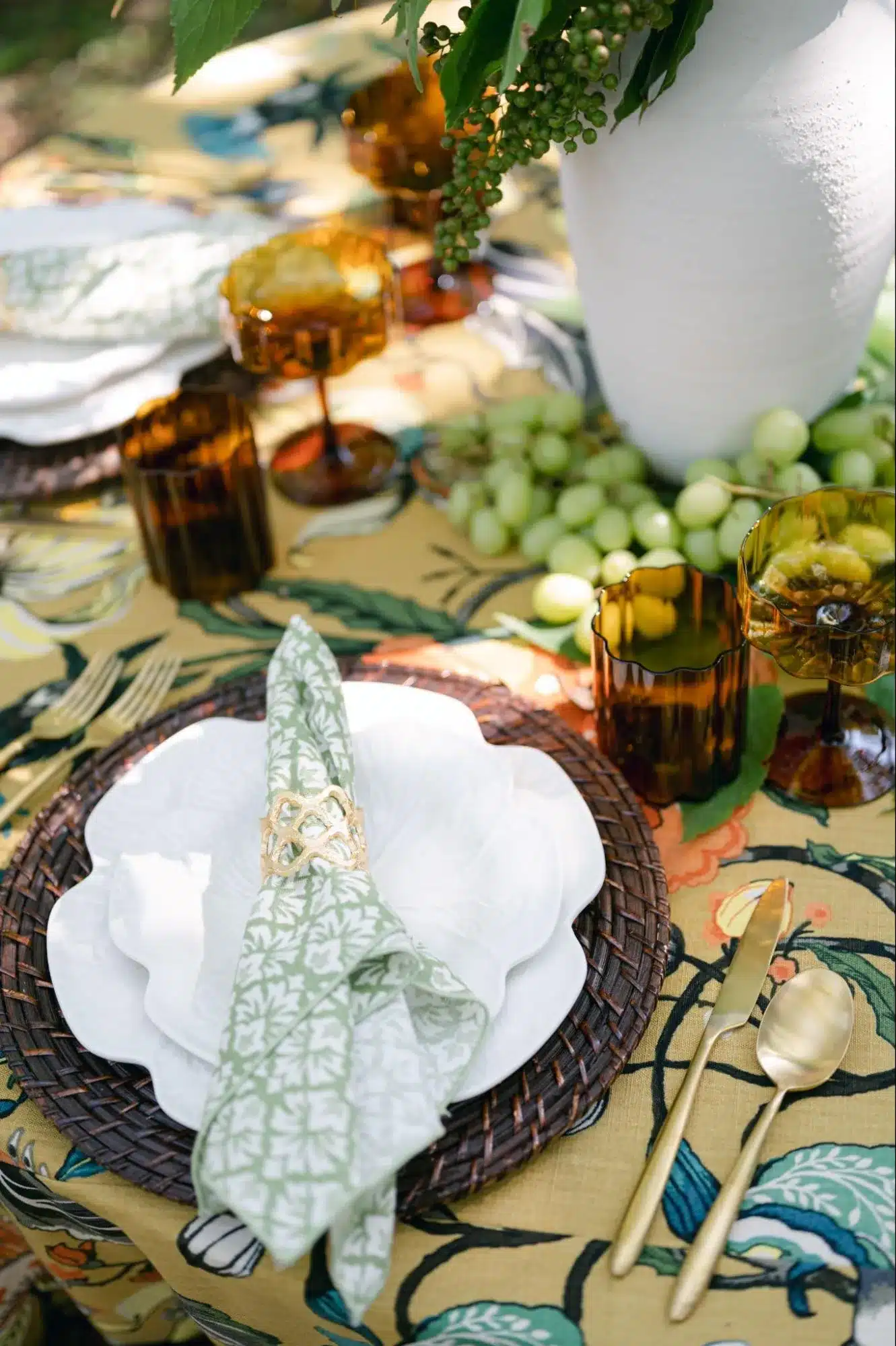
Styling tableware means aligning plate finishes, charger choices, flatware finishes, and linen textures with the holiday palette to create a cohesive visual story that complements the menu. Choose neutral or metallic chargers for formal settings to ground color accents, and select linen weights that support the visual scale of plates and centerpieces.
Accent pieces, napkin rings, charger textures, and glassware shapes, add depth without increasing the number of items to manage. The practical approach to styling also considers service needs: ensure chosen chargers are compatible with plate sizes and that linen layers allow for comfortable flatware placement.
Below are sample approaches to match tableware to common holiday palettes and guidelines for balance.
- Classic holiday (reds & greens): neutral chargers, white porcelain plates, warm gold flatware to add festive shine.
- Winter modern (blues & silvers): matte chargers in charcoal, simple white plates, crystal-stem glassware for contrast.
- Rustic harvest (earth tones): ceramic plates in cream or muted glazes, wooden chargers or textured placemats, and hammered flatware for organic texture.
These palettes show how selecting a few anchor pieces can create a strong table identity without overcomplicating inventory needs. The role of chargers and accent pieces is detailed next.
How to Match Tableware with Holiday Themes and Color Palettes?
Start by choosing one anchor element (charger, linen, or centerpiece color) and coordinate plates and flatware around it to maintain balance. A bold charger paired with neutral plates creates a focal point, while patterned plates call for simpler chargers and linens. Consider contrast and scale: large chargers require smaller plate profiles to prevent a crowded feel, and heavy linens demand larger chargers to maintain proportion. Sampling combinations in advance, either via rental provider styling mockups or test setups—prevents last-minute mismatches.
Selecting anchors naturally leads to charger-specific guidance addressed in the following subsection.
What Role Do Charger Plates and Accent Pieces Play in Formal Settings?
Chargers frame the place setting, add visual weight, and protect linens during service; they also dictate the visible scale of subsequent plates. Accent pieces, napkin rings, folded napkins, and small decor elements, reinforce the theme and can be swapped quickly for different courses without re-setting. Charger sizing should be chosen to leave a balanced lip around the dinner plate, typically 1–2 inches of visible charger edge. Accent pieces provide texture and contrast and can often be rented in small quantities to elevate the look without a full inventory overhaul.
Understanding chargers and accents helps you choose linens and decor that knit the table together, which we discuss next.
How to Incorporate Linens and Decor for a Cohesive Look?
Layer linens to create depth, tablecloth base, runner or overlay, and napkin, and maintain proportion so plates sit comfortably without crowding utensils. Use runners to create a visual axis for centerpieces and ensure runners match the venue’s traffic patterns to avoid obstruction. Choose decor items (candles, small floral clusters) that don’t impede guest service and keep centerpieces low for clear sightlines. Test the full place setting on a sample table to check scale and ensure napkin placement and flatware fit within the final layout.
Styling choices should always be validated against service efficiency so aesthetics do not hinder guest flow or server access.
Frequently Asked Questions
What is the best way to handle unexpected guests at a holiday event?
To effectively manage unexpected guests, it’s crucial to have a buffer in your tableware estimates. A 10-20% buffer is recommended to accommodate last-minute additions. Additionally, maintain a small emergency kit with basic plates, flatware, and glassware that can be quickly deployed. Communicate any changes in guest count to your rental provider as soon as possible, ideally 3-7 days in advance for minor increases. This proactive approach ensures that you can accommodate all guests without compromising service quality.
How can I ensure my tableware matches the theme of my holiday event?
To align your tableware with your holiday theme, start by selecting an anchor element, such as a charger or linen color, and coordinate the rest of your tableware around it. For example, if you choose a bold charger, pair it with neutral plates to create a focal point. Consider the overall color palette and texture of your linens, chargers, and flatware to maintain visual harmony. Testing combinations in advance can help prevent last-minute mismatches and ensure a cohesive look.
What are some tips for efficient buffet setup and flow?
To optimize buffet setup and flow, arrange stations logically to minimize backtracking. Start with plates at the beginning of the line, followed by utensils and then food stations. Clearly label dishes and provide signage for allergens. Position beverages separately to avoid congestion. Consider staffing high-traffic areas to assist with replenishment and maintain a smooth flow. This setup not only enhances guest experience but also speeds up service, ensuring that everyone can enjoy the meal without long waits.
How do I choose the right rental partner for tableware?
Selecting the right rental partner involves considering their inventory, service quality, and expertise. Look for a provider that offers a wide range of tableware options that align with your event’s theme and style. Check their reputation for reliability and customer service, especially regarding delivery and setup. A partner that provides styling guidance can also help ensure that your tableware choices are cohesive. Requesting a tailored quote early in the planning process can help secure the necessary items for your event.
What should I consider when estimating glassware for a mixed drink menu?
When estimating glassware for a mixed drink menu, start by allocating one water glass per guest. Then, assess the expected beverage consumption to determine additional glassware needs. For example, if you anticipate that 60% of guests will drink wine and 30% will have cocktails, plan accordingly by calculating the number of wine and cocktail glasses needed. Always add a buffer of 15-25% to account for turnover and ensure that you have enough glassware to maintain service efficiency.
What are the benefits of renting tableware instead of buying or using disposables?
Renting tableware offers several advantages over buying or using disposables. It reduces the need for long-term storage and maintenance, allowing you to focus on the event itself. Rentals provide access to higher-quality, reusable pieces that enhance the guest experience and support sustainability by minimizing waste. Additionally, renting allows for flexibility in matching styles and quantities to each event, ensuring that you have the right items without the burden of upkeep associated with ownership.
Conclusion
Estimating the right tableware for holiday buffets and plated celebrations ensures a seamless dining experience, enhancing both service efficiency and guest satisfaction. By applying the guidelines and calculations provided, you can confidently plan for various guest counts and menu types, minimizing waste and maximizing enjoyment. For further assistance in selecting the perfect tableware for your event, consider reaching out to a rental partner who can offer tailored solutions. Start planning your holiday gathering today to create memorable moments for your guests.