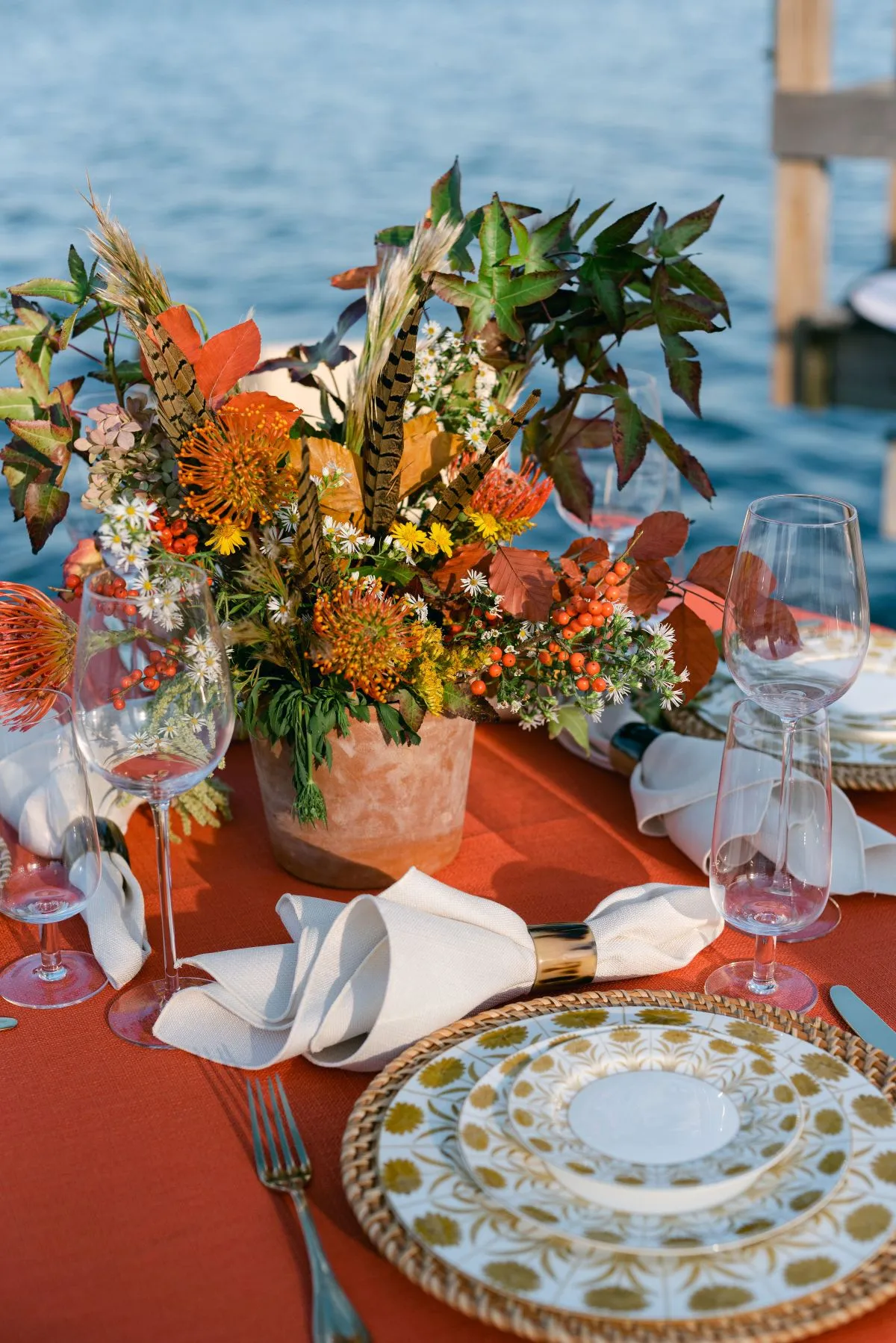
Linens can establish the visual direction of a fall event before floral arrangements, place settings, or other decorative details are added. A full table linen can introduce the primary color, while napkins, runners, cuffs, sashes, and skirting provide smaller opportunities to repeat or contrast that design throughout the venue.
For fall events in Charleston, linen selections do not need to depend on predictable combinations of bright orange, red, and brown. Warm neutrals, natural greens, muted blues, ochre, ruby, indigo, copper, and botanical patterns can reflect the season while remaining suited to historic interiors, formal gardens, waterfront properties, tented lawns, and contemporary venues.
Curated Events Charleston offers an extensive linen inventory that includes full linens, napkins, runners, cuffs, sashes, skirting, and designs from the Curated Linen Collection. These elements can be combined to create a coordinated fabric story across weddings, corporate dinners, fundraisers, milestone celebrations, and seasonal social events.
The strongest linen plans consider color, pattern scale, texture, size, lighting conditions, and how each treatment will appear across the complete event space. Instead of applying the same fabric to every surface, planners can establish a clear hierarchy that gives guest tables, focal displays, cocktail areas, and supporting tables distinct but connected treatments.
Understand the Different Linen Elements Available
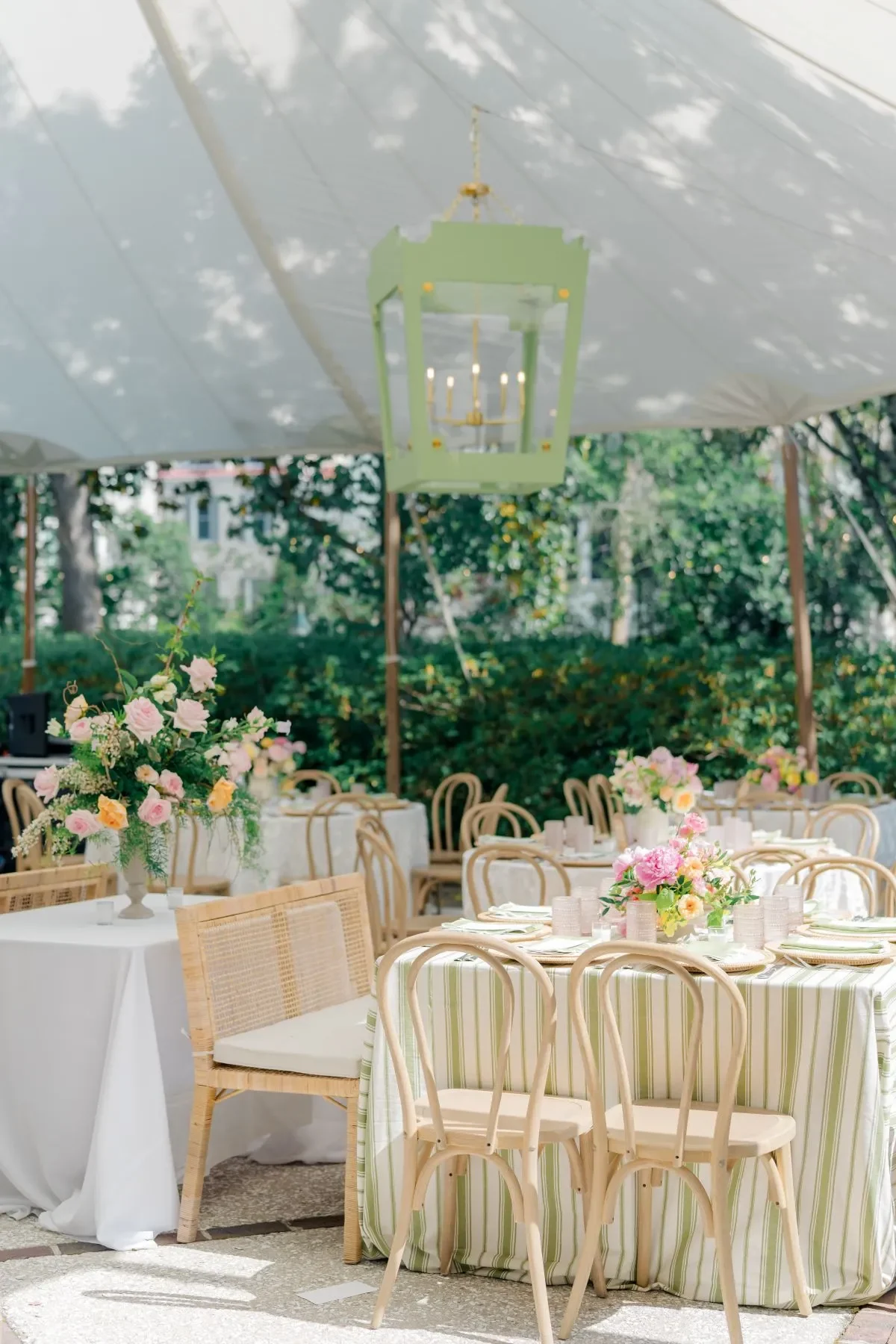
A complete linen design may use several fabric formats rather than one tablecloth repeated throughout the event. Full linens establish the foundation, while napkins, runners, cuffs, sashes, and skirting allow the design to continue through smaller or more targeted details.
Understanding the purpose of each element makes it easier to create variation without allowing the event to feel visually disconnected.
Full Table Linens
Full linens cover most or all of the underlying table and usually establish the dominant color or pattern within the event space. They may be used on guest dining tables, cocktail tables, cake displays, registration areas, beverage stations, or other supporting surfaces.
A full linen may serve as:
-
A solid foundation for patterned napkins
-
A statement pattern used across selected guest tables
-
A neutral base for detailed tabletop pieces
-
A repeated color that connects multiple event areas
-
A focal fabric reserved for one significant display
The decision between a solid and patterned full linen depends on the other visual elements planned for the table. If the place settings, florals, stationery, or chairs contain substantial detail, a quieter foundation may provide balance. If the surrounding design is restrained, a floral, stripe, botanical, or geometric linen can carry more of the visual impact.
Drop length also affects the appearance. A full-length linen creates a more finished presentation and conceals the table base, while a shorter drop may create a lighter look or provide easier clearance in selected applications.
Napkins as Targeted Color Accents
Napkins provide one of the most flexible ways to introduce fall color. Because they occupy a smaller portion of each place setting, they can use a stronger hue or more detailed pattern without dominating the room.
A neutral tablecloth may be paired with olive, ochre, ruby, indigo, copper, or patterned napkins. Alternatively, a statement full linen can be balanced with napkins in ivory, mushroom, sage, or another restrained solid.
Napkins can also help connect different table treatments. If guest tables use more than one linen design, repeating the same napkin across every place setting can create consistency. The napkin becomes the visual link between separate patterns, colors, or event areas.
The selected fold or presentation can affect how much of the fabric remains visible. A flat napkin beneath a menu displays more of the pattern, while a gathered or folded treatment may create a smaller accent. Napkin presentation should be coordinated with menus, place cards, chargers, and the other tabletop elements planned for each setting.
Runners for Pattern and Direction
Runners create a narrower layer of color, texture, or pattern. They are particularly effective when planners want to preserve the visibility of the table surface or base linen while adding a stronger directional detail.
A runner may be used to:
-
Define the center of a long dining arrangement
-
Add pattern over a solid full linen
-
Introduce a seasonal accent on selected tables
-
Coordinate a focal table with the guest-table design
-
Repeat a botanical or geometric motif in a controlled way
-
Connect cake, display, or presentation tables with the main event palette
On long tables, runners emphasize the linear shape and can help visually organize floral arrangements, candles, or place settings. On smaller focal surfaces, they can provide enough color and texture without covering the complete table.
The width, pattern scale, and contrast should be considered carefully. A highly detailed runner may disappear against an equally detailed base linen, while a runner with insufficient contrast may not create the intended layered effect.
Cuffs, Sashes, and Other Linen Details
Cuffs and sashes allow a selected pattern or color to appear in smaller, more concentrated applications. They can repeat a fabric used elsewhere or introduce a supporting design element without applying another full linen.
These treatments may help:
-
Create a gathered fabric detail
-
Repeat a statement print on selected surfaces
-
Distinguish one event area from another
-
Add a secondary texture
-
Carry a pattern into cocktail or supporting areas
-
Connect smaller tables to the primary linen story
Because cuffs and sashes use less fabric than full linens, they can be useful when a bold pattern is intended as an accent rather than the dominant element.
Their placement should remain intentional. Using multiple cuffs, sashes, runners, and patterned napkins together can make the design feel overly layered unless the elements share a clear color or pattern relationship.
Skirting for Display and Service Areas
Skirting can create a finished appearance on tables where bases, storage, service materials, or equipment need to remain less visible.
It may be used on:
-
Registration tables
-
Presentation surfaces
-
Buffet areas
-
Beverage stations
-
Service tables
-
Display areas
-
Operational surfaces visible to guests
The skirt should coordinate with the event palette without competing with guest-facing focal areas. A restrained solid or neutral treatment may be more appropriate for an operational table, while a presentation or display surface may use a color connected to the primary guest-table design.
Build a Charleston Fall Color Story Without Relying on Clichés
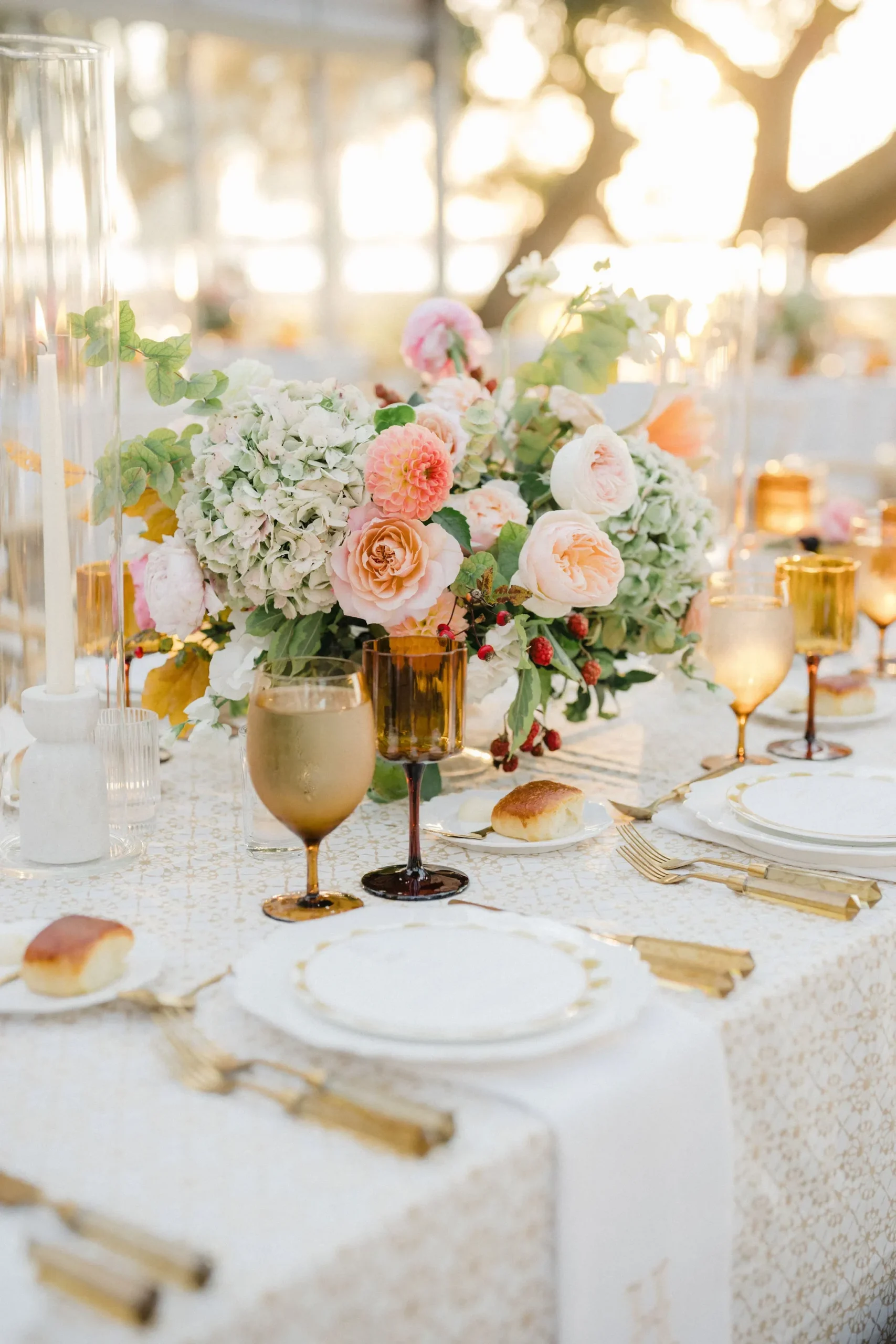
Fall styling can reflect the season without using every traditional autumn color at once. Charleston’s historic architecture, garden settings, coastal surroundings, and softer seasonal light support palettes that feel warm and layered while remaining appropriate to the venue.
A successful color story usually begins with one or two foundational tones, followed by a limited group of accents repeated across full linens, napkins, runners, and focal details.
Warm Neutral and Olive Palettes
Warm neutrals provide a flexible foundation for fall events. Ivory, almond, mushroom, champagne, and natural tones can soften the setting while allowing deeper greens or metallic accents to stand out.
Olive and fern introduce seasonal depth without relying on literal leaf colors. These greens can relate naturally to gardens, courtyards, historic estates, and outdoor settings while also working in formal interiors.
Possible combinations include:
-
Ivory with olive napkins
-
Mushroom with champagne details
-
Natural tones with fern accents
-
Almond with soft gold
-
Cream with patterned sage runners
-
Olive with restrained ivory place settings
This palette can be adapted for both daytime and evening events. During the day, the lighter foundation keeps the setting open and natural. In evening conditions, deeper napkins, runners, or focal linens can provide stronger contrast.
Ochre, Ruby, and Deep Seasonal Accents
Ochre, ruby, burgundy, copper, black, and deep green can create a more saturated fall direction. These colors are often most effective when used selectively rather than covering every surface.
A deeper accent may appear through:
-
Napkins
-
Table runners
-
One group of guest tables
-
A sweetheart or head-table linen
-
A cake or display table
-
Cuffs or sashes
-
A strong geometric or floral print
For example, an ochre linen may serve as the focal fabric while guest tables remain ivory or mushroom. Ruby napkins may be repeated across neutral linens, while a copper velvet treatment may be limited to one significant display.
Black can also be incorporated as a controlled structural accent. A black stripe, geometric design, or napkin can add definition to a palette built around gold, ivory, ochre, or natural green.
Coastal Autumn Color Combinations
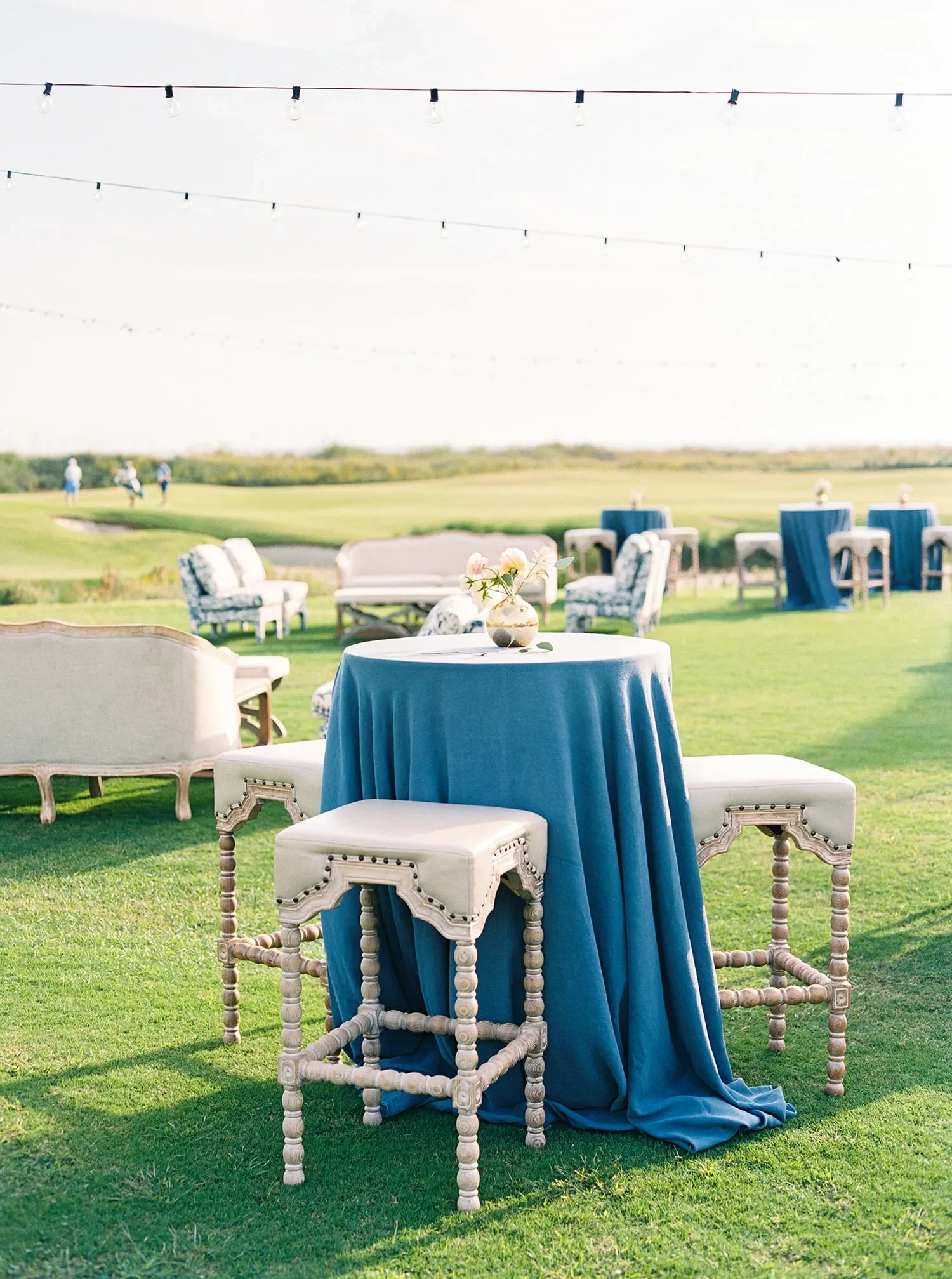
Charleston fall events do not need to abandon blue and coastal tones. Indigo, powder blue, teal, mist, and navy can be warmed through mushroom, olive, natural, ochre, or gold accents.
Possible combinations include:
-
Indigo with ochre
-
Powder blue with mushroom
-
Teal with warm gold
-
Mist with olive
-
Navy with ivory and copper
-
Sage with muted blue
-
Natural tones with indigo botanical patterns
These combinations can feel particularly appropriate for waterfront, island, garden, and indoor-outdoor venues. The blue or green keeps the palette connected to the Charleston setting, while the warmer accent introduces seasonal depth.
The result should not depend on nautical motifs. The location can be reflected through color relationships and softer natural tones rather than anchors, stripes used as a theme, or other literal coastal references.
Floral and Garden-Inspired Palettes
Floral and botanical linens can reference Charleston’s gardens and landscape without turning the event into a harvest-themed design.
Sage, fern, blush, ivory, natural, and muted multicolor patterns can establish a softer seasonal direction. These designs may be paired with solid napkins or runners that draw out one color from the pattern.
Possible approaches include:
-
A sage floral linen with ivory napkins
-
A natural botanical print with olive accents
-
A blush floral with mushroom or champagne
-
A multicolor garden pattern supported by restrained solids
-
A fern motif paired with warm neutral runners
-
A ruby botanical accent used on focal surfaces
When a floral linen is visually strong, the surrounding fabric treatments should remain more controlled. Repeating every color from the print across the room can make the design feel busy. Selecting one or two supporting tones usually creates a more coherent result.
Select Linen Texture and Finish for the Intended Effect
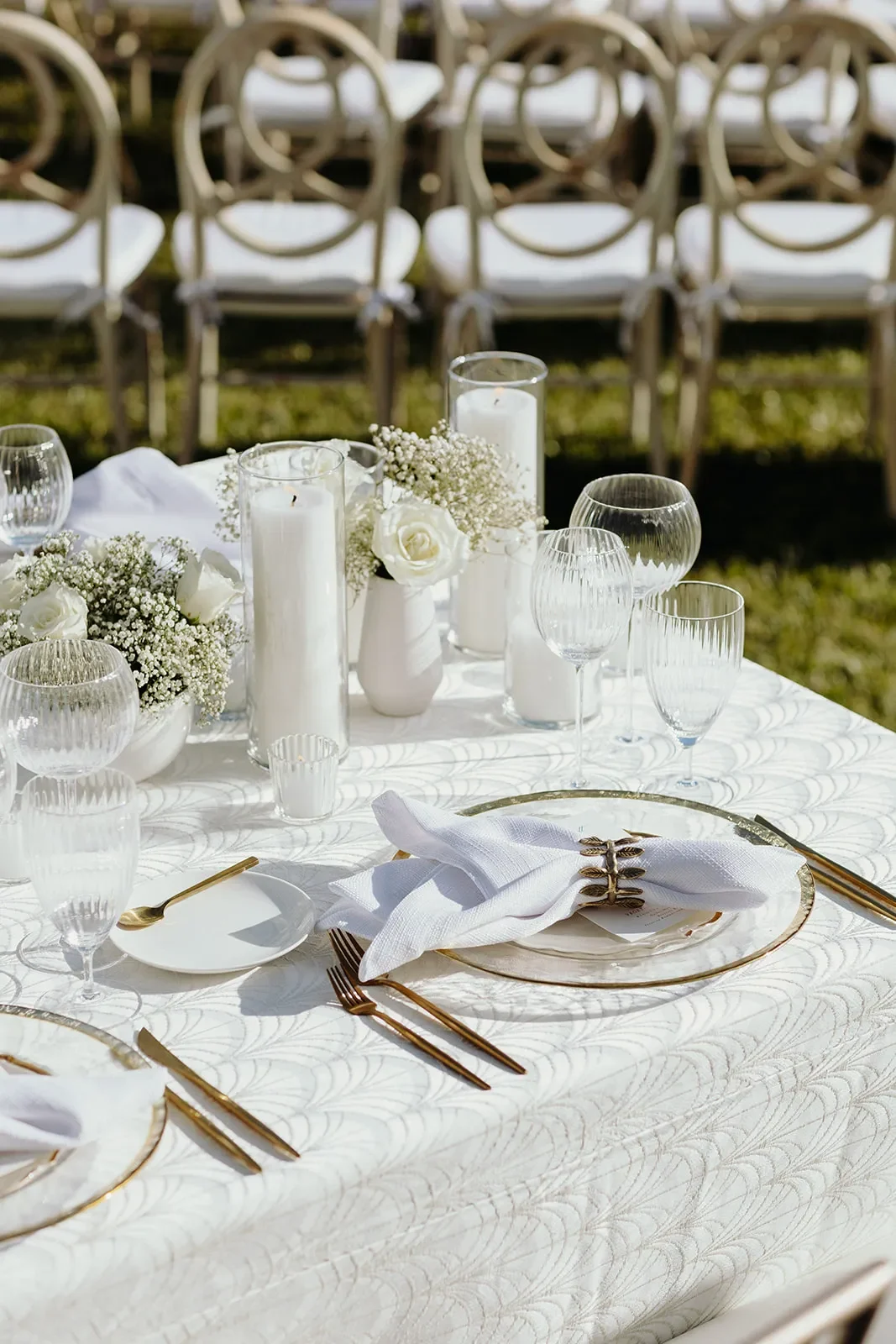
Color is only one part of the linen selection. Texture and finish determine how the fabric reflects light, how substantial it appears, and how it relates to place settings, florals, and the broader venue.
Two linens in the same color can produce very different effects when one is matte and the other is velvet, woven, embroidered, or softly reflective.
Matte Linens for a Restrained Foundation
Matte linens create a quieter base that allows other elements to carry more visual detail. They can support patterned napkins, layered place settings, botanical runners, statement florals, or distinctive chairs without adding another reflective or decorative surface.
A matte foundation may work well when the design includes:
-
Patterned china
-
Colored glassware
-
Detailed chargers
-
Metallic flatware
-
Strong floral arrangements
-
Decorative menus or stationery
-
Statement napkins
Matte fabrics can also provide consistency across multiple event areas. The same or related neutral may be used on guest, cocktail, welcome, or service tables, while the accent treatments change according to each surface’s importance.
Velvet for Concentrated Seasonal Depth
Velvet introduces a deeper, more substantial texture. It can absorb and reflect light differently from flatter fabrics, creating visual richness in evening settings or on selected focal surfaces.
Rather than using velvet automatically across every table, it may be most effective on:
-
A sweetheart table
-
A cake or dessert display
-
A presentation table
-
Selected guest tables
-
A runner or accent treatment
-
A central corporate-event feature
Deep green, copper, burgundy, black, or jewel-toned velvet can contribute to a fall palette without requiring the entire event to use heavy fabrics.
The texture should be balanced with the rest of the design. If the table already includes substantial floral arrangements, decorative china, and reflective metallic details, a restrained velvet application may provide enough depth without overwhelming the composition.
Woven and Natural-Looking Textures
Woven and faux-natural textures can add dimension while maintaining a more understated appearance than a bold print.
These materials may support:
-
Garden-inspired events
-
Coastal settings
-
Transitional designs
-
Historic venues
-
Informal but polished gatherings
-
Layered neutral palettes
A natural-looking texture does not need to create a rustic effect. When paired with formal place settings, refined chairs, or controlled lighting, it can contribute to a sophisticated and tactile design.
Faux-burlap or woven-look fabrics may work as full linens, napkins, or runners. Their effect depends on how they are combined with other materials. A woven runner over a matte ivory linen creates a different result from the same runner placed on a visible wood surface.
Embroidered, Floral, and Geometric Designs
Patterned and embroidered linens can become central design elements. Because they repeat across a room, their scale and contrast should be evaluated carefully.
A large floral may appear dramatic at close range and even more prominent when repeated across several guest tables. A small geometric may read as texture from across the venue but reveal more detail at table level.
Before selecting a patterned linen, consider:
-
Pattern size
-
Color contrast
-
Viewing distance
-
Number of tables using the design
-
Floral arrangement style
-
Place-setting detail
-
Other patterns used in the event
-
How the design appears in photographs
A strong pattern can reduce the need for excessive layering. When the fabric already provides visual movement, simpler napkins, runners, and tabletop pieces may create the best balance.
Mix Patterns Without Making the Event Feel Disconnected
Pattern mixing can create a layered and distinctive linen design, but the combinations need a shared visual relationship. That connection may come from color, pattern, scale, motif, texture, or repetition.
The goal is not to make every fabric identical. It is to ensure that each pattern feels like part of the same event rather than a separate design decision.
Start With One Dominant Pattern
Begin with one principal pattern that establishes the direction. This might be a floral, botanical, stripe, dot, or geometric design.
The dominant pattern may be used on:
-
All guest tables
-
A selected group of guest tables
-
Runners
-
Napkins
-
A focal table
-
A presentation or display surface
Once this fabric has been chosen, the remaining linens should support it. Introducing several equally strong patterns can make it difficult to identify the primary design.
For example, a large sage botanical print could serve as the dominant linen. Solid ivory full linens, olive napkins, and a narrow coordinating stripe could then support the primary pattern without competing with it.
Support the Pattern With Solid Colors
Solid linens help organize a patterned design. They can draw one or two colors from the dominant print and repeat them across the event.
Examples include:
-
Olive solids with a sage floral
-
Ivory with an ochre botanical
-
Mushroom with powder-blue patterning
-
Ruby accents with a neutral floral
-
Indigo solids with a lighter stripe
-
Champagne with gold geometric details
The solid does not always need to match the most obvious color in the pattern. Selecting a quieter secondary tone can create a more refined and less predictable combination.
Combine Different Pattern Scales
Patterns are easier to combine when they use different scales.
A large floral may be paired with:
-
A narrow stripe
-
A small geometric napkin
-
A subtle dot
-
A solid runner
-
A restrained botanical accent
Similarly, a broad geometric linen may be supported by a smaller floral or textured solid.
Using two large, high-contrast patterns together can create competition. The eye has no clear place to rest, particularly when decorative place settings and floral arrangements are also present.
Repeat One Element Across Multiple Designs
Consistency can come from repeating one visual element across different fabrics.
That repeated element might be:
-
Olive green
-
Ivory
-
A gold undertone
-
A botanical motif
-
A single napkin design
-
The same runner
-
A narrow stripe
-
A recurring trim detail
For example, guest tables may use two related floral linens, while every place setting uses the same ivory napkin. Cocktail tables may introduce a coordinating stripe that includes colors from both florals.
This approach creates variation while preserving a recognizable connection.
Know When to Stop Layering
A design may contain too many competing linen elements when:
-
The full linen, runner, napkin, and place setting all use strong patterns.
-
Separate event areas follow unrelated color palettes.
-
The fabric competes with the floral design.
-
Supporting tables receive more visual emphasis than the guest area.
-
No single color or pattern creates continuity.
-
Each surface introduces a new texture without repeating an earlier element.
Removing one layer can often strengthen the remaining choices. A statement linen may need only a solid napkin, while a neutral foundation may support a runner and patterned place-setting details.
Develop a Linen Hierarchy Across the Event
Not every surface needs the same level of decoration. A linen hierarchy helps direct attention toward the most important areas while keeping supporting tables visually connected.
The primary guest-table treatment should establish the design, focal tables can receive stronger details, and operational surfaces can use simpler coordinated variations.
Establish the Primary Guest-Table Treatment
Guest tables occupy a large portion of the event space, so their linen treatment usually establishes the dominant visual direction.
Possible approaches include:
-
A full patterned linen with solid napkins
-
A solid linen with patterned napkins
-
A neutral base with runners
-
One linen color used throughout with several napkin variations
-
Two coordinated full linens connected through the same napkin
-
A restrained foundation with a stronger seasonal accent
The guest-table treatment should be distinctive enough to establish the palette but flexible enough to work across the entire room.
Create a Distinct Focal-Table Treatment
Focal tables can receive a more detailed or saturated treatment. These may include:
-
A sweetheart table
-
A head table
-
A cake table
-
A dessert display
-
A registration or presentation table
-
A central corporate-event feature
The focal linen should remain connected to the guest tables through at least one repeated element. It might use the same pattern in another colorway, a deeper version of the primary color, or a velvet texture that repeats the guest-table napkin tone.
This creates emphasis without making the focal area feel unrelated.
Coordinate Cocktail and Gathering Areas
Cocktail and gathering surfaces can repeat the event palette through smaller treatments.
Options include:
-
Coordinating full linens
-
Runners
-
Cuffs
-
Sashes
-
Repeated accent colors
-
A simplified version of the main pattern
These surfaces do not need the same level of detail as the dining area. Their purpose is to extend the design into transitional spaces without competing with the primary event setting.
Keep Service and Supporting Tables Cohesive
Welcome, registration, beverage, buffet, and information tables should remain coordinated but generally restrained.
A supporting table may use:
-
The same neutral foundation as the guest tables
-
A solid color drawn from the dominant pattern
-
A simple runner
-
Coordinated skirting
-
A repeated cuff or sash
-
A quieter version of the focal treatment
Using the most decorative fabric on every operational surface can reduce its impact. Reserving statement linens for selected areas allows the visual hierarchy to remain clear.
Style Fall Weddings Through Linens
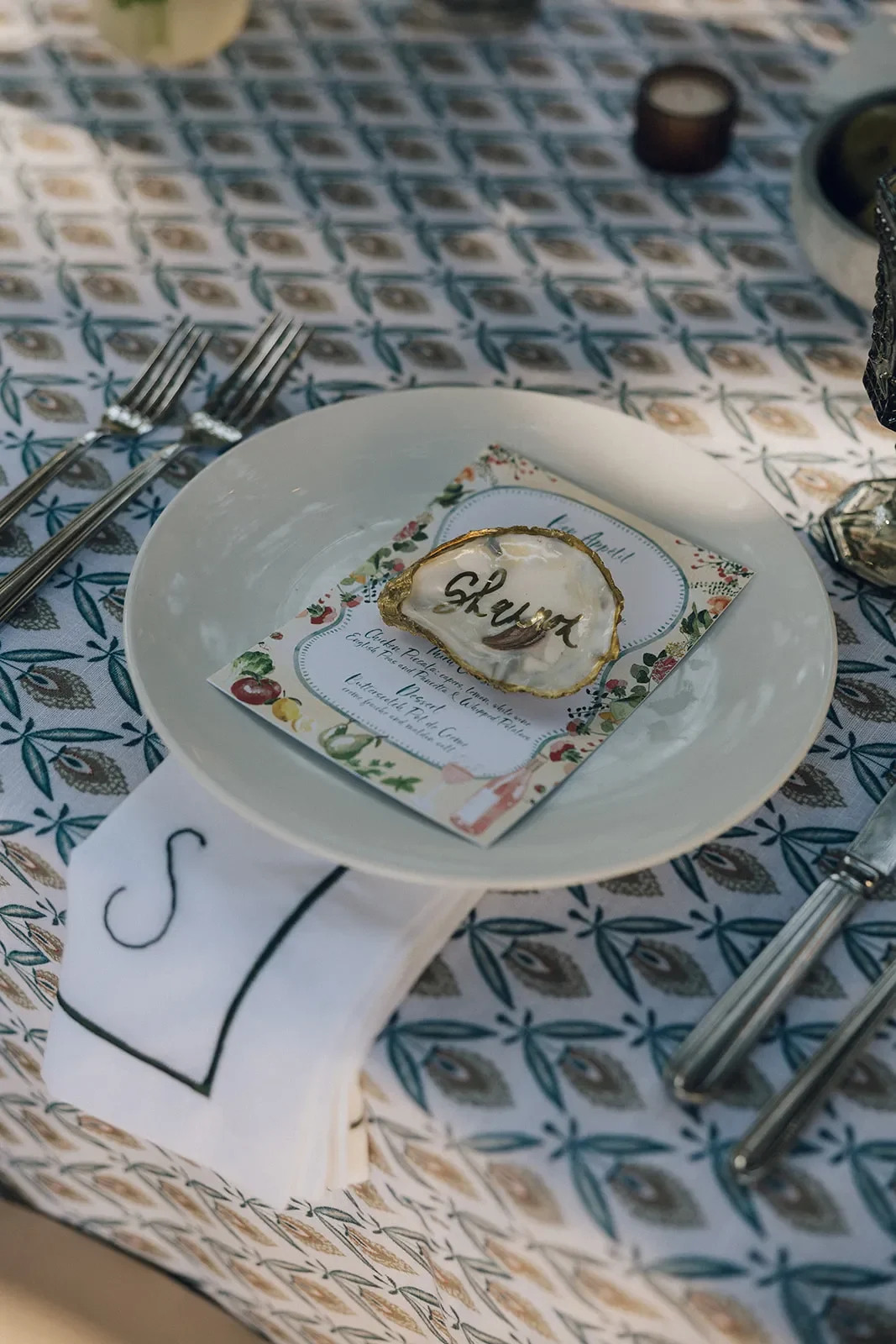
Wedding linens should support the couple’s design direction and the Charleston venue’s character. The fall season can be represented through color, pattern, and texture without requiring literal seasonal decorations.
A coordinated fabric plan can distinguish guest tables, focal displays, and cocktail areas while maintaining one consistent visual story.
Create a Formal Autumn Wedding Direction
A formal fall wedding may combine a restrained foundation with deeper seasonal details.
Possible elements include:
-
Ivory or champagne full linens
-
Ruby or deep-green napkins
-
Gold or black accents
-
Velvet used on one focal surface
-
A controlled floral or geometric pattern
-
Matte guest-table linens with richer runners
For example, champagne guest tables may use ruby napkins, while the sweetheart table receives a deeper velvet treatment. A patterned cake-table linen could repeat ruby, ivory, and gold to connect the areas.
The design should feel layered but not heavy. Deep colors are most effective when enough neutral space remains around them.
Create a Garden-Inspired Fall Direction
Garden-inspired fall styling may use fern, olive, sage, blush, mist, ivory, or natural tones.
Possible combinations include:
-
Sage florals with ivory napkins
-
Olive runners over natural foundations
-
Blush botanical patterns with mushroom solids
-
Fern napkins on matte ivory linens
-
A garden-print focal linen supported by restrained guest tables
This approach works particularly well when the fabric relates to the surrounding landscape without attempting to reproduce it literally.
Botanical patterns can provide seasonal detail while remaining softer than traditional fall colors.
Create a Coastal Charleston Fall Direction
A coastal Charleston fall palette may retain indigo, teal, mist, powder blue, or navy while adding warmth through ochre, mushroom, olive, champagne, or gold.
Examples include:
-
Indigo patterned napkins on mushroom linens
-
Powder-blue guest tables with ochre focal accents
-
Teal runners over ivory foundations
-
Navy and natural patterns with warm metallic details
-
Mist linens with olive napkins
This direction reflects the location without depending on nautical symbols. The seasonal effect comes from the combination of cool and warm tones rather than from a literal theme.
Use Statement Linens Selectively
One statement floral, stripe, velvet, embroidered, or geometric linen can create greater impact when reserved for a limited number of surfaces.
Potential focal areas include:
-
Sweetheart table
-
Head table
-
Cake display
-
Escort-card table
-
Bar or beverage feature
-
Selected guest tables
The surrounding fabrics should support the statement selection through solids, quieter patterns, or related colors. Repeating the same dominant linen on every surface may reduce its ability to create emphasis.
Adapt Linen Styling for Corporate and Social Fall Events
Corporate dinners, fundraisers, milestone celebrations, and seasonal social events may require different levels of pattern, formality, and visual emphasis. The linen design should reflect the purpose of the gathering while maintaining consistency across guest-facing and operational areas.
Existing linen colors and patterns can be used to create a relevant design without implying that fabrics are custom-manufactured or printed for each event.
Corporate Dinners and Networking Events
Corporate events often benefit from a controlled palette that supports presentations, branding, networking, and dining without distracting from the program.
Linens may be used to:
-
Introduce organization colors through available inventory
-
Define dining and presentation areas
-
Create a consistent guest-table foundation
-
Distinguish registration or information tables
-
Add pattern through napkins or runners
-
Keep operational tables visually organized
A neutral full linen paired with a stronger napkin can reference an organization’s color palette without turning every surface into a branded display.
Pattern scale should also be considered. A quieter geometric or stripe may provide enough detail for a professional setting, while a stronger floral may be reserved for a dinner or reception area.
Fundraisers and Formal Celebrations
Fundraisers and formal events may require coordinated linens across dining, sponsor recognition, auctions, welcome tables, or presentation areas.
A linen hierarchy can help distinguish:
-
Guest dining tables
-
Registration
-
Sponsor displays
-
Auction tables
-
Stage-adjacent surfaces
-
Beverage stations
-
Presentation areas
The guest tables might use one consistent foundation, while sponsor or auction areas repeat the palette through runners or accent linens. A focal presentation table may use a stronger pattern drawn from the main design.
Seasonal Social Events
Milestone birthdays, anniversaries, retirement dinners, and holiday gatherings can support richer seasonal colors and more playful pattern combinations.
Possible treatments include:
-
Jewel-toned napkins
-
Floral or botanical focal linens
-
Velvet accents
-
Striped cocktail-table treatments
-
Gold or copper details
-
Patterned runners
-
A stronger cake or display linen
The event should still maintain a clear hierarchy. A social celebration can use more pattern or color than a restrained corporate dinner, but the fabrics should continue to share a common visual direction.
Distinguish Event Areas Through Color
Related linen colors can help identify separate functions within the event.
For example:
-
Dining tables may use ivory with olive napkins.
-
Welcome tables may use olive full linens.
-
Cocktail tables may use a patterned cuff containing both colors.
-
Display surfaces may introduce ochre as a deeper accent.
-
Service tables may return to the ivory foundation.
The spaces feel different, but the repeated colors prevent them from appearing disconnected.
Consider How Linens Will Appear Throughout the Event
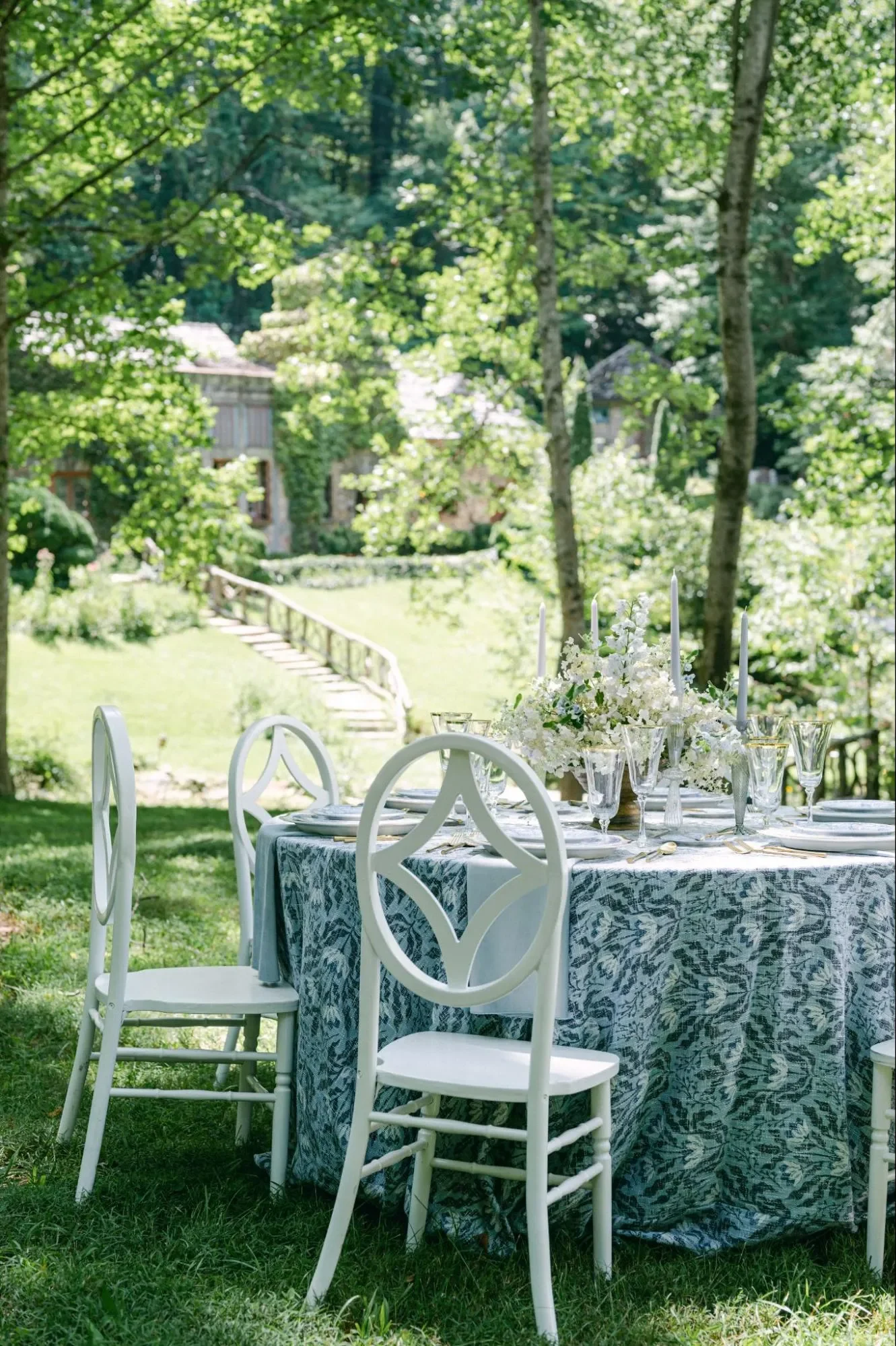
A linen may look different under natural daylight, warm evening fixtures, dark interiors, or across a large room. Samples should be evaluated at close range and from a distance before the full assignment is approved.
Color, pattern, and texture can change significantly once they are repeated across several tables.
Review Color in Natural and Evening Light
Natural light can make some colors appear lighter or cooler, while warm evening lighting may deepen ivory, gold, mushroom, ruby, or olive tones.
When possible, consider how the event will change from setup through the final portion of the evening.
Ask:
-
Will the linen be seen primarily during daylight?
-
Will the event move into warm evening light?
-
Is the venue interior naturally dark?
-
Will the fabric sit near a window or open tent side?
-
Does the color remain distinct from the chairs and flooring?
-
Does a deeper napkin still provide enough contrast after sunset?
The purpose is not to create a separate lighting plan but to confirm that the selected fabrics remain legible and balanced under expected conditions.
Evaluate Pattern From a Distance
Pattern scale becomes more important when a fabric is repeated across an event space.
A small print may read as a solid from across the room. A wide stripe or large botanical may become one of the most visible design elements in the venue.
Review:
-
The pattern at table level
-
The pattern from across the room
-
How it appears across several tables
-
Whether the colors blend at a distance
-
Whether it competes with venue architecture
-
How it may appear in wide photographs
A pattern that seems subtle on a sample may have a much stronger effect when used on twenty guest tables.
Compare Texture at Table Level
Guests will experience napkins, runners, and full linens closely during the event. The materials should complement each other when viewed from the seated position.
Check whether:
-
The napkin provides enough contrast
-
Several textures compete
-
The runner remains visible
-
Decorative trims are concealed by place settings
-
The tabletop pieces overwhelm the fabric
-
The full linen and runner appear too similar
-
A velvet or woven element feels appropriately balanced
This table-level review can reveal issues that are not obvious from a room-wide concept.
Review Samples as a Complete Linen Story
Instead of approving each fabric independently, compare the entire proposed linen collection together.
Include:
-
Primary full linen
-
Napkin
-
Runner
-
Cuff or sash
-
Focal-table linen
-
Cocktail-table treatment
-
Supporting-table linen
-
Skirting where required
Seeing these elements together makes it easier to identify repeated colors, inconsistent patterns, or unnecessary layers before quantities are finalized.
Finalize Linen Sizes, Quantities, and Assignments
The final linen order should identify the exact product, format, dimensions, quantity, and assigned location for every fabric. General descriptions such as “green floral” or “ivory tablecloth” may not provide enough detail when the inventory contains several similar options.
A clear assignment list helps ensure that each linen reaches the correct area and is installed in the intended layering order.
Confirm the Exact Linen Dimensions
The required linen size depends on:
-
The dimensions of the underlying surface
-
Desired coverage
-
Drop length
-
Whether the table base should remain visible
-
Whether guests will be seated
-
The intended layering treatment
-
The use of skirting, cuffs, or runners
The exact measurements should be confirmed before the linen is assigned.
A dining surface may require a different drop from a cocktail, welcome, or display table. Specialty surfaces intended to remain visible may receive only a runner or napkin treatment.
Create a Linen Assignment List
Document every fabric by product name, format, size, quantity, and location.
The assignment list may include:
-
Guest-table full linens
-
Guest napkins
-
Runners
-
Cocktail-table linens
-
Cocktail cuffs or sashes
-
Focal-table treatments
-
Cake or dessert linens
-
Welcome or registration tables
-
Display surfaces
-
Service-area linens
-
Skirting
-
Additional accent pieces
A detailed list reduces confusion during installation, particularly when multiple fabrics share similar colors.
Separate Similar Colors and Patterns
Several linens may be described informally as ivory, green, floral, or striped, but those descriptions may refer to different products.
Use exact names rather than general labels. The assignment should distinguish:
-
Olive from fern
-
Ivory from natural or champagne
-
One floral pattern from another
-
Full linens from matching napkins
-
Runners from cuffs
-
Matte fabrics from velvet or woven textures
This level of detail is particularly important when coordinated linen families are used in several formats.
Update Quantities When the Event Plan Changes
Changes to the number of guests or event functions can affect more than full table linens.
The updated plan may require changes to:
-
Napkins
-
Runners
-
Cocktail-table treatments
-
Focal linens
-
Skirting
-
Cuffs
-
Sashes
-
Supporting-table fabrics
A new registration area, display table, or cocktail surface may require another coordinated treatment even when the guest count remains unchanged.
Confirm the Intended Layering Order
The installation plan should state whether each surface receives:
-
Full linen only
-
Full linen with a runner
-
Visible surface with a runner
-
Cuffed treatment
-
Sash
-
Skirting
-
Specialty napkin
-
Another approved accent piece
Documenting the layering order prevents a visible specialty surface from being fully covered or a runner from being omitted during setup.
Why Choose Curated Events Charleston for Fall Linen Rentals?
Curated Events Charleston offers a broad linen inventory that extends beyond basic solid tablecloths. The collection includes full linens, napkins, runners, cuffs, sashes, skirting, and designs available through the Curated Linen Collection.
This range allows planners to build a complete linen story using existing colors, patterns, textures, and coordinated fabric formats.
Explore Hundreds of Linen Styles
The available collection includes:
-
Solid colors
-
Florals
-
Botanical designs
-
Stripes
-
Geometric patterns
-
Matte foundations
-
Velvet textures
-
Woven and faux-natural finishes
-
Coordinated napkins and runners
-
Accent treatments
This variety makes it possible to create a fall event that feels specific to the venue and event purpose rather than relying on a standard seasonal palette.
Use Coordinated Linen Families
Some linen designs are available across multiple formats, allowing a pattern to be repeated in controlled ways.
A coordinated family may include:
-
Full linen
-
Napkin
-
Runner
-
Cuff
-
Sash
-
Related accent piece
For example, a pattern used on one focal table may reappear as napkins on the guest tables and as a runner on a display surface. This creates consistency without requiring every table to use the same full linen.
Availability should be confirmed for the selected design and format.
Compare Solids, Patterns, and Specialty Textures
A successful linen plan often combines several fabric types.
The Curated Events team can help compare:
-
Matte and reflective finishes
-
Solids and statement patterns
-
Velvet and woven textures
-
Florals and geometrics
-
Full linens and smaller accent formats
-
Coordinated colorways
These comparisons help establish which fabric should serve as the dominant foundation and which should remain supporting accents.
Develop a Consistent Linen Direction
Curated Events Charleston can assist with reviewing existing linen products, comparing coordinated formats, confirming dimensions, and assigning each selection to the appropriate event area.
The planning process should establish:
-
Primary color palette
-
Dominant pattern
-
Supporting solids
-
Focal-table treatment
-
Guest-table treatment
-
Cocktail and supporting linens
-
Required sizes and quantities
-
Intended layering order
This creates a more controlled and cohesive fabric plan across the complete event.
Frequently Asked Questions
Which Linen Colors Work Well for a Charleston Fall Event?
Suitable fall colors may include olive, sage, fern, mushroom, ivory, natural, ochre, ruby, indigo, powder blue, copper, gold, black, and other warm or muted tones.
The appropriate combination depends on the venue, event purpose, lighting, and surrounding design.
Do Fall Events Need to Use Orange and Brown?
No. A fall palette can be created through natural greens, warm neutrals, jewel tones, muted blues, botanical patterns, and layered textures.
Ochre, olive, mushroom, indigo, ruby, and champagne can reflect the season without relying on obvious orange-and-brown combinations.
Can Patterned Linens and Patterned Napkins Be Used Together?
Yes, provided the patterns share a common color or use different scales.
One pattern should generally remain dominant. A large floral linen may be paired with a smaller stripe or geometric napkin, while a patterned napkin may sit against a quieter full linen.
Should Every Table Use the Same Linen?
Not necessarily. Guest tables may use a consistent base, while focal, cocktail, display, and supporting tables receive coordinated variations.
The designs should remain connected through color, pattern, texture, or a repeated linen format.
What Is the Difference Between a Full Linen and a Runner?
A full linen covers most or all of the underlying table, while a runner creates a narrower decorative layer.
A runner may be placed over a full linen or used on a visible specialty surface.
How Is the Correct Linen Size Selected?
The correct size depends on the underlying dimensions, desired drop length, intended use, guest seating, and whether the table base should remain visible.
The exact table measurements should be confirmed before the linen is selected.
When Should Velvet Be Used?
Velvet can provide concentrated color and texture on focal tables, selected dining surfaces, runners, or evening event areas.
It does not need to be used throughout the entire event to create seasonal depth.
Can One Linen Pattern Be Repeated in Several Formats?
Some designs may be available as full linens, napkins, runners, cuffs, sashes, or related accent pieces.
Availability should be confirmed for the chosen pattern and required quantities.
How Can Corporate Colors Be Included Without Custom Linens?
Existing full linens, napkins, runners, or accent treatments can be selected in colors that relate to the organization’s palette.
The design can reference brand colors without requiring custom printing or custom-dyed fabric.
How Can Too Many Linen Patterns Be Avoided?
Begin with one dominant pattern, support it with solids, use different pattern scales, and repeat one common color throughout the event.
Removing one unnecessary layer can often make the remaining fabrics feel more intentional.
Can Curated Events Help Coordinate Full Linens, Napkins, and Runners?
Curated Events Charleston offers these product categories and can help compare coordinated designs, confirm available formats, and establish how each fabric will be assigned throughout the event.
Create a Distinctive Charleston Fall Event Through Linens
A successful linen design involves more than selecting a seasonal tablecloth. Color, pattern, texture, scale, and repetition work together to establish the visual identity of the event.
Full linens can provide the foundation, napkins can introduce targeted color, runners can add pattern and direction, and cuffs, sashes, or skirting can continue the design through smaller or supporting surfaces. Creating a hierarchy allows focal areas to receive stronger treatments while guest and operational tables remain connected through a consistent fabric story.
Curated Events Charleston offers full linens, napkins, runners, cuffs, sashes, skirting, and designs from the Curated Linen Collection for weddings, corporate gatherings, fundraisers, and seasonal social events.
By comparing coordinated linen families and assigning each fabric according to its purpose, planners can create a fall event that feels layered, intentional, and suited to its Charleston setting. Explore the Curated Events Charleston linen collection to begin developing a color, pattern, and texture direction for an upcoming celebration.