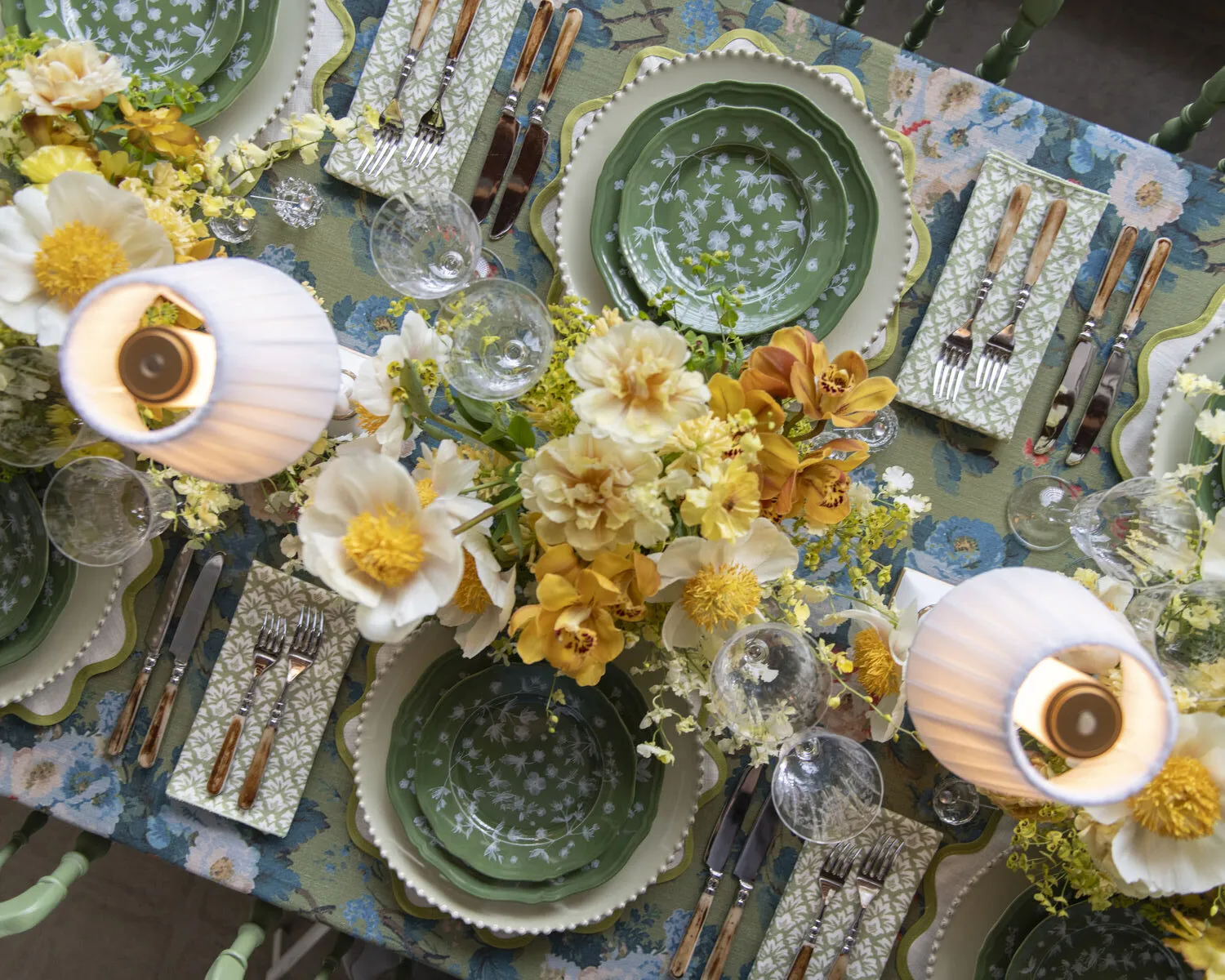
A formal gala tabletop is built from more than individual china, glassware, or flatware selections. Each piece needs to support the dining format while contributing to the visual direction of the room as a whole.
For planners producing galas in Washington, D.C., tabletop decisions often sit at the intersection of design and service. The menu influences what pieces are required, while the linen, florals, lighting, table shape, and surrounding furnishings influence how those pieces should look and feel together.
The strongest tabletop plans are not necessarily the most elaborate. They are the ones in which every layer has a clear purpose, from the first impression of the dining room to the experience of an individual guest seated at the table.
Start With the Dining Format Before Selecting Tabletop Rentals
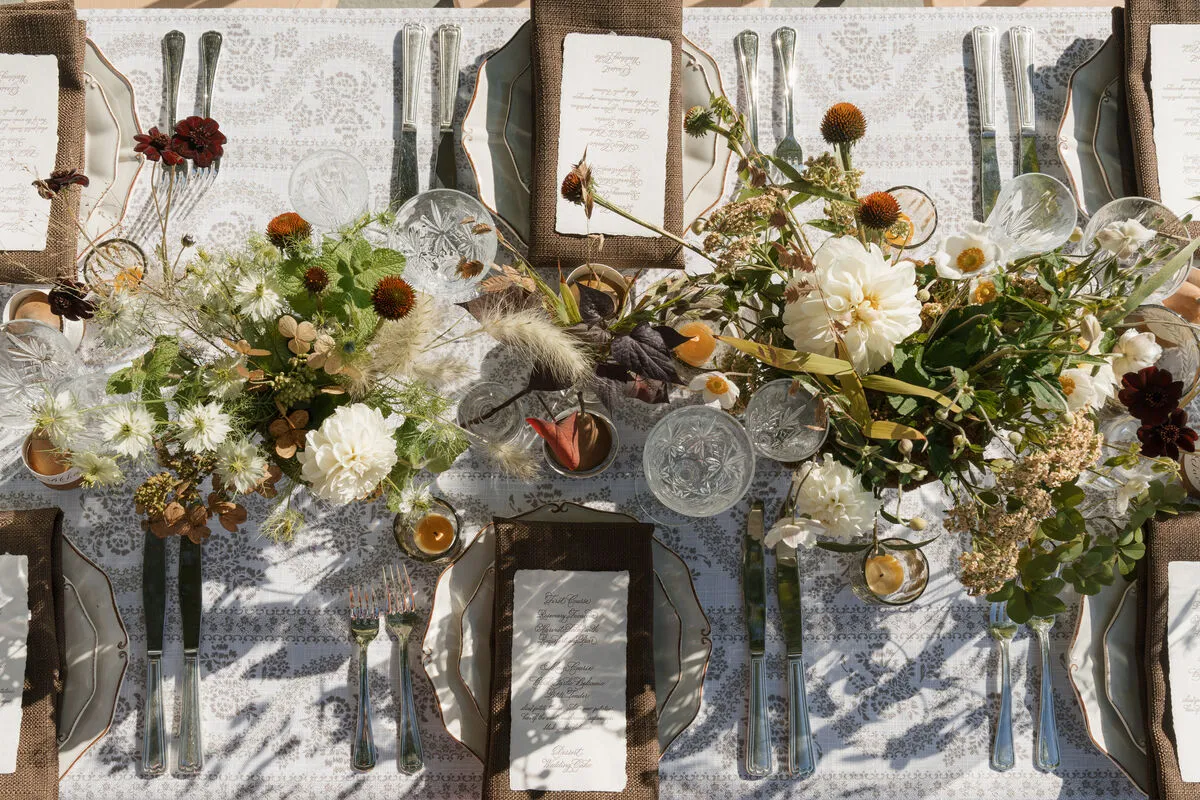
Tabletop planning should begin with how the meal will be served. A place setting can look beautifully composed during a design meeting but still create problems if it does not reflect the actual course sequence or beverage service.
Establishing the dining format first gives planners a practical framework for narrowing tabletop selections.
Confirm the Service Style
Start by clarifying whether the gala will include:
-
Plated dinner service
-
Multiple courses
-
Family-style dining
-
Buffet or food-station service
-
Cocktail service followed by a seated meal
-
A combination of service formats
Each format creates different tabletop requirements.
A formal plated dinner may involve several pieces of china, glassware, and flatware at each place. A station-based event may call for a more restrained table setting because certain pieces are introduced elsewhere during service.
Understanding that distinction prevents the design from being built around tableware the event does not actually need.
Review the Planned Course Sequence
Once the service style is known, review the menu with the caterer.
The course sequence helps determine which china and flatware pieces are required and when they will be used. This is especially important for a multi-course gala where different dishes may require different plates, bowls, or utensils.
Planners do not need to make those service decisions independently. The caterer can confirm what is needed operationally, while the planner ensures the selected rentals remain consistent with the broader design.
That collaboration allows function and presentation to develop together.
Consider How the Table Changes Throughout Dinner
The initial place setting is only one moment in the dining experience.
Some pieces may remain throughout the meal, while others are cleared, replaced, or introduced with specific courses. Thinking through that progression helps planners avoid placing too many elements on the table at once.
A formal place setting should look complete without feeling crowded.
If several plates, glasses, flatware pieces, stationery elements, candles, and decorative details all compete for limited space, the table may feel overworked before the meal even begins.
Establish the Visual Direction for the Complete Table
Once service requirements are understood, the tabletop can be developed as part of the overall gala design.
China, glassware, flatware, linens, florals, chairs, lighting, and decorative details should not be selected independently. The strongest result comes from deciding which elements are meant to lead and which should support them.
Decide What Should Lead the Tablescape
Every table benefits from a clear visual hierarchy.
The strongest element might be:
-
A floral centerpiece
-
A statement linen
-
Distinctive china
-
Colored glassware
-
Sculptural lighting
-
Another intentional focal detail
The remaining pieces should help reinforce that decision. If a patterned linen already establishes a strong visual foundation, the china may be more restrained. If the linen is quiet and the florals are minimal, the tabletop can carry more detail through color, shape, or finish.
Not every element needs to make the same level of statement.
Coordinate Tabletop With the Linen
The linen creates the backdrop for every tabletop piece placed above it.
Pattern, color, texture, and finish can all change how china and glassware appear. A plate that looks subtle against a neutral textile may become much more expressive against a patterned linen.
The same applies to glassware and flatware. Metallic finishes, colored glass, and detailed china can become visually stronger when placed over a richly textured or high-contrast textile.
Planners should therefore review tabletop and linen selections together rather than approving them in separate stages.
Consider the Complete Color and Material Palette
Cohesion does not require every component to match.
A formal gala can combine several finishes and materials while still maintaining one clear design direction.
Consider the relationship among:
-
China
-
Glassware
-
Flatware
-
Linens
-
Floral vessels
-
Chairs
-
Bar finishes
-
Nearby lounge furniture
A metallic flatware finish may connect subtly to a chair frame or bar detail. Colored glassware might repeat a secondary shade from the floral palette. A restrained china pattern can echo the formality of the room without directly matching another element.
These relationships create depth without making the design feel overly coordinated.
Build the Place Setting in Layers
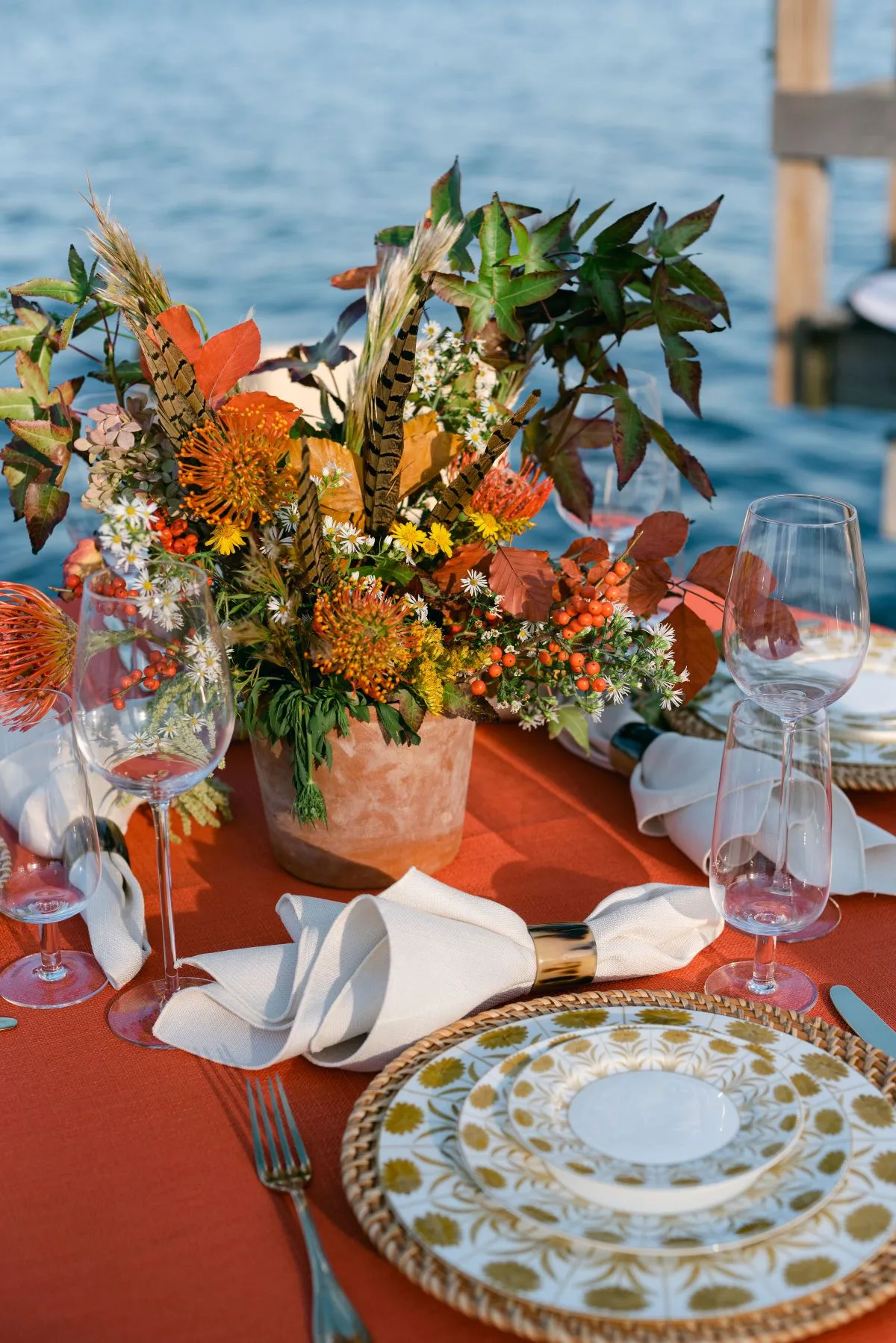
A formal place setting is most successful when each layer contributes either to the dining service or to the visual composition.
Adding more pieces does not automatically make a table feel more refined. The goal is to create an arrangement that feels deliberate, balanced, and comfortable for the guest.
Begin With the China
China provides one of the largest visible surfaces within the place setting.
Its color, shape, border, and detailing can establish either a quiet foundation or a stronger decorative moment.
When reviewing options, consider how the china relates to:
-
The linen beneath it
-
The floral arrangement
-
Chargers, if used
-
Glassware
-
Flatware
-
Menu cards or stationery
If several surrounding elements are already expressive, simpler china may give the setting more visual clarity.
When the broader table is restrained, a distinctive plate can become a more intentional point of interest.
Coordinate Flatware With the Meal
Flatware should be selected around the actual dining requirements first.
The caterer can confirm which pieces are needed for the planned courses, allowing the planner to focus on how the selected flatware fits into the broader design.
Finish, shape, and visual weight all influence how flatware reads against the linen and china.
A highly decorative setting does not necessarily need equally ornate flatware. In many cases, a more controlled selection allows the table to remain polished without becoming excessively detailed.
Plan Glassware Around Beverage Service
Glassware has both a functional and visual impact on the table.
Before adding multiple glass styles to each setting, determine what the beverage program actually requires.
Consider:
-
Water service
-
Wine service
-
Champagne or sparkling beverages
-
Additional specialty beverages where applicable
Every additional glass adds height, reflection, and visual density to the place setting.
For formal galas with elaborate florals, candles, or detailed china, a carefully edited glassware arrangement may produce a stronger result than filling the table with every possible vessel from the beginning.
Decide Whether Additional Tabletop Layers Are Needed
Chargers and other decorative pieces can help frame a place setting, but they should have a clear role. A charger might introduce contrast against the linen, connect to another finish in the room, or provide a visual foundation beneath the china.
However, it should not be added simply because the event is formal. The same principle applies to other decorative tabletop details. If the composition already has sufficient texture, color, and structure, another layer may reduce rather than improve its impact.
Consider How the Tabletop Reads Across a Large Gala
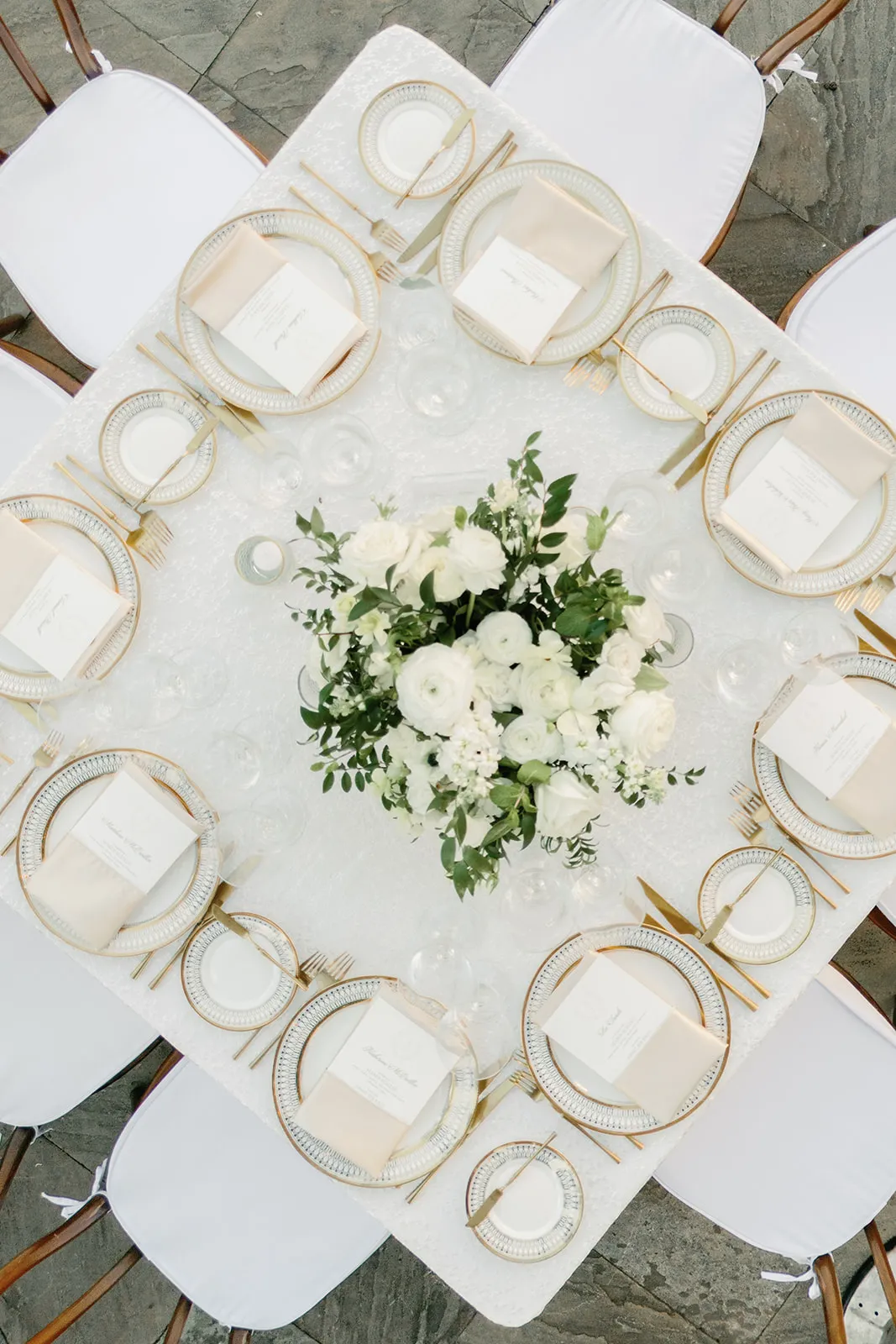
A place setting is rarely experienced in isolation at a formal gala. The same pieces may be repeated dozens or hundreds of times throughout a ballroom or tent.
That repetition can dramatically increase the visual strength of a selection.
Account for Repetition
A colored glass may feel subtle on a single sample table. Repeated across 40 tables, it may become one of the dominant colors in the room.
The same is true of:
-
Metallic flatware
-
Patterned china
-
Chargers
-
Napkin treatments
-
Reflective surfaces
Planners should evaluate both the individual place setting and its cumulative effect across the full dining area.
Room-scale thinking is particularly important for large D.C. galas, where the guest tables often form the largest visual field in the event.
Maintain Consistency Across Guest Tables
The primary guest tables should feel intentionally related even when the floor plan includes different shapes or linen treatments.
Consistency might come from using the same:
-
China
-
Glassware
-
Flatware
-
Charger
-
Napkin treatment
-
Selected tabletop accent
Not every detail needs to remain identical.
The objective is to establish enough repetition that guests understand the dining tables as part of one cohesive environment.
Avoid Making Every Detail a Statement
A formal table can include many beautiful pieces and still need editing.
If the linen has a strong print, the china has a decorative border, the glassware introduces bold color, the flatware has a distinctive finish, and the centerpiece is highly detailed, the eye has no clear place to settle.
Give Head, Honoree, or VIP Tables Appropriate Emphasis
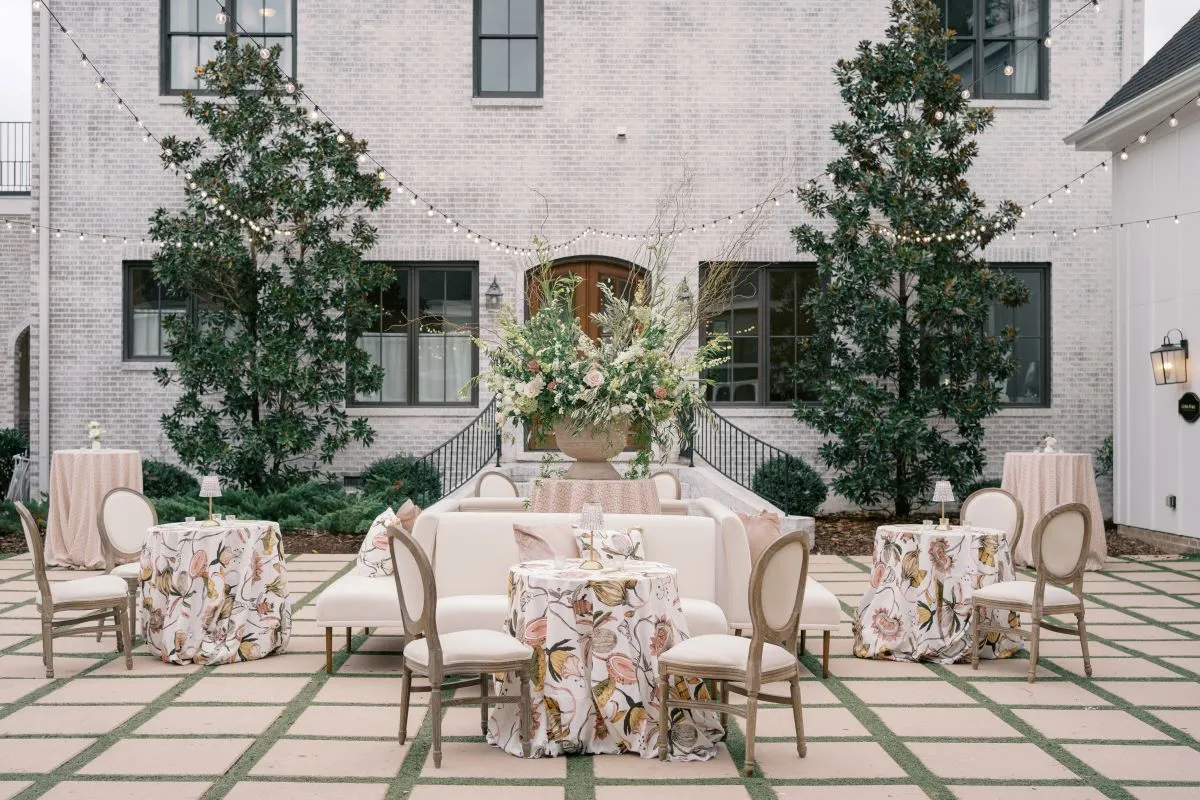
A formal gala may include a table that carries greater significance than surrounding guest seating.
The tabletop can contribute to that distinction, but the focal table should still feel as though it belongs to the same event.
Decide Whether the Tabletop Needs to Change
An important table does not automatically need different china, glassware, and flatware.
The table may already stand apart through:
-
Its location
-
Floral design
-
Linen
-
Shape
-
Lighting
-
Surrounding space
If those elements create enough distinction, maintaining the primary guest tabletop can strengthen cohesion.
Introduce One Controlled Point of Difference
When additional emphasis is appropriate, consider changing one tabletop detail rather than redesigning the entire setting.
For example, the table might use a different charger, glassware detail, or other carefully selected element while retaining the primary china and flatware.
This creates a clear distinction without introducing an unrelated design language.
Keep the Level of Formality Consistent
A focal table can be more prominent without looking like it belongs to another event.
The materials, proportions, and overall level of refinement should remain consistent with the wider gala.
The objective is hierarchy, not separation.
Consider Lighting When Finalizing Tabletop Selections
Tableware can change considerably once the room transitions from daylight or setup lighting into the final event environment.
Glass, metallic finishes, glossy china, and certain linen surfaces can all respond strongly to decorative lighting and candlelight.
Review Reflective Materials Under Event Lighting
Glassware and metallic pieces naturally catch light.
That effect can add dimension to the table, but too many reflective surfaces may create more visual activity than expected.
Review flatware, glassware, chargers, candleholders, and other reflective details together where possible.
The objective is to understand how they contribute to the complete table once the lighting is active.
Consider How Lighting Changes Color
Color may also shift under the final event lighting.
China, linens, florals, and glassware that coordinate well under daylight may read differently under warmer or lower evening illumination.
For formal evening galas, planners should evaluate the table under conditions that resemble the final setting whenever practical.
Keep Lighting and Tabletop Hierarchy Connected
Lighting can increase the visual prominence of the entire dining area.
If tables are already emphasized through chandeliers, candles, or focused lighting, the tabletop may not need the same level of decorative intensity.
As with the other design layers, the strongest result comes from deciding where the emphasis should sit.
Review a Complete Sample Table Before Finalizing Rentals
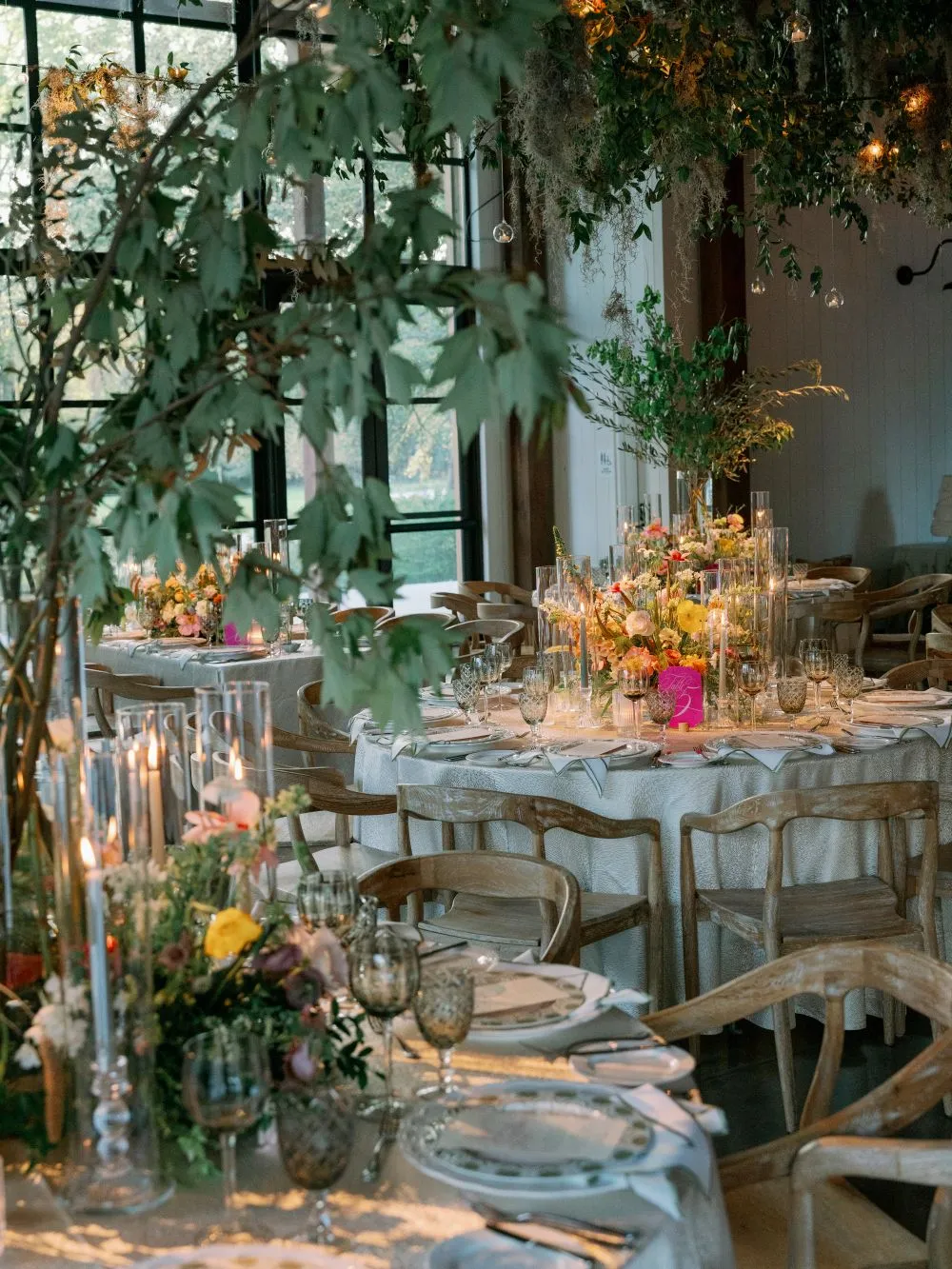
A sample table gives planners the opportunity to move beyond individual swatches and product selections and see how the dining environment actually works.
This is where decisions about proportion, color, reflection, density, and hierarchy can be evaluated together.
Include the Main Tabletop Components
Whenever possible, review a representative combination of:
-
Table
-
Chair
-
Linen
-
China
-
Glassware
-
Flatware
-
Charger, if applicable
-
Floral concept
-
Menu or stationery
-
Relevant lighting
The closer the sample is to the intended event environment, the more useful the review becomes.
View the Table From a Guest Seat
Do not review the design only while standing over it.
Sit at the table.
From that position, assess whether:
-
Glassware feels crowded
-
Flatware spacing is comfortable
-
Florals obstruct views
-
Decorative pieces interfere with dining
-
The overall composition still feels balanced
This perspective often reveals issues that are not obvious in photographs or overhead views.
Step Back and Review the Full Table
After reviewing the individual place setting, move farther away.
A detail that looks successful at one seat may become repetitive or visually heavy when multiplied around the table.
Consider how the table reads from the room as well as from the chair.
Simplify Before Adding More
If something feels unresolved, resist the instinct to add another layer immediately.
The issue may be that too many pieces are already competing.
Removing a charger, simplifying the glassware, reducing a decorative accent, or choosing quieter china can sometimes make the remaining selections considerably stronger.
Editing is an important part of tabletop design.
Confirm Quantities From the Final Floor Plan and Service Needs
Once the tabletop direction has been approved, the planning process shifts from design into coordination.
Final quantities should reflect the current floor plan, dining format, and caterer’s service requirements rather than early estimates alone.
Confirm the Final Dining Layout
Use the most current floor plan to identify:
-
Number of guest places
-
Table shapes
-
Seating arrangements
-
Head or honoree tables
-
VIP tables
-
Other distinct dining areas
Changes to the floor plan can affect rental quantities, particularly when table sizes or seating configurations have shifted.
Coordinate Requirements With the Caterer
The caterer should confirm the service-related quantities needed for china, glassware, and flatware based on the final menu and service sequence.
That allows the planner to coordinate rentals against real operational requirements rather than assumptions.
Any changes to the menu or beverage program should also be reviewed for their impact on tabletop needs.
Review Specialty and Supporting Areas
Do not stop with the dining tables.
Depending on the event, additional tabletop or service pieces may be needed for:
-
Cocktail areas
-
Bars
-
Dessert service
-
Coffee service
-
Welcome areas
-
Other guest-facing stations
Reviewing these areas at the same time helps create a more complete rental plan.
Coordinate the Complete Tabletop With Curated Events DMV
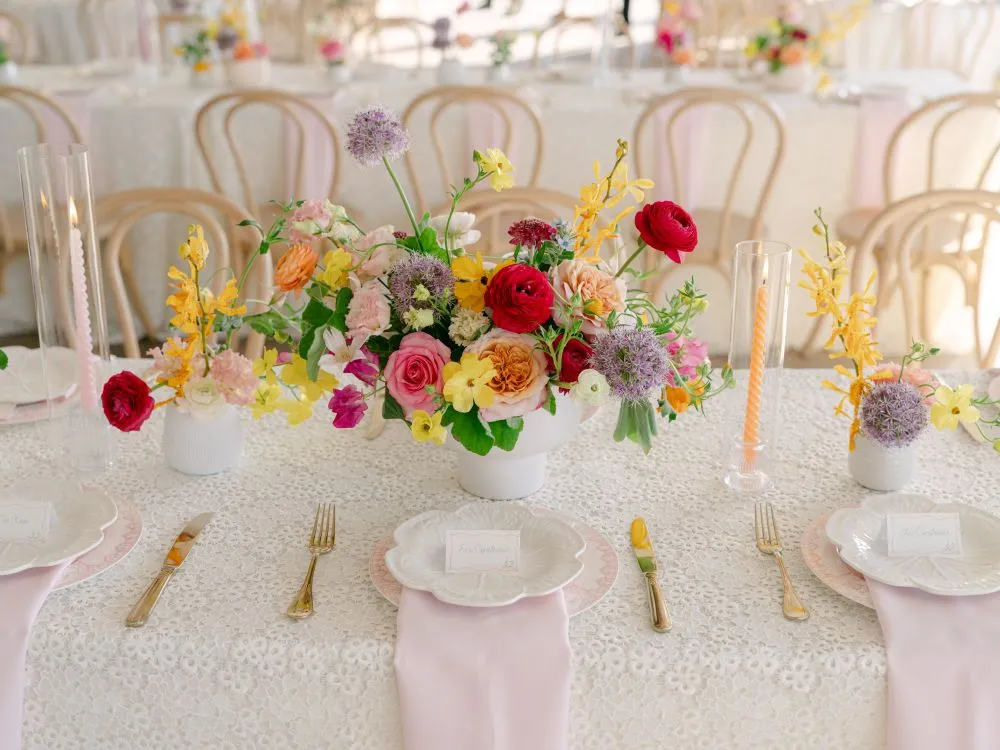
The tabletop is one layer within a much larger event environment. For a formal D.C. gala, china and glassware may sit beside custom linen selections, distinctive chairs, floral designs, decorative lighting, bars, lounge furniture, and tenting. These elements are strongest when they are considered together.
Review Tabletop and Linens Together
Tabletop pieces should be evaluated directly against the selected linen. Color, pattern, texture, and finish can all influence whether china, glassware, and flatware feel balanced.
Curated Events DMV offers tabletop and linen options that allow planners to compare these layers as part of a broader event direction rather than selecting them in isolation.
Consider the Surrounding Rental Environment
The guest table does not exist independently from the room.
Look beyond the place setting and consider its relationship to:
-
Chairs
-
Lighting
-
Bars
-
Lounge furniture
-
Tent structure
-
Other prominent design elements
A tabletop that works beautifully in isolation may need adjustment if the surrounding environment already contains several strong visual features.
Frequently Asked Questions
Should tabletop rentals be selected before the menu is finalized?
The general design direction can be established early, but final china, glassware, and flatware requirements should reflect the confirmed menu and service format.
Does every guest table need the same tabletop setting?
No. Controlled variations can be used for different table formats or focal tables as long as the overall dining area remains visually connected.
How many types of glassware should be placed on the table?
It depends on the beverage service. Only glassware that serves a clear purpose needs to be included in the initial place setting.
Should china match the linen?
Not exactly. China and linens should complement one another through color, pattern, texture, or overall level of formality without needing to match directly.
Can a head or honoree table use different tabletop rentals?
Yes. One or more controlled changes can distinguish an important table, but the setting should still feel connected to the broader gala design.
When should planners finalize tabletop rentals?
Final selections and quantities should be confirmed once the dining format, menu, floor plan, and primary design direction are sufficiently established.
Create a Cohesive Tabletop for a Formal DC Gala
A formal gala tabletop is most successful when design and service requirements are considered together.
China, glassware, flatware, linens, florals, lighting, and table layouts all influence the final result. Rather than maximizing the number of decorative layers, planners can focus on creating clear relationships among the pieces that guests will actually use and experience.
The tabletop should work from several perspectives: close enough for a seated guest to dine comfortably, wide enough for a full table to feel balanced, and consistently enough that dozens of settings create a cohesive room.
For planners producing formal galas in Washington, D.C., Curated Events DMV offers tabletop, linens, furniture, lighting, tenting, and other event rentals that can be considered together as part of the complete dining environment. With a clear hierarchy and thoughtful coordination, the tabletop can support both the meal and the larger event design without becoming overworked.