
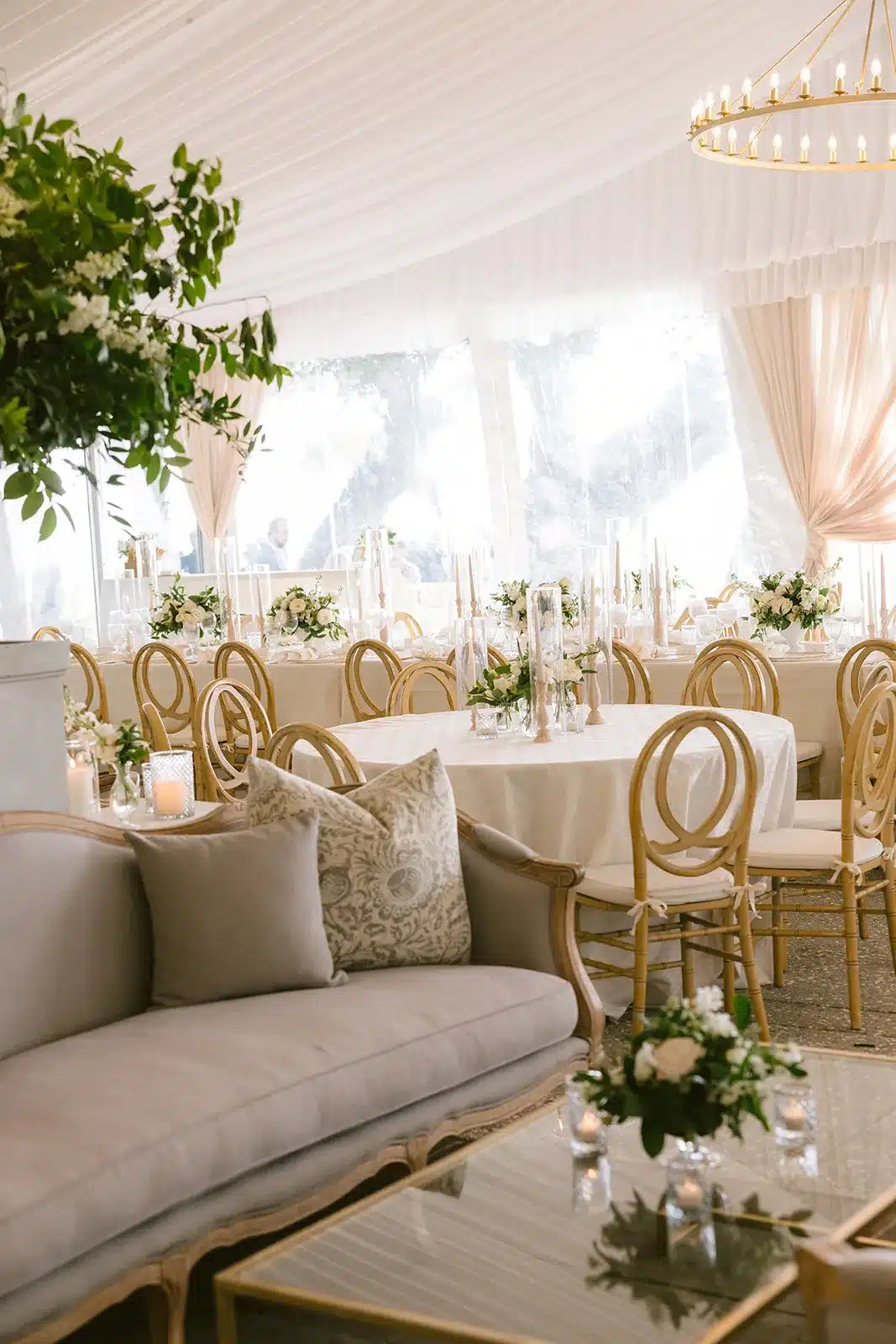
In today’s holiday and corporate event world, tents function as architectural centerpieces, structures that influence how guests move, how they gather, and ultimately, how the celebration feels. At Curated Events, we pair thoughtfully curated rentals with attentive, design-savvy service to transform open-air sites into warm, welcoming, and impeccably styled environments.
This guide explores how strategic tent selection, shape, structure, ceiling treatment, lighting, and winter comfort planning, can elevate an outdoor space into a festive setting with depth, dimension, and unmistakable seasonal charm. Grounded in architectural principles and guided by refined event aesthetics, the following sections outline how modern tent design supports both form and function, from intimate dinners to expansive holiday galas.
How Do You Create a Cozy Atmosphere in Large Christmas Party Tents?
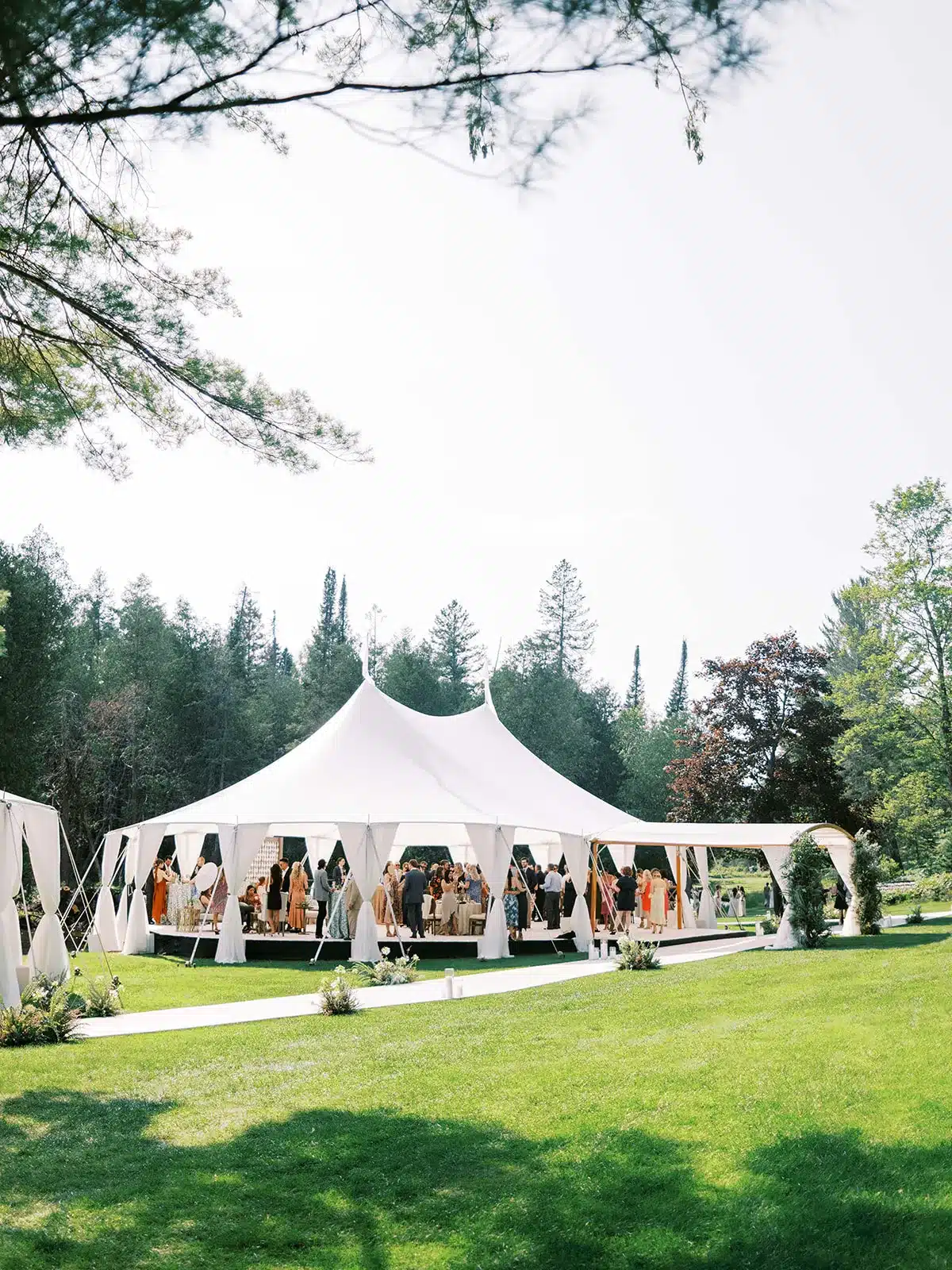
Creating a cozy feeling in a large Christmas tent is about shrinking perceived scale with zones, warm light, and tactile layers that invite people into intimate pockets. It’s both psychological and physical: clustered seating and soft textiles cut echo and block drafts, while warm color-temperature lighting visually compresses the space and feels immediately comfortable.
The result is measurable: guests stay longer, conversations feel deeper, and the event reads as thoughtful and premium instead of cavernous. Start by mapping lounge footprints, then add furniture clusters, layered rugs, and low, warm light; these choices form the foundation for safe, efficient heating and weatherproofing. The sections that follow translate those principles into furniture selections, lighting plans, and heating strategies you can apply to any tent size.
This checklist covers the essential elements to establish a cozy tent lounge before you dial in details.
- Define lounge clusters with rugs and furniture groups to reduce perceived scale.
- Use layered textiles (throws, cushions, rugs) to add thermal comfort and visual depth.
- Select warm, dimmable lighting at 2700K–3000K to soften interior brightness.
- Integrate heating and insulated sidewalls to maintain a stable microclimate.
- Prioritize safe clearances, ventilation, and non-flammable decor near heaters.
These five steps form the backbone of a winter tent lounge; the following subsections break down each step into specific furniture, lighting, and heating decisions that can be implemented on-site.
What Furniture Choices Enhance Comfort in Christmas Tent Lounges?
Furniture creates the tactile warmth guests remember, and the right mix also supports circulation and service. Choose sofas with moderate seat depth and supportive cushions for long stays; pair them with high-back armchairs to carve acoustic pockets, and add ottomans or low coffee tables to encourage relaxed clusters.
Rental-friendly fabrics like velvet and faux fur offer a luxurious texture while withstanding the rigors of event wear, opt for pieces with removable covers for easy maintenance. Arrange seating in groups of 4–8 to promote conversation, and leave 36–48 inches for clear circulation and service aisles. Wise furniture choices simplify lighting and heating zoning, which makes the rest of the build-out smoother.
Which Ambient Lighting Options Warm Up Holiday Tent Interiors?
Lighting sets mood and defines scale, use warm color temperatures and layered fixtures so the tent reads as an interior regardless of volume. Start with perimeter string lights or festoon bulbs at 2700K–3000K to outline the structure, then add cluster lighting, pendant chandeliers or grouped lanterns—over each lounge pocket to create visual anchors. Supplement with low-level table lamps and LED candles to soften contrasts and add task lighting, and install dimmable controls so you can adjust the atmosphere during the evening. Always observe safe clearances between fixtures and textiles, use fixtures rated for tent or outdoor use, and keep lighting circuits coordinated with heating equipment; this layered approach produces inviting illumination without compromising safety.
What Are the Best Heating Solutions for Winter Event Tent Lounge Areas?
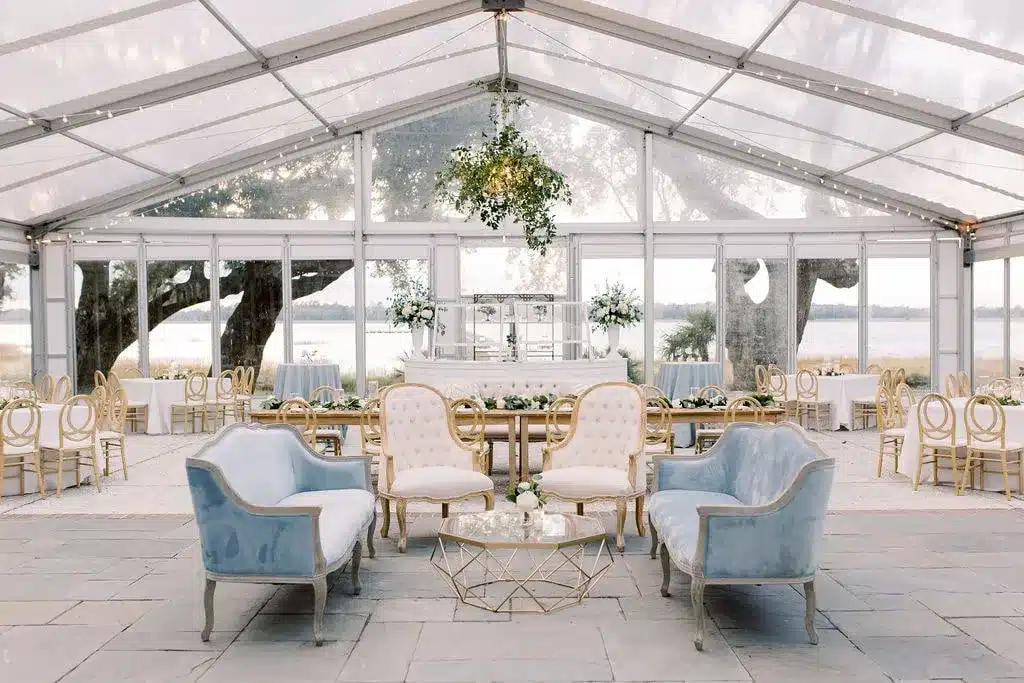
Picking the right heaters balances safety, BTU capacity, and ventilation so guests stay warm without exposure or risk. Heaters add energy to the tent air to offset losses through sidewalls and floors; choosing between indirect-fired, propane, and electric forced-air depends on how enclosed the tent is, permit constraints, acceptable noise levels, and fuel logistics.
When heaters are sized correctly and paired with insulated walls and flooring, runtime and fuel use drop while comfort rises. Below is a technical comparison of common heater types, followed by how insulation choices improve efficiency and guest experience while lowering operating costs.
- Indirect-fired units are best for fully enclosed tents where combustion exhaust can be ducted outside.
- Propane heaters work for partly open or well-ventilated setups but need strict clearances and secure fuel handling.
- Electric forced-air (ECU) units are clean and quiet where adequate power is available.
Introductory comparison of heater types and when each is appropriate.
This table highlights trade-offs: indirect-fired units give high capacity with cleaner occupied air, propane provides mobility with greater ventilation needs, and electric systems avoid combustion but require robust power and can be more expensive to run.
How Do Indirect-Fired and Propane Heaters Work in Large Tents?
Indirect-fired heaters pull combustion air from outside and route exhaust out of the occupied space, transferring heat through a heat exchanger so guest air stays free of combustion byproducts. Propane heaters combust within the unit and release exhaust into the tent, which means careful airflow planning, fuel staging, and strict clearances from textiles and furnishings are required to manage ignition and air-quality risks. Both require BTU sizing matched to the tent’s cubic volume and the desired temperature delta. Calculate the tent volume (floor area × peak wall/ceiling height) and use the manufacturer’s BTU-per-cubic-foot guidance to size the units. That’s why indirect-fired systems are usually preferred for fully enclosed lounges, while propane can work for semi-open settings with proper ventilation and fuel controls.
Why Are Insulated Sidewalls and Flooring Essential for Tent Warmth?
Insulated sidewalls and flooring are passive measures that cut convective and conductive heat loss and make heaters more effective. Sidewall insulation reduces drafts and cold radiation through clear walls; raised insulated flooring and area rugs stop ground heat loss and create a warmer underfoot microclimate. The payoff is tangible: insulation plus correctly sized heating reduces run-time, lowers fuel use, and evens out temperatures across lounge zones. Using insulation often lets you specify fewer or smaller heaters, which simplifies zoning and reduces on-site complexity.
Which Textiles and Decor Elements Make Christmas Tent Lounges Inviting?
Textiles and curated decor are the sensory anchors of a cozy tent lounge, adding warmth, dampening sound, and expressing the theme through material and color. Favor high-loft blankets, supportive pillows, and rugs made from wool, knit layers, and faux fur, which deliver both thermal and tactile warmth. Velvet cushions add visual depth. For rentals, select durable fabrics with removable covers and flame-retardant treatments to ensure the look remains intact in service. The table below helps you prioritize textile types by warmth, maintenance, and rental suitability for different event scales.
Mixing these textiles gives both insulation and cohesive style, layer a wool blanket with a faux-fur throw and velvet cushions on a sofa to maximize comfort and polish. The next section explains practical layering techniques and maintenance for rental use.
How Do Blankets, Pillows, and Rugs Add Warmth and Style?
Layered textiles increase perceived warmth through insulation and visual cues—soft layers signal comfort and reduce perceived cold. Practically, start with a base rug to insulate the floor, add a sofa throw for extended warmth, and scatter pillows in varied textures to invite guests to linger; mixing knit, velvet, and faux fur creates depth while keeping the palette balanced. For rentals, prioritize removable covers and flame-retardant finishes and maintain a clear cleaning protocol between events. These combinations improve microclimate and make lounge clusters read as intentional living rooms rather than ad-hoc seating areas.
- Place large focal pieces (statement tree, oversized garlands) to anchor sightlines.
- Use lanterns and LED candles for low-level light and photo-friendly moments.
- Apply garlands and wreaths sparingly to avoid blocking ventilation or sightlines.
These placement rules help decor enhance operations rather than complicate them; the following section expands on that guidance.
What Festive Decor Accents Elevate Holiday Tent Interiors?
Choose a few high-impact accents that create focal interest and photo moments while reinforcing the lounge’s warmth. One statement tree or a cluster of sculptural lanterns reads cleaner than many small ornaments that clutter sightlines. Mount garlands along structural beams at safe distances from heaters, and use LED candles to avoid open flames near textiles. Scale decor to tent volume—large tents benefit from fewer, larger focal points to preserve intimacy; smaller tents can handle denser decoration. Prioritize lightweight, flame-safe pieces that install and remove easily for rental turnover; thoughtful restraint delivers a luxurious holiday feel without sacrificing safety or flow.
How Should You Plan Tent Size and Layout for Large Christmas Party Lounges?
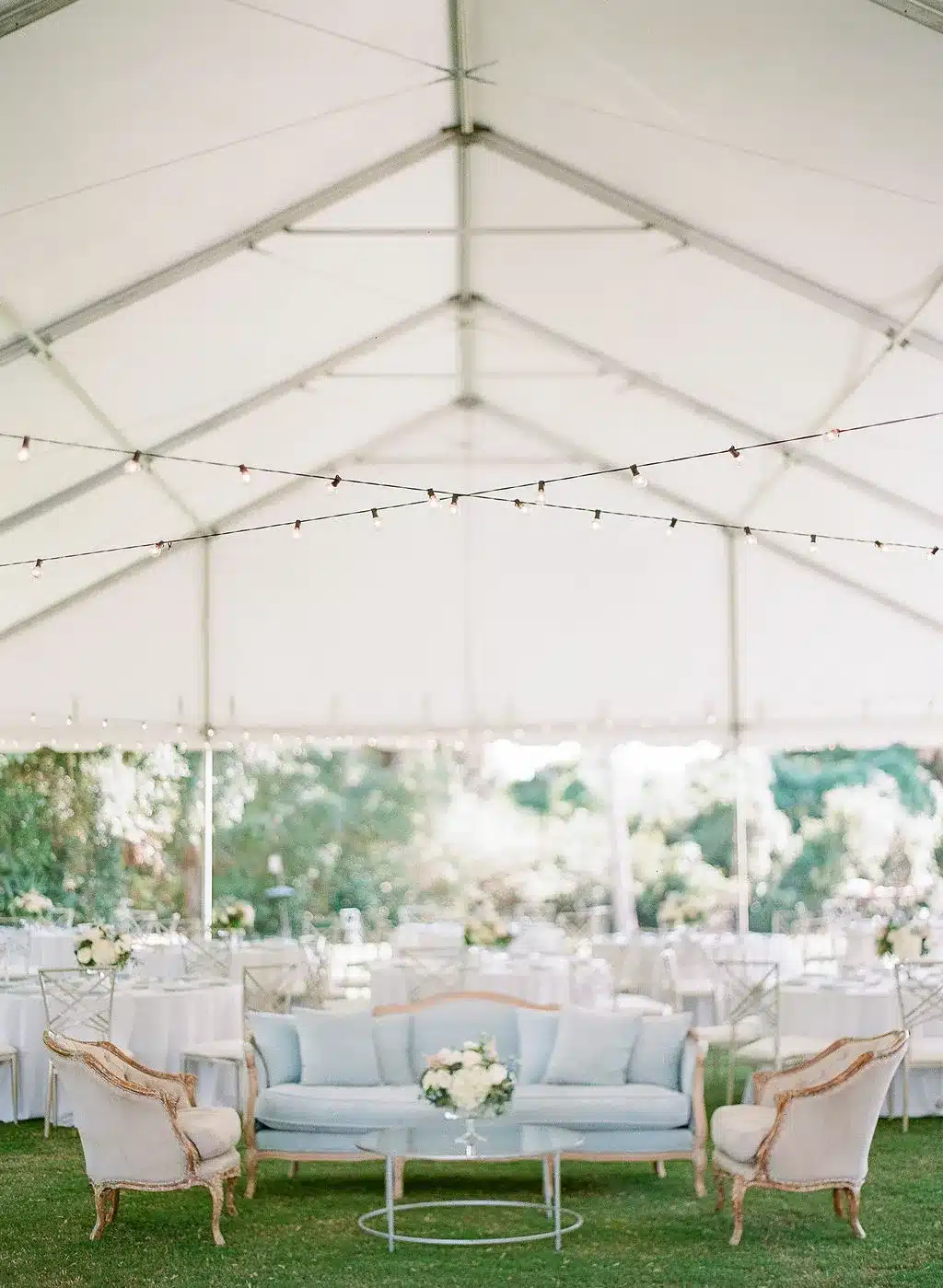
Tent size and layout planning makes lounge clusters comfortable, serviceable, and code-compliant. Start by selecting a tent type that matches desired sightlines, headroom, and your heating approach. The planning principle is spatial optimization: assign square footage per lounge cluster and keep service and egress lanes clear for safety and flow. When you map lounge footprints and heater zones ahead of time, you cut on-site guesswork and raise guest comfort. Below is a compact comparison of common tent types to guide selection by capacity, aesthetics, and heating compatibility.
Understanding these trade-offs helps you pick a structure that supports the lounge concept and heating plan; the next subsection gives practical seating arrangements and example footprints to use as starting points.
What Tent Types Are Ideal for Cozy Lounge Zones?
Clear-span and frame tents are generally the easiest for cozy lounge zones because they offer uninterrupted interiors for flexible furniture groupings and unobstructed rigging points for lighting and HVAC. Pole tents have a classic look but introduce central obstructions that must be integrated into seating plans or used as decorative anchors rather than primary circulation routes. Consider sidewall choices: clear sidewalls offer views but often need insulation or extra heating in winter; solid sidewalls hold heat better but reduce ambient light and visibility. Pick the tent type that aligns with your aesthetic and heating approach to keep retrofits simple and guest comfort high.
How Do You Arrange Seating and Gathering Areas for Maximum Comfort?
Group seating into pockets for 4–8 guests with 36–48 inch circulation aisles to allow service and egress while keeping intimacy. Define footprints with area rugs and low coffee tables, and orient seating toward focal elements like the bar, tree, or stage; staggering furniture heights helps dampen echo and creates acoustic pockets. For mixed-use events (cocktail mingling plus seated clusters), balance open standing zones with several anchored lounge clusters and keep clear paths between service stations and exits. These layout heuristics keep guests moving freely while enjoying secure, inviting pockets to gather.
- Small lounge cluster template: 8–12 guests — one 8-foot sofa, two armchairs, one rug, one lamp, heater at perimeter.
- Medium cluster template: 24–40 guests — three clusters of 6–8, distinct rugs, central walkway, one indirect-fired/heater zone per 1,000–1,500 ft³.
- Large lounge template: 50+ guests — multiple clusters with staggered lighting, raised flooring sections, and distributed heating zones.
Use these templates as starting points and adjust for site constraints and service needs to maintain good circulation and temperature control.
What Themed Decor Styles Work Best for Cozy Christmas Tent Gathering Areas?
Choosing a theme streamlines decisions about palette, materials, and focal decor so every element supports a unified cozy environment. The theme functions as the organizing idea that ties textiles, lighting, furniture, and accents together. Rustic Lodge and Elegant Winter Wonderland use the same layering logic but different materials and scale. Below are two distinct executions plus a note on current trends to help you pick an approach that fits audience and budget.
- Rustic Lodge essentials: warm wood furniture, plaid blankets, lanterns, natural greenery, and textured rugs.
- Elegant Winter Wonderland essentials: white and silver palette, crystal or faux-crystal chandeliers, plush velvets, metallic accents, and clear acrylic furniture for lightness.
- Modern cozy trends: muted palettes with tactile accents (bouclé, shearling), sustainable textiles, multifunctional seating, and integrated smart lighting.
These curated lists make it quick to assemble a cohesive look with rental pieces and layering techniques.
How to Design Rustic Lodge and Elegant Winter Wonderland Tent Themes?
For Rustic Lodge, emphasize natural materials and layered texture: wooden coffee tables, leather or wool seating, plaid throws, and lantern lighting create a hearth-like feel inside the tent. Arrange seating around a focal element, such as a faux fireplace or lantern cluster, and use greenery and pine garlands sparingly to add seasonal cues. For Elegant Winter Wonderland, favor a restrained white and metallic palette, faceted lighting to reflect warm light, and plush velvet upholstery for tactile luxury; offset high-sheen pieces with soft rugs and faux-fur throws to keep the space welcoming. Both themes benefit from considered heater placement and insulated flooring so aesthetics and comfort coexist.
What Are Modern Holiday Tent Styling Trends for Cozy Lounges?
Right now trends favor sustainability, tactile minimalism, and subtle tech integration so tents feel curated, not cluttered. Planners increasingly choose recycled or sustainable textiles and rental-friendly luxe fabrics like faux shearling and bouclé, pair muted palettes with a few tactile accents, and use smart dimming systems to tune mood through the evening. Multifunctional furniture, modular sofas and nesting tables, supports both intimate gatherings and active mingling, reducing mid-event reconfiguration. These approaches deliver timeless looks that stay current through 2025 while working well for rental logistics and turnover.
How Does Curated Events Support Designing and Furnishing Cozy Christmas Tent Lounges?
Curated Events provides full-service rentals and operational support so planners can deliver cozy, heated tent lounges without juggling multiple vendors. As a rental partner focused on high-quality inventory and dependable service, we supply appropriately scaled lounge furniture, flame-retardant textiles, dimmable lighting systems, and heating equipment that align with the design guidance above. We act as a single resource, handling furniture selection, staging, heater coordination, and safe setup/takedown, so you can focus on guest experience while we manage logistics and on-site execution.
Below are example package outlines that show how modular rental bundles simplify procurement and scope for different event sizes.
- Starter Package: small-scale lounge bundle — sofas, armchairs, rugs, string lighting; ideal for intimate corporate holiday gatherings.
- Premium Package: mid-size lounge bundle — sectional sofas, layered textiles, chandeliers, and portable heaters; suited for medium corporate or social events.
- Luxury Package: full-service bundle — curated lounge furniture, premium velvet and faux-fur textiles, dimmable chandeliers, insulated flooring, and coordinated heating; built for large marquee events requiring turnkey delivery.
Each package is a configurable starting point; Curated Events confirms delivery, setup, and takedown scope at booking so clients know what’s included and what add-ons, like extra heaters or bespoke decor—are available.
What Rental Packages Include Furniture, Heating, and Decor for Holiday Tents?
Typical packages bundle core furniture, layered textiles, lighting, and heating so you can match scale and budget without sourcing multiple vendors. A starter package covers essential seating and ambient lighting for smaller lounges. A premium package adds elevated textiles and multiple lighting fixtures to define clusters. A luxury package integrates insulated flooring and coordinated heating for large, enclosed tents. Each tier includes delivery, setup, and takedown, along with an on-site contact to place items according to the layout plan. Common add-ons include extra heaters, custom decor, and upgraded lighting controls. Bundled options streamline procurement and reduce the administrative overhead of coordinating separate suppliers.
How Does Curated Events Ensure Seamless Setup and Customer Satisfaction?
Curated Events builds reliability into every job through pre-event site surveys, clear scope documentation, and dedicated on-site coordination during setup and takedown to minimize surprises. Our process confirms tent footprints, power, and heating needs during planning, coordinates permits or safety checks for heater installations, and assigns a single point of contact to oversee delivery, rigging, and placement to the agreed layout. That process lowers risk, keeps installations code-compliant, and helps deliver the designed lounge environment consistently. For planners who want a turnkey partner, Curated Events handles logistics so the guest experience stays front and center.
- Pre-Event Consultation: site survey and scope confirmation to align layout and heating requirements.
- On-Site Coordination: single point of contact oversees delivery, heater placement, and safety verification.
- Post-Event Follow-Up: takedown scheduling and quality checks to ensure equipment turnover readiness.
These process steps show how a single rental partner reduces complexity while delivering consistent event outcomes.
Frequently Asked Questions
What factors should I consider when choosing a tent for my holiday event?
Start with guest count, event format, and venue layout. Select a structure—clear-span, high-peak, frame, or sailcloth—that best supports your design vision and winter comfort needs. Plan lighting, décor, and heating in harmony with ceiling height and rigging capabilities.
How can I ensure my tent is safe and compliant with local regulations?
Begin with a detailed site assessment. Confirm anchoring conditions, obtain the required permits, and collaborate with an experienced provider familiar with local codes. Safety features, such as egress lighting, emergency exits, and proper anchoring, should be verified throughout the installation process.
What are the benefits of using professional installation services?
Professional crews bring expertise in layout, climate planning, rigging, and safety. Their sequencing and attention to detail minimize risk and create a smoother planning experience while protecting both rental assets and venue surfaces.
How do I choose the right décor theme for my tented event?
Anchor your theme in the tent’s architecture. Select a cohesive palette and three primary design elements—such as ceiling treatments, centerpieces, and lighting—to create a unified aesthetic. Build the rest of the décor around these core choices.
What are effective climate control strategies for winter tents?
Use forced-air systems for primary heat and radiant units for focused warmth. Pair heating with insulated sidewalls, liners, and raised flooring for the most comfortable winter environment.
How can lighting enhance the atmosphere of my tented event?
Layer light intentionally—ambient string lights for warmth, architectural uplighting for dimension, and statement fixtures for drama. Dimming capabilities allow smooth transitions throughout the evening.
What should be included in an event planning checklist?
Key steps include a site assessment, obtaining required permits, confirming the guest count, and coordinating plans for heating, lighting, flooring, and décor. Always prepare a weather contingency plan.
Conclusion
Tent rentals offer an elevated, design-forward way to host holiday celebrations, bringing architectural structure, luxurious ambiance, and winter comfort together in one cohesive environment. With the right tent type, detailed planning, and curated design elements, outdoor spaces transform into immersive winter venues rich with warmth and seasonal elegance.
Curated Events delivers this experience with thoughtful design guidance, deep inventory, and expert regional teams—ensuring every event feels polished, seamless, and unforgettable. Begin your planning journey with a consultation, and we’ll craft a tailored proposal that brings your festive vision to life.