
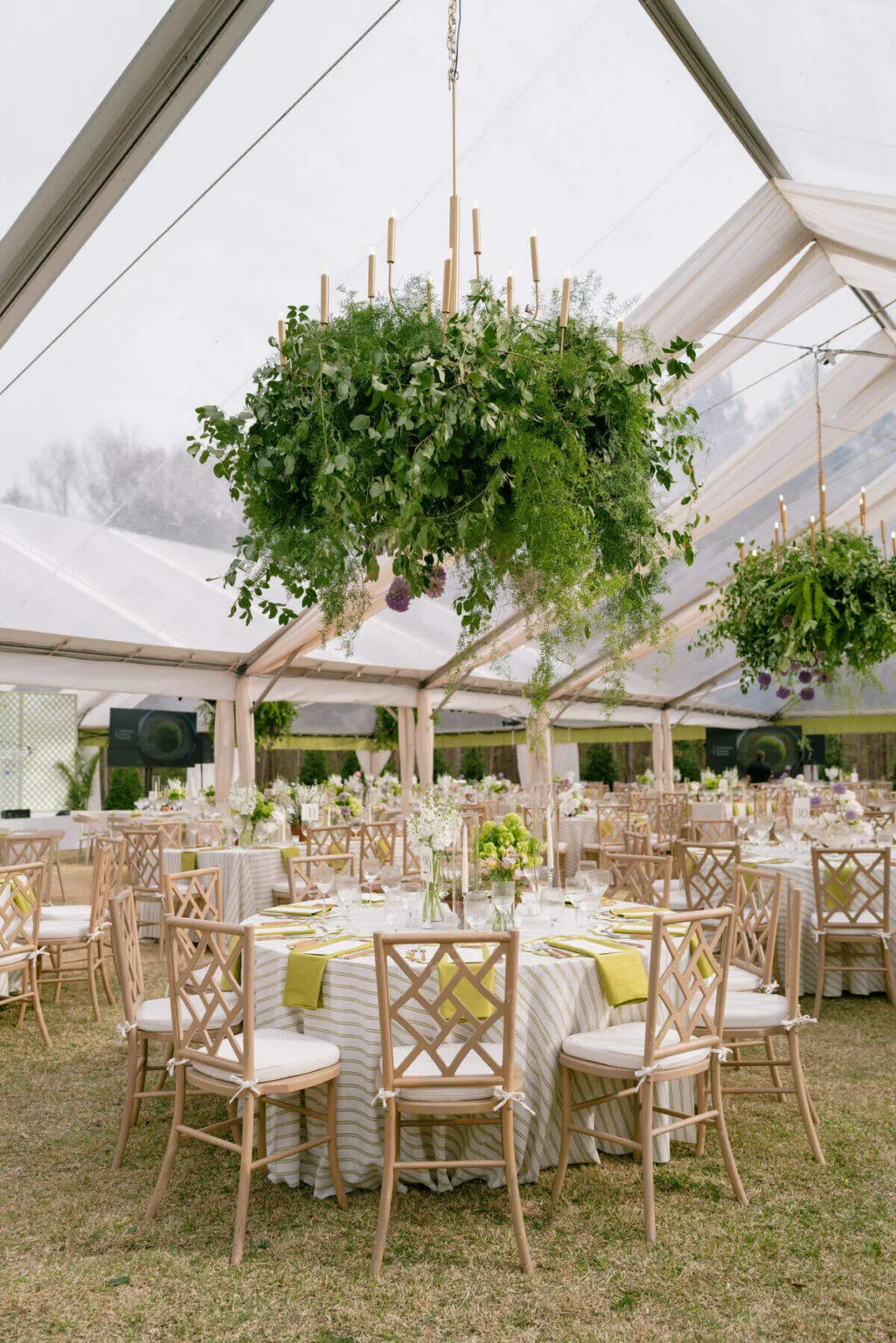
Seating is one of the most repeated design elements at a wedding or social event. A floral installation may create a single focal point and a bar may anchor one area of the room, but chairs appear throughout the ceremony and around every dining table. Their silhouette, material, finish, and proportion therefore have a considerable influence on how the complete setting feels.
For a fall event in Nashville, choosing the right seating is less about finding a chair that looks distinctly seasonal and more about understanding how it relates to the venue, tables, linens, lighting, and overall atmosphere. Natural wood, upholstery, metal, woven details, and transparent materials can all work within an autumn design when they are considered as part of a larger composition. Curated Events Nashville offers seating alongside tables, linens, tabletop pieces, lounge furniture, lighting, and other event rentals, allowing these relationships to be considered together.
What Makes a Chair Right for the Event?
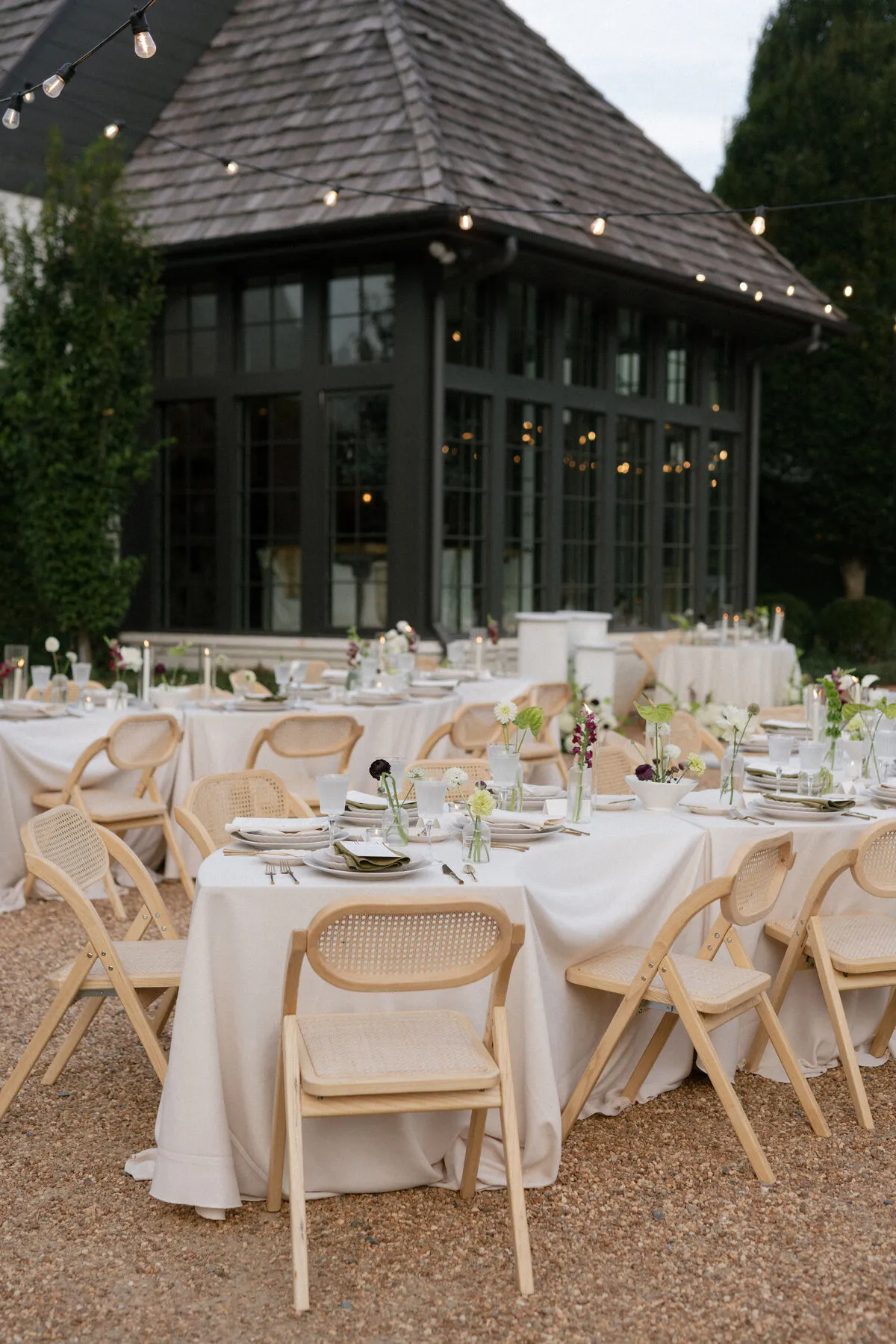
There is no single chair style that automatically makes an event feel more refined. The strongest choice is the one that works with the venue, table configuration, guest experience, and visual direction. A quieter chair may be exactly what a richly layered tablescape needs, while a more distinctive silhouette can bring character to a reception where the surrounding design is intentionally restrained.
Start With the Silhouette
A chair’s silhouette becomes especially important because it repeats across the room. A slender open-back design creates a different rhythm from a fully upholstered chair, while curved forms can soften a structured layout and straighter lines may reinforce a more architectural setting. Even before color and finish are considered, the outline of the chair contributes to whether a room feels airy, formal, relaxed, or visually substantial.
The surrounding design should help determine how expressive that silhouette needs to be. Elaborate florals, patterned linens, or detailed architecture may benefit from seating that provides visual breathing room, while a simpler environment can accommodate a chair with more shape or personality.
Consider Material and Finish
Material affects both the visual weight and the atmosphere of a chair. Wood can introduce warmth without automatically creating a rustic look, while metal can feel polished, understated, or architectural depending on its finish. Acrylic seating allows more of the room to remain visible, and woven elements introduce texture without requiring additional color.
Upholstery brings softness and can add another layer of color or material to the reception. Because that material repeats at every seat, even a subtle upholstery choice can become a significant part of the palette once the room is fully set. Seating should therefore be reviewed alongside the venue and tablescape rather than selected as a standalone detail.
Think About Visual Weight
Two chairs of similar size can affect a room very differently. Transparent or open-backed seating allows more of the flooring, linens, architecture, and tables to remain visible, while a solid or upholstered chair creates greater visual presence. Neither approach is inherently better; the decision depends on how much weight the seating should carry within the overall design.
This becomes especially noticeable in a larger reception where dozens or hundreds of chairs repeat across the floor plan. Looking at the chair as part of a complete room, rather than as a single product, gives a much clearer sense of how it will contribute to the event.
Keep Comfort Part of the Decision
A chair also has a practical role. Ceremony seating may be used for a relatively short period, while reception chairs need to remain comfortable through dinner, speeches, and other parts of the evening. Support, seat width, cushioning, and spacing therefore matter alongside visual appeal.
Comfort extends to the room around the chair as well. An attractive seating choice can still feel impractical if too many pieces are crowded around a table or if guests do not have enough room to move comfortably. Good seating design considers both the furniture and the space it occupies.
How Should the Venue Influence Chair Selection?
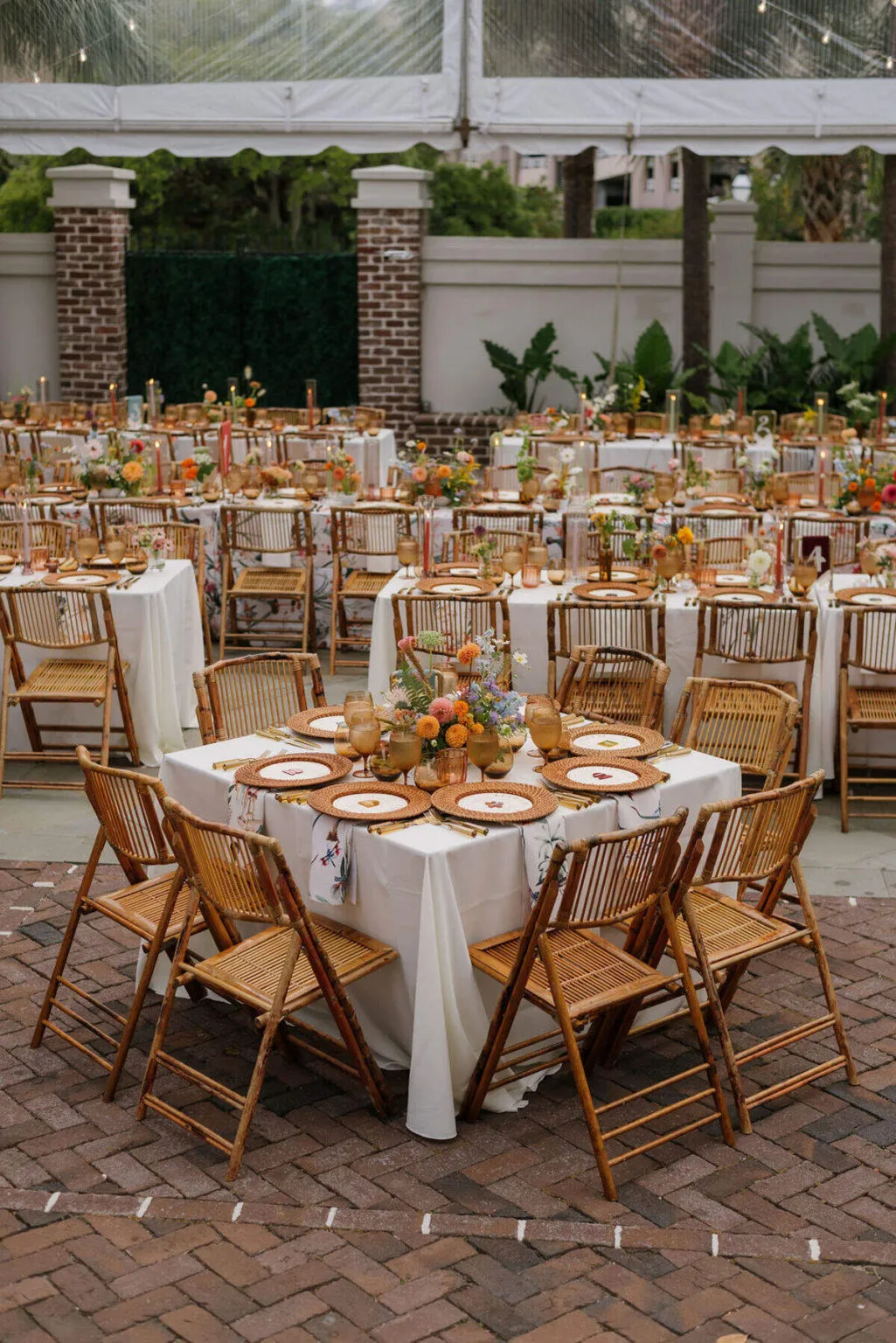
A chair is always viewed against the backdrop of the venue, so architecture and surroundings should be considered early in the selection process. The goal is not necessarily to match the setting. In many cases, a thoughtful contrast between the seating and the architecture creates a more interesting result than trying to reproduce every material already present in the room.
Historic and Traditional Settings
Historic venues often have a strong visual identity through woodwork, flooring, windows, lighting, or decorative architectural details. Seating can acknowledge that character without imitating it literally. A refined wood chair may establish continuity, while a cleaner silhouette can provide contrast and prevent the reception from feeling overly formal.
The tablescape should also influence the decision. When an ornate room is paired with layered linens, florals, and detailed tabletop pieces, relatively restrained seating can give the composition needed balance.
Contemporary Venues
Contemporary venues often give furniture greater visual prominence because the architecture itself is more restrained. Acrylic, metal, streamlined wood, or other clean-lined chairs can reinforce that clarity, while upholstery or natural materials can introduce a deliberate counterpoint to harder surfaces.
Spacing becomes particularly important in these environments because individual furniture shapes are easier to see. The relationship between chair, table, floor, and surrounding décor tends to feel more pronounced, making proportion and visual rhythm central to the design.
Tented Receptions
Within a tent, seating helps define an interior that begins with fewer permanent architectural details. Tables, chairs, lighting, flooring, and linens collectively establish the room’s identity, so the repeated chair silhouette has a noticeable effect on whether the space feels airy, tailored, warm, or more visually substantial.
Tent scale should be considered as well. A delicate chair may feel very different beneath a large structure than it does in an intimate dining room, while a substantial chair can become overly dominant in a smaller setting. The tent, floor plan, and surrounding landscape should all inform the choice.
Outdoor and Estate Settings
Outdoor ceremonies and estate receptions already benefit from visual texture through gardens, lawns, architecture, and open views. Seating does not always need to compete with that environment. A more restrained chair can allow the landscape to remain part of the experience, while a stronger material or finish may help define the event area within a broad outdoor setting.
Surface conditions also matter. Grass, flooring, patios, and other site characteristics can influence which seating works comfortably while maintaining the intended layout and design.
How Can Seating Bring Seasonal Character to a Fall Event?
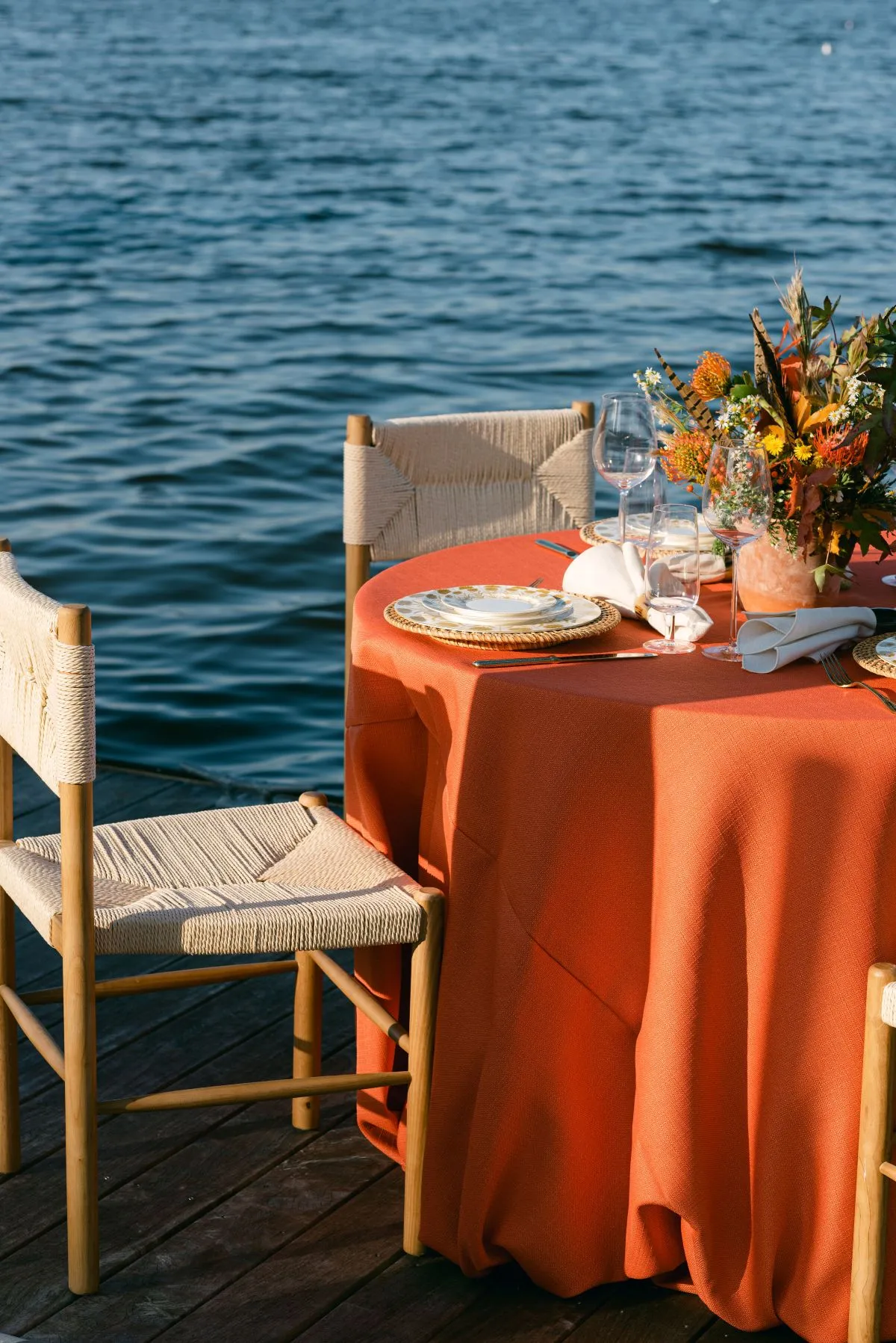
Autumn does not require one particular chair style. Seasonal character can develop through material, tone, texture, and the relationship between the seating and the rest of the event. In many cases, the chair can remain relatively neutral while linens, florals, tabletop pieces, and lighting carry more of the fall atmosphere.
Introduce Warmth Through Material
Wood, woven texture, upholstery, and selected metal finishes can introduce visual warmth without relying on obvious seasonal motifs. These materials become particularly expressive once repeated across an entire reception and viewed alongside textiles, glassware, and evening lighting.
Contrast can make those qualities more noticeable. Natural wood beside a soft linen, for example, creates a different effect from polished metal against a darker table covering. Seasonal depth often comes from these material relationships rather than a literal fall theme.
Use Color Selectively
A fall event can incorporate natural wood, black, ivory, olive, cognac, deeper upholstery tones, muted metallics, or transparent acrylic depending on the venue and overall palette. There is no need for the chairs themselves to introduce traditional autumn colors simply because the event takes place later in the year.
Often, restrained seating allows richer details elsewhere to carry more visual impact. Burgundy linens, amber glassware, deeper florals, or warm lighting may establish the seasonal atmosphere more effectively when every other element is not attempting to repeat the same color story.
Let the Surrounding Design Carry Part of the Season
Chairs do not need to communicate fall on their own. Their strongest role may be to provide structure while textiles, flowers, lighting, and the surrounding landscape establish the seasonal tone. This creates a more layered environment because different categories are contributing different parts of the design rather than repeating the same visual message.
Should Ceremony and Reception Seating Match?
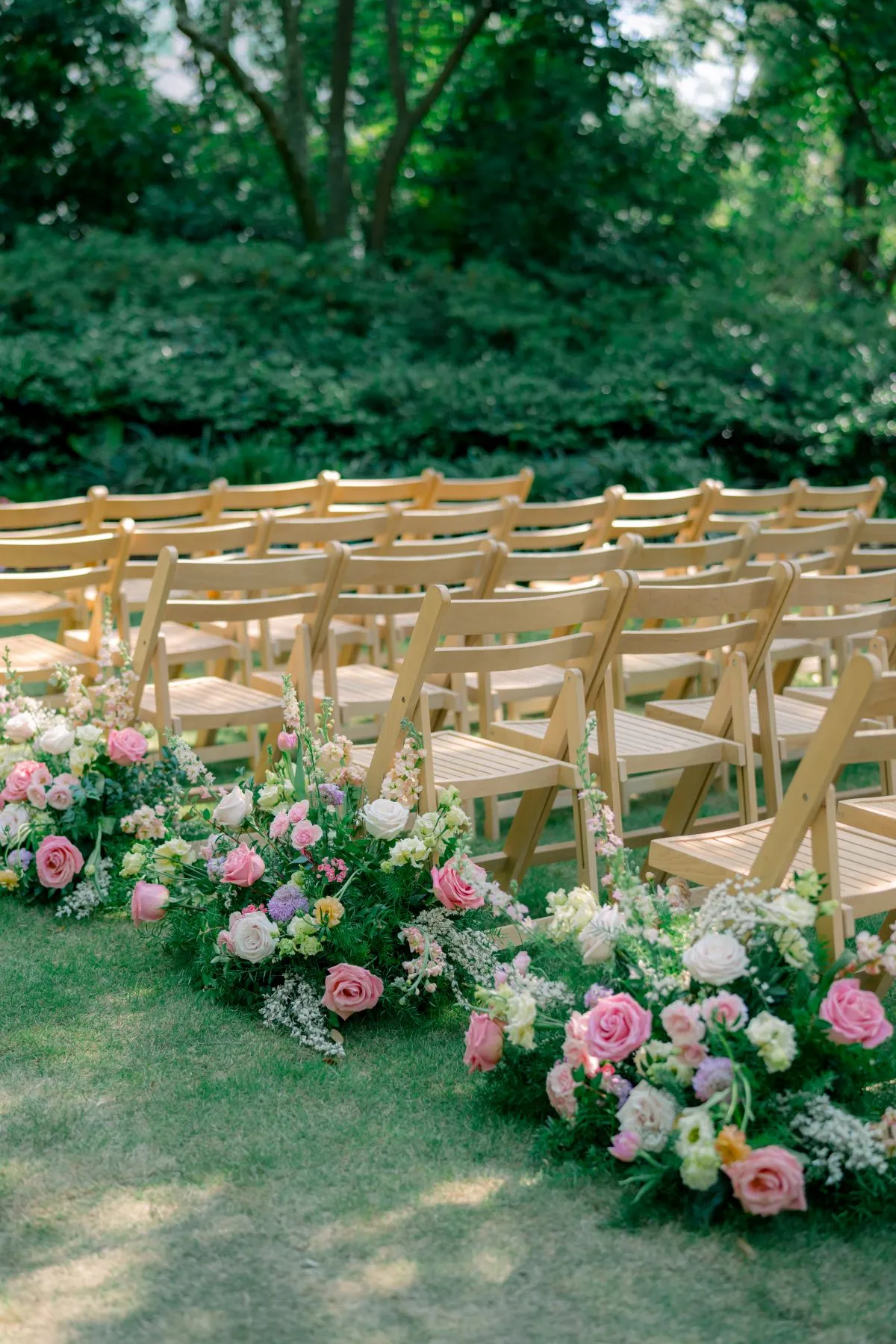
Using one chair throughout a wedding can create visual continuity, but matching ceremony and reception seating is not required. The right approach depends on whether the two environments share similar practical needs and whether continuity or intentional variation better supports the event.
Use the Same Chair When Continuity Matters
Repeating the same chair can connect ceremony and reception visually, particularly when both spaces are located on the same property or visible from one another. It also provides a consistent structural element while other details change between the two settings.
This can be particularly effective when the reception introduces richer linens, tabletop pieces, or lighting. The repeated seating creates a visual thread between the earlier ceremony and the more developed evening environment.
Change Seating When the Environments Differ
A lawn ceremony and an indoor or tented reception may require very different visual and practical considerations. In that case, selecting different seating for each space allows the design to respond more precisely rather than forcing one chair to serve two unrelated environments.
The styles can still relate through similar wood tones, metal finishes, colors, or levels of visual weight. Continuity does not require exact repetition.
Consider the Transition Between Spaces
The relationship becomes more important when guests can see both environments at once. Rows of ceremony chairs may remain visible during cocktail hour, or the reception tent may sit directly beside the ceremony lawn. In these situations, completely unrelated styles can create more visual separation than intended.
A shared material or tonal quality can connect the spaces while still allowing each one to have its own character.
How Should Chairs Work With the Tablescape?
Dining chairs sit directly against the table and linen, making their relationship particularly important. A chair that looks appealing on its own can feel very different once repeated beside a specific textile, table shape, glassware selection, and floral design.
Consider the Chair Against the Linen
The linen is often one of the largest areas of color within the room, while chairs create a repeated border around each table. Evaluating the two together helps determine whether the composition needs contrast or continuity.
A richly patterned or saturated linen may benefit from a quieter chair finish, while a restrained table can support seating with greater visual character. Neither element needs to match the other exactly; the goal is to establish a clear hierarchy.
Look at Chair and Table Proportions Together
Table height, width, and shape influence how a chair feels once the room is fully set. A substantial chair can work beautifully around a generous table but may feel crowded around a narrower configuration. A slimmer silhouette can reduce visual density when many seats need to fit around the same table.
It is also important to consider the room once chairs are occupied. A reception can appear spacious while everything is tucked neatly beneath the tables, then feel much tighter once guests are seated and chairs are pulled back.
Coordinate Without Matching
A wood chair does not require a wood table, and a metallic chair does not need to be repeated through every finish on the tabletop. Intentional contrast often creates a more interesting room than exact matching.
Cohesion can instead come through smaller relationships. The chair finish might connect with a bar, side table, flatware detail, or lighting element elsewhere in the reception. These references keep the environment connected without making it overly coordinated.
How Can Dining Chairs and Lounge Seating Work Together?
Dining chairs and lounge furniture serve different purposes but are often visible within the same environment. Dining seating gives the room order and repetition, while lounge furniture creates more informal areas for conversation and gathering. The two do not need to match, but they should feel like parts of the same event.
Connections can come through shared wood tones, metal finishes, upholstery colors, or forms. A natural wood dining chair might relate to a lounge side table, while the tone of upholstered lounge seating could appear again in napkins or other tabletop details. These smaller relationships create cohesion without forcing every seating area to use the same furniture language.
Different zones should also be allowed to have distinct character. Dining can feel structured and composed, while a lounge feels softer and more relaxed. A bar area may be more active and open. Seating can reinforce those differences while remaining connected through the broader palette and material choices.
What Should Be Finalized Before Chair Selections Are Confirmed?
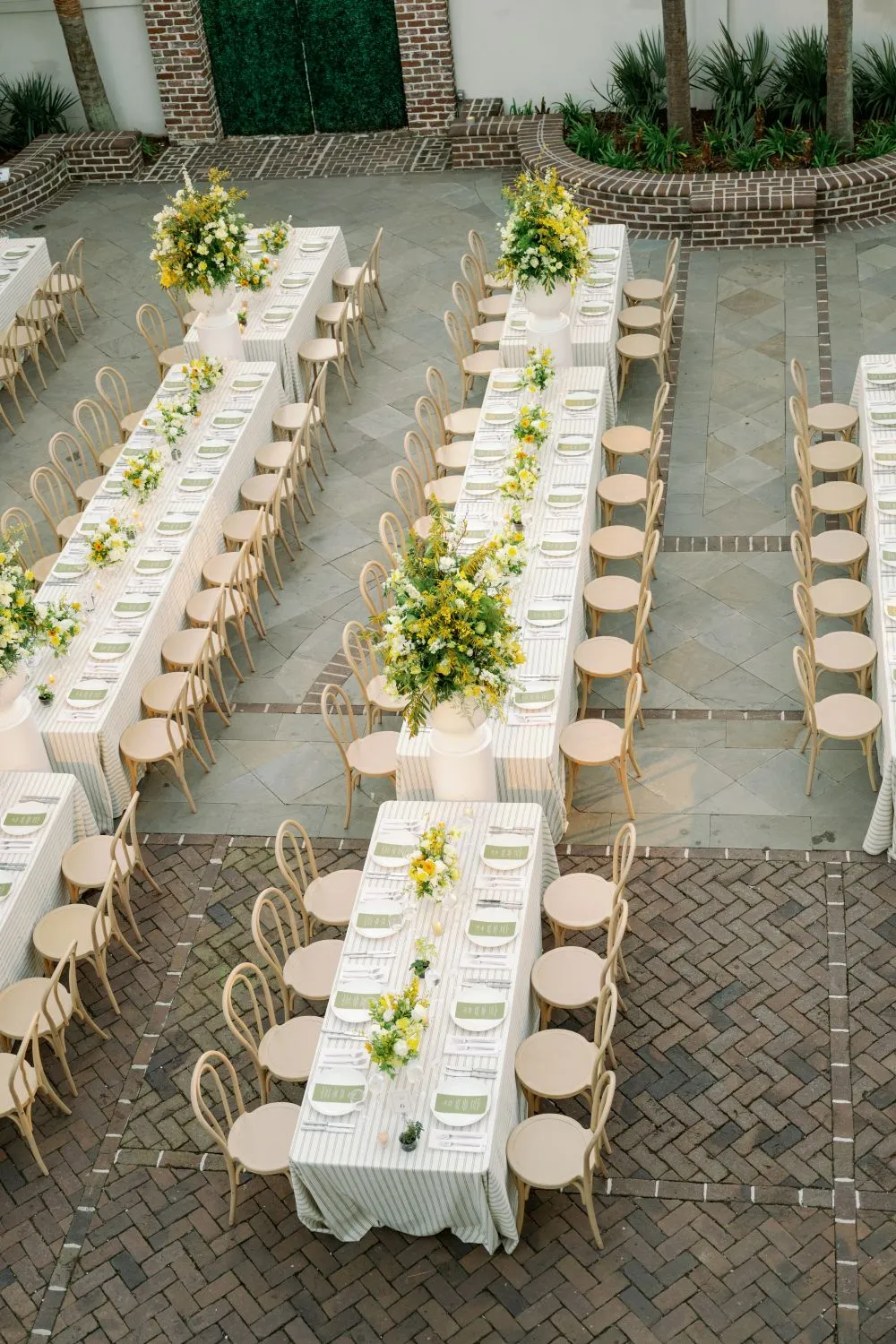
Chair decisions become more reliable once the main structure of the event is established. Guest count, table configuration, venue conditions, and surrounding rentals all affect which seating will work best and how many pieces are genuinely required.
Confirm Guest Count and the Floor Plan
Quantities depend on more than the reception headcount when the event includes separate ceremony, cocktail, lounge, or other seating areas. It helps to establish where dedicated seating is required and whether any pieces will be used across multiple parts of the event.
The table layout should also be reasonably settled. Round tables, banquet tables, mixed configurations, dance-floor placement, bars, lounges, and service paths all affect how comfortably chairs can be arranged.
Review Venue Conditions
Indoor and outdoor settings can introduce different requirements, including flooring, ground surface, access, stairs, elevators, and venue restrictions. These details are especially important when ceremony and reception seating are planned for different locations on the same property.
Understanding those conditions early prevents a chair from being chosen purely for appearance when the site requires additional practical consideration.
Review Chairs With the Surrounding Rentals
Whenever possible, evaluate seating alongside the table, linen, tabletop, and other major design elements. Material, color, and proportion can look considerably different when pieces are viewed as a group instead of individually.
Curated Events Nashville offers chairs alongside tables, linens, tabletop pieces, lounge furniture, lighting, tenting, and other event rentals, allowing the seating to be considered within the complete event environment.
Frequently Asked Questions
What should couples consider when choosing chairs for a Nashville wedding?
Venue architecture, guest count, table configuration, floor plan, material, silhouette, comfort, and the surrounding design should all influence the decision. The strongest chair is the one that supports the event visually and functionally rather than simply being the most decorative option.
Should ceremony and reception chairs match?
They do not have to. Using the same chair can create continuity when both environments share a similar design direction, while different styles may work better when the ceremony and reception have distinct practical or visual needs. Shared materials, finishes, or tones can connect different seating selections.
What chair materials work well for fall events?
Wood, metal, acrylic, woven materials, and upholstery can all work for fall events. Seasonal character is often created through the relationship between seating, textiles, florals, lighting, and other materials rather than through one particular chair type.
How should chairs coordinate with linens and tables?
Chairs should be evaluated alongside the table and linen because the elements appear together throughout the reception. Coordination can come through complementary tones, material relationships, proportion, or intentional contrast rather than exact matching.
Does Curated Events Nashville offer different styles of event chairs?
Yes. Curated Events Nashville offers a broad range of chair styles and materials alongside tables, linens, tabletop pieces, lounge furniture, lighting, tenting, and other complementary rentals, allowing seating to be considered in relation to the broader event design.
Conclusion
Seating influences a Nashville fall event at both a practical and visual level. Because chairs repeat throughout the ceremony and reception, their silhouette, material, finish, and proportion become part of the architecture of the space, shaping how the room feels before guests even take their seats.
The strongest choice does not depend on finding a chair that looks inherently autumnal or more luxurious than every alternative. It comes from understanding the venue, floor plan, tables, linens, lighting, and guest experience, then selecting seating with the right amount of visual presence. When chairs are considered as part of the complete event environment, they help create a celebration that feels intentionally composed rather than simply furnished.