Choosing the right tent size for a Raleigh summer event starts with the guest count, but it should not end there. The right tent must also fit the event format, seating plan, weather needs, vendor setup, catering flow, dance floor, lighting, and guest circulation. For most outdoor events, the safest approach is to calculate the space needed for people first, then add space for tables, bars, stages, service areas, walkways, and weather protection.
This guide explains how to estimate tent size for summer events in Raleigh, how different tent types affect layout, and what rentals should be planned alongside the tent. It is written for event hosts, planners, venues, and teams comparing tent rental options for weddings, corporate events, private parties, festivals, and branded outdoor experiences. For more detail, see our article The Ultimate Guide to Luxury Tent Rentals for Memorable Outdoor Celebrations.
Key Factors That Determine the Right Tent Size
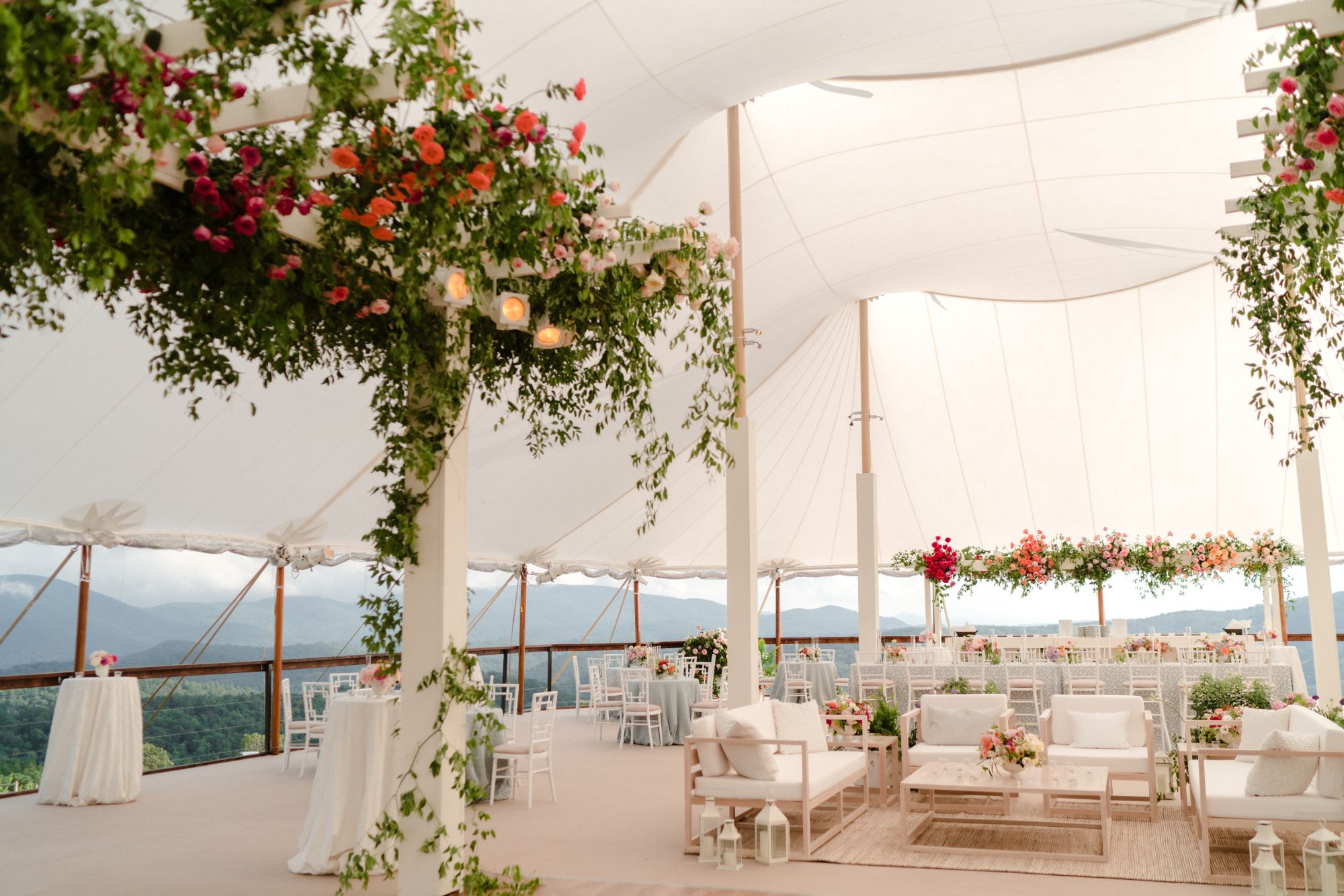
The right tent size depends on the relationship between guest count, layout, rentals, site conditions, and weather planning. Before choosing dimensions, define what will happen inside the tent and what equipment must fit under cover. This prevents underestimating the footprint and helps the rental team recommend a tent that works for the full event, not just the number of attendees.
Guest Count and RSVP Buffer
Start with the expected guest count, then add a reasonable buffer. For weddings and private events, RSVP totals may shift as the date gets closer. For corporate, festival, or community events, attendance can be less predictable.
A buffer also helps account for vendors, speakers, performers, photographers, or staff who may need to move through the tent during the event. Even when these people are not seated guests, they still affect circulation and service flow.
Event Type and Format
Different event types use space differently. A seated wedding reception requires space for dining tables, chairs, service aisles, a dance floor, entertainment, and possibly a head table. A corporate event may need presentation space, registration, branded displays, lounge seating, or product stations. A festival or community event may require booths, wide aisles, and separate service zones.
Common formats include:
- Seated dinners
- Cocktail receptions
- Wedding ceremonies
- Corporate meetings or receptions
- Fundraisers and galas
- Festivals and concerts
- Exhibits and branded events
- Private parties and backyard celebrations
The more activities that happen under the tent, the more important the layout becomes.
Seating Style and Table Layout
Seating style has a direct impact on tent size. Round tables usually require more room for chair clearance and service aisles than simple row seating. Banquet tables can be efficient but may need wider aisles depending on service style. Cocktail tables use less dining space but require more open circulation.
A formal seated meal generally requires more square footage per person than a standing reception. If the event includes plated service, staff need clear routes between tables. If it includes buffet service, guests need space to line up without blocking entrances, exits, or dining areas.
Event Features That Add Square Footage
Many tent sizing mistakes happen because planners calculate only the guest seating area. A complete event layout may also need space for:
- Dance floor
- Stage
- Band or DJ
- Bar or beverage station
- Buffet tables
- Catering service area
- Lounge furniture
- Registration or check-in table
- Cake, gift, or display table
- Photo booth
- AV equipment
- Lighting equipment
- Décor installations
- Storage or vendor staging
Each feature should be added to the layout before the tent size is finalized.
Venue Footprint and Site Conditions
The event site determines what tent sizes and tent types are practical. A wide lawn may allow a large pole tent or sailcloth tent, while a patio, driveway, courtyard, or paved surface may require a frame tent or weighted installation. Trees, slopes, underground utilities, buildings, walkways, irrigation systems, and overhead lines can all affect placement.
A site visit is often the most reliable way to confirm dimensions, access points, anchoring needs, and delivery logistics.
How to Estimate Tent Size by Guest Count
Estimating tent size requires more than matching a number of guests to a standard chart. Capacity charts are useful, but they work best when paired with the actual event layout. The goal is to determine how much covered space is needed for guests, rentals, service areas, and movement.
Start With the Event Layout
First, decide what the tent must hold. A basic ceremony setup may only need rows of chairs and an aisle. A seated dinner needs tables, chairs, service aisles, and possibly buffet or bar space. A wedding reception may need all of that plus a dance floor, head table, band or DJ, cake table, lounge area, and décor.
Once the event format is clear, estimate space by section:
- Guest seating
- Dining or cocktail space
- Dance floor
- Stage or entertainment
- Food and beverage stations
- Service aisles
- Entrances and exits
- Vendor access areas
This method gives a more accurate footprint than relying on guest count alone.
Use Tent Capacity Charts Carefully
Tent capacity charts can help narrow the options, but they should be read according to the event format. A tent that can fit a certain number of guests for a standing reception may not fit the same number for a seated dinner with round tables and a dance floor.
When a chart gives a maximum capacity, treat it as a starting point rather than a final recommendation. If the event includes formal dining, entertainment, staging, lounge areas, or a premium guest experience, choose a larger tent or reduce the number of items placed inside.
Example Tent Size Planning for 100 Guests
For 100 guests, the right tent size depends heavily on the setup. A cocktail-style reception may require less space than a seated dinner. A seated dinner with round tables, a dance floor, bar, and DJ will need more room than dining alone.
As a working estimate:
- A standing cocktail event for 100 guests may fit in a smaller footprint if furniture is minimal.
- A seated dinner for 100 guests generally needs more space for tables, chairs, and service aisles.
- A seated reception with dancing, bar service, and entertainment often requires a larger tent than the dining count alone suggests.
- A ceremony and reception under the same tent may require either a larger tent or a layout change between event segments.
For many seated events around 100 guests, planners often evaluate tent sizes in the range of approximately 30×60 feet or larger, depending on the full rental plan. The final size should be confirmed with a rental specialist after reviewing the site and layout.
Add Space for Circulation and Vendor Operations
A tent should include space for people to move naturally. Guests need to enter, exit, visit the bar, access restrooms, move to the dance floor, and return to their seats without cutting through service areas.
Vendors also need functional space. Caterers need service access, entertainment teams need equipment zones, and rental crews need staging areas during setup and breakdown. Adding circulation space early prevents the tent from feeling overcrowded once the event is fully installed.
Common Tent Sizes and When to Use Them
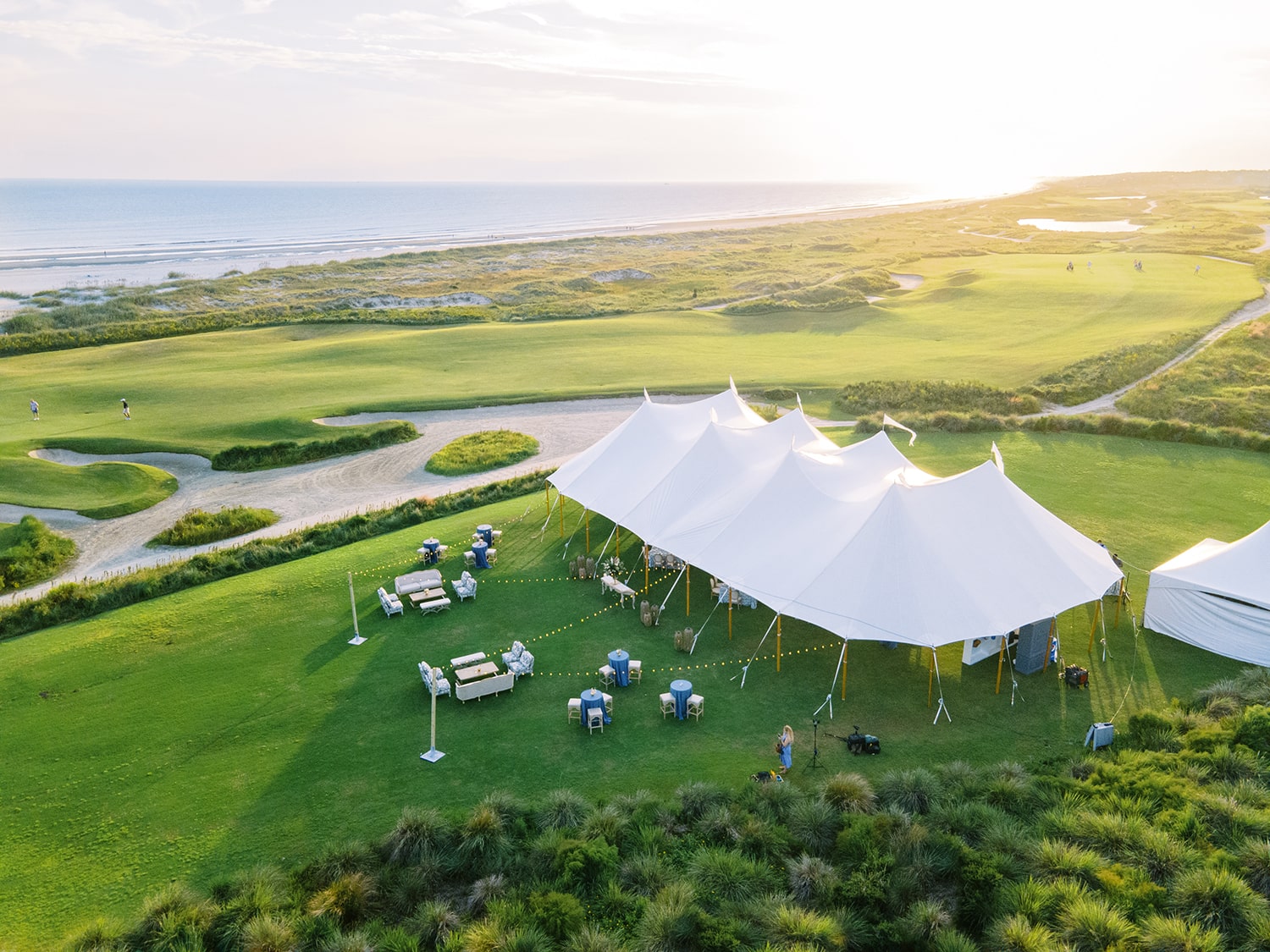
Standard tent sizes can help with early planning, but the best size depends on the event’s layout, rental inventory, and site. The same tent can serve very different purposes depending on whether it is used for dining, cocktail service, ceremony seating, vendor booths, or support space.
Small Tents for Intimate Gatherings and Support Areas
Small tents are useful for compact events or secondary functions. A small canopy may work for a check-in table, beverage station, vendor booth, welcome area, or small shaded lounge.
For larger events, small tents are often used as support structures rather than the main guest tent. They may cover catering prep, valet check-in, gift tables, bars, or satellite service areas.
Mid-Sized Tents for Private Parties and Small Receptions
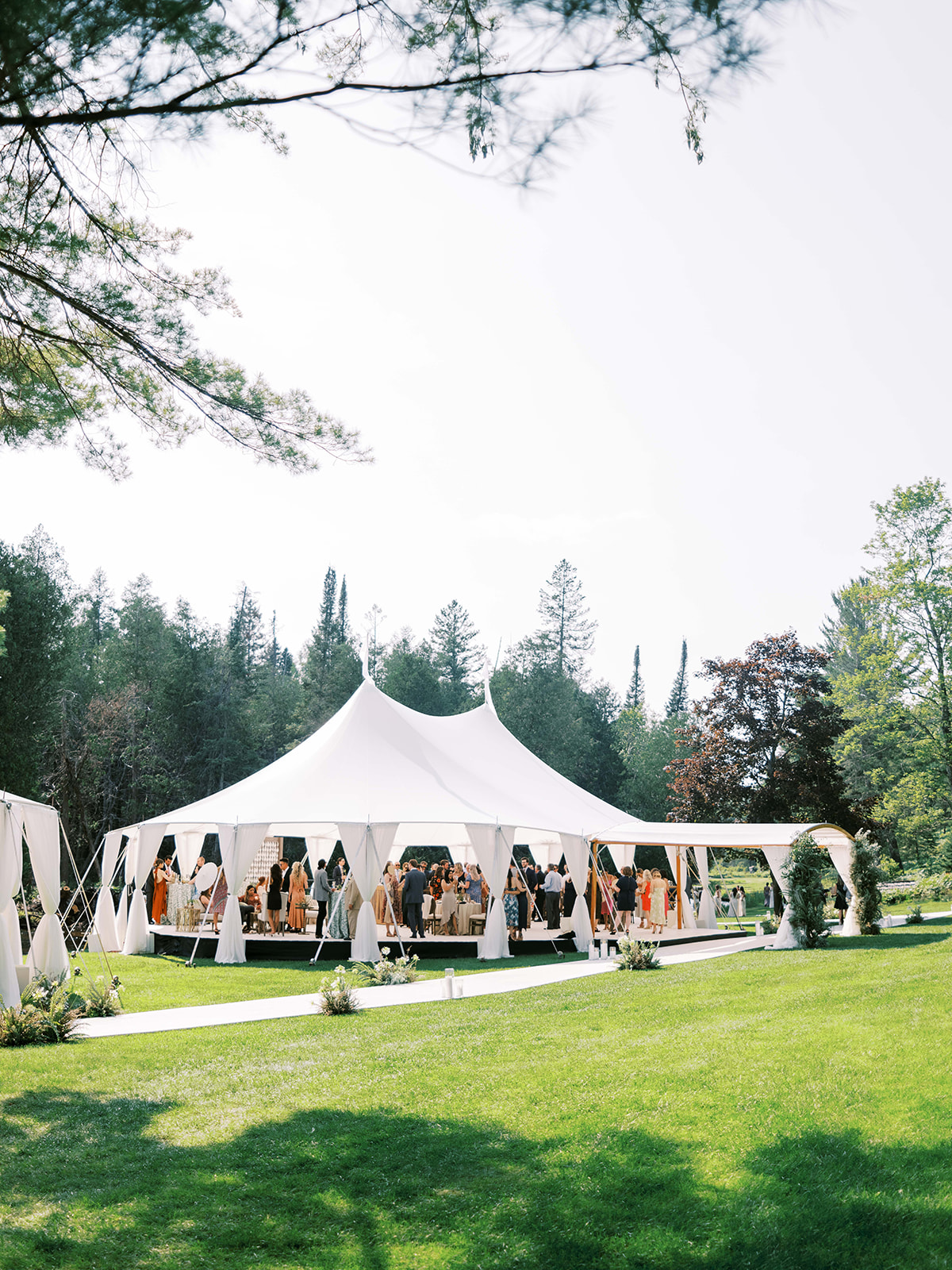
Mid-sized tents are commonly used for birthdays, showers, rehearsal dinners, backyard parties, and smaller corporate gatherings. They can often support a mix of dining, cocktail tables, and limited food service, depending on the guest count.
These tents work best when the layout is simple. If the event includes a dance floor, bar, buffet, or lounge furniture, the planner should confirm whether the added elements reduce seating capacity.
Large Tents for Weddings, Galas, and Corporate Events
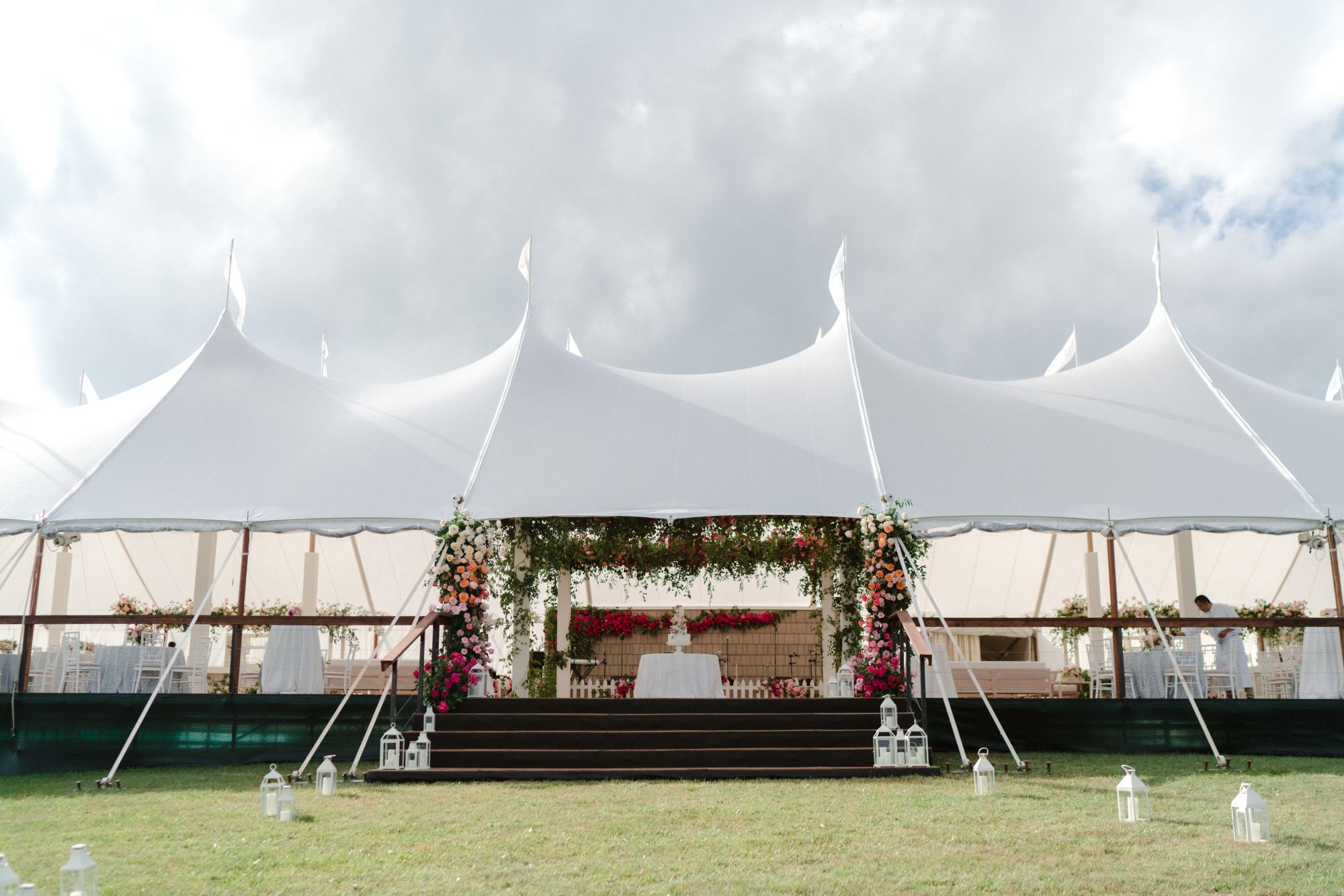
Large tents are used for events that require multiple zones under one covered structure. Weddings, galas, fundraisers, corporate receptions, and large private celebrations often need space for dining, dancing, entertainment, bars, lighting, and décor.
For these events, tent size should be based on a floor plan rather than a capacity estimate alone. A larger tent can improve guest comfort, create better traffic flow, and allow the design elements to feel intentional rather than crowded.
Modular and Expanded Tent Layouts
Some events work better with connected tents or multiple tented areas instead of one structure. A modular layout can separate guest seating from catering, create a covered walkway, divide ceremony and reception areas, or support different event zones.
This approach can be useful when the site has an irregular footprint or when the event includes multiple functions. It also gives planners flexibility when attendance, weather, or production needs change.
How Raleigh’s Summer Weather Should Influence Tent Planning
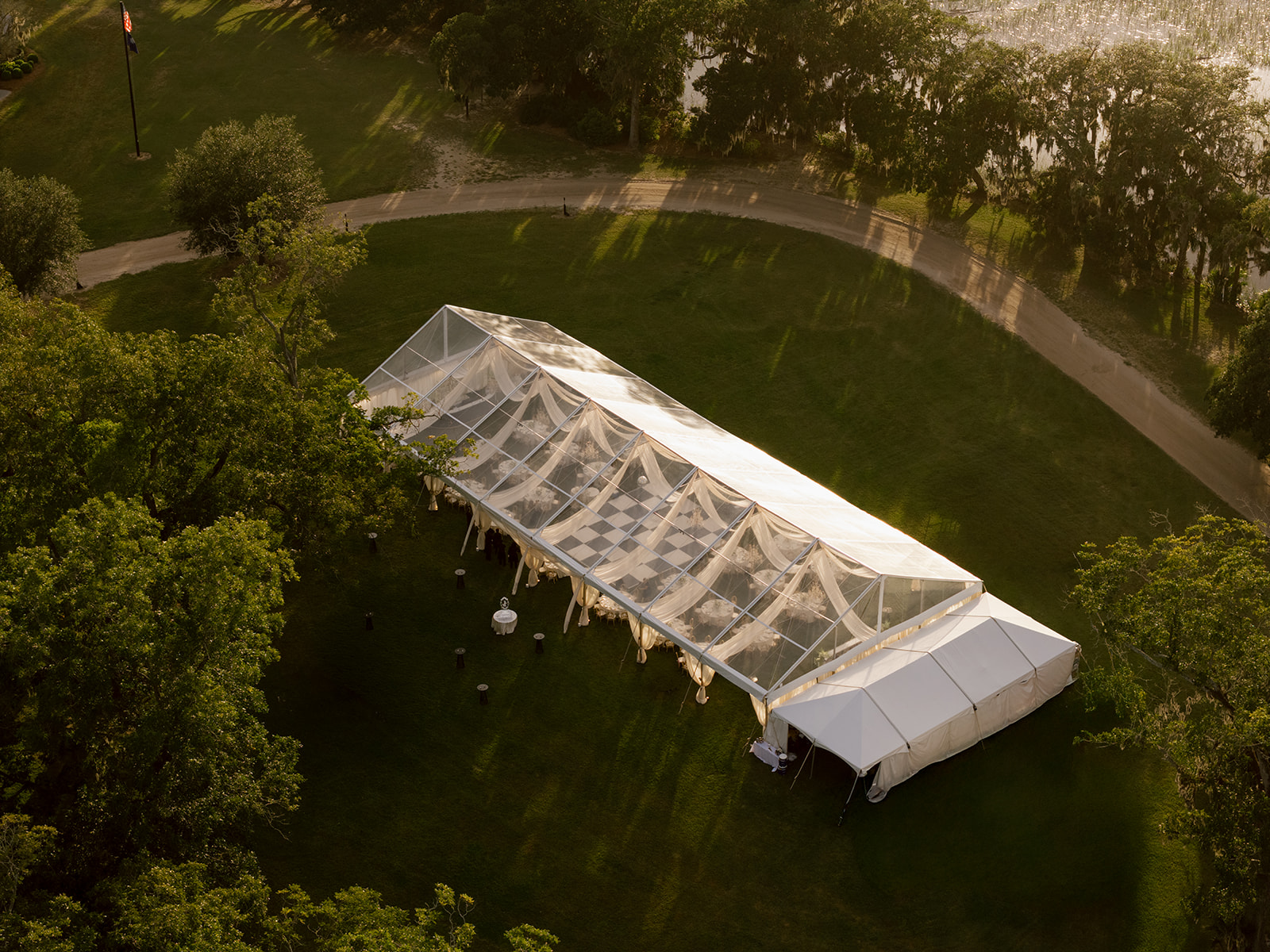
Summer weather in Raleigh can affect the tent size, tent style, layout, and accessory plan. Heat, humidity, rain, and wind should be considered before the tent is reserved. Weather planning is not just about guest comfort; it also protects vendors, equipment, décor, food service, and the event timeline. For more detail, see our article Find Your Perfect Weatherproof Tent Rentals for 2026 Events.
Heat and Humidity
Shade is essential for summer events, but shade alone may not be enough. Depending on the event time and guest profile, planners may need fans, ventilation, cooling units, hydration stations, or shaded arrival areas.
Heat and humidity are especially important for events with older guests, young children, formal attire, or long outdoor timelines. A tent with better airflow and enough space between tables can help guests stay more comfortable.
Rain and Storm Preparation
Rain planning should be built into the tent layout. Sidewalls can help protect against wind-driven rain, while flooring can reduce issues from wet or uneven ground. Covered walkways may be useful when guests need to move between buildings, restrooms, parking areas, or other tented zones.
Food, AV equipment, lighting, and electrical connections should also be protected from moisture. The tent plan should keep sensitive equipment away from exposed edges and drainage areas.
Wind and Anchoring
Anchoring must match the site conditions and tent type. Grass, asphalt, concrete, gravel, and pavers may require different anchoring methods. Some tents can be staked, some can be weighted, and some require specific site conditions.
Wind exposure should also influence placement. Open fields, hilltops, waterfront areas, and exposed lawns may require additional review. A professional rental team can determine what anchoring approach is appropriate for the tent and site.
Severe Weather Contingency Plan
Every outdoor event should have a documented weather plan. This plan should identify who makes weather-related decisions, when decisions are made, how guests are notified, where guests go if conditions become unsafe, and how vendors secure equipment.
A clear plan helps avoid confusion during fast-changing weather. It also ensures that staff, vendors, and the event host understand their responsibilities before the event begins.
Complementary Rentals That Affect Tent Size
Tent size should be planned with all other rentals in mind. Tables, chairs, linens, bars, lighting, flooring, staging, lounge furniture, and climate-control equipment all take up space and influence the final footprint. Choosing the tent first without accounting for these elements can lead to a layout that is technically possible but operationally difficult.
Tables, Chairs, and Linens
Tables and chairs are often the largest space drivers in a tented event. Round tables create a social dining experience but require chair clearance and aisles. Banquet tables can create efficient rows but may need additional room for servers, guests, and table décor.
Linens also affect the finished layout. Floor-length linens, table skirts, and draped buffet tables need clearance from tent edges and high-traffic zones. The furniture and linen plan should be reviewed together so the event feels polished and functional.
Flooring and Dance Floors
Flooring can improve comfort, stability, and appearance, especially on grass, uneven ground, or damp surfaces. It can also help protect formal footwear and reduce tripping hazards.
Dance floors require their own planning. They should be sized for the guest count and placed near the band or DJ without blocking dinner service or guest circulation. A dance floor that is too small can feel crowded, while one that is too large can make the reception feel under-attended.
Lighting and Electrical Needs
Lighting affects safety, atmosphere, and event design. General lighting keeps the tent functional, while decorative lighting can highlight the dance floor, bar, stage, head table, or lounge areas.
Electrical needs should be reviewed early. Lighting, sound, catering equipment, fans, cooling units, and AV systems may all require power. Cable routes should be planned so they do not create trip hazards or interfere with guest movement.
Bars, Buffet Stations, and Catering Areas
Food and beverage stations require more space than many planners expect. A bar can create a natural gathering point, so it should be placed where guests can queue without blocking entrances or dining areas. Buffet tables need room for lines, serving staff, and guest movement.
Catering also requires back-of-house access. If food service happens from a separate catering tent or service area, the layout should include clear routes between the kitchen, dining tables, and waste or dish collection areas.
Lounge, Décor, and Event Design Elements
Lounge furniture, floral installations, draping, signage, and branded displays add personality to a tented event, but they also affect usable space. These items should be included in the floor plan from the beginning.
A lounge area can improve the guest experience, especially during cocktail hour or after dinner, but it should not compete with essential circulation paths. Decorative installations should be placed where they enhance the event without restricting exits, aisles, or service access.
How Curated Events Raleigh Can Help With Tent Sizing and Rentals
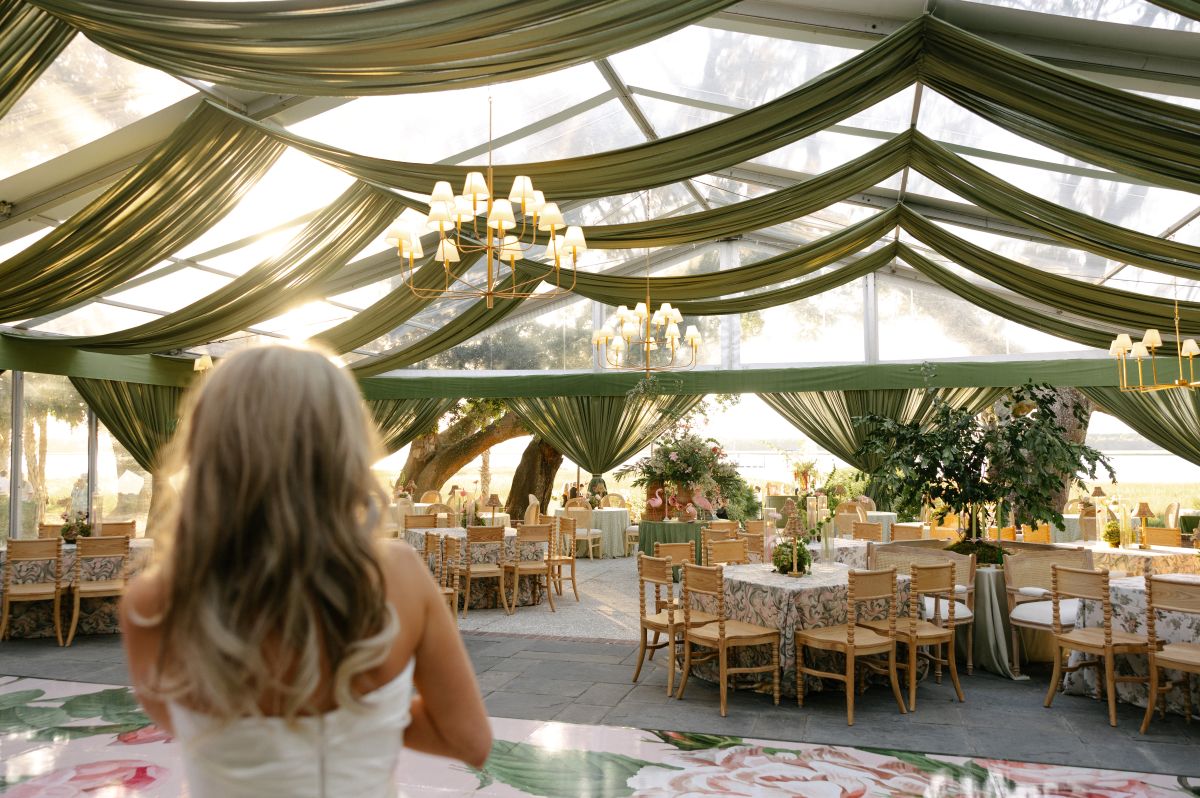
Curated Events Raleigh supports tented events by helping clients match tent size, tent type, and event rentals to the needs of the site and occasion. Because tent planning is connected to furniture, tabletop, linens, lighting, staging, bars, flooring, and other rentals, working with one coordinated rental resource can make the planning process more efficient.
Tent Options for Different Event Styles
Curated Events Raleigh offers tenting solutions for a wide range of events, including weddings, branded marketing events, festivals, concerts, sporting events, exhibits, conventions, and temporary auxiliary spaces.
Tent options may include frame tents, pole tents, sailcloth tents, structure tents, and other tenting solutions depending on the event needs and site conditions. The right recommendation depends on guest count, service style, entertainment, surface type, and the desired visual result.
Full-Service Event Rental Support
Tent size should be coordinated with the complete rental plan. Curated Events Raleigh offers event rental categories that can support the full setting, including tables, seating, linens, tabletop, bars, shelving, lounge furniture, lighting, dance floors, staging, catering equipment, heating and cooling, and tenting accessories.
This matters because the tent must be large enough for the actual installed event, not just the guest list. A coordinated rental plan helps ensure the furniture, décor, and functional equipment all work within the selected footprint.
Site Visits and Production Guidance
A site visit can confirm whether the preferred tent size and style will work on the property. It can also identify access issues, anchoring needs, obstructions, grade changes, power considerations, and weather concerns.
Professional production guidance reduces the risk of selecting a tent that is too small, difficult to install, or poorly matched to the event layout.
Coordinated Design and Functionality
The best tented events balance design and logistics. A beautiful tent still needs safe anchoring, clear exits, proper lighting, functional guest flow, and room for vendors to work.
Curated rental planning can help align the event’s visual goals with the practical requirements of the site, schedule, and guest experience. Get in touch with our Raleigh showroom to start your rental order.
Frequently Asked Questions
What size tent do I need for 100 guests?
The right tent size for 100 guests depends on the event format. A cocktail reception may need less space than a seated dinner, while a seated wedding reception with a dance floor, bar, DJ, and buffet will need more space. For many seated events around 100 guests, planners often evaluate tents around 30×60 feet or larger, but the final recommendation should be based on the full layout and site conditions. For more detail, see our article How To Select The Correct Size Tent For Your Wedding.
Is a frame tent or pole tent better for a Raleigh summer event?
A frame tent is often better when the event needs open interior space, flexible placement, or installation on a surface where center poles would interfere with the layout. A pole tent is often chosen for its classic peaked look and works well on suitable lawns where staking is possible. The better choice depends on the site, surface, anchoring options, guest count, and desired aesthetic.
Do I need sidewalls for a summer tented event?
Sidewalls can help protect guests from wind-driven rain, provide privacy, and support climate-control efforts. However, they can also reduce airflow, which matters during hot and humid Raleigh summer events. Many planners use sidewalls as a weather contingency rather than keeping them closed throughout the event.
Should I add flooring under my tent?
Flooring is useful when the ground is uneven, soft, wet, or formal guest comfort is a priority. It can improve stability for tables and chairs, protect guests’ shoes, and create a more finished event environment. Flooring is especially helpful for weddings, galas, and events with a dance floor.
How early should I book my tent rental?
For many summer events, begin the tent rental process at least 8 to 12 weeks in advance. Larger events, weddings, festivals, corporate functions, and custom tent installations may need several months of planning. Early booking helps secure the preferred tent style, size, accessories, and installation schedule. You may also find What Size Tent Do I Need for My Chesapeake Summer Event helpful.
Can Curated Events help with more than the tent?
Yes. Curated Events Raleigh can support tent planning alongside related rentals such as tables, chairs, linens, tabletop, bars, lounge furniture, lighting, flooring, staging, catering equipment, heating and cooling, and tenting accessories. Coordinating these rentals together helps create a more functional and cohesive event layout. See the full collection of Raleigh tent rentals at Curated Events.
Conclusion
Choosing the correct tent size is vital for ensuring guest comfort and maximizing the event experience during Raleigh’s summer season. A well-planned layout not only considers guest numbers, but also integrates essential elements like food stations and entertainment areas, enhancing the overall event flow. With the right guidance and support, your tent can transform your event into a memorable gathering that meets all functional and aesthetic needs. Reach out today to explore our comprehensive rental options and ensure your event is perfectly tailored to your vision.