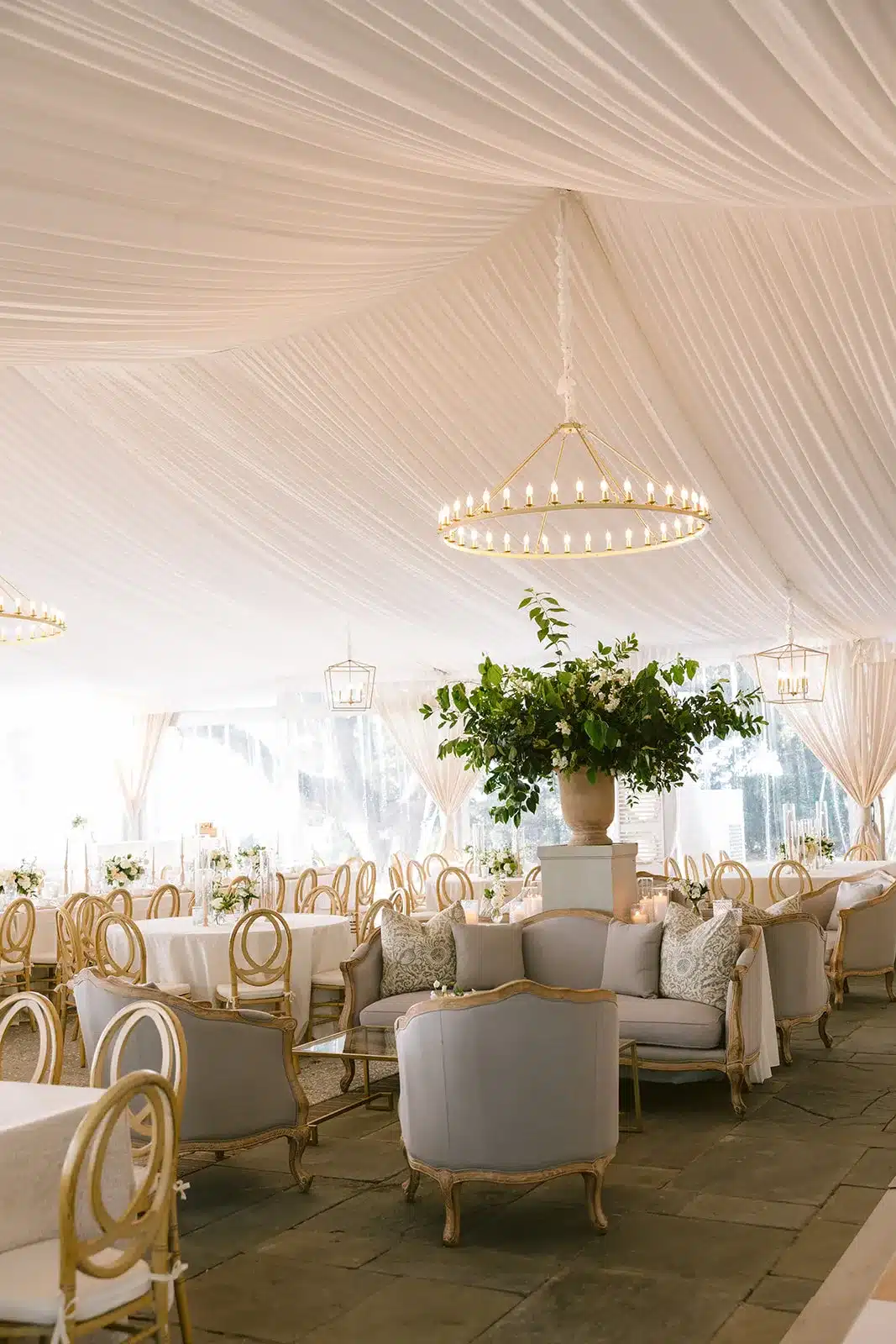
Low ceilings often make event spaces feel restricted, reduce elegance, and complicate technical elements such as lighting and sound. With thoughtful use of drapery and ceiling lighting, however, you can create the illusion of height, elevate the atmosphere, and improve both guest experience and photography.
This guide explores how drapery and ceiling lighting can transform low venues—individually and in combination. You’ll find practical techniques, comparisons of fabrics and fixtures, rental-friendly installation tips, and budget-conscious solutions. Topics include vertical draping methods, ceiling canopy designs, uplighting and low-profile fixtures, and strategies for harmonizing fabric colors with lighting temperatures to maximize perceived height.
We’ll walk you through the process step by step—from measurements and rigging considerations to design examples and cost-effective rental packages—so you can make informed choices for weddings, corporate events, and private gatherings. Throughout, the focus remains on event-specific, rental-ready solutions that emphasize safe installation, seamless service, and temporary setups, with Curated Events’ drapery and lighting rentals available as a trusted resource for both inventory and professional support.
Key Takeaways
- Low ceilings can make event spaces feel small, cluttered, and less elegant.
- Drapery creates vertical lines that give the illusion of more height.
- Ceiling draping adds grandeur and defines focal zones like dance floors and dining areas.
- Lighting techniques such as uplighting and low-profile fixtures help draw the eye upward.
- Combining drapery with lighting enhances both atmosphere and photography.
- Rental-friendly solutions make it possible to achieve safe, cost-effective transformations without permanent changes.
Why Low Ceilings Affect Event Ambiance and Perception

Low ceilings restrict vertical sightlines and minimize the visual distance between guests and the overhead plane, leading to a perception of a smaller, less formal space. The effect is simple: when your gaze is drawn to a close ceiling, your brain registers less vertical distance, and your attention shifts horizontally. This flattens the sense of depth and can make decor appear cluttered. Addressing this visual compression results in a more spacious feel, better photography, and clearer focal points, such as stages or head tables. Understanding these principles sets the stage for targeted drapery and lighting solutions that redirect attention upward and redefine the visual space.
Challenges Low Ceilings Pose for Event Design
Low ceilings present several practical and aesthetic hurdles that event designers must navigate. Common logistical issues include obstructed sightlines, limited clearance for chandeliers or pendants, and tighter constraints for rigging and HVAC access. Acoustic reflections can also make spaces feel louder and more crowded. Lighting choices are particularly constrained; large fixtures can overwhelm the space, creating glare or physical obstructions, while insufficient vertical lighting can emphasize the low ceiling. Overcoming these challenges requires meticulous measurement, creative fixture selection, and close coordination with venue operations to ensure safe installation and a cohesive visual outcome.
How Enhanced Visual Height Improves Guest Experience in Low Venues
Increasing perceived height boosts guest comfort, elevates photography, and enhances the perceived value of an event by creating an airy, elegant atmosphere, even in compact rooms. When vertical emphasis is applied, backdrops and focal points appear more dramatic and photogenic, while guests experience less psychological crowding and improved flow. Visual height also clarifies event flow by defining zones—entrances, dining areas, and dance floors—allowing planners to guide attention without physically altering the venue. The next section tackles common misconceptions about decorating low-ceiling spaces and explains why many conventional rules can be adapted for events.
Common Misconceptions About Decorating Low-Ceiling Spaces
Several myths persist about low ceilings, most notably the idea that drapery or pendants should be avoided entirely, or that only minimal decor is feasible. These notions often overlook the potential of temporary, rental-specific solutions that safely simulate height. In event settings, tunable lighting, lightweight draping systems, and low-profile fixtures are designed to work within clearance limitations while creating upward visual movement. Professional installation addresses many concerns about rigging and safety, and rentals allow planners to explore solutions without long-term commitment. Dispelling these myths empowers planners to consider a broader toolkit of practical and reversible vertical strategies.
Using Drapery to Create Height Illusion in Low-Ceiling Venues
Drapery creates the illusion of height by establishing continuous vertical lines, extending sightlines beyond architectural interruptions, and introducing a new overhead plane that reframes the ceiling as a softer, higher surface. This effect is achieved through careful consideration of hang height, panel length, and fabric choice. When rods are placed near the ceiling and panels run uninterrupted to the floor, the eye is drawn vertically, perceiving added height. Benefits include gracefully concealing unattractive walls, creating a unified visual field for photography, and coordinating with lighting for layered effects. Below are practical vertical draping techniques and fabric guidance for rental-friendly implementation.
Vertical Draping Techniques for Maximum Visual Height
Vertical draping techniques focus on the anchor points and arrangement of panels. Install hang rods as close to the ceiling as safely permitted, extend drapes beyond window and wall edges, and use continuous panel runs to avoid horizontal breaks that interrupt sightlines. Measure from the finished floor to the highest safe rigging point and subtract a minimal hem to ensure the drapes skim the floor rather than bunching, maintaining a clean vertical line. Pleat styles like pencil pleats or wave headings create a subtle vertical rhythm, while minimizing hardware visibility preserves the upward illusion. For rental installations, opt for track systems with grommet or ripple-fold panels that allow for quick, repeatable rigging and seamless vertical continuity.
How Ceiling Draping Adds Grandeur and Elevates Event Spaces
Ceiling draping—whether through swags, canopies, or suspended sails—creates a new overhead plane that visually raises the ceiling, adding a sense of volume and intimacy simultaneously. The technique involves introducing gentle curves and uninterrupted fabric across the room’s width, which redirects the eye upward and distracts from the actual ceiling height. Use lightweight fabrics and soft pleats to avoid visual heaviness; anchor points must align with structural supports or approved rigging locations for safety. Ceiling draping is particularly effective over dance floors and seating areas, defining a focal zone and preparing the surface for complementary uplighting.
Fabric Choices That Best Enhance Height in Low Venues
Selecting the right fabric balances weight, opacity, and color to maintain vertical flow without adding bulk. Sheer and lightweight textiles tend to elongate sightlines, while heavier satins can make a space feel more compressed. The table below compares common rental drapery fabrics by key attributes to help planners choose materials that enhance perceived height.
This table compares common rental drapery fabrics by key attributes to help planners choose materials that enhance perceived height.
How Vertical Patterns and Textures Contribute to Elongation
Vertical patterns, ribbed textures, and long seams create directional cues that guide the eye upward, reinforcing the impression of height even when actual clearance is limited. This works perceptually: the brain interprets consistent vertical repetition as continuity, reducing the sense of truncation caused by low ceilings. Avoid horizontal banding or heavy horizontal trim that interrupts the vertical flow; instead, opt for subtle vertical stripes, lengthwise pleats, or textures with a vertical grain. In practice, combining vertical textures with continuous panel runs creates a layered look that increases visual depth without adding physical height.
Following our discussion on drapery techniques, the next section delves into complementary ceiling lighting strategies that draw the eye upward and integrate with fabrics to amplify perceived height. Additionally, for planners seeking rental inventory or turnkey installations, Curated Events offers drapery rentals featuring a range of fabric types, lengths, and hardware suitable for temporary event installations across our Eastern U.S. service areas.
Ceiling Lighting Strategies to Visually Elevate Low Event Spaces

Ceiling lighting strategies that visually elevate low event spaces include uplighting to draw the eye upward, low-profile flush or semi-flush fixtures to minimize visual clutter, and carefully placed pendants or recessed fixtures to define zones without reducing headroom. The mechanism involves layering: ambient recessed light provides even illumination, uplighting on drapery or walls creates vertical emphasis, and selective pendants establish focal points that read as intentional design rather than obstructions. Benefits include smoother photographic highlights, a perception of expanded space, and flexible mood control through dimming and color temperature adjustments. The following subsections detail uplighting mechanics, the advantages of low-profile fixtures, pendant usage, and recessed lighting integration. We cover this further in Innovative Lighting for Stunning Nashville Event Spaces.
How Uplighting Draws the Eye Upward for Height Illusion
Uplighting works by washing vertical planes—drapes, columns, and walls—with light. This reduces the visual weight of the ceiling and accentuates verticality through gradients and shadows. Position uplights along wall bases or behind drapery at regular intervals, angling them slightly upward to create a soft vertical wash. Spacing recommendations typically range from one uplight per 8–12 linear feet, depending on the desired intensity. Color temperature is also key: cooler whites enhance perceived openness, while warm whites add coziness without making the space feel smaller when used sparingly. Uplighting also integrates beautifully with fabric architecture, as light passing through sheer textiles deepens the sense of space and creates an airy feel.
Advantages of Flush Mount and Semi-Flush Lighting Rentals
Flush and semi-flush fixtures provide low-profile ambient illumination that preserves headroom while maintaining aesthetic refinement in low-ceiling environments. Flush mounts sit close to the ceiling plane, minimizing visual clutter and making them ideal for rooms with tight clearance. Semi-flush fixtures project slightly lower, adding style without overwhelming the space. Their installation footprint is modest and rental-friendly, often requiring less complex rigging and fewer venue approvals than large chandeliers. When paired with uplighting and dimming controls, flush and semi-flush fixtures deliver balanced light layers that support the perception of vertical space.
This table contrasts common fixture types for low ceilings, summarizing ideal ceiling heights and effects to help planners select rental fixtures based on venue constraints.
Creative Pendant Lighting Use Without Overwhelming the Space
Pendants can define zones like bars and head tables when chosen and grouped strategically to avoid dominating a low room. Opt for shallow-drop pendants or short-stem fixtures, and group several small pendants rather than a single large chandelier to maintain appropriate scale. Position pendants directly over long tables or bars so they function as intentional accents. Keep glass finishes and colors coordinated with drapery to ensure visual cohesion, and always maintain minimum clearance above head height for safety. If pendant placement is restricted, consider faux pendants—decorative ceiling elements paired with uplighting—to achieve the desired look without deep drops.
When Recessed Lighting is Ideal for Seamless Illumination
Recessed lighting is ideal when unobtrusive, even ambient light is the priority and when maintaining clean ceiling sightlines is critical. These fixtures recess into the ceiling plane, avoiding added visual bulk, making them especially useful for ceilings under nine feet where downward glare must be minimized. Use dimmable trims with narrow-beam accents to spotlight focal elements, while relying on uplighting to create vertical depth. Combining recessed ambient light with targeted uplights provides layered illumination that enhances perceived height without introducing competing fixtures.
After outlining ceiling lighting strategies, the next section explores how drapery and lighting combine to create integrated transformations, including bundled rental options and consultation support from Curated Events for planners seeking coordinated drape + light solutions.
How Drapery and Ceiling Lighting Work Together to Transform Low Venues
Drapery and ceiling lighting enhance each other by synchronizing vertical form and vertical illumination: fabric creates the planes for light to wash, and lighting animates the fabric to emphasize upward movement. The synergy is powerful: uplights behind sheer drapes create luminous columns, ceiling swags backlit by soft washes produce a raised plane, and low-profile fixtures maintain clearance while uplighting sculpts depth. These paired solutions result in greater perceived height, improved photo quality, and cohesive aesthetics that read as intentional design rather than makeshift concealment. The subsections below present effective pairings, brief case study summaries, and practical expert tips for planners.
Effective Drapery and Lighting Pairings for Height Enhancement
Specific pairings deliver reliable results by aligning fabric opacity, drape placement, and lighting type to achieve distinct effects for various event styles. Examples include sheer ceiling drape combined with warm uplights for a romantic glow, heavy textured panels backlit with cool uplighting for dramatic contrast, and continuous wall draping paired with linear uplights to elongate banquet halls. Choose neutral lighting when the goal is perceived openness, and use subtle color washes to create depth without reducing height. Installation sequencing is crucial: install and test lighting with drapery hung so shadows and washes can be adjusted for optimal vertical emphasis. We cover this further in The Wedding Lighting Rental Guide.
- Sheer canopy + warm uplights: creates romantic elevation over a dance floor.
- Continuous wall drape + linear uplights: visually elongates banquet halls.
- Textured panels + cool backlight: adds contrast and depth for modern events.
These pairings illustrate how fabric and light collaborate; the next subsection highlights real event transformations where these approaches yielded measurable impacts.
Expert Tips for Planners Implementing Low-Ceiling Solutions
Professional planners rely on a concise checklist to avoid surprises: measure twice and confirm rigging points, prioritize lightweight fabrics and low-profile fixtures, and coordinate power and cable runs early with the venue and AV team. Allow ample time in your schedule for test hangs and light tuning; verify that all anchors or truss points are approved by the venue and that installers carry required safety certifications. Plan load-in and installation windows to minimize event-day disruptions and establish a contingency plan for weather if outdoor transitions are possible. These practical steps reduce risk and ensure that drapery and lighting installations achieve the intended vertical transformation.
- Measure and confirm rigging points: ensures safety and correct panel lengths.
- Coordinate power and cable runs with venue: prevents last-minute compromises.
- Schedule mock-ups and light tuning: optimizes final appearance before guests arrive.
Following these operational tips prepares planners for the cost and logistics discussions in the next section, which also highlights bundled rental offerings from Curated Events for integrated drape + lighting projects.
Cost-Effective Drapery and Lighting Rental Solutions for Low Ceilings
Cost-effective rental strategies prioritize the visual impact-to-cost ratio by selecting materials and fixtures that maximize perceived height without expensive customization. Mechanisms include using stock-length continuous panels rather than custom sewing, choosing lightweight sheers for overhead effects, and opting for portable LED uplights that require minimal power infrastructure. Benefits include shorter lead times, predictable pricing, and the ability to trial different configurations using rental inventories. The following subsections outline how drapery options align with budgets, typical lighting rental packages for low ceilings, and the client benefits of partnering with experienced rental providers.
How Rental Drapery Options Fit Various Event Styles and Budgets
Rental drapery can accommodate styles from romantic to corporate by selecting appropriate fabrics and installation scope. Stock sheer panels are economical for soft ceiling canopies, while textured or satin panels add formality at a moderate premium. Tradeoffs involve investing in seamless runs where vertical continuity is paramount and economizing on trims or custom embroideries that have limited visual impact on perceived height. Quick styling shortcuts—like pairing a continuous neutral backdrop with accent swags—deliver high-impact looks within controlled budgets. Understanding where to invest (continuous runs, quality hardware) versus where to economize (ornamental trims) helps planners allocate budgets efficiently.
The following table outlines conceptual rental package tiers and their typical inclusions to guide budget decisions for low-ceiling events.
Lighting Rental Packages Best Suited for Low-Ceiling Venues
Lighting rental packages for low ceilings typically range from a simple wash-and-uplight set to integrated packages that include dimmable flush fixtures, uplights, and control systems for color temperature and intensity. A basic package might include several LED uplights and a simple controller for mood washes, while a design-assist package adds flush or semi-flush rentals and programmable scenes. Full-transform packages combine drapery, uplights, and on-site technicians for tuning and sequencing. Selecting the right package depends on event goals, desired photographic outcomes, and logistical constraints like power availability and lead time.
How Event Planners Choose the Right Drapery and Lighting for Low-Ceiling Venues

Selecting the right combination of drapery and lighting begins with a decision framework: confirm functional goals (photography, intimacy, formality), measure venue dimensions and rig points, and vet rental providers for suitable inventory and installation expertise. The process involves assessment followed by matching: map desired visual effects to fabric weights, fixture types, and package tiers, then request mock-ups or site visits to validate choices. Benefits include fewer surprises on event day, optimized budgets, and visual coherence across decor and lighting. The next subsections provide specific questions for vendors, evaluation rules of thumb, and layout considerations to guide selection.
Questions Planners Should Ask When Selecting Drapery Rentals
Planners should use a concise vendor checklist to confirm specifications: inquire about available panel lengths and seam joins, color-matching capabilities, cleaning and damage policies, and turnaround times for delivery and pickup. Verify rigging methods and whether the provider coordinates with venue-approved anchors or supplies temporary track systems; confirm whether installers are insured and trained for on-site rigging. Also, request sample photos of previous low-ceiling installations and ask for mock-ups or fabric swatches to avoid mismatches. These vendor queries ensure that the chosen drapery solution fits the venue and the event’s aesthetic priorities.
Evaluating Lighting Options Based on Venue Size and Ceiling Height
Evaluate lighting by matching fixture type to ceiling height and room scale: use low-profile flush or semi-flush fixtures for ceilings under nine feet, uplights spaced by linear footage for vertical emphasis, and pendants only when adequate clearance exists. Consider beam spread and lumen output relative to wall surface area and desired intensity; a common rule of thumb is one uplight per 8–12 linear feet for moderate washes. Confirm venue power availability and cable routing early, and plan dimming and control systems with the AV provider to achieve layered scenes without overlighting. These practical rules reduce iteration and expedite setup.
The Role of Venue Layout in Drapery and Lighting Design
Venue layout dictates placement decisions: entrances and focal points like stages and head tables should remain unobstructed by drapes or fixtures, while unattractive walls or mechanical elements are prime candidates for concealment using continuous drapery. Account for room function—dining, dancing, and presentation areas require different lighting cues and clearance considerations—and avoid covering HVAC, exits, or fire suppression devices. For long halls, run continuous drapes to elongate the space; for square rooms, create a central canopy to define a raised focal zone. Thoughtful layout planning aligns drapery runs and lighting placement for maximum perceived height without compromising safety.
The following section outlines current trends and innovations influencing choices for low-ceiling events, including sustainability and new lighting technologies that support safer, more flexible installations. You may also find Top Lighting Rental Trends Shaping 2025 Luxury Events helpful.
Latest Trends and Innovations in Drapery and Lighting for Low Ceilings
Recent trends in low-ceiling event design emphasize sustainability, LED and wireless lighting technologies, and modular fabric architecture that allows for fast, reversible installations. The driving forces behind these trends include demand for lower power consumption, reduced installation time, and flexible inventory that can be reused across events. Benefits include lower operating costs, safer proximity to fabrics, and faster turnarounds. These innovations expand the palette available to planners seeking impactful vertical solutions without heavy custom fabrication. The subsections below examine sustainability, lighting tech advances, and evolving fabric architecture relevant to low venues.
How Sustainability is Influencing Drapery and Lighting Rentals
Sustainability in rentals focuses on durable, machine-washable fabrics and LED lighting that reduces energy use and heat near textiles. Rental models prioritizing reuse and cleaning protocols decrease waste compared to single-use decorations, and choosing LED uplights or battery-powered fixtures reduces venue power demand and heat load. Sustainable fabric choices and maintenance practices also extend product lifecycles and lower replacement frequency, making environmentally conscious options compatible with design goals for perceived height. These practices resonate with clients who prioritize eco-conscious events. For more detail, see our article Top Tips for DC Monument Venue Rentals and Lighting Options.
New Lighting Technologies Enhancing Visual Height in Event Spaces
New lighting technologies—battery-powered wireless uplights, DMX-controllable LED fixtures, and tunable white systems—make it easier to place lights where they will best accent vertical planes without lengthy cable runs or excessive heat. Wireless uplights allow for flexible staging and reduce trip hazards from cables, while pixel-mappable fixtures enable gradient washes across drapery for subtle vertical movement. Tunable white technology helps designers match fabric color and ambient temperature to create the illusion of openness. These technologies support safer placements near fabrics and deliver precise control for final looks.
Evolving Fabric Architecture and Drapery Styles for Low Venues
Fabric architecture innovations—tensioned modular panels, pre-built canopy frames, and lightweight sail systems—allow planners to create clean overhead planes and tailored lines without heavy rigging. These systems offer a modern aesthetic that emphasizes vertical seams and neutral palettes, and they simplify installation and teardown for rental use. Textural layering and vertical detailing remain popular because they add depth without visual mass, while modular panels enable combinations that scale to room size. Emerging styles provide planners with more tools to craft perceived height in diverse venue types.
Frequently Asked Questions
What are the best lighting colors to enhance the perception of height in low venues?
When aiming to enhance the perception of height in low venues, lighting color temperature plays a crucial role. Cooler white lights (around 4000K to 6000K) can create a sense of openness and spaciousness, making the ceiling feel higher. In contrast, warmer tones (around 2700K to 3000K) can add coziness but may also risk making the space feel more enclosed if overused. A balanced approach, using cooler uplighting combined with warm ambient lighting, can effectively create an inviting atmosphere while maintaining the illusion of height.
How can I ensure the safety of drapery and lighting installations in low-ceiling venues?
Safety in drapery and lighting installations is paramount, especially in low-ceiling venues. Always confirm that all rigging points are secure and approved by the venue. Use lightweight materials for drapery and low-profile fixtures to minimize risks. Ensure that all electrical components are properly installed and that any cables are secured to prevent tripping hazards. Hiring experienced professionals for installation can also help ensure compliance with safety standards and regulations, providing peace of mind during the event.
What are some creative ways to use drapery in conjunction with lighting for themed events?
For themed events, drapery can be creatively combined with lighting to enhance the overall aesthetic. For instance, using sheer drapes in a romantic theme can be paired with soft, warm uplighting to create a dreamy atmosphere. In a modern or industrial theme, textured drapes can be backlit with cool, dramatic lighting to add depth and intrigue. Additionally, incorporating colored lights that match the theme can further unify the decor, making the space feel cohesive and immersive for guests.
How can I measure my venue to determine the best drapery and lighting solutions?
Measuring your venue accurately is essential for selecting the right drapery and lighting solutions. Start by measuring the ceiling height at various points, as some venues may have uneven ceilings. Next, measure the dimensions of the walls and any architectural features that may affect drapery placement. Consider the layout of the space, including entrances and focal points, to ensure that drapery and lighting do not obstruct sightlines. Document these measurements to share with rental providers for tailored recommendations.
What are the benefits of using rental services for drapery and lighting?
Using rental services for drapery and lighting offers several benefits, particularly for temporary installations. Rentals provide access to a wide variety of fabrics and fixtures without the need for significant upfront investment. This flexibility allows planners to experiment with different styles and configurations. Additionally, rental services often include installation support, ensuring that setups are safe and visually appealing. Finally, rentals can be more sustainable, as they promote reusability and reduce waste compared to purchasing new items for each event. Fresh additions to the collection are in New Arrivals.
Can I customize drapery and lighting solutions for specific event themes?
Yes, many rental services offer customizable drapery and lighting solutions tailored to specific event themes. Planners can choose from various fabrics, colors, and lighting types to align with their vision. Customization can include selecting specific patterns, lengths, and styles of drapery, as well as adjusting lighting colors and intensities to match the theme. Collaborating with rental providers who understand design principles can help ensure that the final setup not only meets functional needs but also enhances the overall aesthetic of the event.
Conclusion
Effectively using drapery and ceiling lighting transforms low event venues by creating the illusion of height and enhancing the overall ambiance. By implementing strategic techniques and rental solutions, planners can elevate guest experiences and improve visual aesthetics without permanent alterations. For those looking to achieve impactful results, exploring our curated selection of drapery and lighting rentals can provide the perfect starting point. Partner with us today to bring your vision to life and ensure a memorable event. Curated Events has eight showrooms; find your nearest location.