At a formal corporate or association gala, the head table often carries more visual weight than any other dining table in the room. It may seat event hosts, organizational leaders, speakers, award recipients, or other participants who are closely connected to the evening’s program. Its position near the stage can also make it one of the first tables guests notice when they enter the dining space.
That prominence does not mean the head table should look dramatically different from everything around it. In many of the strongest gala designs, distinction comes from a few deliberate choices: placement, proportion, chair selection, linen treatment, tabletop details, and lighting.
For planners organizing formal dinners in Washington, D.C., the goal is to create a head table that supports the program and reads clearly as a focal point while remaining connected to the broader event design.
Decide Whether the Gala Actually Needs a Head Table
A traditional head table is not necessary for every corporate or association dinner. Before selecting furniture or planning a special tabletop treatment, planners should determine what purpose the table will serve.
Sometimes a defined head table reinforces the structure of the program. In other cases, distributing hosts or leadership among guest tables can create a more appropriate atmosphere.
Identify Who the Head Table Is Intended to Seat
Begin with the number of people who genuinely need to sit at the focal table.
Depending on the event, that group might include:
-
Organizational leadership
-
Board members
-
Speakers
-
Award recipients
-
Event hosts
-
Other honored participants
The purpose here is not to establish protocol or determine organizational hierarchy. It is to understand the number of seats required so the table can be appropriately scaled.
A head table designed for six people should feel intentionally different from one designed for 18. Establishing the likely capacity early helps determine table length, chair quantity, surrounding clearance, and the amount of tabletop required.
Consider How the Table Supports the Program
The people seated at the head table may have a more active role in the event than guests elsewhere in the room.
Speakers may need to move between their seats and the stage. Award presenters may leave the table several times. Event hosts may need a clear view of the room and program area throughout dinner.
Those activities should influence where the table is positioned and how much space is left around it.
If the head table exists primarily as a dining location for organizational leadership but those guests are not involved in the stage program, a different placement may be appropriate.
Know When Another Arrangement May Work Better
Not every formal dinner benefits from one long focal table.
Some association galas may prefer several reserved tables positioned near the stage. Corporate dinners built around networking may benefit from placing leadership throughout the room rather than grouping everyone together.
The decision should reflect the event format. A head table is most effective when it serves a clear function rather than being included simply because it is expected at a formal dinner.
Position the Head Table in Relation to the Stage
For events with awards, presentations, speeches, or formal remarks, the head table and stage are closely related planning elements.
The table should allow its occupants to follow and participate in the program, while its placement should not compromise the view for guests seated elsewhere.
Keep the Table Connected to the Program Focal Point
If head-table guests will regularly move to the stage, the two areas should feel physically connected.
That does not necessarily mean placing the table directly against the stage. Enough separation should remain for chairs, service, guest movement, and any other program requirements.
The ideal relationship depends on the venue, but speakers and presenters should not have to navigate through multiple guest tables whenever they participate in the program.
Preserve Sightlines for the Rest of the Room
The head table may be prominent, but it should not become a visual barrier.
Consider what guests seated farther back will see when looking toward the stage, podium, screens, or awards presentation area. Tall décor, oversized chairs, or an elevated arrangement can have a greater effect on those sightlines than expected.
Review the head table from several locations across the venue rather than considering it only from the front.
Allow Practical Movement Between Table and Stage
Guests seated at the head table may need to stand, leave their chairs, and return several times during the evening.
Keep the route toward the stage straightforward and avoid placing decorative furniture or other obstacles directly between the two areas.
The objective is not to make the head table feel operational. It is to ensure that participation in the program can happen without disrupting the dining environment.
Choose a Head Table Configuration That Fits the Room
A head table should have enough visual presence to register as important, but its scale still needs to make sense within the venue.
Table length, guest count, stage width, nearby guest tables, and the overall proportions of the room should all influence the configuration.
Consider a Long Rectangular Head Table
A long rectangular table remains a natural choice for many formal galas because it establishes a clear front-of-room focal point.
It can work particularly well when positioned parallel to a stage or along the front edge of the dining area. The linear shape creates a strong visual relationship with the program while keeping the head-table guests grouped together.
However, the configuration should still respond to the actual number of people being seated. A long table with too few guests can feel empty, while an overly compressed arrangement loses the sense of refinement the focal table is supposed to create.
Match the Scale to the Number of Guests
Start with the required seating capacity and build the table around it.
Each guest should have comfortable dining space, and the tabletop needs enough room for place settings, glassware, linens, and any planned décor.
Avoid adding table length solely to make the arrangement appear more substantial. Presence can come from placement, lighting, chairs, and linen treatment rather than unnecessary size.
Keep Proportion in Mind
Step back and consider the head table as part of the entire room.
A very long table can overwhelm a compact stage. Oversized chairs can make a standard table look underscaled. A highly elaborate treatment may compete with dozens of carefully designed guest tables.
The strongest head table usually feels appropriately important without appearing disproportionately large.
Use Chair Selection to Give the Head Table Subtle Distinction
Chairs are one of the easiest ways to create visual hierarchy because they repeat across the length of the table and are visible from across the room.
The head-table chairs can match the guest seating completely, or planners can introduce a controlled variation when additional emphasis is appropriate.
Decide Whether Head Table Chairs Should Differ
Using a different chair at the head table can immediately establish it as a focal point.
The variation does not need to be dramatic. A related finish, upholstered option, or slightly more detailed silhouette may be enough to distinguish the table while keeping it connected to the rest of the room.
For a more restrained gala design, using the same chair throughout may be the stronger approach. In that case, the distinction can come from the table placement, linens, or lighting instead.
Prioritize Comfort for Longer Programs
A head-table chair needs to function throughout dinner and formal programming.
Guests seated there may spend a significant portion of the evening at the table, particularly if speeches, presentations, or awards occur during meal service.
Comfort should therefore remain part of the selection process rather than allowing appearance to become the only consideration.
Keep Chair Scale Appropriate to the Table
A chair can look very different once repeated across a long table.
High backs, wide frames, or visually heavy upholstery may create much more volume than expected. Review the chair in relation to the table height, linen treatment, stage, and nearby décor.
The goal is emphasis without allowing the seating itself to dominate the focal table.
Differentiate the Head Table Through Linens Without Overdesigning It
Linens can create distinction without requiring a completely different furniture setup. Because the head table is often viewed from farther away, changes in color, texture, or layering can help it stand out while still remaining connected to the surrounding tables. We cover this further in The Wedding Lounge And Furniture Rental Guide.
Build From the Main Linen Direction
Begin with the linen palette already established for the gala.
If guest tables use a particular color family or texture, the head table can build on that same direction rather than introducing an unrelated treatment.
For example, a different tone within the same palette can create subtle hierarchy, while a more distinctive texture can make the focal table register more strongly under event lighting.
Introduce One Deliberate Variation
A head table usually does not need several simultaneous linen changes.
One controlled variation may be enough, such as:
-
A related linen color
-
A more pronounced texture
-
A different napkin treatment
-
An appropriate overlay or accent where available
-
A different balance between the table linen and exposed table finish
Keeping the variation focused prevents the table from becoming visually busy.
Avoid Making the Head Table Look Like a Separate Event
The focal table should still belong to the same dining room.
Introducing a completely different color scheme, pattern, chair, tabletop collection, and décor treatment at once can make it feel disconnected.
A stronger approach is to decide which one or two elements deserve emphasis and allow the rest to maintain continuity with the guest tables.
Create a Tabletop That Reads Well From Across the Room and Up Close
The head table operates at two visual scales. From across the ballroom, guests primarily see its overall shape, linens, chairs, décor, and lighting. Once seated, head-table guests experience the china, glassware, flatware, napkins, and other details much more closely. Both perspectives should be considered.
Coordinate China, Glassware, and Flatware With Guest Tables
There is usually no need to introduce an entirely different tabletop collection solely because the table is more prominent.
Using the same china, glassware, and flatware can create continuity across the dining room and allow other elements to establish the hierarchy.
Curated Events DMV’s current corporate offering includes tables, chairs, linens, china, glassware, flatware, lighting, staging, and other event rental categories that can be considered together when developing formal dining environments. You may also find Round vs. Rectangular Tables for Chesapeake Events helpful.
Use Selective Variations for Emphasis
If the head table needs additional visual distinction, smaller tabletop changes can be effective.
A different napkin treatment, selected glassware accent, charger, or place-setting detail may create enough separation without changing the entire tabletop.
The best variation should support the broader design rather than becoming a novelty. For more detail, see our article 8 Ways to Design Comfortable Layouts for Large-Scale Events.
Keep the Table Functional During Speeches and Dinner
A head table often carries additional program materials, water service, place cards, or other functional items alongside the normal place setting.
Avoid filling the tabletop so densely that guests struggle to dine comfortably or interact with one another.
This is particularly important when the table is narrow or when the décor extends across much of its length. A focal table can feel polished without using every available inch of the tabletop.
Keep Centerpieces and Décor Appropriate for a Focal Table
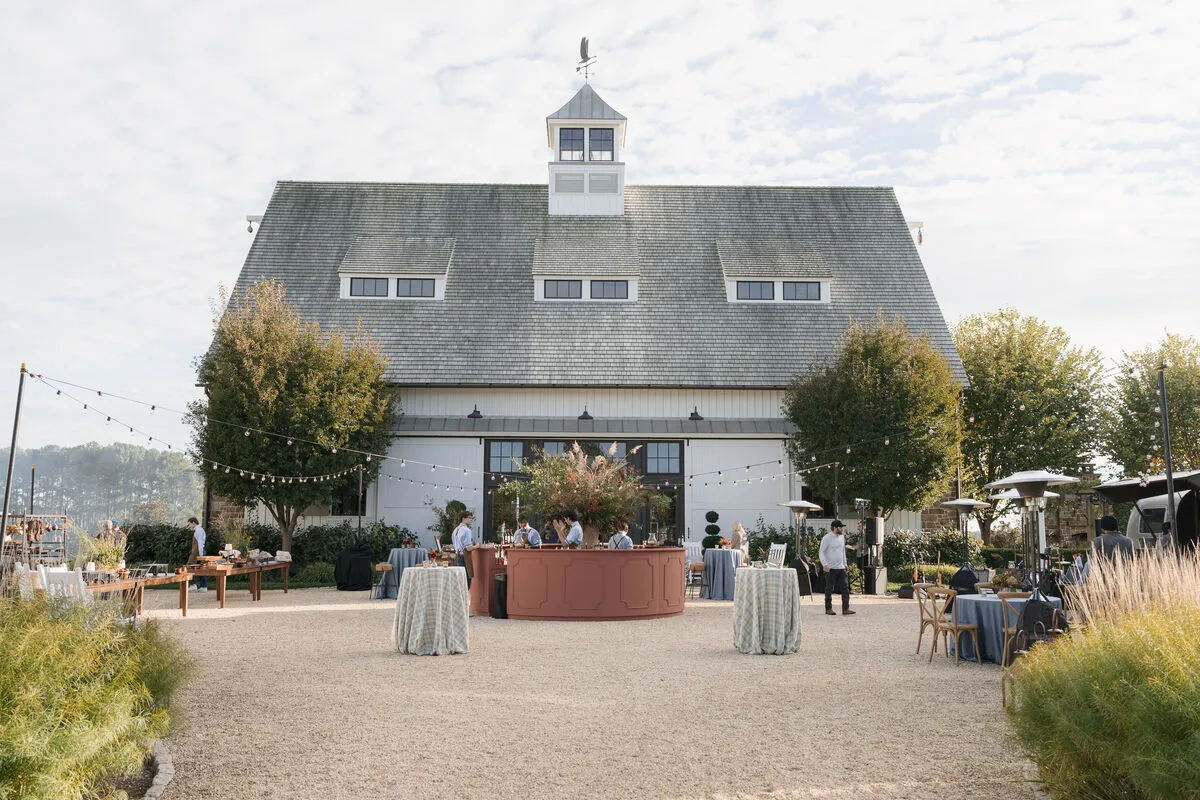
The head table’s proximity to the stage makes décor placement especially important.
An arrangement that looks striking from the front may interfere with conversations across the table, obstruct sightlines, or compete with the program.
Protect Sightlines Across and Beyond the Table
Consider what head-table guests need to see.
If they are watching awards or speakers during dinner, tall centerpieces may become impractical. Dense arrangements can also make it difficult for guests seated along the table to communicate with one another.
Lower or more open treatments can still create presence while protecting the table’s relationship with the stage and room.
Use Scale to Create Presence
Creating a focal table does not necessarily mean adding more objects.
Scale can come from the overall length of the table, repeated floral or decorative elements, strong linen treatment, or a carefully defined lighting area.
A visually continuous treatment may read more effectively from across a large ballroom than several unrelated decorative moments.
Coordinate Décor With the Surrounding Dining Room
The head table should reinforce the same design story as the guest tables. You may also find How to Design Unique Venue Layouts with Furniture Rentals helpful.
If guest tables use a restrained floral direction, dramatically increasing the height and density at the head table can feel disconnected. Instead, the focal table might use a longer interpretation of the same design language or repeat selected materials in a more concentrated way.
The distinction should feel intentional rather than competitive.
Use Lighting to Establish the Head Table as a Visual Focal Point
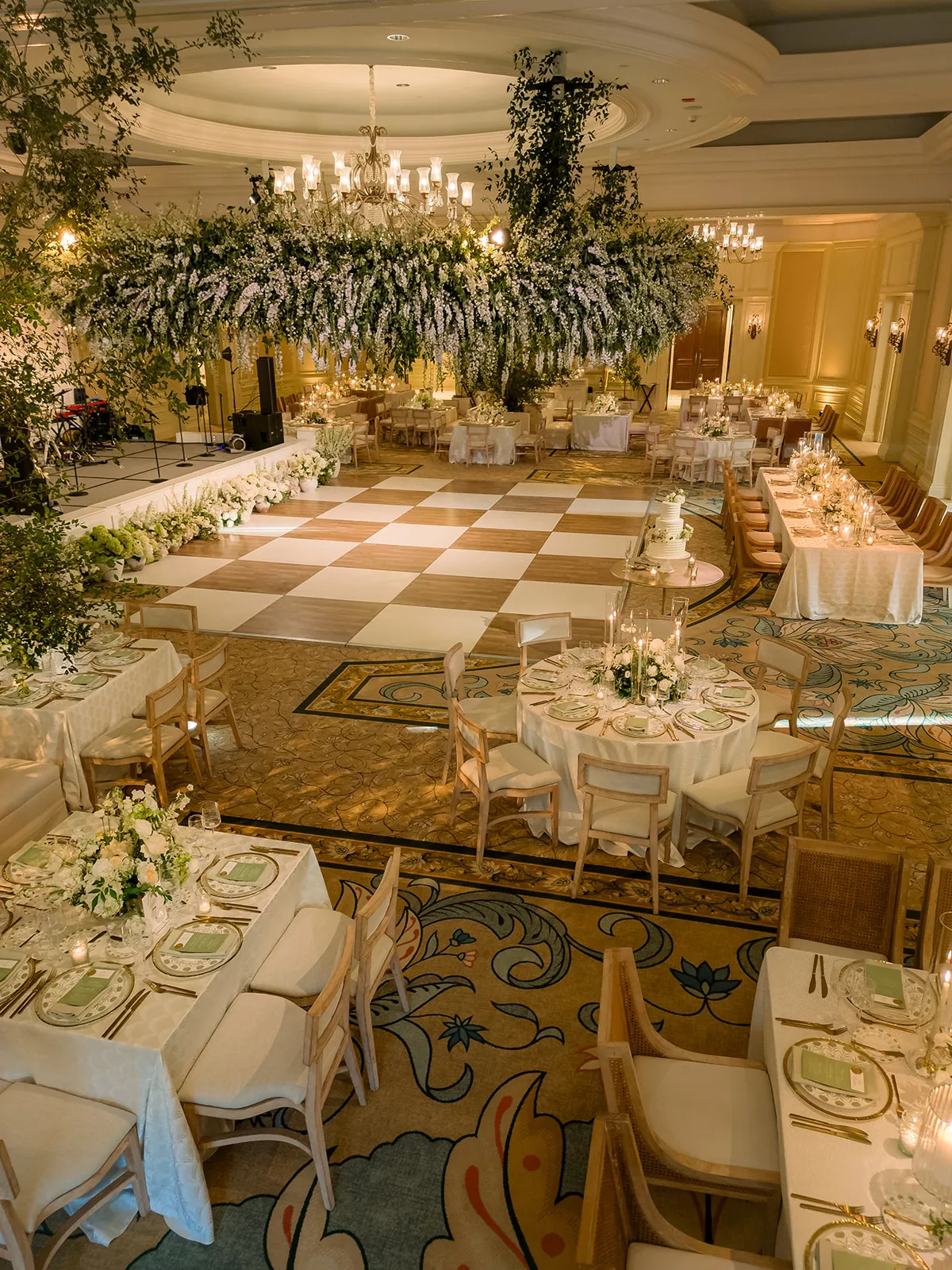
Lighting can help establish hierarchy without requiring the head table itself to carry every decorative detail.
Because formal galas often move between dinner, speeches, presentations, and awards, the lighting around the head table should also work alongside the stage and broader dining environment.
Make the Table Visible Without Overlighting It
The head table should register from across the room, but excessive brightness can make it feel isolated from the surrounding guests.
Aim for enough visual emphasis that the table is clearly part of the program area while retaining the warmth and atmosphere established elsewhere in the dining room.
Coordinate Head Table and Stage Lighting
The stage and head table often function as two related focal points.
During dinner, the table may receive more visual emphasis. During speeches or award presentations, attention naturally shifts toward the stage.
Planning them together makes that transition feel more cohesive and prevents one area from visually competing with the other.
Curated Events DMV currently lists lighting among its corporate event rental categories alongside tables, chairs, tabletop, bars, tents, and other event furnishings.
Consider How the Room Changes During the Program
A head table does not need exactly the same emphasis at every moment of the evening.
As the program moves from dinner into awards or presentations, the room’s focal point may shift. The head table should remain visible and connected without drawing attention away from the person speaking.
Keeping that hierarchy in mind can help the event feel more polished throughout the program.
Protect Space Around the Head Table
Because the head table often sits close to the stage and major program activity, the area around it can become crowded quickly.
Furniture placement should account for the people seated there, dining service, speakers moving toward the stage, and nearby guest circulation.
Leave Comfortable Space Behind Chairs
Guests should be able to pull out chairs and enter or leave the table without colliding with walls, staging, nearby furniture, or major pathways.
This becomes especially important with larger chair styles or long tables where several guests may need to stand at similar times.
Account for Dining Service
Service access should be considered when positioning the table.
A dramatic focal placement loses some of its effectiveness if staff cannot comfortably reach the guests seated there. Leave enough space around the table for normal dinner service without allowing operational needs to dominate the visual plan.
Keep Stage Access and Main Pathways Clear
Avoid using the space between the head table and stage as a convenient location for extra furniture or decorative pieces.
If speakers or presenters will regularly move between those areas, the route should remain straightforward throughout the event.
Similarly, guests elsewhere in the room should not need to squeeze around the head table to reach primary circulation routes.
Make the Head Table Feel Connected to the Entire Dining Room
A head table works best when it creates visual hierarchy rather than visual separation.
The table should be distinctive enough to communicate its role, but guests should still recognize it as part of the same carefully considered gala design.
Repeat Key Design Elements
Continuity can come from recurring details.
The head table might use the same flatware as guest tables, repeat the chair finish elsewhere in the room, carry the primary linen color into napkins, or use related glassware.
These connections help the table remain grounded in the broader design even when another element is intentionally different.
Create Hierarchy Through Small Differences
Planners do not need to change everything to make a head table stand out.
Visual hierarchy can come from a combination such as:
-
A different table shape or orientation
-
A distinct but related chair
-
A subtle linen variation
-
Slightly different tabletop layering
-
A more concentrated décor treatment
-
Carefully considered lighting
Usually, a few of these are enough.
Review the Table From Across the Venue
A head table is rarely viewed only from three feet away.
Stand at the event entrance, several guest tables, the stage, and other key points in the room. From those perspectives, ask whether the table reads as a focal point and whether it feels balanced with the surrounding design.
This wider view can also reveal issues with décor height, chair scale, or stage sightlines before guests arrive.
Frequently Asked Questions
Does every corporate or association gala need a head table?
No.
A head table works well when event hosts, organizational leadership, award recipients, speakers, or other program participants benefit from being seated together near the primary program area.
For other events, reserved guest tables or distributed host seating may better suit the atmosphere. Our Washington, DC team stocks lounge furniture rentals for Washington, DC events.
Where should a head table be positioned?
The head table is often positioned near the stage or formal program area, but the exact location should respond to the venue.
Consider stage access, guest sightlines, service routes, chair clearance, and how the table appears from the rest of the dining room before finalizing its placement.
Should head-table chairs be different from the guest chairs?
They can be, but they do not have to be.
A related chair with a different finish, upholstery, or silhouette can create additional emphasis. Using the same chair throughout the room can also work when the table is distinguished through placement, linens, lighting, or tabletop details instead.
Should the head table use different linens from the guest tables?
A coordinated variation can be effective.
Rather than introducing an unrelated color or pattern, consider using a related shade, different texture, or another subtle change that builds on the existing linen direction.
How can a head table stand out without looking overdecorated?
Focus on hierarchy rather than quantity.
Placement, table shape, chair selection, linen treatment, lighting, and a few intentional tabletop details can establish the table as a focal point without relying on excessive décor.
What rentals are typically needed for a head table?
Core rentals may include the table, chairs, linens, china, glassware, flatware, and other tabletop elements appropriate to the meal.
Lighting and staging should also be considered when the table sits close to the main program area.
How should the head table relate to the stage?
When head-table guests are involved in speeches, awards, or presentations, the table and stage should be planned together.
The table should provide clear views of the program while allowing participants to move between their seats and the stage without navigating through crowded guest areas.
Make the Head Table a Focal Point, Not a Separate Design
A strong head table does not need to announce its importance through a completely different design.
Its prominence can come from where it sits in the room, how it relates to the stage, the scale of the table and chairs, a considered linen treatment, subtle tabletop variation, and lighting that gives it the right amount of visual emphasis.
When those choices build on the design already established throughout the gala, the result feels intentional rather than excessive.
For corporate and association galas in Washington, D.C., Curated Events DMV can help planners coordinate tables, chairs, linens, tabletop pieces, lighting, and supporting rentals to create a head-table setting that feels distinctive while remaining connected to the rest of the event. To check availability for your date, contact our Washington, DC team.