
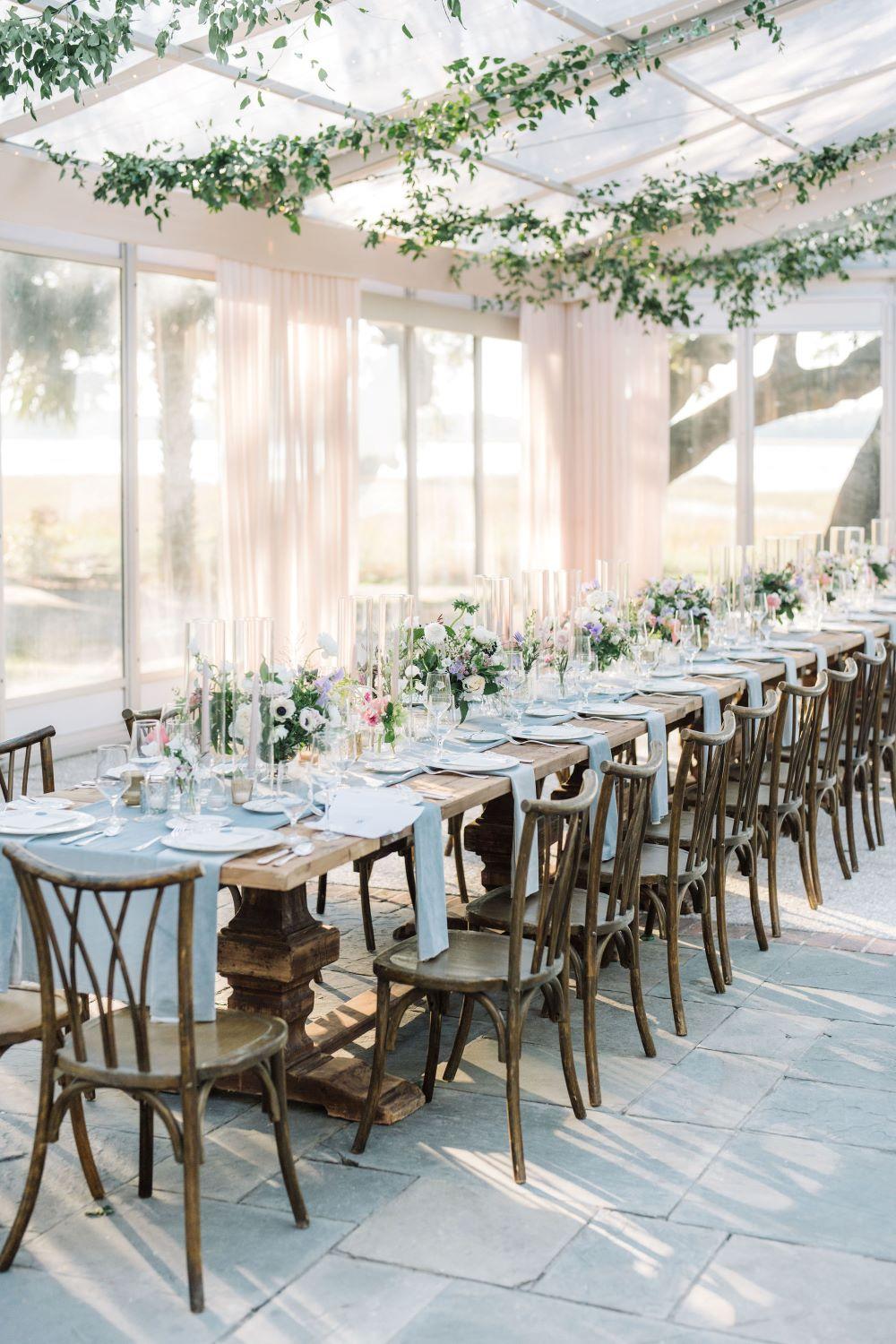
A farm table introduces natural warmth and character into a Charleston wedding reception. Its visible wood finish can suit settings ranging from historic interiors and private estates to gardens, courtyards, and tented celebrations. However, creating a rustic-elegant table requires more than placing neutral linens and flowers over an exposed wood surface.
The most successful designs balance the table’s relaxed character with more tailored details. Refined china, intentional glassware, carefully selected textiles, and well-proportioned centerpieces can elevate a farm table without concealing the features that made it appealing in the first place.
The objective is not to make every element look rustic. Instead, the table should provide the warmth, while the surrounding rentals introduce contrast, structure, and polish. Decisions about surface exposure, place-setting scale, centerpiece placement, and visual repetition all contribute to whether the finished table feels sophisticated or overly themed.
Define What Rustic Elegance Means for the Table
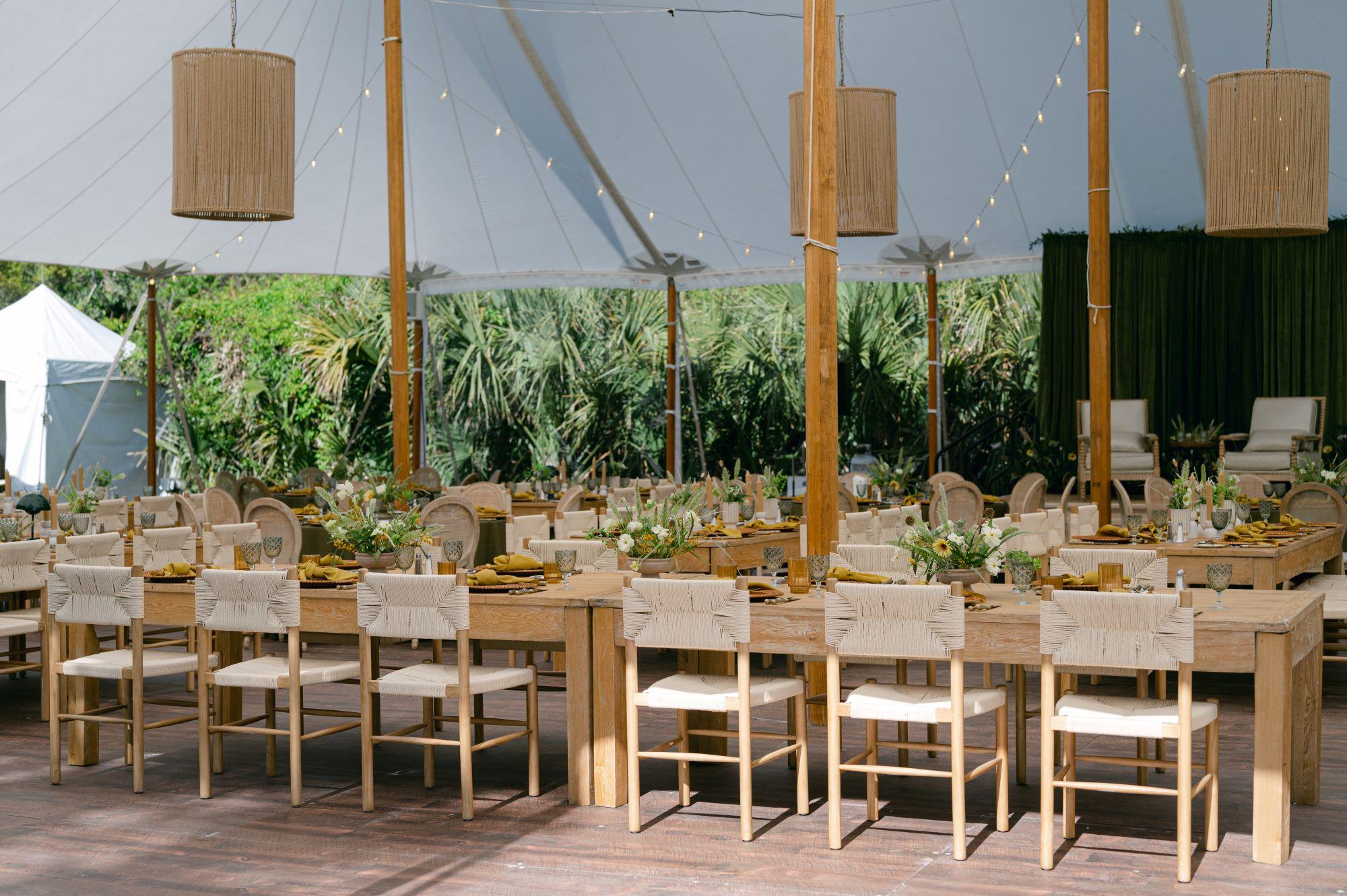
Rustic elegance is created through contrast. A farm table contributes texture and an organic foundation, while the remaining pieces establish the desired level of formality.
Before selecting individual rentals, determine which elements will provide the rustic character and which will bring refinement to the design.
Let One Element Carry the Rustic Character
The farm table itself may provide all the rustic influence the tablescape needs. Its visible surface, substantial shape, and natural finish already establish a warm, approachable foundation.
Adding wooden chargers, burlap runners, twine, crates, unfinished signs, and distressed accessories to the same table can push the design too far toward a conventional farmhouse theme. When every component repeats the same visual idea, the individual details lose their impact.
Instead, allow the table to carry the natural character and use the surrounding pieces to create balance. Defined plate shapes, polished flatware, delicate glassware, tailored napkins, or structured candleholders can make the composition feel more intentional.
Introduce Refinement Through Finish and Shape
Refinement does not necessarily mean adding more decoration. It often comes from selecting pieces with clean silhouettes, considered finishes, and proportions that complement the table.
A shaped charger can create a clear boundary around each place setting. A glass with subtle color or texture can introduce interest without adding clutter. Metallic flatware or candlesticks can reflect the surrounding light and contrast with the matte appearance of the wood.
The chosen elements should not feel disconnected from the farm table. They should provide enough contrast to elevate it while maintaining a cohesive design.
Choose a Clear Design Direction
A defined design direction prevents the table from becoming a collection of unrelated pieces.
A classic Lowcountry approach might combine warm wood with traditional place settings, soft color, and controlled candlelight. A garden-refined table could feature a lighter palette, botanical details, and delicate glassware. A modern-organic arrangement may rely on cleaner shapes, fewer colors, and stronger contrast between the wood and tabletop pieces.
These are not fixed formulas. They are starting points that help ensure the table, chairs, textiles, tableware, and center décor support the same overall vision.
Use the Table’s Finish and Proportions as the Starting Point
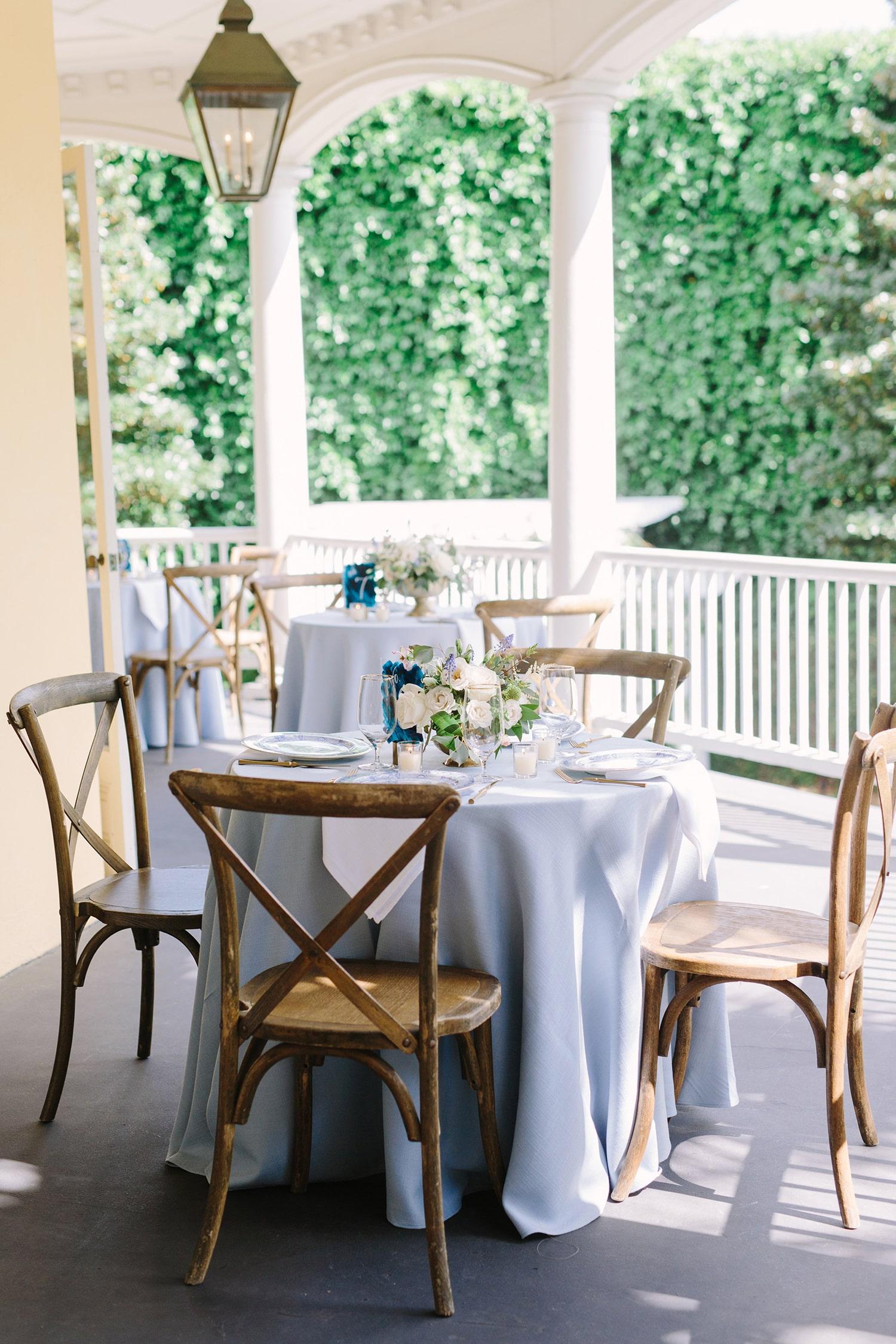
Not every farm table should be styled in the same way. Wood tone, table width, length, leg placement, and overall shape affect how the remaining pieces look and function.
Curated Events Charleston carries farm and specialty dining tables in various formats, allowing you to select a table that supports your intended layout and design direction.
Work With the Wood Tone Instead of Repeating It
The wood finish should guide the color and material choices for the surrounding elements. A warm wood table can support ivory, muted blue, green, or softly patterned accents. A pale or antique-white finish may benefit from deeper napkin colors, warm metals, or darker tabletop details. Greyed finishes can be softened with warmer glassware and candlelight, while golden tones may work well with controlled neutrals or cooler accents.
Avoid selecting every item in a shade similar to the table. When the chairs, chargers, linens, and centerpiece vessels all repeat the same brown or beige tones, the arrangement can appear flat.
Contrast does not have to be dramatic. Even a slight difference in color, texture, or sheen can help each layer remain visible.
Account for the Table’s Width
Table width determines how much room is available after each place setting has been arranged.
Chargers, dinner plates, flatware, napkins, menus, bread plates, and multiple glasses can occupy more surface area than expected. The centerpiece may then need to share the remaining space with candles, table numbers, and serving pieces.
Before finalizing décor, map the complete place setting on the selected table. This helps establish the actual centerpiece zone rather than estimating how much space will remain.
A narrower table usually benefits from a restrained center arrangement and fewer tabletop layers. A wider surface may accommodate additional glasses, larger vessels, or grouped decorative pieces, provided there is still sufficient room for guests and service.
Treat Square and Long Tables Differently
A long farm table naturally creates a strong horizontal line. Repeated place settings, floral vessels, and candleholders can reinforce that shape and lead the eye through the dining area.
A square table has a more centralized structure. Instead of repeating many small arrangements along a line, it may benefit from one focused centerpiece composition or a compact group of coordinated pieces.
The styling should respond to the table’s geometry rather than applying the same centerpiece format to every table in the reception.
Decide How Much of the Farm Table Should Remain Visible
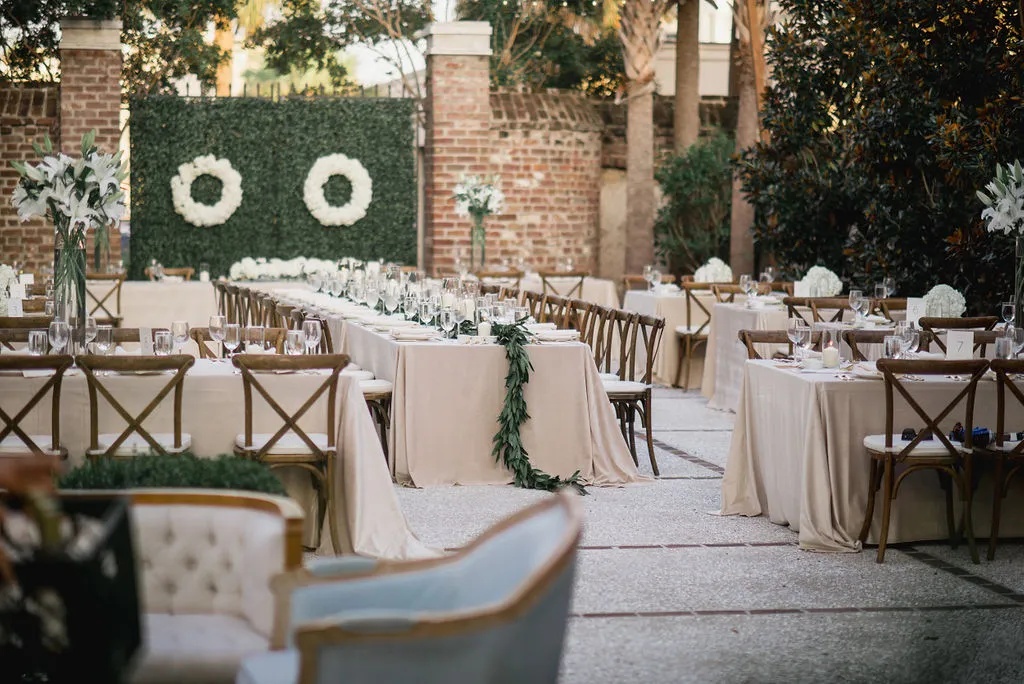
Exposed wood is one of the defining features of a farm-table design, but leaving the surface bare should be a deliberate choice. The appropriate amount of coverage depends on the table finish, desired formality, and visual strength of the place settings.
Leave the Surface Mostly Bare for Stronger Contrast
A mostly uncovered table works well when the wood finish is intended to be a prominent part of the design.
Exposing the surface can create a strong contrast with china, glassware, napkins, and metallic pieces. It can also help the table feel connected to a garden, courtyard, estate, or other Charleston setting where architectural and natural details already influence the design.
A bare table does not have to feel casual. Formality can come from the quality, scale, and arrangement of the tabletop rentals rather than from a full linen.
Add a Runner When the Table Needs Continuity
A runner can visually connect the elements placed along a long table. It may help unify floral vessels, candlesticks, or small decorative groupings while still leaving much of the wood visible.
The runner should be selected according to the table’s width and finish. It needs enough contrast to remain noticeable without overpowering the surface beneath it.
Its placement should also account for the place settings. A runner that spreads too far toward the table edge can compete with chargers, flatware, and glassware, making the arrangement feel crowded.
Use Textile Details Selectively
A full linen is not the only way to introduce fabric into the design. Napkins, narrow runners, or other tailored textile accents can add softness, pattern, and color while preserving the farm table’s character.
A patterned napkin may provide the table’s primary color accent. A subtly textured runner can create separation between the wood and centerpiece vessels. Coordinated fabrics may also be repeated in nearby reception areas to connect the table design with the broader event.
Curated Events Charleston offers table rentals alongside linens, china, glassware, flatware, lighting, and other event pieces, allowing the full composition to be coordinated rather than assembled one item at a time.
Build the Place Setting Through Controlled Contrast
The place setting is often what moves a farm table from relaxed to refined. Each layer should remain visible against the wood while supporting the broader palette and level of formality.
Start With the Largest Visible Layer
The charger, placemat, or dinner plate establishes the footprint of each place setting. Its color, shape, material, and size influence every layer placed above and around it.
Consider whether the base layer separates clearly from the table. A wooden charger in nearly the same finish as the tabletop may disappear visually, while a defined rim, metallic finish, woven texture, or contrasting color can create a stronger boundary.
Scale is equally important. An oversized charger may look impressive in isolation but leave too little space for flatware, glasses, and neighboring guests. Test the full setting rather than evaluating the charger alone.
Layer China Without Making the Setting Feel Heavy
Layered china can introduce depth, but every plate that may be used during dinner does not necessarily need to appear on the table at once.
The visible layers should correspond to the menu, service plan, and intended design. A plate with a distinctive rim or subtle pattern may create more impact than several similar pieces stacked together.
When the table already contains strong floral, textile, or glassware details, simpler china can provide visual rest. When the centerpiece is restrained, the plate pattern or shape may become a more noticeable part of the composition.
Use Glassware and Flatware to Establish Formality
Glassware and flatware can significantly change the character of a farm table without covering its surface.
Clear glassware keeps the composition light and allows other colors to remain prominent. Colored or textured glasses introduce a controlled accent and may help repeat a tone used in the napkins or floral design.
Warm metallic flatware can reinforce the table’s warmth, while cooler or darker finishes create sharper contrast. Regardless of the selected finish, consistent placement is essential. Repetition along a long farm table creates order and prevents an otherwise layered design from appearing unsettled.
Design the Center of the Table Around Available Space
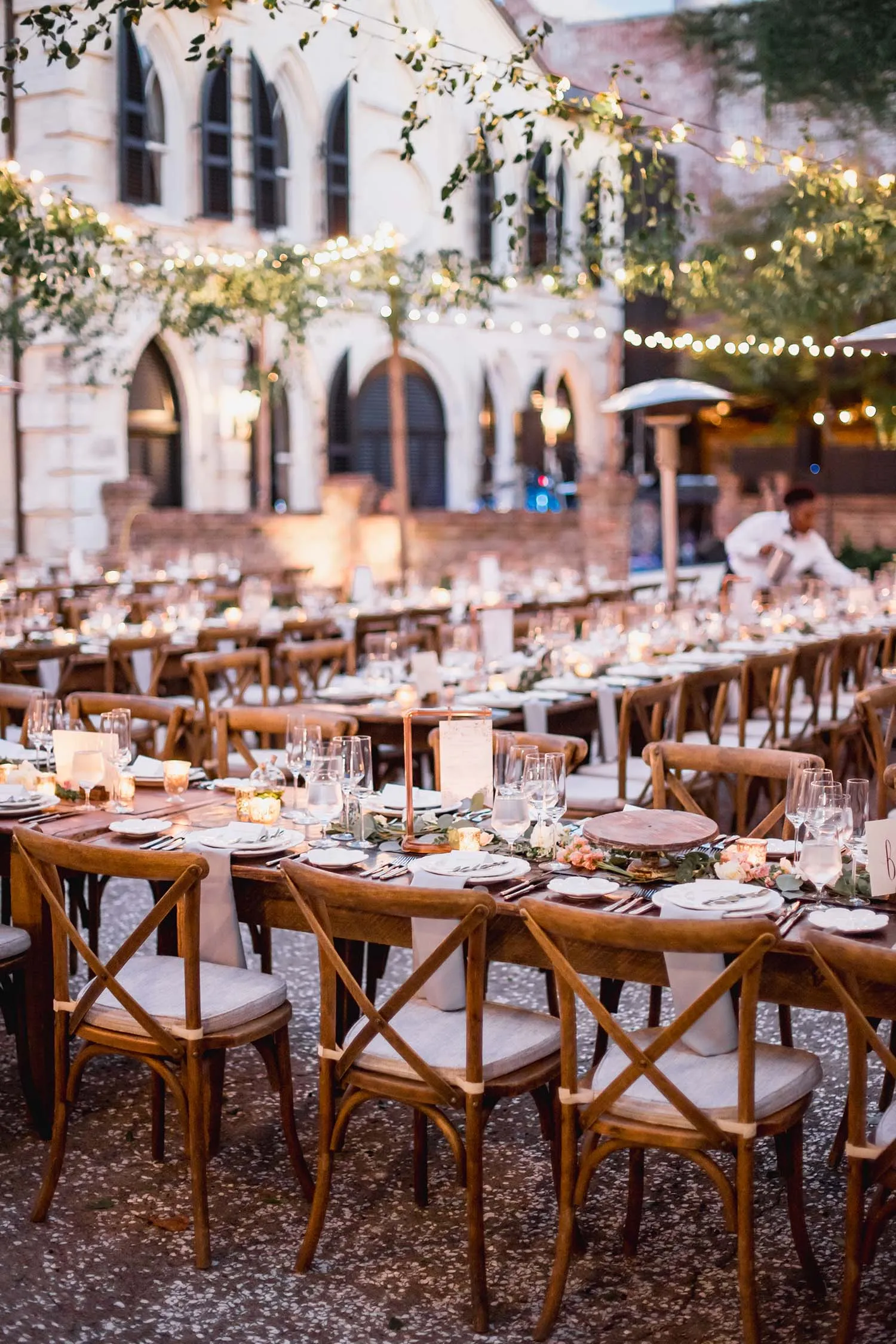
A centerpiece should be planned according to the space left after place settings and service requirements have been established. Height matters, but the base width of floral vessels, candleholders, and accessories can create even more crowding.
Establish the Centerpiece Footprint First
Begin by arranging one complete place setting. Include every item expected to remain on the table when guests are seated, including glasses, menus, bread plates, favors, or place cards.
Next, consider whether the meal will involve shared serving pieces, bottles, or other items that need temporary tabletop space. The area that remains can then be assigned to the centerpiece.
This process helps prevent the center arrangement from spreading into glassware or forcing décor too close to the guests.
Create Rhythm Instead of One Continuous Mass
Long farm tables benefit from visual rhythm. Instead of filling the entire center with one uninterrupted arrangement, use repeated groupings separated by deliberate open space.
A low floral vessel might be followed by a pair of candlesticks and then a smaller arrangement. Another option is to alternate floral groupings with candles or decorative vessels at consistent intervals.
Repetition allows the design to feel unified from one end of the table to the other. Open space between the groupings also prevents the arrangement from becoming visually heavy.
Preserve Conversation and Dinner Service
Centerpieces should support the guest experience rather than interfere with it.
Low arrangements generally preserve views across the table, while taller designs need sufficiently narrow bases and appropriate placement. The centerpiece should not block conversation, crowd glasses, or make it difficult for service staff to reach the place settings.
Floral dimensions and vessel placement should be coordinated with the florist, planner, caterer, and rental consultant. This ensures the design works with the menu and service plan rather than being developed independently.
Style the Ends and Transitions of a Long Farm Table
The middle of a farm table often receives the most attention, but the ends and connection points can determine whether the complete arrangement looks finished.
Check the Layout of the End Seats
End seats may have different space limitations because of table legs, decorative overhangs, adjacent chairs, or nearby pathways.
Confirm that guests at the ends have enough room for their chairs and full place settings. Decorative pieces should not sit so close to the edge that they restrict glassware placement or create an obstruction.
If an end seat has less depth, the place setting may need a slightly simplified layout while still matching the rest of the table.
Avoid Abrupt Decorative Endings
Runners, candles, and floral patterns should end intentionally.
A runner should not stop at an arbitrary location between the final place settings. Similarly, a repeated centerpiece arrangement should not simply disappear before reaching the end of the table.
The design might conclude with a smaller floral grouping, a tapered sequence of candles, or a deliberate section of open wood. The correct option depends on the table length and the pattern established through the center.
Maintain Continuity When Tables Are Joined
Multiple farm tables may be combined to create an extended dining arrangement. When this is planned, account for seams, table legs, small height differences, and changes in spacing.
The complete configuration should be confirmed before runner lengths or centerpiece intervals are finalized. Floral vessels and candles can then be positioned so the connection points appear intentional rather than interrupting the design.
Edit the Table Before Adding More Décor
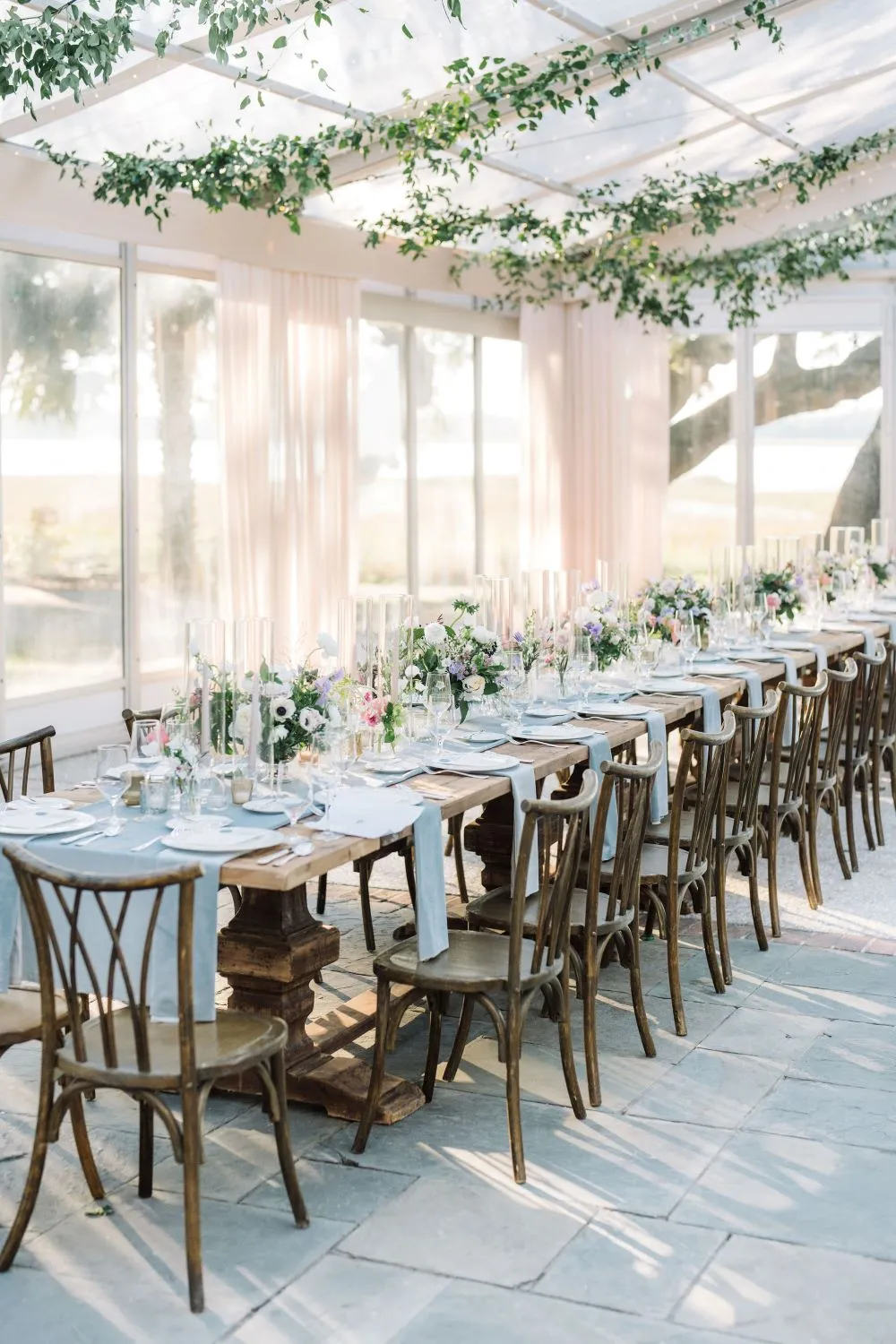
Rustic-elegant styling often improves through subtraction. Because the table already contributes texture and character, every additional piece should serve a visual or functional purpose.
Check for Repeated Textures
Review how often the same material appears.
Wood may already be present in the table and chairs. Repeating it in the chargers, candleholders, signs, centerpiece bases, and decorative accessories can make the design feel overly coordinated.
Balance the wood with other materials, such as glass, metal, ceramic, or tailored textiles. A varied but controlled material palette gives the design more depth.
Identify the Main Accent
Determine which element should attract the most attention after the table itself.
The focal accent might be a patterned napkin, colored glassware, distinctive charger, floral composition, or candleholder finish. Once the primary accent is identified, the remaining pieces should support it.
When several strong patterns, colors, and finishes compete for attention, simplify the less important layers. A refined design does not require every item to make a separate statement.
Review the Table From Multiple Angles
A tablescape should work from more than one viewpoint.
Assess the design from a seated position to confirm that the place setting feels comfortable and the centerpiece does not block sightlines. View it from the end to evaluate repetition and spacing. Step back toward the room entrance to see how the table relates to the full reception.
Close photographs may reveal small inconsistencies, while a wider view can show whether the tables appear balanced across the room.
Common Farm Table Styling Mistakes to Avoid
Certain design choices can quickly move a farm table away from refined rustic elegance and toward a more literal theme.
Making Every Selection Look Rustic
A wood table does not require burlap, twine, wooden chargers, crates, mason jars, and distressed accessories to establish its identity.
Choose one or two natural elements and create contrast through the remaining rentals. The farm table will feel more distinctive when it is surrounded by pieces that offer a different finish, shape, or degree of formality.
Selecting Décor Before Confirming Dimensions
Chargers, floral vessels, candlesticks, and glassware should not be selected without knowing the table measurements.
A beautiful centerpiece concept may be impractical on a narrow table, while an oversized charger can reduce the space available for glasses and flatware. Confirm dimensions and test the full composition before finalizing quantities.
Filling Every Inch of the Table
Open space is both functional and visual.
It provides room for service, makes individual pieces easier to appreciate, and keeps the setting comfortable for guests. On a long table, carefully placed negative space can also strengthen the rhythm of the centerpiece arrangement.
Adding more items does not necessarily make the table feel more complete. In many cases, removing one decorative layer makes the remaining details look more intentional.
Frequently Asked Questions
Does a rustic-elegant farm table need a runner?
No. A runner can introduce texture or connect centerpiece elements, but it is not required. A well-finished farm table can remain mostly exposed when the place settings and center design provide enough structure and contrast.
Can farm tables work for a formal Charleston wedding?
Yes. A farm table’s formality depends on the pieces surrounding it. Refined china, coordinated glassware, tailored napkins, considered flatware, and well-proportioned centerpieces can create an elevated reception table without hiding the wood surface.
Should the chairs match the farm table?
The chairs do not need to match the table exactly. A complementary finish can create continuity, while a contrasting material or color can prevent the dining arrangement from looking too uniform. The chair silhouette should also suit the desired level of formality.
How much room should be reserved for the centerpiece?
The available centerpiece area depends on the table width, size of the place settings, number of glasses, menu, and service format. Arrange a complete place setting first, account for service needs, and use the remaining center area to determine the appropriate vessel and candleholder sizes.
Can different farm table styles be used in one reception?
Different table formats can be combined when the variation is intentional. Repeating the same china, napkins, glassware, floral vessels, or candleholder finish can create continuity across different table shapes and wood tones.
Create a Farm Table That Feels Warm, Refined, and Intentional
Styling a rustic-elegant farm table in Charleston is not about following a fixed formula or filling the table with familiar farmhouse decorations. It is about balancing the warmth of the wood with deliberate contrast, appropriate scale, and carefully edited details.
Begin with the table’s finish and dimensions. Decide how much of the surface should remain visible, then build each place setting around the available space. Create a centerpiece pattern that works with the table’s proportions, preserves guest sightlines, and accommodates dinner service. Finally, remove any pieces that repeat the same texture or compete with the primary accent.
Curated Events Charleston offers farm tables, chairs, linens, china, glassware, flatware, lighting, and decorative rentals that can be coordinated into a cohesive reception design. Working with the Charleston team can help ensure each selection supports both the visual direction and practical requirements of the celebration.