
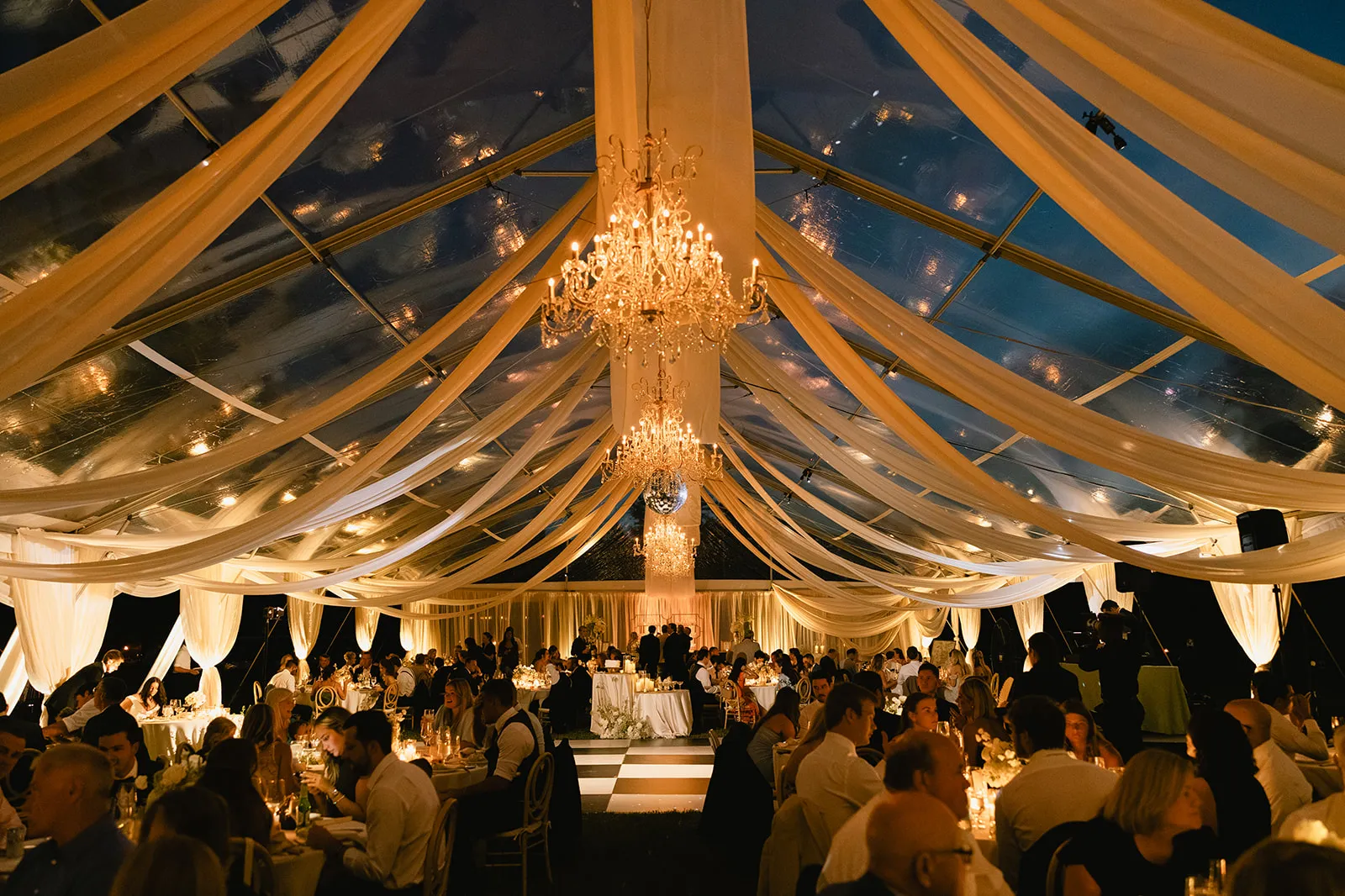
Corporate event venues often arrive with a strong visual identity already in place. A ballroom may have elaborate architectural details, a contemporary event space may be dominated by glass and clean lines, while a conference venue may include blank walls, service entrances, or other functional elements that were never intended to become part of an event design.
Drapery gives planners a way to edit those surroundings without losing the character of the venue. Fabric can soften architecture, create a more intentional backdrop, define an important area, or conceal elements that distract from the finished setting. Used thoughtfully, it can also change how large or intimate a room feels.
The most refined approach does not begin by asking how much of the venue can be draped. It begins by deciding which parts of the room already work, which views deserve attention, and where fabric can make the greatest visual difference.
Start With What the Venue Already Gives You
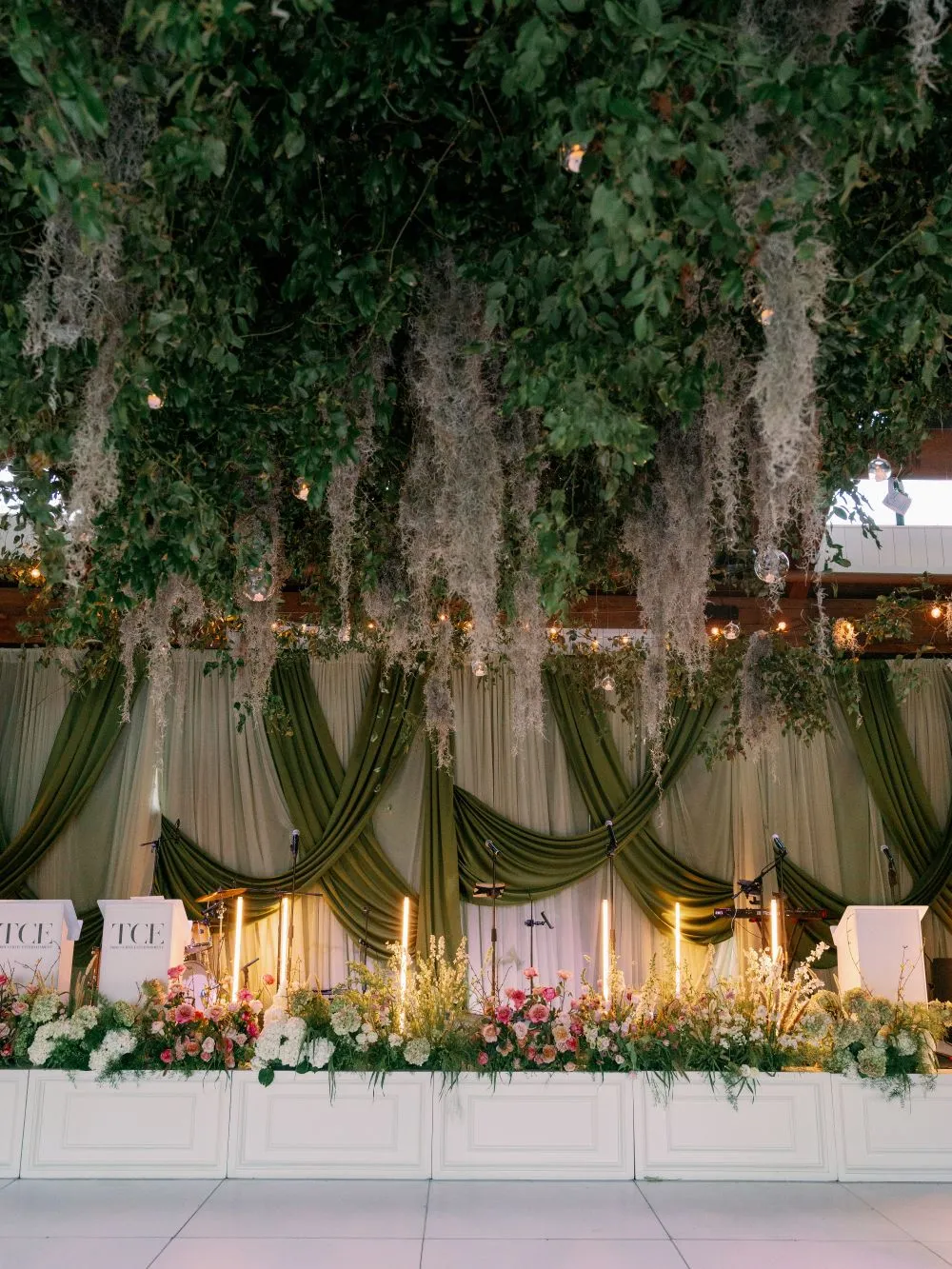
Before introducing fabric, study the room as it exists. Architecture, permanent finishes, ceiling height, windows, lighting fixtures, entrances, and sightlines all contribute to the final event environment.
Drapery should respond to those features rather than automatically cover them. In many corporate venues, the strongest design comes from preserving some architectural elements while selectively refining others.
Identify the Architectural Features Worth Preserving
Not every wall needs a treatment. A dramatic staircase, detailed molding, tall windows, decorative columns, or an interesting ceiling can provide more character than any temporary installation. When these elements contribute positively to the event, drapery can frame them rather than hide them.
This is particularly important in architecturally distinctive venues where part of the appeal comes from the building itself. Covering too much of the room can remove the sense of place that made the venue attractive in the first place.
Notice Where the Room Feels Visually Unfinished
Other parts of the venue may need greater control. Service doors, blank walls, temporary equipment areas, awkward openings, or visually inconsistent sections can interrupt an otherwise polished environment. These are natural places to consider fabric.
A well-positioned drapery treatment can create a cleaner visual field without requiring the entire room to be transformed. The objective is to make distractions recede so the designed elements of the event receive greater attention.
Consider the Room From Major Sightlines
A treatment that looks effective from one position may be unnecessary from another. Review the venue from the entrance, main seating areas, executive hospitality spaces, bars, presentation areas, and other locations where guests will spend significant time. These views matter more than portions of the room that guests will rarely notice.
Drapery can then be concentrated where it contributes most to the overall composition.
Decide What the Drapery Needs to Change
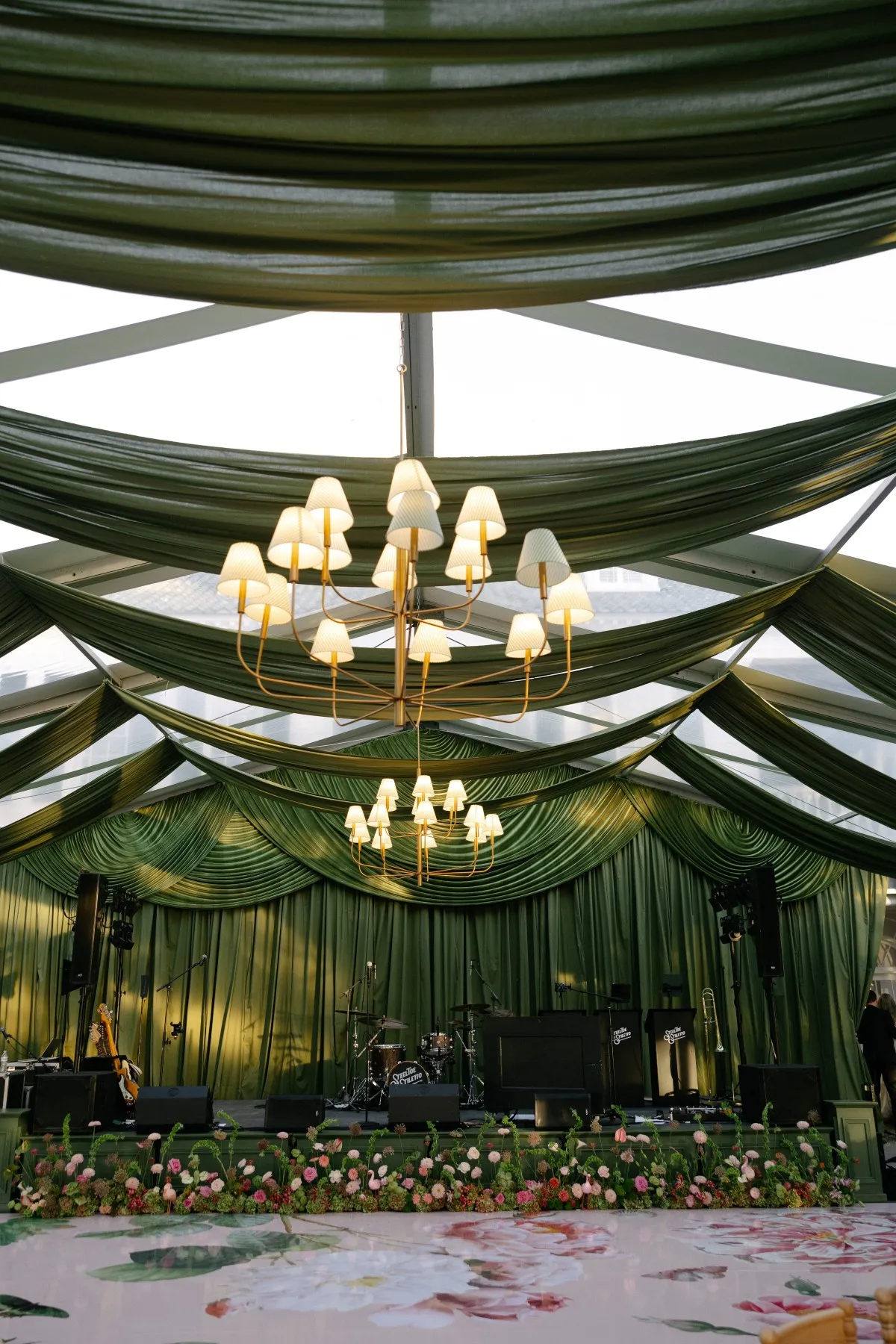
Fabric can perform several visual roles, but the purpose should be clear before color, texture, or placement is considered.
In some venues, drapery provides softness. In others, it creates a cleaner background or gives an oversized room stronger definition. Establishing that purpose first keeps the design from becoming decorative for decoration’s sake.
Soften a Space With Hard Architectural Surfaces
Contemporary venues often contain glass, metal, stone, concrete, or other hard finishes.
These materials can create a striking architectural environment, but a corporate event may benefit from introducing something softer alongside them. Drapery adds movement and texture while retaining the clean character of the room.
The fabric does not need to cover the architecture. Even a restrained treatment in selected areas can change the material balance of the space.
Conceal What Should Not Be Part of the Event View
Some venue elements are necessary but do not contribute to the final visual experience.
Fabric can provide a controlled background around service areas, unused openings, equipment, or other visual distractions. This is especially useful when those elements sit behind an important hospitality or presentation area.
The treatment should feel intentional from the guest side rather than like a temporary solution placed solely to hide something.
Give an Oversized Room More Definition
Large corporate venues can sometimes feel visually dispersed, particularly when the guest count uses only part of the available space.
Drapery can help establish a more focused event environment by drawing attention toward the areas guests will actually occupy. Fabric may define the visual boundary of a hospitality area, frame a main gathering point, or reduce the sense that furniture has been placed in the middle of an oversized room.
The objective is not necessarily to make the room physically smaller. It is to give the event a clearer visual center.
Frame Important Event Moments
Fabric can also create a stronger setting around selected moments. A presentation area, executive hospitality space, branded feature, bar, or other focal point may benefit from a defined background. The drapery can provide contrast, texture, or simply a cleaner field behind the feature.
When another element already carries substantial visual interest, the fabric should support it rather than become a competing focal point.
Use Drapery to Change the Perceived Scale of the Room
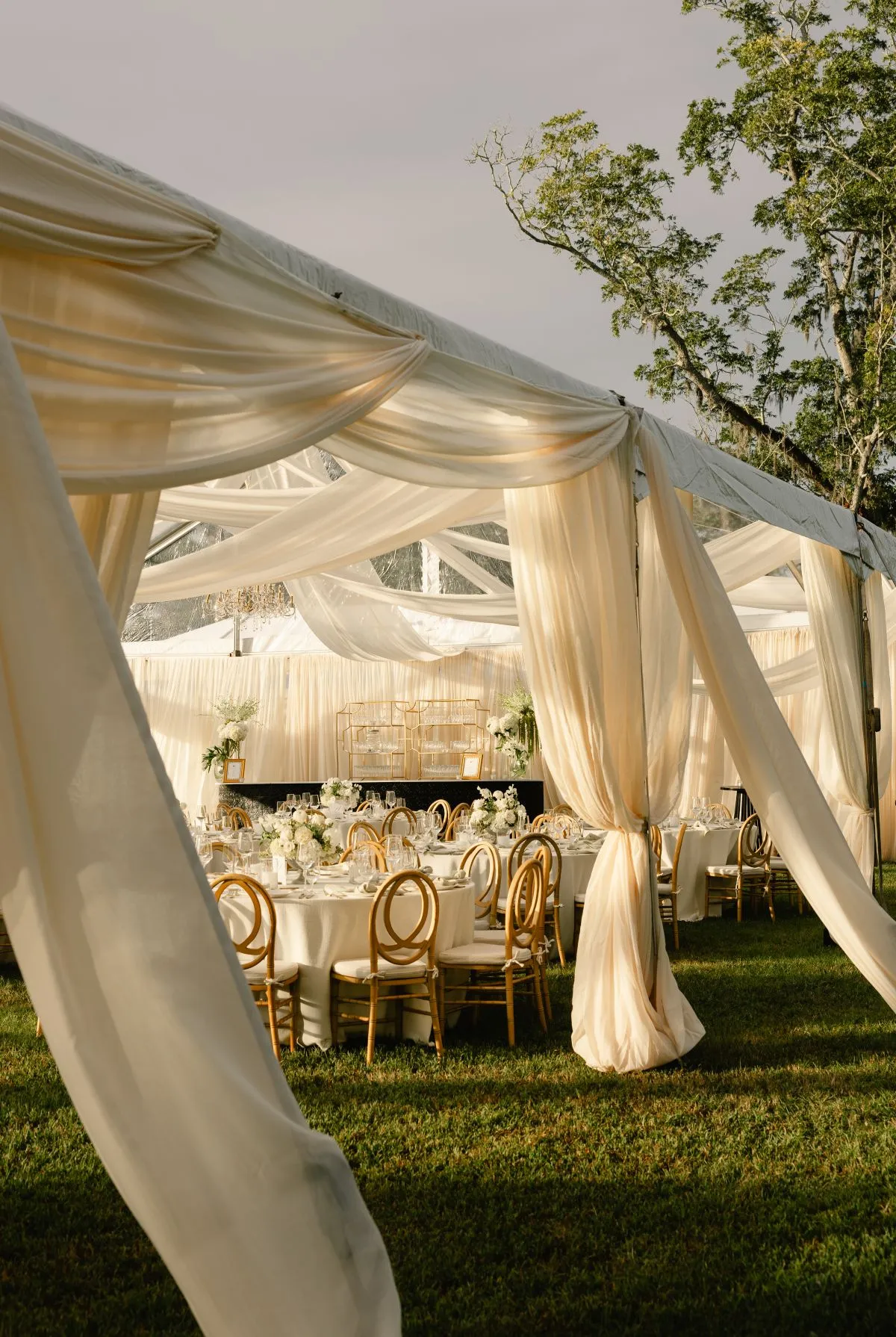
One of the most useful qualities of drapery is its ability to influence how guests perceive a space.
Height, width, and visual boundaries can all feel different once fabric is introduced, making drapery particularly useful in large corporate venues where the architecture may not naturally match the scale of the event.
Bring Tall Spaces Down to a More Intimate Scale
High ceilings can create grandeur, but they can also make a smaller corporate gathering feel visually lost.
Strategically placed fabric can establish a stronger relationship between the height of the room and the furnishings below. Rather than allowing every wall surface to continue uninterrupted toward the ceiling, drapery can introduce a more human scale around the areas guests actually use.
The treatment should still respect the architecture. A room with beautiful vertical proportions may need only selective softness rather than a complete visual reduction in height.
Give Wide Rooms a Clearer Visual Center
Broad ballrooms and conference spaces sometimes lack an obvious focal point. Fabric can help establish one by directing attention toward a main event zone. This can be especially effective when several parts of the room have similar architectural weight and the event needs one area to feel more important.
The position and width of the treatment matter as much as the fabric itself. A deliberately framed section often has greater impact than drapery spread evenly across every perimeter.
Use Vertical Fabric to Emphasize Height Intentionally
Not every large space needs to feel smaller. When ceiling height contributes to the elegance of a venue, vertical folds can reinforce that quality. Long fabric lines can draw the eye upward while adding softness to otherwise hard architectural surfaces.
This approach works particularly well when the event design already uses tall lighting, floral arrangements, shelving, or other vertical elements.
Avoid Making Small Rooms Feel Smaller
Compact spaces require greater restraint. Heavy, dark, or continuous drapery can make an intimate venue feel enclosed very quickly. Lighter treatments, selective placement, or more neutral fabric may preserve openness while still improving the room visually.
In smaller spaces, every addition occupies a greater percentage of the guest’s view, which makes editing particularly important.
Create Stronger Transitions Between Event Areas
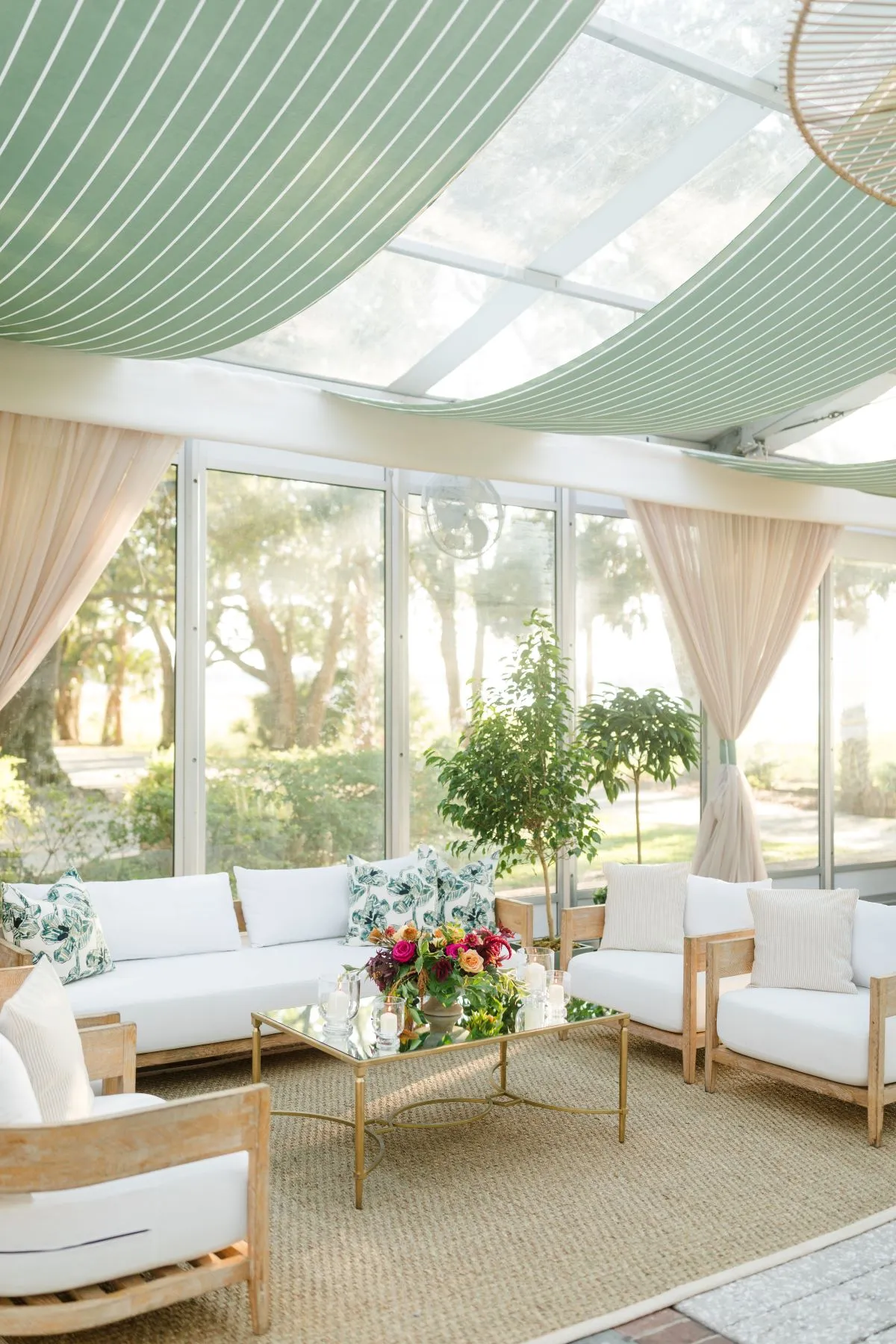
Corporate events often move through several distinct environments. Guests may arrive through registration, attend a presentation, gather for cocktails, move into dinner, and later spend time in lounges or hospitality areas.
Drapery can help distinguish these experiences while maintaining a consistent visual language across the event.
Make the Arrival Feel Intentional
Arrival areas introduce the event before guests reach the primary room. A controlled fabric treatment can create a clearer transition from the existing venue into the designed environment, particularly when registration or entry occurs in a visually neutral pre-function space.
The goal is not to reveal every design idea immediately. A restrained treatment can simply establish the tone that will continue deeper into the event.
Separate Cocktail and Main Event Spaces Visually
Cocktail and dining or presentation areas may occupy the same large room or adjacent sections of a venue.
Drapery can create enough visual distinction for each space to have its own identity without making them feel unrelated. A lighter or more open treatment around cocktails might transition into a more formal backdrop within the main program area.
The difference should feel like progression rather than separation for its own sake.
Create a More Refined Executive Hospitality Setting
An executive lounge positioned within a larger corporate environment may benefit from additional visual definition.
Fabric can create a more contained backdrop around the lounge without requiring the space to become completely enclosed. When paired with appropriate furniture and lighting, the treatment can help distinguish executive hospitality from general event seating.
The fabric should support the lounge rather than overpower the furniture that gives the area its primary character.
Use Drapery to Clarify the Event Progression
Fabric can also help guests understand how one area relates to another. Changes in drapery placement, density, or tone can subtly signal that guests are moving from an arrival environment into a more formal program space or from a large ballroom into a quieter hospitality area.
These transitions work best when the overall material and color language remains consistent.
Treat Drapery and Lighting as One Composition
Fabric changes considerably once event lighting becomes part of the room.
Pleats gain depth, texture becomes more visible, darker colors become richer, and reflective surfaces can become far more noticeable. For this reason, drapery should be considered in relation to the lighting environment rather than evaluated only under ordinary venue illumination.
Use Light to Reveal Folds and Texture
Directional lighting can emphasize the dimensional quality of drapery. Even a restrained neutral fabric can become visually rich when folds create areas of highlight and shadow. This gives planners another way to add depth without introducing additional pattern or color.
The strongest result allows the material to retain its softness rather than flattening it under uniform illumination.
Consider How Dark Fabric Changes After Sunset
Deep burgundy, navy, charcoal, green, or other saturated fabrics may appear substantially heavier once evening lighting becomes dominant.
If the drapery is already dark, lighter furniture, flooring, tabletops, or nearby surfaces can provide useful contrast.
The final palette should be evaluated for the event’s actual lighting conditions rather than daylight alone.
Watch Highly Reflective Fabrics
Sheen can become dramatic under chandeliers, uplighting, or other directed illumination.
When the room already contains glass, polished metal, reflective tabletops, or metallic accents, a highly reflective fabric may create more visual activity than the design needs.
Matte and subtly textured drapery can provide valuable balance in these settings.
Let Some Drapery Recede
Not every treatment needs special illumination. Sometimes the purpose of the fabric is simply to create a controlled background behind a bar, lounge, presentation area, or other important feature. In those cases, allowing the drapery to remain visually quieter can strengthen the element positioned in front of it.
Coordinate Drapery With Furniture and Other Rentals
Because drapery occupies such a large visual surface, it should be considered alongside the furniture and rentals that will appear against it.
The relationship between fabric, upholstery, bars, tables, linens, lighting, and harder materials often determines whether the room feels cohesive.
Compare Fabric With Upholstery
A lounge filled with rich upholstery may benefit from a quieter backdrop, while restrained furniture can support more expressive drapery.
Consider both color and texture. Plush or highly textured seating against equally rich fabric can become visually dense, while a cleaner textile treatment may give the furniture enough room to register.
Consider Bars and Shelving Against the Drapery
A bar placed in front of drapery becomes part of a single composition. Its finish should have enough contrast to remain clearly visible against the background. A dark bar against equally dark fabric may lose definition, while a lighter or complementary backdrop can make its silhouette more apparent.
The same principle applies to shelving and other architectural rental pieces.
Coordinate With Tables and Linens Without Repeating Them
Drapery and table linens can relate without matching exactly. A deeper shade around the perimeter may pair with lighter linens, while neutral drapery can allow patterned or richly colored tablecloths to carry more visual weight.
Using several related tones often creates more depth than repeating the same fabric or color throughout the room.
Keep the Overall Material Palette Controlled
When drapery, upholstery, and table linens already introduce substantial fabric, harder materials become increasingly important.
Wood, glass, metal, acrylic, or other structured surfaces can prevent the room from feeling overly soft. The contrast between materials is often what gives a corporate event environment greater sophistication.
Know When Not to Use More Drapery
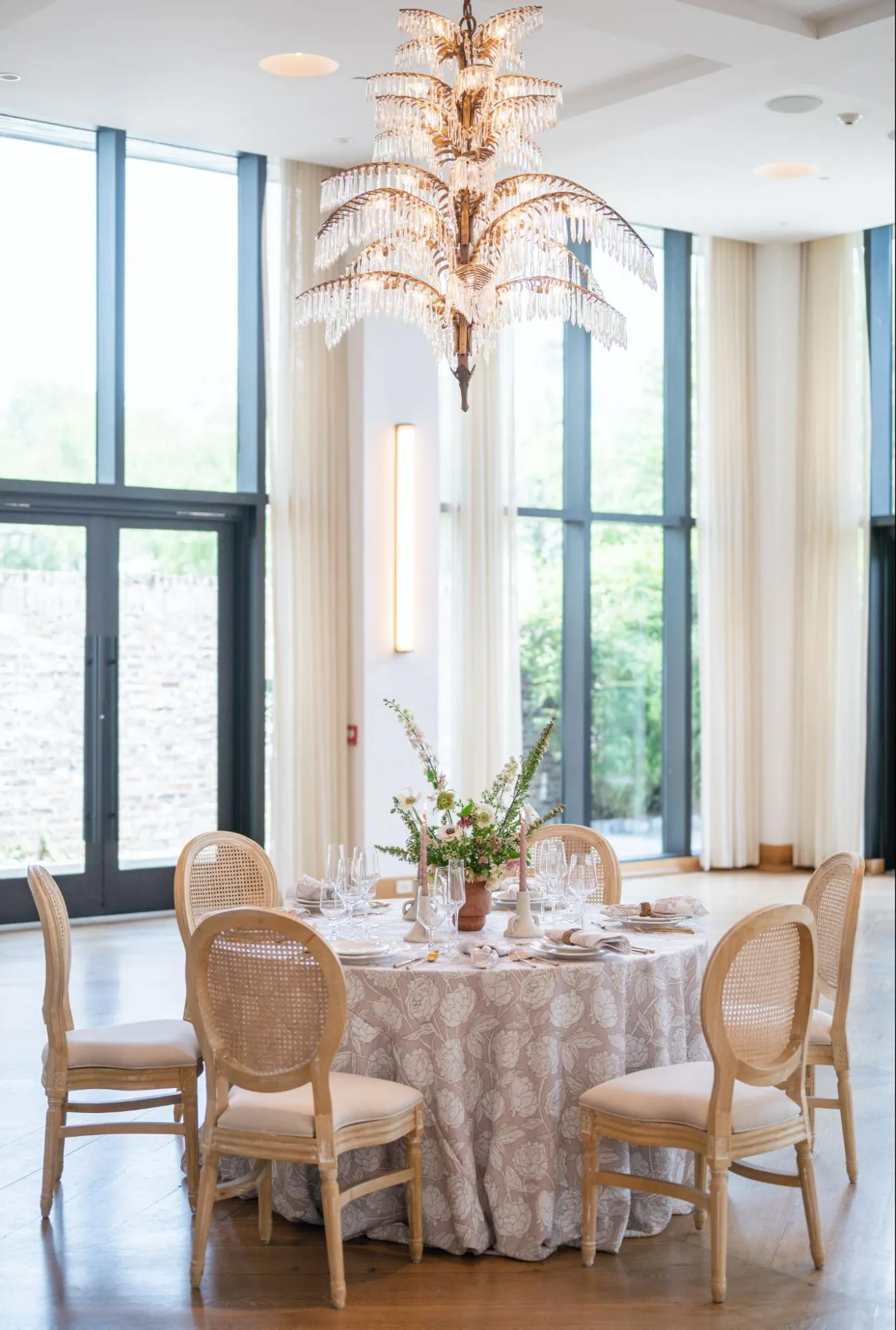
Luxury event design relies on restraint as much as transformation. Once fabric has softened, framed, concealed, or defined the areas that need attention, adding more may weaken the effect. Drapery is most compelling when its purpose remains clear.
Preserve Strong Architecture
If a wall, window, staircase, or other architectural feature contributes positively to the room, allow it to remain visible. The venue itself can provide much of the character an event needs.
Avoid Fabric on Every Perimeter
Continuous draping can make a distinctive venue feel generic. Leaving portions of the room exposed creates contrast between architecture and fabric while making the selected treatments feel more deliberate.
Do Not Add Drapery Where Furniture Already Defines the Space
A strong lounge composition, sculptural bar, or carefully arranged hospitality setting may already provide enough visual structure.
Adding a fabric backdrop simply because space is available can make the area feel overdesigned.
Remove Fabric That Does Not Have a Clear Purpose
Every treatment should contribute something specific. It should soften, frame, conceal, define, or support another important feature. If it does none of those things, removing it may create the stronger final composition.
Refine the Drapery Plan With Curated Events
Once planners understand what the venue needs from the fabric, the drapery can be evaluated alongside the broader event environment.
Curated Events can help coordinate drapery with furniture, bars, linens, lighting, staging where appropriate, and other rentals so the treatment feels integrated with the room rather than added as a separate layer.
Bring the Venue Floor Plan and Photography
Floor plans establish proportions and available areas, while photographs reveal architectural details, finishes, permanent fixtures, and visual distractions that may not be obvious on a diagram.
Together, they provide a stronger foundation for determining where drapery will have the greatest impact.
Identify What Should Remain Visible
Before deciding what to cover, identify which parts of the venue should remain part of the finished design.
Windows, architectural features, entrances, artwork, or views may all deserve to remain exposed.
This gives the drapery plan a clearer purpose from the beginning.
Share the Broader Event Design
Furniture, color palette, lighting direction, branding, and other major design decisions should inform the fabric treatment.
A richly colored furniture palette may call for quieter drapery, while restrained rental selections can support a stronger fabric moment.
Review Drapery From Several Viewpoints
Evaluate the treatment from the entrance, major seating areas, bars, lounges, and presentation zones.
A backdrop that appears balanced from directly in front may read differently from across a ballroom or beside another major rental element.
Edit the Final Treatment
Before adding another draped wall or backdrop, review what the room already has. The most refined solution may involve fewer fabric treatments concentrated in the places where they make the greatest difference.
Frequently Asked Questions
How can drapery change the look of a corporate venue?
Drapery can soften hard architecture, create cleaner backgrounds, define focal areas, conceal visual distractions, and change how large or intimate a room feels.
Does every wall at an event need to be draped?
No. Selective drapery usually creates a stronger result because it allows attractive architecture to remain visible and gives each fabric treatment a clear purpose.
Can drapery make a large ballroom feel more intimate?
Yes. Strategic fabric placement can establish stronger visual boundaries and bring attention toward the areas guests actually use without requiring the entire room to be enclosed.
What drapery colors work well for corporate events?
Neutral tones are versatile when furniture, branding, or architecture should lead, while deeper colors can work when the fabric is intended to create a stronger focal area. The venue and broader event palette should guide the final choice.
Should drapery match the event linens?
Not exactly. Related tones, textures, or levels of formality can create cohesion without making every textile identical.
Can drapery be used behind bars or lounge furniture?
Yes. Drapery can create a controlled backdrop behind bars or lounge settings, provided the fabric complements the furniture and allows its silhouette and materials to remain visible.
How does lighting affect event drapery?
Lighting can reveal folds, texture, sheen, and color depth. Dark fabrics may appear richer after sunset, while reflective surfaces can become more noticeable under directed light.
Conclusion
The most effective corporate event drapery does not attempt to conceal or completely reinvent a venue. It edits the room with purpose.
Fabric can soften hard architecture, create a stronger focal point, clean up distracting backgrounds, define hospitality areas, and change how guests perceive the scale of the space. The strongest results come from identifying what the venue already does well and adding drapery only where it improves the composition.
For Washington, D.C. corporate events, Curated Events can help planners consider drapery alongside furniture, bars, lighting, linens, staging, and other rentals so the final environment feels cohesive, intentional, and refined.