
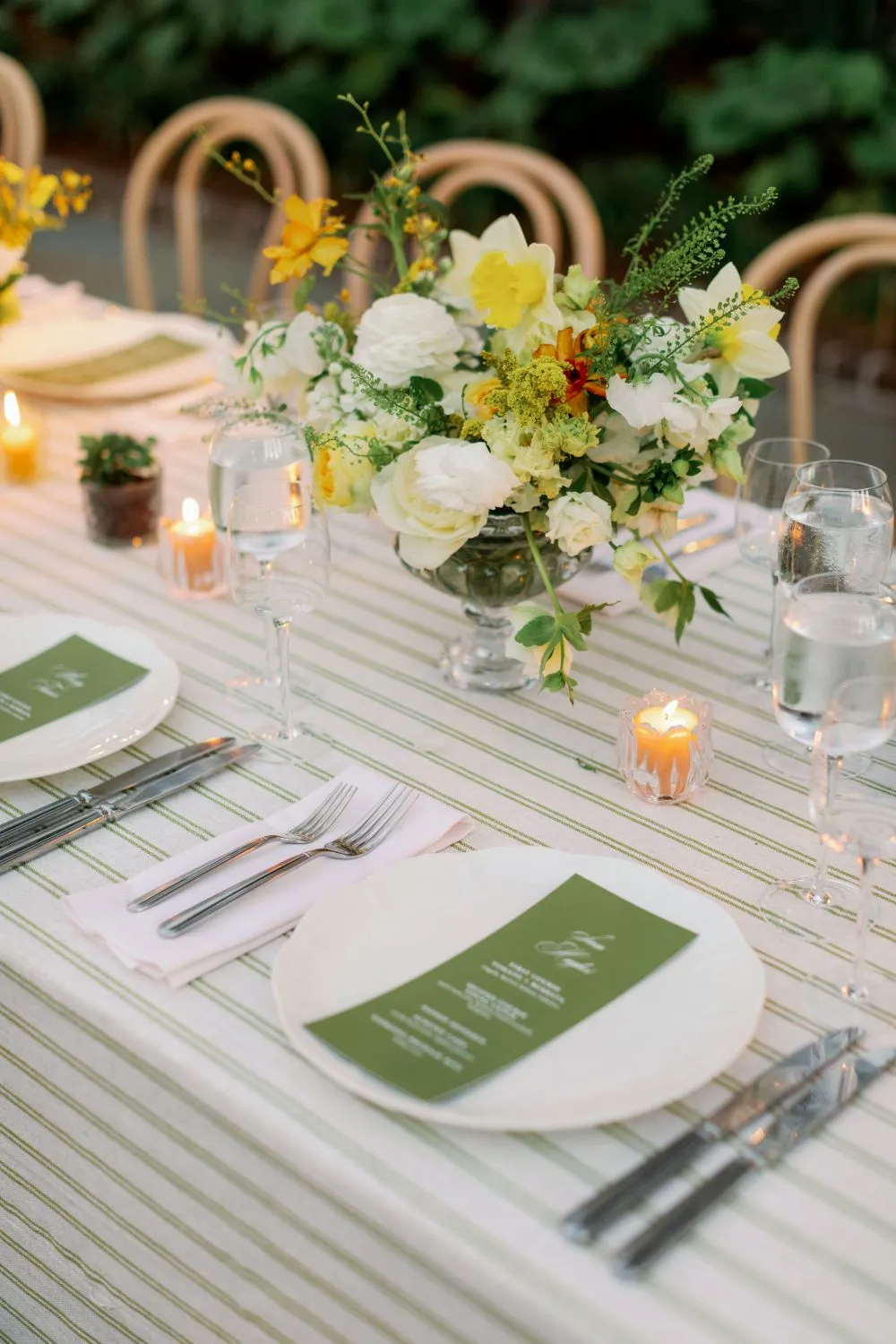
Autumn offers a rich design vocabulary for weddings, galas, corporate dinners, and private celebrations. Warm neutrals, deep botanical colors, metallic details, and layered textures can all reflect the season without relying on literal fall decorations. At the center of the table, china establishes the character of each place setting, while flatware adds definition, contrast, and a polished finishing detail.
The strongest combinations are not always exact matches. They balance pattern, color temperature, finish, and formality so that every piece contributes to one clear design direction. Whether the goal is timeless, organic, or contemporary, the following guidance will help you pair china and flatware for an elegant autumn event with confidence.
Begin With the Mood of the Event
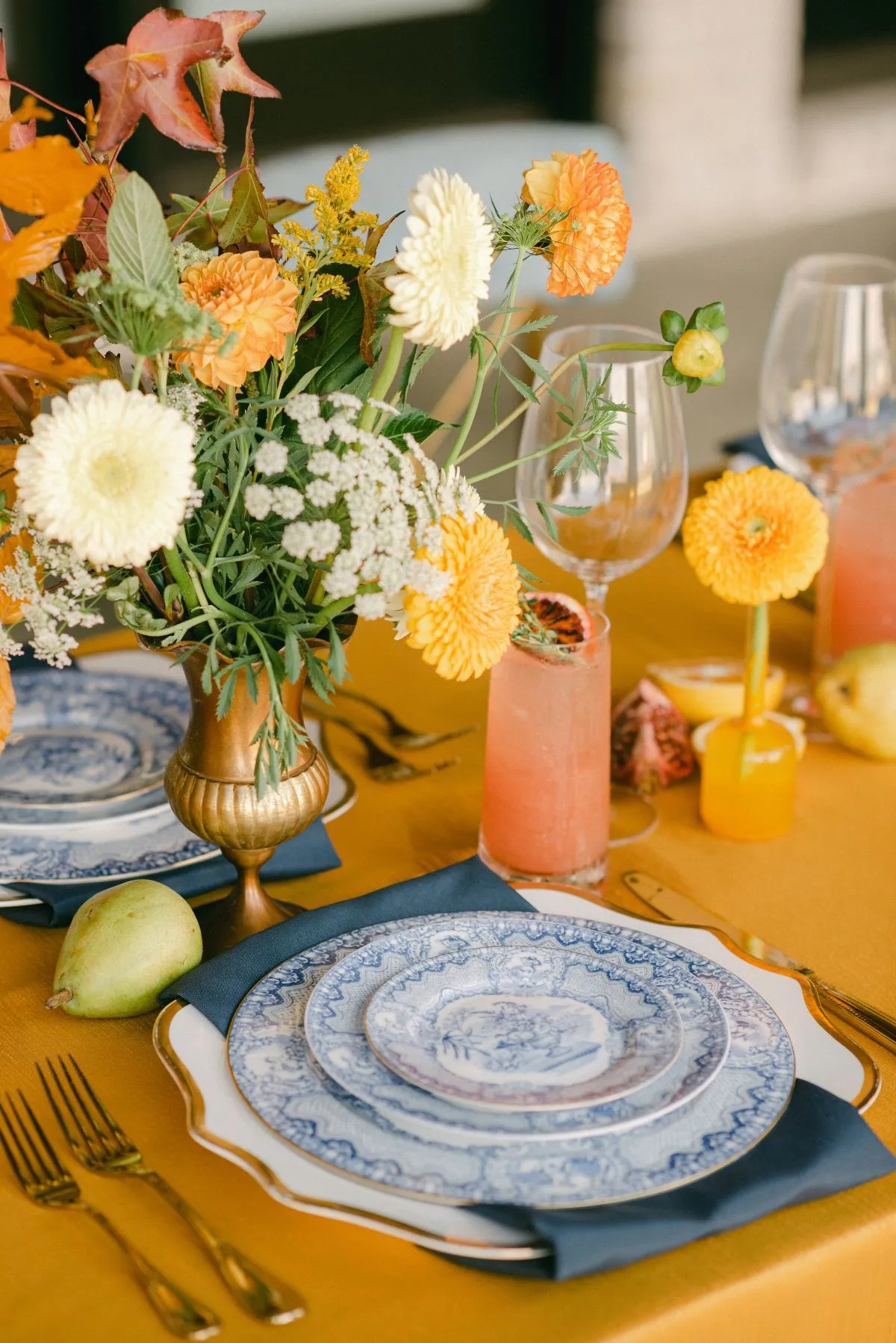
Before comparing plate patterns or metal finishes, define how the event should feel. A formal evening reception calls for a different tabletop than an intimate garden dinner, even when both share a similar autumn palette. Establishing the mood first narrows the options and keeps the final design cohesive.
Classic and Formal
A classic autumn table often begins with white, ivory, or softly patterned china. Gold or platinum rims introduce a refined detail without overwhelming the setting. Polished silver and gold flatware both work beautifully in this direction because their reflective finishes complement candlelight and formal surroundings.
This approach suits black-tie weddings, galas, anniversary dinners, and elegant estate celebrations. Deep navy, burgundy, olive, or warm ivory linens can bring seasonal depth while preserving the table’s formal character.
Warm and Organic
For a softer interpretation of autumn, consider textured stoneware, muted botanical patterns, or china in moss, taupe, smoke, and cream. These pieces feel connected to the season through color and texture rather than obvious motifs.
Brushed gold, understated silver, or subtly detailed flatware supports this relaxed elegance. The combination works especially well for garden weddings, outdoor dinners, vineyard-inspired celebrations, and intimate events at private estates.
Modern and Dramatic
Modern tables benefit from contrast and clean lines. Matte china, dark dinnerware, or crisp white plates can be paired with black, brushed gold, or streamlined silver flatware. A restrained color palette allows the shapes and finishes to create the visual interest.
This direction is well suited to contemporary weddings, corporate dinners, evening celebrations, and editorial-style events. Charcoal, espresso, deep green, and ivory can establish an autumn mood without making the design feel themed.
Use the China as the Visual Starting Point
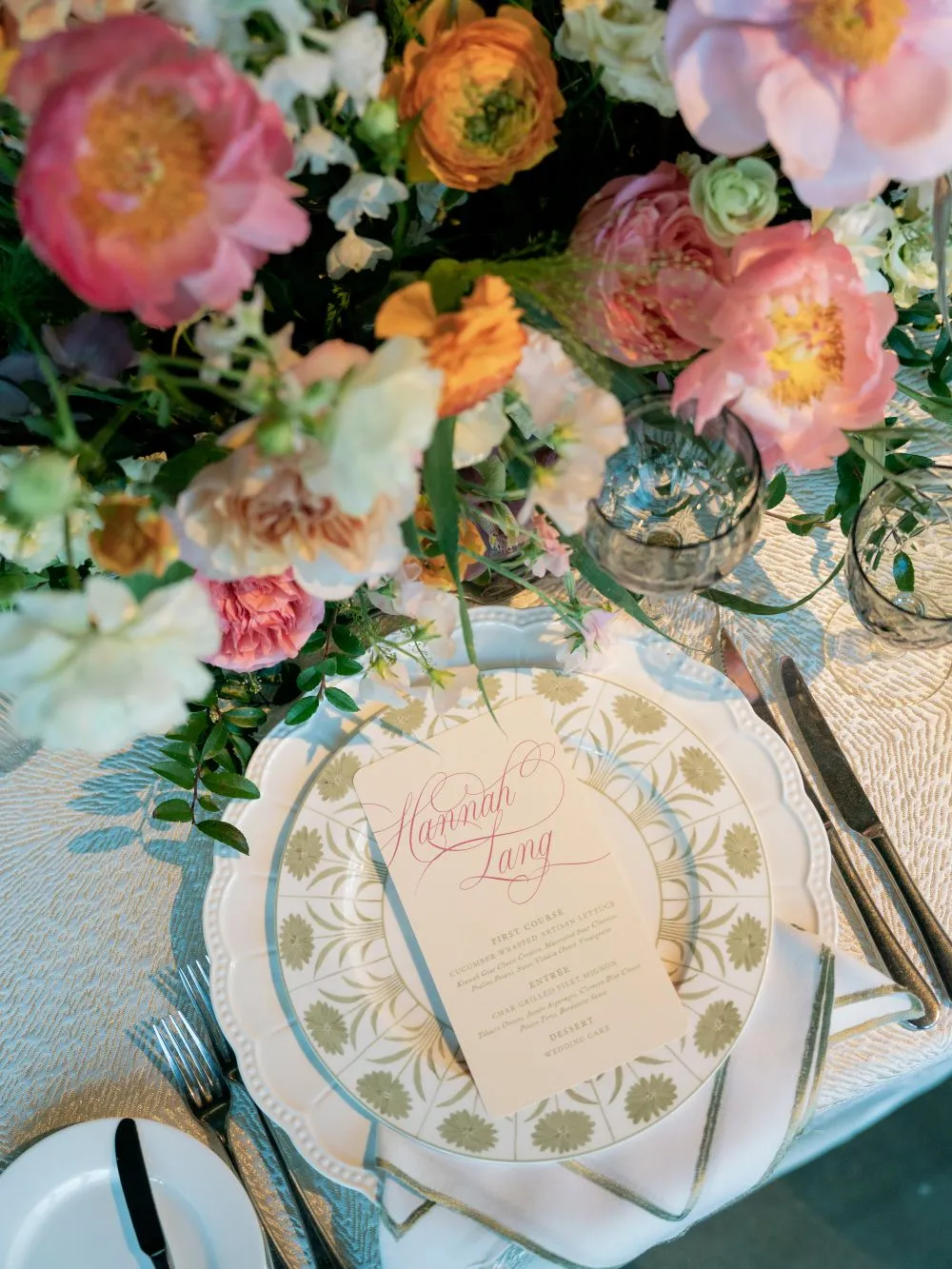
China usually occupies the greatest amount of visual space within a place setting, so it makes a natural starting point. Once the china is selected, the flatware can reinforce its style or introduce a deliberate contrast.
Consider the China’s Pattern
Patterned china already brings movement and detail to the table. Simple polished or brushed flatware gives those designs room to stand out. Floral and botanical plates, for example, often pair best with a streamlined silhouette and a finish that relates to one of the quieter colors in the pattern.
Minimal white or ivory china creates more freedom. It can support decorative flatware, an unusual handle, or a strong finish such as matte black or rose gold. Metallic-rimmed china looks cohesive with a related flatware finish, while textured stoneware benefits from brushed or understated metals that share its softer character.
China style
Flatware direction
Overall effect
Detailed floral or botanical pattern
Simple polished or brushed flatware
Balanced and refined
Minimal white or ivory china
Decorative, colored, or metallic flatware
Distinctive and versatile
Gold-rimmed china
Gold or warm-toned flatware
Formal and cohesive
Platinum- or silver-rimmed china
Polished or brushed silver flatware
Classic and luminous
Textured stoneware
Brushed or understated flatware
Organic and elevated
Dark or matte china
Gold, silver, or contrasting black flatware
Modern and dimensional
Balance the Visual Weight
Every place setting needs a clear focal point. If the china features an intricate border, layered color, or expressive floral pattern, highly decorative flatware may compete for attention. A quieter flatware design will frame the plate without distracting from it.
The reverse also applies. Clean, minimally detailed china can serve as a calm background for faceted handles, bamboo-inspired forms, dark finishes, or warm metallics. In most settings, pairing one statement element with one supporting element produces a polished result. A deliberately maximalist event can carry more detail, but the colors, shapes, and finishes still need a visible connection.
Coordinate the Metal Finish With the China’s Undertones
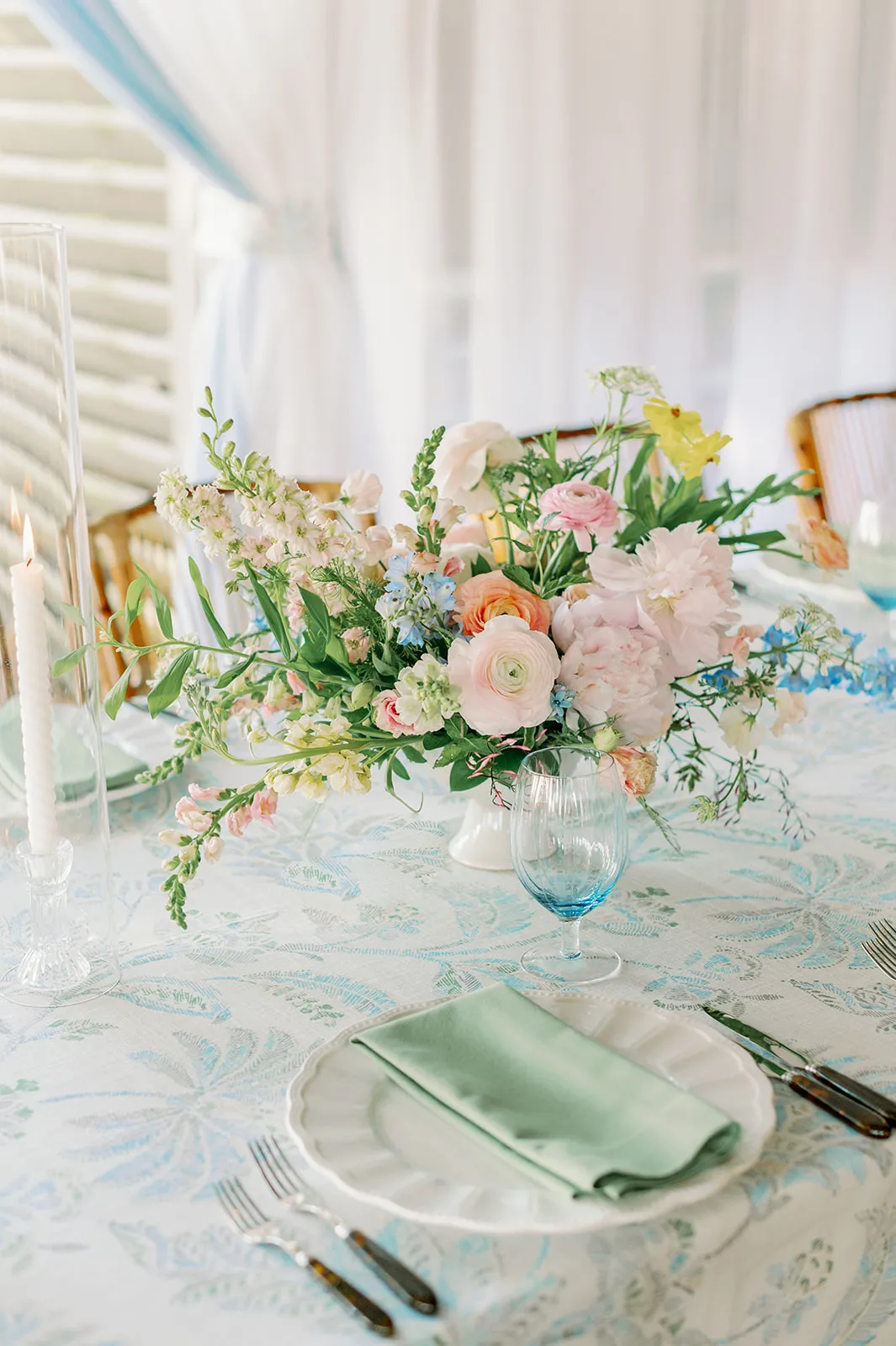
Looking at undertones offers a more reliable pairing method than matching colors at face value. Two neutral pieces can feel disconnected when one has a cool blue cast and the other leans warm or creamy. The flatware finish can either reinforce that temperature or create a purposeful contrast.
Gold and Brushed Gold Flatware
Gold flatware naturally complements cream, ivory, taupe, olive, ochre, and warm white china. It also works with gold-rimmed plates and botanical patterns containing amber, coral, brown, or warm green.
The finish affects the mood. Polished gold reflects light and creates a dressier impression, making it a strong choice for formal receptions and evening events. Brushed gold has a softer presence that pairs especially well with stoneware, textural linens, and organic designs.
Polished and Brushed Silver Flatware
Silver is particularly effective with crisp white, grey, blue, and other cool-toned china. It is also the natural companion to platinum- or silver-rimmed plates and traditional blue-and-white patterns.
Polished silver feels timeless and luminous. Brushed silver is quieter and more contemporary, so it can bridge the gap between formal china and a clean modern setting. Silver should not be treated as a neutral default. Its cooler quality can become an intentional part of the palette.
Black Flatware
Black flatware creates a defined outline around a place setting. With white or ivory china, it produces sharp, modern contrast. Alongside matte grey, taupe, or stone-colored dinnerware, it contributes to a tonal, architectural look.
Because black carries more visual weight than conventional silver, it works best when the surrounding pieces are edited carefully. Simple glassware, restrained linens, and china with clean lines allow the finish to look sophisticated rather than heavy.
Rose Gold and Mixed Metals
Rose gold brings warmth to blush, burgundy, cream, and softly patterned china. Its color is distinctive, so repeating it in a subtle tabletop detail can help the choice feel deliberate.
Mixed metals can also work when they share a similar level of polish or visual softness. A brushed gold fork does not require every nearby accent to be the same shade. Warm brass details and a fine gold rim can sit comfortably beside it because the finishes belong to the same visual family.
Five Refined Pairing Directions for Autumn
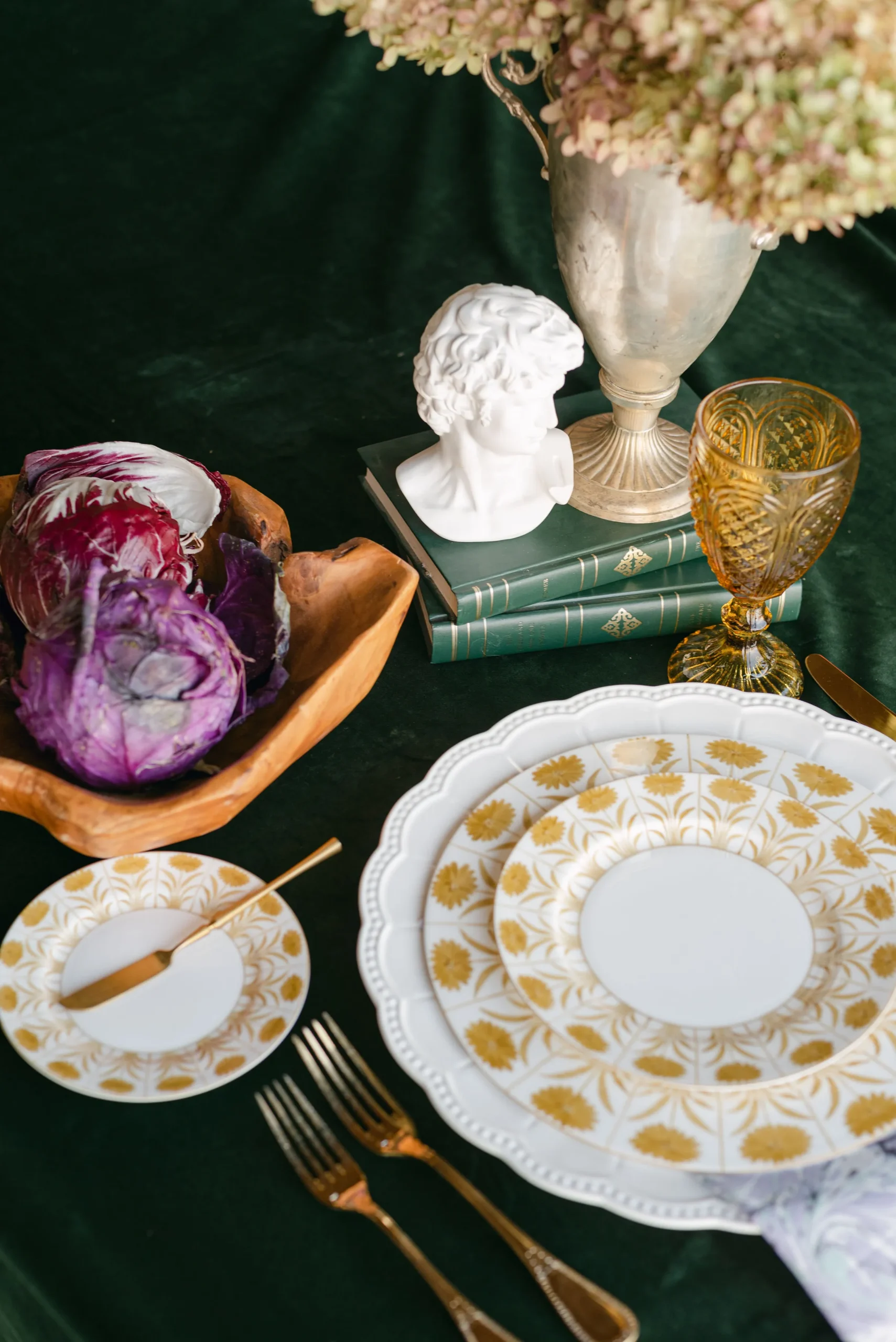
These combinations offer useful starting points rather than fixed formulas. Each one can be adjusted to reflect the venue, event type, linen choice, and locally available rental inventory.
Ivory and Gold for Timeless Warmth
Pair ivory, cream, or gold-rimmed china with polished or brushed gold flatware. Warm neutral linens allow the metallic details to glow, while clear glassware keeps the composition light.
This combination feels seasonal through warmth rather than overt decoration. It is a natural fit for formal weddings, estate dinners, and candlelit evening receptions.
Botanical China With Polished Silver
Let floral or garden-inspired china lead the design, then frame it with streamlined polished silver. Olive, ivory, or muted green linens can draw out botanical colors without making the setting overly coordinated.
Clear glassware or a lightly tinted goblet completes the look. The silver introduces a crisp finish that keeps the romantic pattern polished and suitable for a refined celebration.
Stoneware With Brushed Gold
Taupe, moss, smoke, or textured stoneware pairs naturally with brushed gold flatware. Both finishes have a softer quality, allowing them to create richness without excessive shine.
Add a textural neutral linen and amber or smoke-toned glassware for an organic autumn table. This pairing suits outdoor celebrations and garden-inspired events while maintaining an elevated appearance.
White China With Black Flatware
Crisp white china and black flatware create a clean, confident contrast. Deep olive, charcoal, or ivory linens can soften the composition, while minimal clear glassware preserves its modern lines.
The result is well suited to contemporary weddings, corporate dinners, and evening events. A small warm detail, such as candlelight or a muted gold accent, can prevent the black-and-white palette from feeling stark.
Platinum-Rimmed China With Classic Silver
White china edged in silver or platinum creates a natural relationship with polished silver flatware. Dove grey, cool ivory, or navy linens add depth, and traditional stemware supports the formal character.
This combination feels particularly appropriate for black-tie receptions, formal corporate events, and milestone celebrations. Its appeal comes from proportion, restraint, and luminosity rather than seasonal ornament.
Let the Menu Determine the Pieces You Need
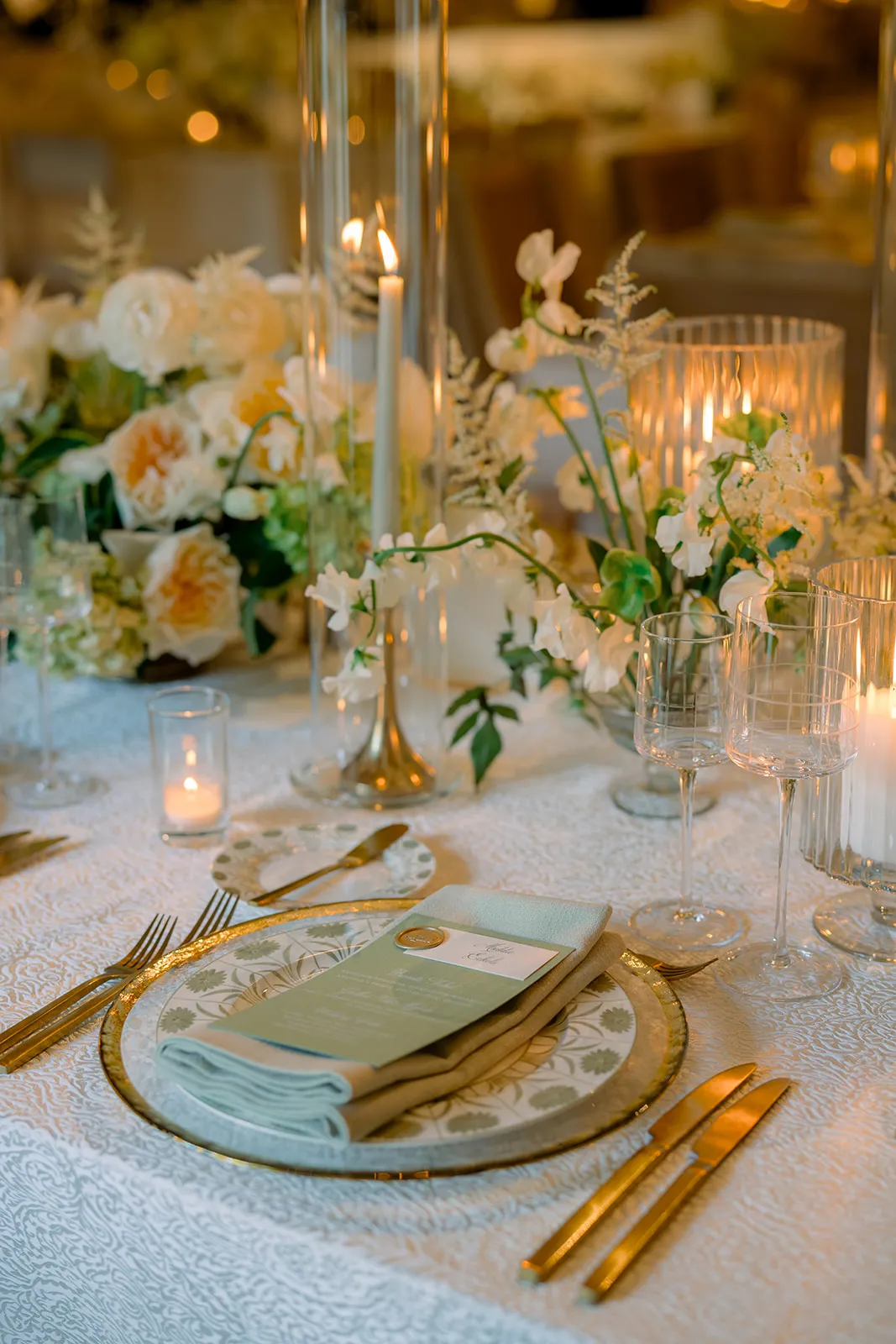
A beautiful place setting must still support the way the meal will be served. Before confirming china and flatware quantities, review the menu and service plan with the caterer. This prevents unnecessary pieces from crowding the table and ensures that guests have the correct item for every course.
Match the China to the Courses
A plated dinner will usually require a dinner plate, but the remaining china depends on the menu. Salad or appetizer plates may be set in advance or brought out with the course. Soup calls for an appropriate bowl, while a seated dessert service may require a separate plate. Cups and saucers make sense when coffee or tea is part of the formal service.
Using different pieces from a coordinated collection can add gentle variation while preserving a cohesive look. A patterned salad plate layered over a quiet dinner plate, for instance, can introduce detail without committing the entire setting to a bold pattern.
Select Flatware for the Service Style
A multi-course dinner may call for separate salad and dinner forks, a soup spoon, a steak knife, or dessert utensils. A simpler menu needs fewer pieces. Rather than building the setting for appearance alone, select each item according to its purpose.
The caterer can confirm which utensils are required and whether some should arrive with individual courses. This coordination also helps the rental team prepare accurate quantities.
Refine the Pairing With Supporting Elements
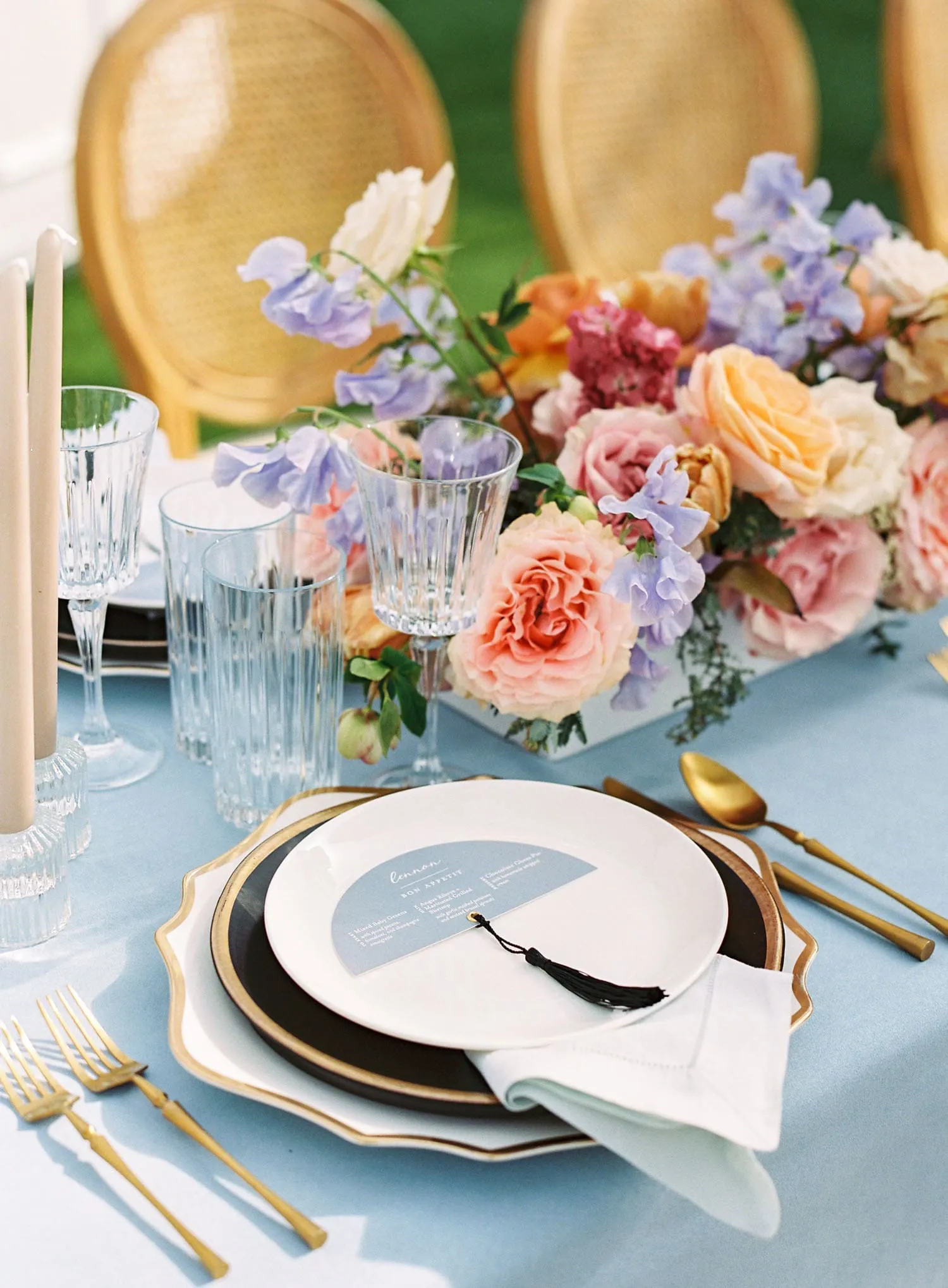
China and flatware should remain the focus, but a few supporting choices help them feel connected to the wider event design. Linens establish the background, chargers define the edge of the setting, and glassware introduces height and light.
Let the Linen Set the Background
Tonal linens produce a quiet, layered effect, while a deep linen beneath light china creates drama. Patterned linens generally work best with simple plates. When the china already includes a detailed motif, a solid linen gives the design room to breathe.
Use a Charger to Create Separation
A charger can visually separate china from a linen in a similar color. It can also repeat the flatware’s finish, connecting the metal elements across the place setting. Scale matters, especially when several plates or glasses will occupy the same area.
Keep Glassware in a Supporting Role
Clear glassware is a reliable choice when both the china and flatware have strong personalities. If the primary pairing is restrained, a lightly colored goblet can introduce another layer of autumn color without taking over the table.
Common China and Flatware Pairing Mistakes
Thoughtful editing often makes the difference between a layered table and a crowded one. Watch for these common issues as the design develops.
Matching Every Metal Exactly
Metal finishes can relate without being identical. Slight variation often gives the table more depth. Focus on compatible undertones and a consistent level of formality instead of trying to reproduce one exact metallic shade throughout the event.
Combining Too Many Statement Pieces
Ornate china, decorative flatware, patterned linen, colored glassware, and an elaborate charger can compete when they all carry equal emphasis. Decide which element should lead, then simplify the surrounding pieces.
Choosing by Color Alone
Color is only one part of the relationship. Shape, pattern scale, texture, sheen, and formality also affect whether two pieces belong together. A rustic plate and a highly ornate fork may share a color but still communicate different design directions.
Ignoring the Menu or Table Size
Full flatware service, layered plates, chargers, and multiple glasses require adequate room at each seat. Confirm the table dimensions and place-setting width before finalizing the design. A slightly edited setting will feel more luxurious than one that leaves guests with limited space.
Waiting Too Long to Reserve Specialty Pieces
Distinctive patterns and finishes may be in demand during the autumn event season. Begin selecting tabletop rentals once the venue, date, estimated guest count, and service style are established. Availability varies by market and event date, so early coordination gives the design team more flexibility.
How to Finalize Your Autumn Tabletop Rentals
Start by establishing the event mood and general color direction. Select the china as the visual anchor, then compare flatware finishes directly beside it. Once the main pairing is established, confirm the menu and determine which plates, bowls, and utensils the service requires.
Next, view the pairing against the selected linen and charger. Add glassware last so it supports the composition rather than redirecting it. Seeing the pieces together can reveal differences in scale, undertone, and finish that are difficult to judge separately.
Curated Events offers tabletop collections that range from classic white and metallic-rimmed china to botanical patterns, stoneware, and modern matte designs. Flatware options include polished and brushed metals, warm gold tones, rose gold, black finishes, and distinctive handle styles. Because collections and quantities differ by location, connect with your nearest Curated Events team to confirm availability and request a tailored quote.
Frequently Asked Questions
Should flatware match the metallic rim on the china?
An exact match is not necessary, but the finishes should feel related. Consider their undertones, sheen, and formality. A softly brushed gold can complement a fine gold rim even when the shades are not identical.
Can patterned china be paired with decorative flatware?
Yes, although one element should usually remain dominant. Detailed china often looks best with a quieter flatware silhouette. If the plate pattern is restrained, a more distinctive handle or finish can add interest without creating visual competition.
Is gold or silver flatware better for an autumn event?
Both can work beautifully. Gold naturally complements cream, taupe, olive, ochre, and other warm colors. Silver pairs especially well with crisp white, blue, grey, and platinum details. The event’s overall mood and the china’s undertones should guide the decision.
Can black flatware work for a formal event?
Black flatware can feel polished and formal when it has a refined silhouette and is paired with sophisticated china. Keep the surrounding elements restrained so the strong finish looks deliberate.
How many pieces of flatware are needed for each guest?
The menu and service style determine the number. Confirm every course with the caterer, including soup, salad, dessert, and any dishes requiring specialty utensils, before placing the rental order.
Create an Autumn Table With Lasting Style
The most successful china and flatware combinations feel balanced rather than perfectly matched. China gives the setting its personality, while flatware reinforces its undertones, visual weight, and formality. When both choices also support the menu and the available table space, the result feels polished from every angle.
An autumn event can draw from the season through warm metals, botanical colors, textured surfaces, and thoughtful contrast. With a clear design direction and a carefully edited selection of rentals, the table will feel seasonal, sophisticated, and distinctly suited to the occasion.