
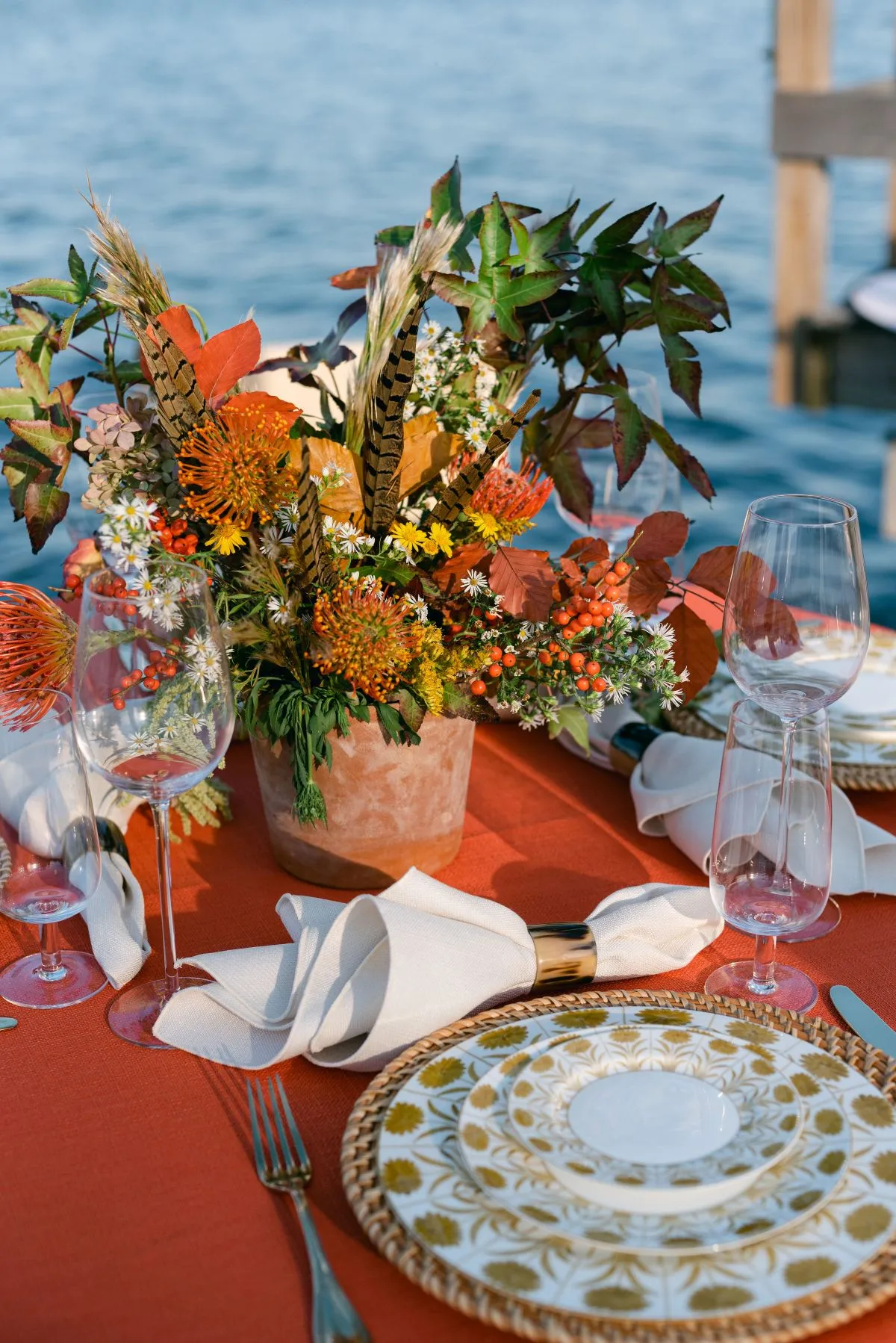
Charger plates and flatware may occupy less space than florals, linens, or furniture, but they establish much of the visual structure at each seat. The charger creates the foundation beneath the dinnerware, while the flatware frames the setting and communicates how the meal will progress.
These pieces should not be selected by color or finish alone. Their size, quantity, and placement must work with the table dimensions, china, glassware, napkin, printed materials, guest count, and catering plan. A charger that is too large can reduce the usable space between guests, while an elaborate flatware arrangement can crowd the table with utensils that the menu does not require.
Curated Events Chesapeake offers chargers, china, flatware, and glassware through its local tabletop collection. The charger inventory includes clear and colored glass, metallic, rattan, wicker, wood, patterned, square, and sculptural styles. The flatware collection includes silver, gold, copper, rose-gold, black, bamboo-inspired, faceted, brushed, and traditional patterns.
This guide explains how to build a complete place setting around proportion and meal service so every tabletop selection has a clear purpose.
Begin With the Meal Before Selecting the Tableware

The menu determines which flatware pieces and tabletop layers guests will actually use. A cocktail reception, plated dinner, buffet, family-style meal, and formal multi-course dinner each require a different arrangement.
Before selecting a charger or flatware pattern, confirm the meal sequence with the caterer. This prevents decorative preferences from producing a place setting that is crowded, confusing, or disconnected from the service plan.
Confirm the Number of Courses
Start by identifying every course that will be served at the table. Depending on the menu, the meal may include:
- A salad or first course
- Soup
- A plated entrée
- Bread service
- A seafood or cocktail course
- Dessert
- Coffee
A straightforward dinner may need only a dinner fork, dinner knife, and one additional utensil. A longer meal may require a salad fork, cocktail fork, dessert spoon, teaspoon, spreader, or other course-specific piece.
The quantity of utensils should follow the confirmed meal rather than a general idea of what a formal place setting should contain.
Identify What Will Be Preset
Not every item used during the meal must be placed on the table before guests arrive. Some china and flatware may be preset, while other pieces can be delivered with the appropriate course.
Ask the caterer which items need to appear in the initial guest-arrival setting. This arrangement may include:
- Charger plate
- Napkin
- Menu
- Place card
- Dinner fork and knife
- First-course flatware
- Preset china
- Glassware
The fewer pieces that must be preset, the more flexibility the table has for menus, centerpieces, shared dishes, and guest comfort.
Separate Necessary Pieces From Decorative Additions
Additional utensils can make a table appear more elaborate, but they should not be included only to create a formal look.
Every fork, knife, spoon, and spreader should correspond to a course or service need. Unnecessary pieces can create uncertainty for guests and use valuable width on the tabletop.
A well-edited setting often looks more intentional than one filled with pieces that have no practical role.
Confirm When the Charger Will Be Removed
The charger’s role changes according to the caterer’s service sequence. It may remain beneath the first course, be removed before the entrée, or leave the table at another designated point.
Confirm the planned removal timing before the tabletop design is approved. This affects both the guest experience and the table’s appearance later in the meal.
The setting should continue to look complete after the charger is removed and more of the linen or table surface becomes visible.
Establish the Place-Setting Footprint

Each guest needs more than the diameter of the dinner plate. The complete footprint includes the charger, forks, knives, spoons, napkin, glassware, menu, place card, and enough separation from neighboring settings.
Calculating this footprint is especially important when using large chargers, narrow tables, wide chairs, or an extensive flatware arrangement.
Start With the Charger Diameter
Curated Events Chesapeake currently carries chargers ranging from approximately 11 inches to 13.25 inches. Examples include the 11-inch Fusion White Charger, the 11.625-inch White Square Charger, several 12- and 12.5-inch options, numerous 13-inch styles, and the 13.25-inch Valencia Metal Copper Charger.
A one-inch difference may appear minor when viewing an individual product, but it becomes significant when several guests are seated around one table.
Before selecting a charger, determine whether the planned table and seat count provide enough room for its full diameter.
Add Space for Flatware on Both Sides
The charger represents only the central portion of the place setting. Forks typically occupy space to the left, while knives and spoons occupy space to the right according to the menu and catering plan.
The setting also needs enough separation from neighboring guests so utensils do not overlap visually or physically.
When several pieces are required on one side, arrange them according to the order in which they will be used, following the caterer’s approved service plan. If the available width is limited, some course-specific pieces may be better delivered later rather than preset.
Account for Napkins, Menus, and Place Cards
Napkin placement changes the amount of space required around the charger. A napkin folded on top of the charger uses the central setting, while one placed beside the forks increases the total width.
Menus and place cards may also extend beyond the charger or overlap with glassware. Decide where these pieces will sit before the final seat count is approved.
A full-scale test should include the actual size of the printed materials rather than placeholder pieces that are smaller than the finished design.
Build the Setting at Full Scale
Product images cannot show whether the complete setting will function on the selected table.
Build one representative place setting using:
- The proposed charger
- Dinnerware
- Every preset flatware piece
- Napkin
- Menu and place card
- Glassware
- Linen or exposed tabletop
- An outline of the centerpiece footprint
Then repeat the setting beside it to confirm the space between neighboring guests. This reveals proportion issues that may not be visible when one seat is viewed in isolation.
Match the Charger to the Dinnerware Above It
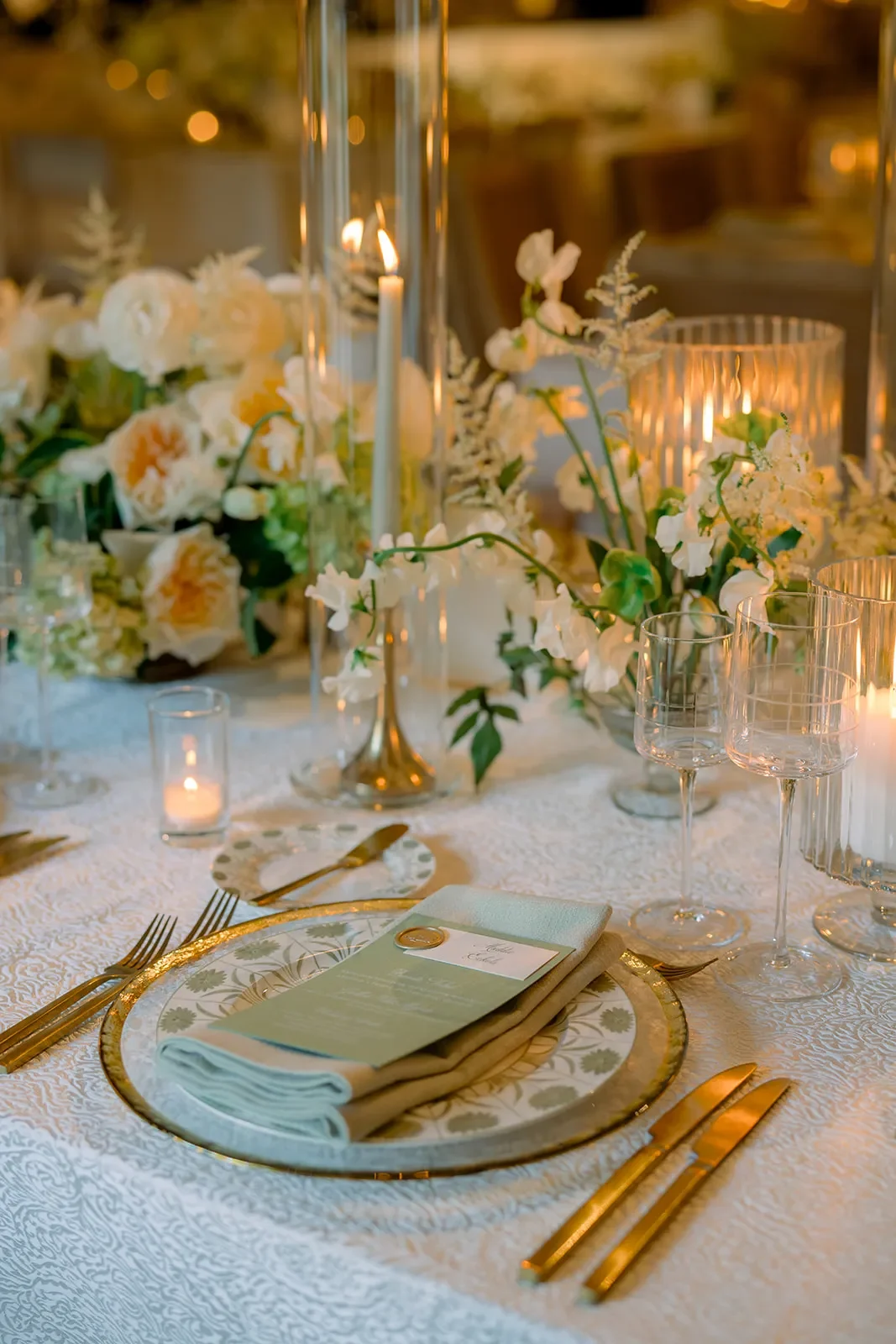
A charger should frame the dinnerware rather than disappear beneath it or compete for attention. The relationship between the charger and dinner plate depends on size, shape, rim design, pattern, texture, and color.
Review the two pieces as a layered composition rather than choosing each independently.
Leave a Visible Border Around the Dinner Plate
Once the dinner plate is centered, enough of the charger should remain visible to create a clear frame.
This is particularly important when the charger has:
- A metallic rim
- A hammered texture
- A patterned edge
- A sculptural form
- Natural woven material
- Decorative color
If the dinner plate conceals nearly the entire design, the charger is not contributing meaningfully to the place setting.
The visible border should appear consistent at every seat. Small differences in plate placement can make rows of settings look uneven, particularly along long rectangular or community tables.
Pair Detailed China With a Restrained Charger
China with a decorative border, floral pattern, colored glaze, or distinctive shape already creates a strong visual layer. Pairing it with an equally detailed charger can make the center of the place setting difficult to read.
A clear glass, quiet metallic, linen-look, or restrained natural charger can provide definition without competing with the china.
The Chesapeake charger collection includes clear-glass, solid metallic, heirloom-style, and natural-material options that can support detailed dinnerware.
Use a More Distinctive Charger Beneath Simple China
Plain white or minimally decorated china can support a charger with stronger color, texture, or pattern.
Current Chesapeake options include:
- Garden Party Charger Plate
- Natural Rattan Charger
- Wicker Charger
- Tropical Natural Wood Charger
- Arumy Distressed Wood Charger
- Sienna Lace Charger
- Hammered Copper Charger
- Pebble Silver Glass Charger
A distinctive charger can give simple china more visual presence without requiring another patterned layer across the entire table.
Check Shape Compatibility
A round plate centered on a round charger creates a traditional, symmetrical layer. A square charger, irregular edge, or sculptural design introduces contrast.
That contrast should appear deliberate. Confirm that the plate can be centered consistently and that the charger’s corners or edges do not interfere with flatware, neighboring seats, or the table edge.
The Chesapeake collection includes the 11.625-inch White Square Charger as well as cabbage-shaped, lace-edged, floral, and other decorative forms.
Choose a Charger Material That Serves the Design

Material affects how the charger interacts with the linen, table surface, china, flatware, and surrounding venue. Instead of choosing glass, metal, wicker, or wood only because it fits a broad theme, consider what that material contributes to the place setting.
Use Clear Glass to Preserve the Linen or Table Surface
A clear glass charger creates a defined plate layer while allowing the textile or table finish beneath it to remain visible.
Curated Events Chesapeake carries options such as the Belmont Clear Glass Charger and Hammered Clear Glass Charger.
Clear glass may be useful when:
- The linen has a pattern that should remain visible
- The wood tabletop is part of the design
- The place setting already includes several colors
- The charger needs to frame the plate without adding another dominant finish
A hammered surface can introduce subtle texture, while smooth clear glass produces a quieter effect.
Use Metallic Finishes to Create a Defined Perimeter
Metallic chargers create a visible edge around the dinner plate and can help establish the table’s primary finish.
Current Chesapeake options include:
- Orizzonte Gold Charger
- Orizzonte Platinum Charger
- Galaxy Gold Glass Charger
- Galaxy Silver Glass Charger
- Gold Lacquer Charger
- Gold Checked Edge Charger
- Pebble Silver Glass Charger
- Valencia Metal Copper Charger
- Hammered Copper Charger
Gold and copper generally introduce warmth, while silver and platinum create a cooler visual effect. Compare the finish with the linen, china, flatware, candleholders, chairs, and venue materials before making the final selection.
Use Rattan, Wicker, or Wood for Visible Texture
Natural chargers introduce texture and allow the individual place setting to connect with visible wood tables, woven furniture, garden surroundings, and outdoor Chesapeake-area venues.
The local collection includes Natural Rattan, Wicker, Tropical Natural Wood, and Arumy Distressed Wood chargers.
These materials can work in both relaxed and formal settings. Their formality depends on the china, flatware, linens, florals, and service style placed around them.
A woven charger paired with refined china and carefully selected flatware may feel elevated, while the same charger with simpler tableware creates a more relaxed effect. You may also find Tips for Renting Elegant Tableware and Flatware for Weddings helpful.
Use Pattern or Sculptural Form Selectively
A floral, cabbage-shaped, lace-edged, heirloom-inspired, or strongly textured charger can become one of the dominant tabletop details.
When using a statement charger, simplify at least one surrounding layer. Consider pairing it with:
- Solid china
- Streamlined flatware
- A restrained napkin
- A simple linen
- Minimal printed materials
This creates hierarchy and allows the charger’s shape or pattern to remain visible.
Let the Menu Determine the Flatware Count
A rental flatware pattern may include several types of forks, knives, and spoons, but the complete pattern does not need to appear at every seat.
The final count should be built piece by piece from the menu and service plan.
Build the Basic Dinner Setting
For a straightforward meal, the initial setting may include:
- Dinner fork
- Dinner knife
- One first-course or dessert utensil, when needed
The caterer should confirm the exact arrangement and determine whether additional utensils will be preset or delivered later.
Start with the pieces required for the meal, then evaluate whether the table has room for decorative or printed elements.
Add Course-Specific Pieces Only When Required
Some Chesapeake flatware patterns include salad forks, cocktail forks, place or dessert spoons, teaspoons, demitasse spoons, and butter spreaders. We cover this further in What does flatware include for events.
The Milano collection, for example, includes a butter knife, cocktail fork, dinner fork, demitasse spoon, place or dessert spoon, salad fork, teaspoon, and dinner knife. Unity and Luma also include multiple course-specific pieces.
Access to these pieces allows the setting to be tailored to the meal. It does not mean that every available utensil should be placed at each seat.
Check Whether a Steak Knife Is Needed
A specialty knife should correspond to the entrée rather than being added automatically to every formal setting.
Curated Events Chesapeake lists a Large Wood Stainless Steel Steak Knife separately from its primary flatware patterns.
Confirm whether the menu requires it, when it will be placed, and whether it visually coordinates with the rest of the flatware.
Coordinate Dessert and Coffee Service
Dessert utensils can be:
- Preset above the charger
- Included beside the setting
- Delivered with dessert
- Provided at a separate dessert station
Coffee spoons may also be brought with the cup-and-saucer service rather than placed on the table from the beginning.
Delivering these pieces later can create a cleaner initial setting and preserve space for menus, glassware, and other tabletop elements.
Select a Flatware Pattern by Visual Weight
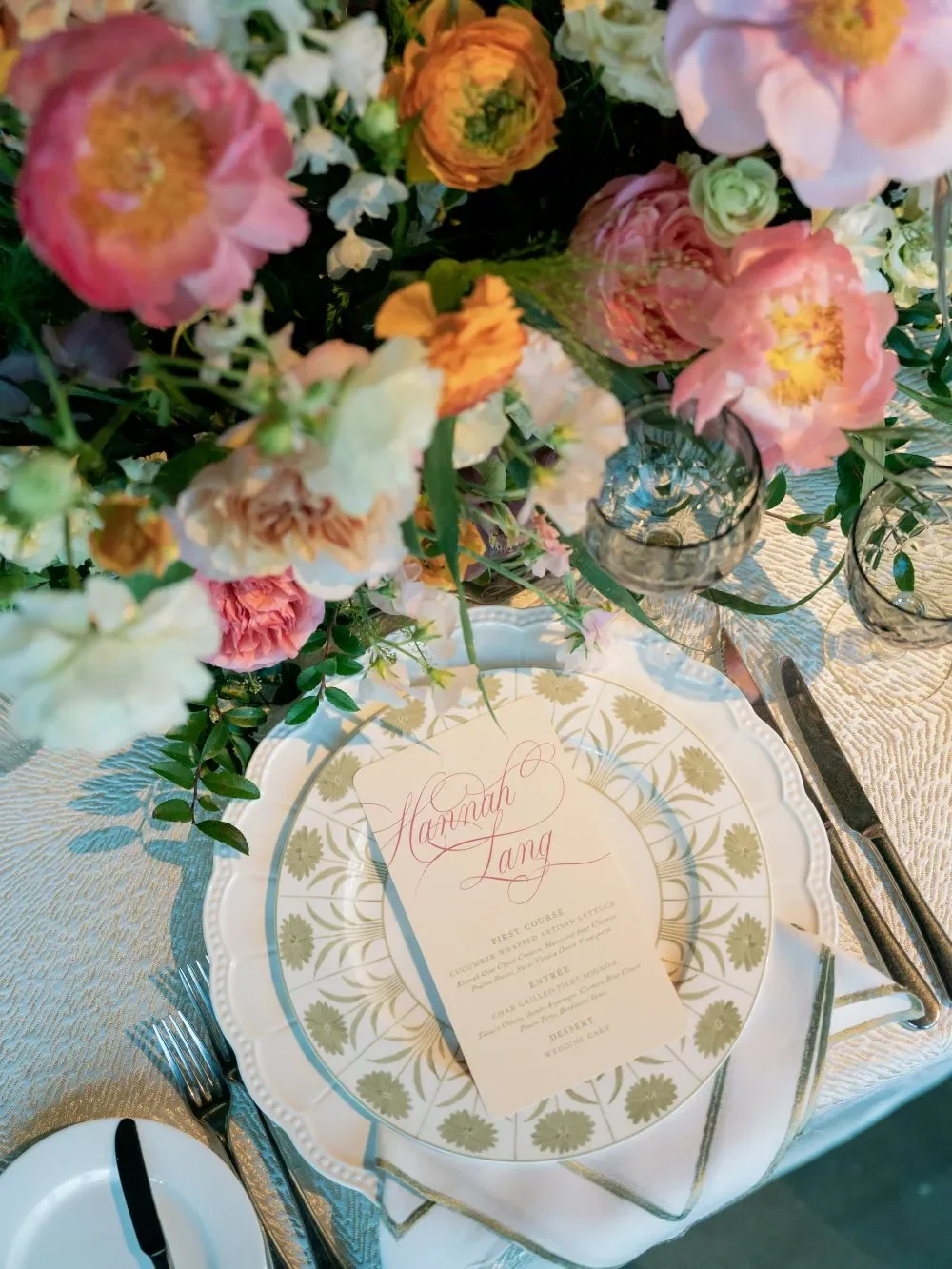
Flatware patterns differ in handle thickness, length, ornament, finish, and silhouette. These characteristics affect the table even when the overall metal color remains the same.
A slim, streamlined pattern visually recedes, while an ornate, faceted, bamboo-inspired, or dark finish gives the flatware more presence.
Use Streamlined Patterns for Detailed Tables
When the charger, china, linen, napkin, or floral design already contains strong pattern, restrained flatware can prevent the setting from becoming visually crowded. Read more in The Best Flatware and China Pairings for a Fall Events.
Current Chesapeake options include Unity, Milano, Luma, Velo Brushed Stainless, and Velo Brushed Gold.
These patterns can provide a clean frame around detailed tableware without introducing another highly decorative element.
Use Traditional Patterns for Formal Place Settings
Traditional flatware can support classic wedding receptions, formal dinners, galas, and events using detailed china or crystal-inspired glassware.
Chateau and King Arthur are among the traditional patterns currently represented in the Chesapeake collection.
The level of formality should still be evaluated against the full setting. Traditional flatware can be paired with modern china for contrast or with classic pieces for a more unified presentation.
Use Faceted or Textured Handles for Subtle Detail
Handle texture can introduce visual interest without occupying additional tabletop space.
Lucca Faceted, Bamboo, and Sequoia are current Chesapeake options that use handle shape or surface detail to create a more distinctive profile.
These patterns can be useful when the charger and china are restrained but the setting still needs a smaller decorative element.
Use Black, Copper, or Rose Gold for Stronger Contrast
Flatware in black, copper, or rose gold creates a stronger outline against pale linens, clear chargers, and white china.
The Chesapeake inventory includes Capri Black Matte, Capri Copper, Capri Rose Gold, and Copper Flatware.
These finishes should connect to at least one other part of the design, such as:
- Charger edge
- Bar finish
- Chair frame
- Candleholder
- Menu detail
- Linen accent
- Venue architecture
A single strong finish can look intentional. Several unrelated finishes can make the table appear fragmented.
Coordinate Metals Without Making Everything Match
A coordinated place setting does not require the charger, flatware, china rim, glassware rim, chairs, and candleholders to use the exact same metal.
A more layered table often uses one dominant finish and one quieter supporting finish.
Choose One Dominant Metal
Identify which finish will appear most frequently across the table.
The dominant metal may be established by:
- The charger
- The flatware
- A china border
- Candleholders
- Chair details
- The centerpiece vessel
Once the dominant finish is clear, additional metallic elements can be selected according to whether they should reinforce or contrast with it.
Use a Second Finish in a Smaller Role
A platinum charger can sit beside stainless-steel flatware, while a copper charger may be paired with restrained silver pieces. The finishes do not need to be identical when their relationship appears intentional.
Use the secondary finish in fewer places so the table retains hierarchy.
For example, copper flatware may provide the stronger accent while a clear charger with a narrow gold or neutral edge remains in a supporting role.
Compare Warm and Cool Undertones
Gold, brass, copper, and rose gold generally create warmer effects. Silver, platinum, and stainless steel tend to read cooler.
Compare these finishes beside the actual linen and china. A warm ivory cloth may shift the appearance of silver, while a cool white linen can make certain gold finishes appear more pronounced.
Venue materials also influence the combination. Brick, wood, stone, tent canopies, and flooring all contribute undertones that may strengthen or soften the tabletop metals.
Avoid Repeating Metallic Detail on Every Layer
A table can lose focus when the charger, flatware, china rim, glassware rim, chair frame, candleholder, and menu all use prominent metallic finishes.
Choose two or three layers to carry the strongest repetition. Let the remaining elements provide contrast through clear glass, neutral textiles, restrained china, or natural materials.
Adjust the Setting to the Table Shape
The same charger and flatware combination can perform differently on a round table, narrow rectangular table, farm table, or extended community table.
Table shape affects the angle of each place setting, the amount of available width, the centerpiece footprint, and the way repetition appears across the room.
Check Spacing Around Round Tables
Place settings on a round table angle toward the center. This causes the outer ends of neighboring forks, knives, and chargers to come closer together than they would on a straight table.
A table may technically accommodate a given number of chairs while leaving insufficient room for large chargers and multiple flatware pieces.
Curated Events Chesapeake lists a 72-inch round table as seating approximately 10 to 12 guests, but the final seat count must also reflect the selected chairs, chargers, place-setting width, and centerpiece.
Test the planned guest count with the actual tabletop components rather than relying on table capacity alone.
Protect Width on Narrow Rectangular Tables
A long rectangular table may provide sufficient length for the guest count while offering limited depth between opposing settings.
Large chargers, extensive glassware, menus, and broad centerpieces can compete for the same central area. Review both the width allocated to each guest and the depth required between the charger and centerpiece.
When the table is narrow, consider:
- Reducing preset flatware
- Delivering dessert pieces later
- Selecting a smaller charger
- Narrowing the centerpiece
- Moving menus onto the charger
- Limiting shared tabletop items
Use Repetition to Structure Community Tables
Long community tables create strong horizontal sightlines. Repeated chargers and flatware can provide rhythm and help organize the surface.
Alignment is especially visible on these tables. Keep the charger edges, flatware placement, napkin folds, and glassware positions consistent from one end to the other.
A community table can also accommodate deliberate changes, such as a different charger at the head positions, but the distinction should be planned rather than accidental.
Recalculate Capacity When Using Oversized or Sculptural Chargers
Do not assume the table can hold the same number of guests after changing from an 11-inch charger to a 13- or 13.25-inch style.
The Chesapeake collection includes chargers across that size range, and the larger pieces require more space between neighboring settings.
Recalculate the complete footprint whenever the charger size or shape changes.
Plan for the Place Setting to Change During Dinner
The arrival setting is only the first version of the table. Plates, menus, napkins, chargers, utensils, and glassware may be removed, replaced, or added as service progresses.
A successful design should remain complete through those changes.
Map the Initial Guest-Arrival Setting
Record exactly what guests will see when they first sit down.
The initial setting may include:
- Charger
- Napkin
- Menu
- Place card
- Preset china
- Dinner and first-course flatware
- Water and wine glasses
This is often the most photographed stage of the table, but it must also allow guests to sit comfortably and understand the service arrangement.
Confirm the First Table Reset
Ask the caterer what happens when the first course begins.
Questions may include:
- Is the menu removed?
- Does the napkin remain on the charger?
- Is a plate placed directly on the charger?
- Is the charger removed before the entrée?
- Which utensil is cleared after the first course?
- Are additional pieces delivered later?
Documenting the reset prevents uncertainty between the design plan and catering execution. We cover this further in Catering Equipment Checklist for Nashville Summer Events.
Protect Space for Shared or Family-Style Service
Family-style meals require central space for platters, bowls, serving utensils, bread, and other shared items.
A large charger and extensive individual setting may leave insufficient room for that service.
Before finalizing the tabletop, map the footprint of every shared item the caterer expects to place on the table. The setting may need smaller chargers, fewer preset utensils, or a more restrained centerpiece.
Consider the Table After the Charger Is Removed
Once the charger leaves, more of the linen or table surface becomes visible. The dinner plate may also appear smaller within the surrounding flatware arrangement.
Review the table both with and without the charger. A setting that depends entirely on the charger for color or structure may feel incomplete later in the meal.
Color and texture can be repeated through the napkin, menu, linen, or another permanent tabletop detail so the design remains cohesive.
Reference Chesapeake Without Creating a Literal Coastal Theme
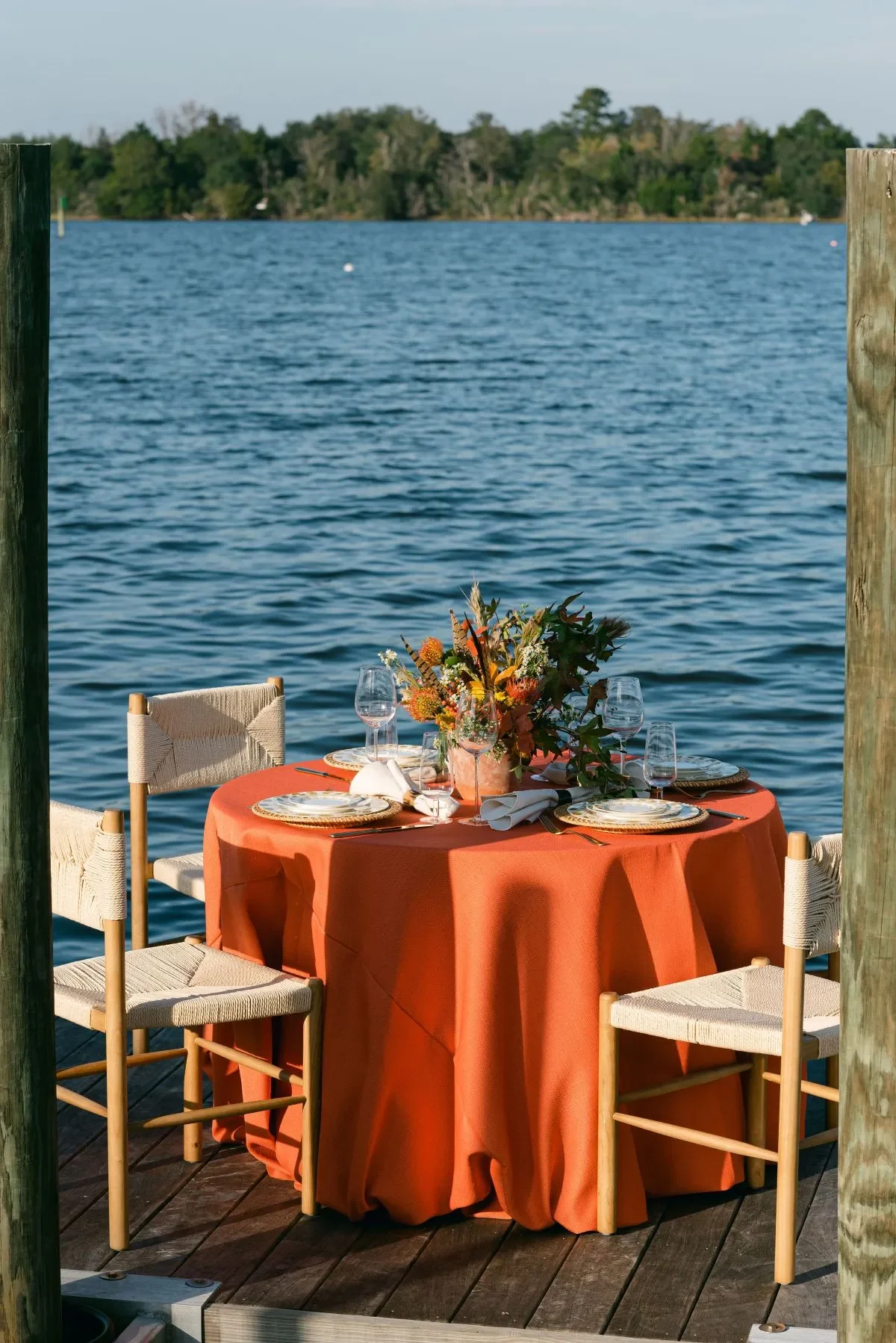
A Chesapeake event can respond to the region through material, color, and finish without relying on anchors, shells, rope motifs, or overt nautical details.
The venue and surrounding landscape should influence the table without dictating the entire theme. When flatware and chargers are selected as part of a broader plan for summer event rentals in Chesapeake, their materials and finishes can respond subtly to the tables, linens, chairs, lighting, architecture, and natural setting.
Use Natural Materials for Waterfront and Garden Settings
Rattan, wicker, wood, and textured glass chargers can connect the setting to outdoor venues, landscaped properties, and waterfront locations. Find the showroom nearest you on our store locations page.
The Chesapeake charger collection includes several natural and textured options that can support this approach.
Pairing these chargers with refined china and flatware prevents the design from becoming overly casual.
Use Silver and Clear Glass for a Cooler Palette
Clear glass, silver, platinum, blue, and white can create a cooler visual direction that relates subtly to water and open-air settings.
Options such as the Belmont Clear Glass Charger, Hammered Clear Glass Charger, Galaxy Silver Glass Charger, Pebble Silver Glass Charger, and Orizzonte Platinum Charger provide several ways to introduce this palette. The result can reference the regional setting without depending on literal coastal symbols.
Use Copper and Warm Gold With Brick or Wood Architecture
Chesapeake-area events held around brick, wood, stone, historic architecture, or candlelit tents may support warmer metallic finishes.
Copper and gold chargers or flatware can respond to those surroundings while creating contrast against white or ivory dinnerware.
Curated Events Chesapeake carries copper chargers, gold chargers, Gold Gatsby flatware, Capri Copper, and other warm-finish patterns.
Let the Venue Influence the Finish, Not Dictate It
The setting still needs to reflect the event’s formality, meal service, linen, china, and overall design.
A waterfront venue does not require rattan chargers, just as a brick venue does not require copper flatware. Use the location as one design input and choose the combination that best supports the complete reception.
Frequently Asked Questions
Does Every Formal Place Setting Need a Charger?
No. Chargers can provide structure, color, texture, and a finished arrival presentation, but they are not required for every formal event.
A place setting can still feel refined through coordinated china, flatware, glassware, linens, and napkins. Use a charger when it makes a clear contribution to the design or service plan.
How Many Flatware Pieces Should Be Placed at Each Seat?
The number should follow the menu and the caterer’s service sequence.
A simple meal may require a dinner fork, dinner knife, and one additional piece. A multi-course dinner may require several utensils, although some can be delivered with the course instead of being preset.
Do Charger Plates and Flatware Need to Use the Same Metal Finish?
No. They can use related or contrasting finishes when the combination is intentional.
Choose one dominant metal and use the second in a smaller supporting role. Compare the finishes with the linen, china, glassware, and venue materials before approving the pairing.
Can Chargers Reduce the Number of Guests Who Fit at a Table?
Yes. Larger or sculptural chargers increase the width required for each place setting, particularly when combined with several flatware pieces and glasses.
Recalculate the table capacity whenever the charger size or setting composition changes.
Conclusion
Charger plates and flatware should not be treated as isolated decorative accessories. Their size, finish, quantity, and placement affect how guests sit, how the table is serviced, and how the complete setting appears from arrival through dessert.
Begin with the meal. Confirm the courses, identify what will be preset, and determine when the charger will be removed. Next, calculate the place-setting footprint using the actual charger diameter, flatware count, printed materials, glassware, and table dimensions.
Once the setting functions correctly, refine its visual hierarchy. Pair the charger with the china, choose a flatware pattern with the appropriate visual weight, coordinate metals without overmatching, and test the full arrangement on the planned table type.
Curated Events Chesapeake offers chargers, flatware, china, glassware, tables, and related rentals through its local tabletop collection and showroom. By reviewing these pieces as one complete setting, couples and planners can create a table that feels considered at every seat and remains practical throughout the meal. Fresh additions to the collection are in New Arrivals.