
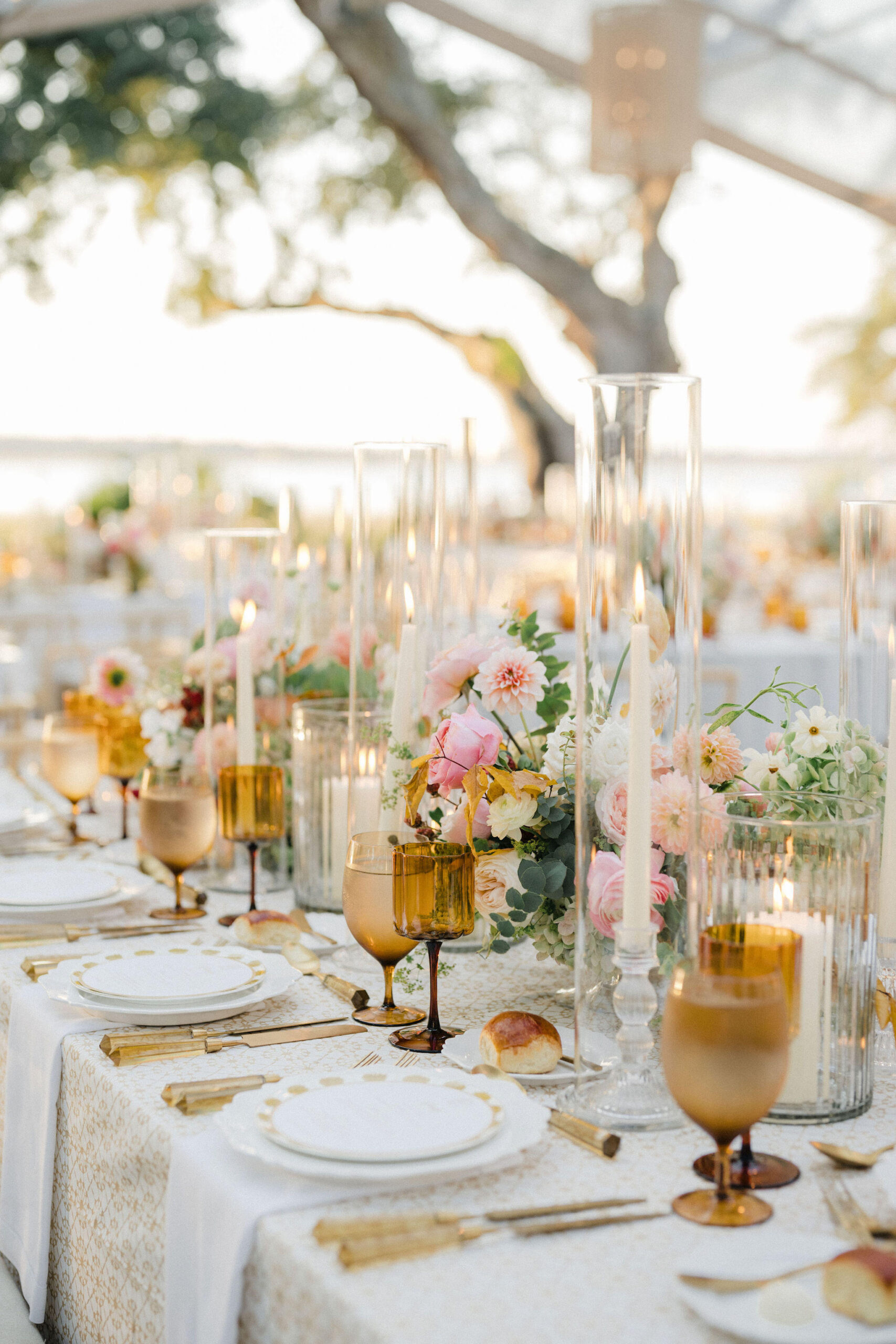
A signature cocktail can introduce guests to an event’s personality before dinner is served or the formal program begins. While the ingredients and garnish shape the drink itself, the glassware determines how it is presented, carried, and experienced. The right glass can make a cocktail feel more refined, reinforce the event’s color palette, and help the bar area feel connected to the rest of the design.
For weddings, corporate receptions, galas, and private celebrations in Chesapeake, glassware should be approached as part of the overall rental plan instead of an isolated bar decision. Coordinating it with other summer event rentals in Chesapeake helps connect the beverage menu and bar setup with cocktail tables, linens, tabletop pieces, lighting, lounge furnishings, and guest movement throughout the event.
This guide explains how to choose glassware rentals that complement the beverage menu, support efficient service, and contribute to a cohesive Chesapeake event.
Begin With the Cocktail Menu and Service Plan
Glassware should be selected after the caterer or bar team has established how each beverage will be prepared and served. A cocktail poured over ice has different functional requirements than a sparkling drink or a beverage served without ice. Reviewing the complete beverage plan first also helps prevent important glassware categories from being overlooked.
Match the Glass Shape to the Way Each Drink Is Served
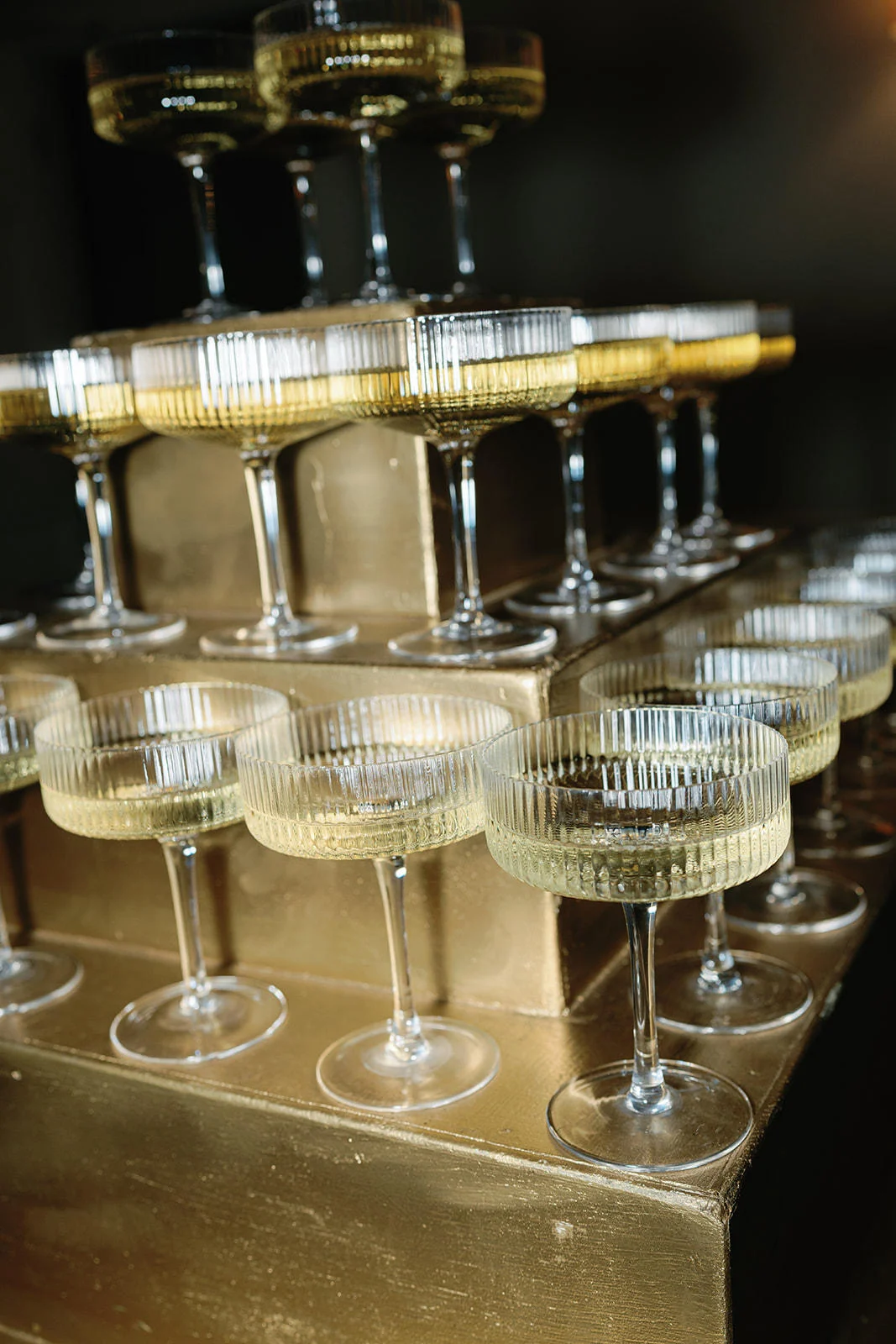
Each glass shape supports a different type of presentation. Coupes and martini glasses are commonly used for cocktails served without ice, while highball glasses accommodate taller drinks with mixers, ice, and garnishes. Rocks glasses work well for shorter cocktails served over ice, and flutes or champagne saucers provide an elevated presentation for sparkling beverages.
The goal is not to assign a different glass to every drink. Instead, choose a manageable group of shapes that supports the menu while maintaining a consistent visual direction. When several cocktails can be served appropriately in the same glass, using one coordinated collection can make the bar look more polished and simplify service.
Identify Every Beverage-Service Moment
The signature cocktail may be the visual focus, but it is rarely the only beverage served during an event. Glassware may also be needed for water, wine, champagne toasts, nonalcoholic selections, beer, and after-dinner drinks.
Consider when each beverage will be available. A Chesapeake wedding might begin with signature cocktails during the reception, transition to wine service during dinner, and include a champagne toast later in the evening. A corporate event may use one glassware style for an initial networking reception and another for beverages served during the program.
Mapping these moments before placing the rental order creates a more complete and practical glassware plan.
Coordinate With the Caterer or Bar Team
The catering or bar team can confirm which glass styles are appropriate for the menu, whether garnishes require additional space, and how frequently glasses can be collected and replenished. They can also identify whether separate bars will serve different beverages.
Curated Events can then help translate those operational details into a coordinated rental selection. This collaboration keeps each professional focused on their area of expertise: the beverage team manages drink preparation and service, while the rental team helps select glassware that supports the event’s needs and design.
Select Chesapeake Glassware by Cocktail Style
Curated Events Chesapeake carries glassware for a range of cocktail formats, from classic highballs and old-fashioned glasses to champagne vessels, martini glasses, goblets, and specialty barware. The local collection also includes clear, colored, patterned, ribbed, and metallic-rimmed options, allowing the glassware to support both the beverage menu and the event aesthetic.
Coupes, Flutes, and Champagne Saucers for Elevated Serves
Stemmed glassware creates a refined presentation for cocktails served without ice and beverages with a sparkling component. A coupe can give a signature drink a classic profile, while a flute emphasizes the celebratory character of champagne and sparkling cocktails.
The Chesapeake inventory includes traditional champagne flutes and saucers as well as design-forward options within collections such as Ribbed, Beckett Green, and Marla Ginger. These pieces can be used to create a more distinctive presentation without changing the functionality of the bar service.
For events with a formal toast, planners should also determine whether the same stemware will be used for both the signature cocktail and champagne service or whether separate glasses will be staged.
Highball Glasses for Tall Mixed Drinks
Highball glasses are suited to drinks served with ice, carbonated mixers, fresh garnishes, or longer pours. Their vertical shape makes them a practical choice for many familiar cocktail formats while providing enough room for presentation details.
Curated Events Chesapeake offers round and square highball options, allowing planners to select a shape that reflects the broader event style. A rounded glass can feel traditional and versatile, while a square profile can introduce a cleaner, more contemporary element to the bar.
Rocks Glasses for Shorter Cocktail Presentations
Rocks glasses, sometimes called old-fashioned glasses, are appropriate for shorter drinks served over ice. Their compact proportions work especially well for spirit-forward cocktails and beverages presented with a single large cube or restrained garnish.
The Chesapeake collection includes classic rocks glasses as well as patterned and colored alternatives within collections such as Melodia, Ribbed, Beckett Green, and Marla Ginger. Choosing a distinctive rocks glass can give even a straightforward cocktail service a more intentional visual identity.
Specialty Glassware for a Distinct Beverage Menu
Some beverage menus require more specific shapes. Pilsner glasses, copper mugs, brandy snifters, punch cups, Irish coffee mugs, and tasting glasses should be selected when they serve a clear purpose within the menu.
Specialty pieces are most effective when used selectively. Too many unrelated styles can make the bar feel visually fragmented and complicate staging. When a menu includes one distinctive beverage, however, a dedicated glass can help it stand apart from the rest of the service.
Choose a Glassware Collection That Supports the Event Design
Glassware occupies a visible position at the bar, in guests’ hands, and across cocktail tables throughout the event. Its color, pattern, and finish should therefore relate to the surrounding linens, florals, china, flatware, furnishings, and venue architecture.
Rather than matching every element exactly, choose glassware that contributes to the design through contrast, repetition, or texture.
Use Clear Glassware for a Timeless Foundation
Clear glassware provides a versatile foundation for events in which other elements carry the primary color or pattern. It works particularly well when the design includes statement linens, abundant florals, patterned china, or architectural surroundings that should remain visually prominent.
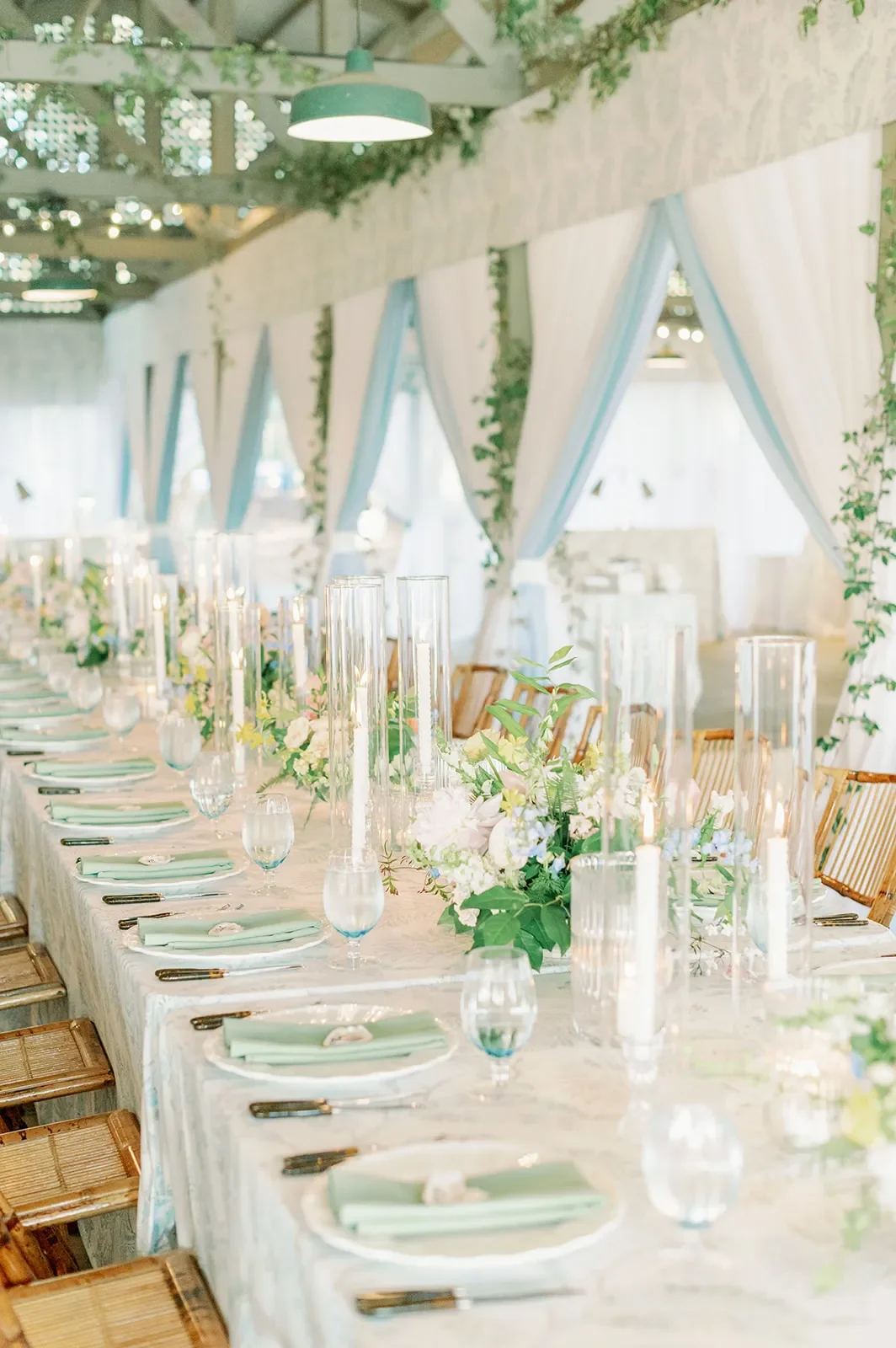
Collections such as Superior, Embassy, Riedel Restaurant, Savoie, and classic stemless glassware can support weddings, corporate receptions, fundraising events, and other celebrations without competing with the broader design. Curated Events Chesapeake also offers clear barware in several silhouettes, making it possible to maintain consistency across water, wine, and cocktail service.
Introduce Color Through Specialty Collections
Colored glassware can reinforce an event palette while adding visual interest to the bar and tabletop. Curated Events Chesapeake carries collections and individual pieces in shades such as green, amber, cornflower blue, ruby, and black. Available styles include Beckett Green, Marla Green, Marla Ginger, Lily Amber, Jupiter Cornflower, Debutante Cornflower Blue, D&V Gala Ruby, and Ariana Black.
Colored glasses do not have to match the dominant event color exactly. An amber glass can warm a neutral design, while green glassware can connect naturally with floral foliage or garden-inspired details. Blue glass can introduce contrast to white, ivory, or coastal palettes without requiring every rental element to repeat the same shade.
For a controlled design, use color in one glassware category and keep the remaining stemware clear. This allows the signature cocktail glass to become a recognizable feature without overwhelming the table.
Add Texture With Ribbed and Patterned Glassware
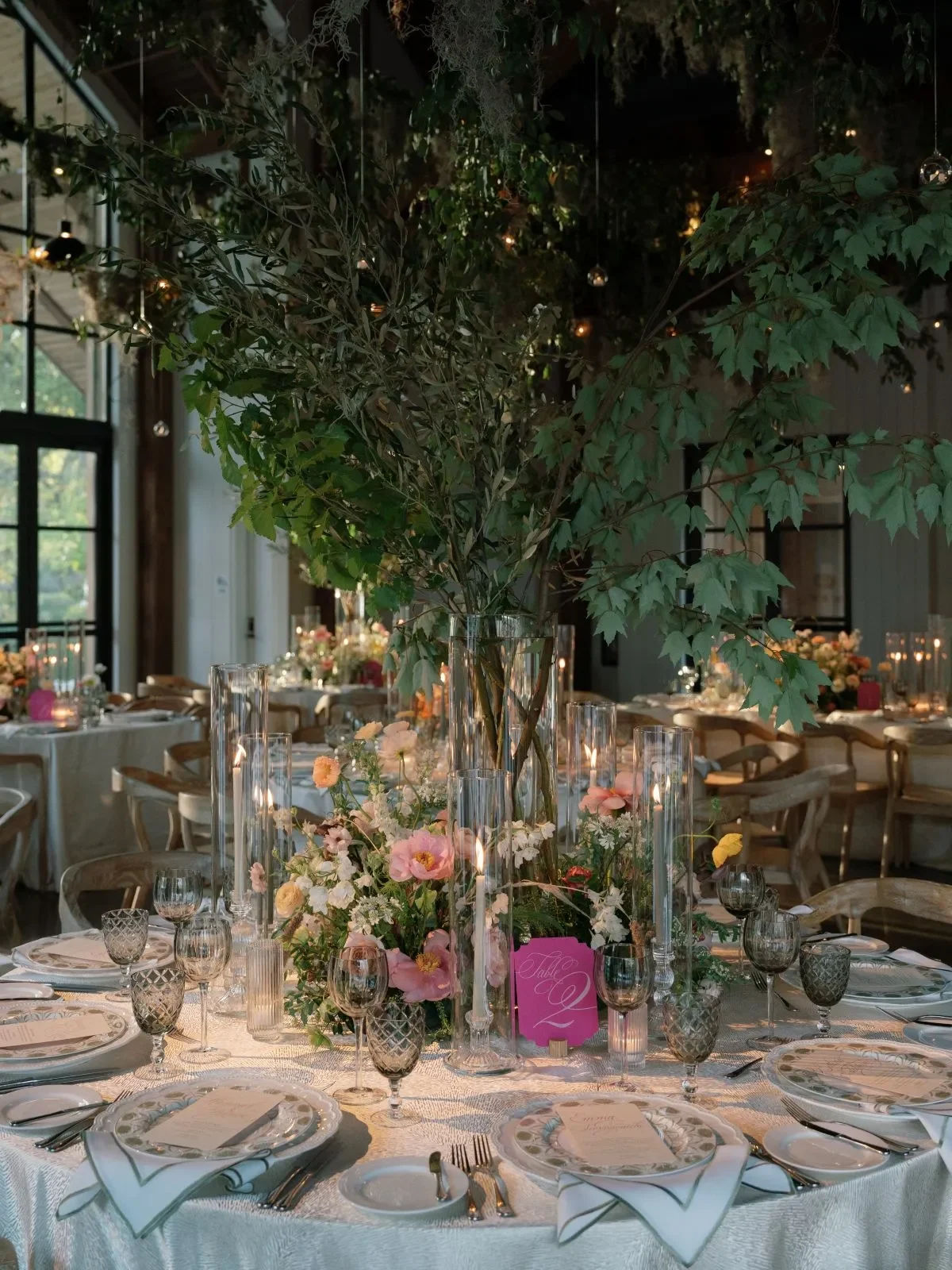
Patterned glassware introduces dimension even when the event palette remains restrained. Ribbed, cut, or embossed surfaces catch light differently from smooth glass and can make the beverage presentation feel more layered.
Curated Events Chesapeake carries patterned collections including Ribbed, Melodia, Mendocino, Opus, Excalibur, and Jupiter Cornflower. These pieces can complement textured linens, traditional china patterns, or streamlined tables that need an additional decorative layer.
Because patterned glassware is already visually detailed, it is often most effective when paired with a deliberate tabletop rather than several competing motifs.
Use Metallic Details Selectively
Gold- and platinum-rimmed glassware can connect the beverage service to metallic flatware, candleholders, chargers, or bar details. Chesapeake options include Waldorf Gold Rim, Gold Rim Glassware, and Charlotte Platinum.
Metallic rims work particularly well for formal weddings, anniversary celebrations, galas, and corporate dinners where a more tailored finish is appropriate. They should be selected as part of the complete tabletop plan so the metal tones feel coordinated rather than added independently. For more detail, see our article The Art of Crafting Signature Cocktails for Elite Corporate Events.
Build a Cohesive Cocktail Area With Chesapeake Rentals
The glassware is only one part of the guest’s experience at the bar. The bar façade, nearby tables, lounge arrangement, and lighting all influence how the beverage station functions and how prominently it appears within the room or tent.
Curated Events Chesapeake offers these rental categories alongside its glassware inventory, allowing planners to develop a cocktail area with a consistent design language.
Pair the Glassware With the Bar Style
The material and finish of the bar can provide a visual foundation for the glassware. Natural wood bars pair well with amber, green, ribbed, or classic clear glassware, while white bars create a clean backdrop for colored, gold-rimmed, or patterned collections. Black bars can provide contrast for clear stemware and metallic details.
The Chesapeake bar collection includes options such as the Finn Slat Bar, Chelsea Bar in Natural, Briar Burl Bar, Michael Bar, Chet Bar, curved wooden bars, and white circular configurations.
The bar selection should reflect the scale of the event as well as its visual direction. A large reception may require a longer or curved configuration, while a more intimate gathering may be well served by a compact statement bar.
Add Cocktail Tables Near the Beverage Area
Cocktail tables give guests a convenient place to set a drink while socializing, waiting for the reception space to open, or moving between event areas. Their placement can also reduce the number of used glasses left on bars, ledges, or unrelated surfaces.
Choose cocktail tables that relate to the bar and surrounding furnishings. A wood or rattan table can support a relaxed, textural design, while a pedestal or polished table may suit a more formal environment. Leave sufficient space between the tables and bar so guests can gather without obstructing beverage service. You may also find Classy Rental Ideas for Your Cocktail Party in 2025 helpful.
Connect the Bar to Nearby Lounge Seating
Lounge furniture can turn the area near the bar into a defined social zone. Sofas, chairs, side tables, and coffee tables allow guests to settle into conversations while keeping drinks within reach.
The layout should preserve a clear path between the bar, lounge, dining area, and other event spaces. Avoid placing seating so close to the service counter that seated guests interfere with ordering or clearing. Curated Events Chesapeake offers soft seating and coordinating coffee and side tables that can be incorporated into this type of arrangement.
Use Lighting to Define the Beverage Station
Lighting can help distinguish the cocktail area after sunset or within a large reception space. Pendants, chandeliers, café lighting, or focused decorative lighting can draw attention to the bar façade and make colored or textured glassware more visible.
Lighting should be considered early enough to coordinate power, suspension points, and placement with the venue and rental team. The objective is not simply to brighten the bar but to integrate it into the event’s overall lighting plan.
Plan Glassware Quantities Around the Guest Experience
The appropriate glassware quantity depends on more than the number of attendees. The beverage menu, event duration, number of service locations, clearing schedule, and ability to replenish the bar all influence how many glasses should be available.
A thoughtful quantity plan helps the event maintain a polished presentation from the first cocktail through the final service period.
Estimate Needs by Beverage Type
Separate the calculation by beverage category rather than using one general quantity for all drinks. Consider how many guests may choose the signature cocktail, wine, water, champagne, beer, or a nonalcoholic selection.
Some categories may overlap. A multipurpose wine glass may support more than one beverage, while a coupe reserved for the signature cocktail will require its own quantity. Reviewing the plan with the caterer prevents unnecessary duplication while ensuring the intended presentation can be maintained.
Account for Glasses in Use and Awaiting Collection
Not every glass will return to the bar immediately after use. Some will remain in guests’ hands, on cocktail tables, or within lounge areas, while others may be waiting for collection.
The service team should determine whether glassware will be replenished from additional racks or washed during the event. Rental quantities can then be based on the actual service strategy rather than an assumption that each glass will turn over quickly.
Review Rack Quantities Before Finalizing the Order
Many glassware rentals are supplied in rack-based quantities, and the number of pieces per rack varies by product. For example, different stemware shapes within the same collection may have different rack counts. Curated Events Chesapeake lists relevant rack information on individual product pages, and an event specialist can help align those quantities with the beverage plan.
Reviewing these specifications early makes it easier to refine the selection without disrupting the intended design.
Allow for More Than One Bar Location
Larger celebrations may include a cocktail-hour bar, reception bar, outdoor station, satellite bar, or separate service area. Each location needs enough glassware to operate without continually transferring racks through guest spaces.
Confirm where each glassware category will be staged and whether all bars will serve the same menu. A smaller satellite bar may need only highballs and wine glasses, while the main bar carries the complete selection.
Account for the Chesapeake Venue and Event Layout
Local venue logistics can affect how glassware is delivered, staged, distributed, and collected. Curated Events Chesapeake serves greater Hampton Roads as well as Williamsburg, the Northern Neck, the Eastern Shore, the Outer Banks, and northeastern North Carolina, giving its team experience with a range of venue types and delivery conditions.
Whether the event is held indoors, beneath a tent, or across multiple spaces, the glassware plan should reflect the actual route from delivery to service.
Determine Where Glassware Will Be Staged
The bar team needs a designated area for unopened racks, active glassware, backup inventory, and used-glass collection. This staging area should be close enough to support service without being visible from the main guest space whenever possible.
Confirm the available space with the venue and caterer before finalizing quantities. A generous order may still be difficult to manage if there is no suitable place to store the racks.
Consider Indoor, Tented, and Open-Air Service Areas
An indoor ballroom may offer nearby catering access and level flooring, while a tented or open-air event may require glassware to travel farther from the delivery point. Surface stability, covered staging, bar access, and transitions between indoor and outdoor spaces should all be reviewed.
For events using multiple settings, such as an outdoor cocktail hour followed by an indoor reception, determine whether glassware will move with the guests or whether separate quantities should be staged in each space.
Map the Route Between Delivery, Staging, and Service
Venue entrances, loading areas, stairs, elevators, gates, and outdoor pathways can influence how efficiently glassware racks reach the bar. Share access information with Curated Events before the event so the delivery plan reflects the property’s requirements.
The venue should also identify any timing restrictions or designated service entrances. Clear communication among the venue, planner, caterer, and rental team helps prevent glassware from being staged in the wrong location.
Keep Guest Traffic Clear Around the Bar
Bars naturally attract groups of guests, particularly at the beginning of cocktail hour. Their position should allow room for a queue without blocking entrances, lounge seating, dining areas, or the path between event spaces.
Cocktail tables can encourage guests to move away from the service counter after receiving a drink. For larger guest counts, multiple bars or a longer bar configuration may distribute traffic more effectively.
Finalize the Selection With Curated Events Chesapeake
Once the beverage menu, event design, quantities, and venue logistics have been reviewed, the final step is coordinating the rental order. Curated Events Chesapeake combines a broad local inventory with professional consultation, reflecting its focus on service, selection, and style.
Browse the Chesapeake Glassware Catalog
Begin by identifying a small group of collections that fit the event. Compare the available shapes within each collection and confirm whether the chosen pattern includes the glasses required for the complete beverage plan.
The online catalog can also help planners evaluate bars, tables, lounge furnishings, linens, lighting, and tabletop pieces alongside the glassware rather than making each decision separately.
Visit the Chesapeake Showroom and Design Center
Viewing glassware in person can help clarify its color, scale, texture, and relationship to other rental items. Curated Events Chesapeake has a showroom and design center at 1111 International Plaza, Chesapeake, VA 23323.
During a consultation, planners can compare glassware with linen swatches, china, flatware, and other design elements. Because sample availability can vary, communicate which collections you are considering when arranging the visit.
Bring the Details Needed for a Productive Consultation
Before speaking with an event specialist, gather the event date, venue, estimated guest count, proposed beverage menu, number of bars, design references, and preferred glassware collections.
It is also useful to identify related rental needs. Coordinating the glassware with bars, cocktail tables, lounge furniture, linens, and tabletop pieces during the same planning process can create a more consistent final design.
Submit a Coordinated Rental Wishlist
The Chesapeake website allows users to add preferred rental products to a cart, enter event details, and submit the selection as a wishlist for a customized quote.
Treat the initial wishlist as the beginning of the consultation rather than a final design. The Curated Events team can help review product availability, quantities, collection compatibility, and other details before the rental order is finalized. Get in touch with our Norfolk showroom to start your rental order.
Frequently Asked Questions
Which glass is best for a signature cocktail?
The best glass depends on how the cocktail is served. Coupes and martini glasses suit drinks served without ice, highballs accommodate tall mixed drinks, rocks glasses work for shorter drinks over ice, and flutes are appropriate for sparkling cocktails.
Can I mix different glassware collections at one event?
Yes. Mixing collections can create a layered design when there is a clear connection among the pieces. For example, a colored goblet may be paired with clear wine glasses, or a patterned signature-cocktail glass may be used alongside simpler water and wine stemware.
Should water, wine, and signature cocktails use separate glass styles?
Separate styles usually make it easier for guests and service staff to distinguish beverages. However, some multipurpose glasses may support more than one part of the menu. Review the final plan with the caterer and rental specialist before deciding.
How many types of glassware should be used at a reception?
There is no fixed number. Use enough styles to support the beverage menu without creating unnecessary complexity. Many receptions require glasses for water, wine, a signature cocktail, and a champagne toast, although the exact combination depends on the service plan.
Conclusion
Well-chosen glassware brings together beverage presentation, event design, and practical service. By starting with the finalized cocktail menu, selecting shapes that support each drink, and coordinating the glasses with the bar and surrounding rentals, hosts can create a beverage experience that feels considered from every angle.
Curated Events Chesapeake offers classic and specialty glassware alongside bars, tables, lounge furnishings, linens, lighting, and tabletop rentals. With a coordinated plan and guidance from the local team, your signature cocktail can become a natural extension of the celebration rather than a separate detail. Our Norfolk team stocks bar rentals for Norfolk events.