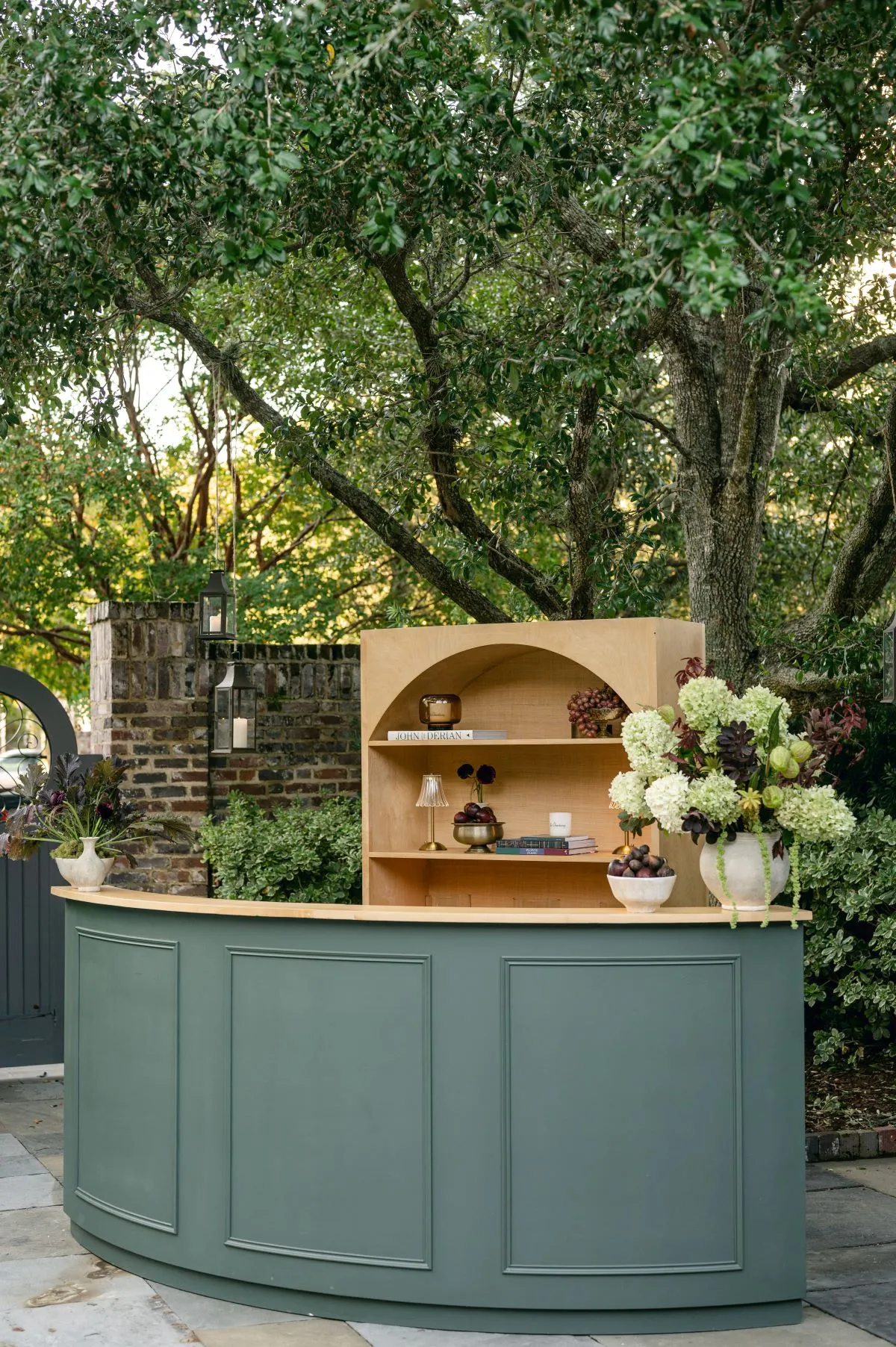
The bar often becomes one of the most noticeable furniture elements during a gala cocktail hour. Guests see it as they enter, pass it throughout the reception, and experience it as part of the larger event design. Its shape, finish, scale, and placement can therefore influence how the entire space feels.
A curved bar creates a different visual effect from a conventional straight bar. Rounded or quarter-moon configurations can introduce softer lines, create a stronger focal point, or provide contrast within an architectural setting. However, the shape needs enough room to be appreciated and should make sense within the venue rather than being selected simply because it is distinctive.
For event planners, choosing the right curved bar begins with the space itself. Consider the venue, surrounding furniture, major sightlines, desired level of formality, and the role the bar should play within the overall gala design.
Decide Whether a Curved Bar Is Right for the Space
A curved bar naturally attracts attention because its silhouette differs from the straight lines found throughout most event spaces. That can make it a strong design tool, but it also means the bar needs to be used intentionally.
Before selecting one, determine whether the room benefits from a more sculptural bar or whether a simpler linear configuration would provide a better fit.
Use a Curved Bar When the Bar Should Be a Focal Point
A curved bar works particularly well when the beverage area is meant to contribute to the visual identity of the cocktail hour.
Placed in an open area, a distinctive bar can anchor the surrounding furniture and give guests an immediate design reference as they enter. The rounded silhouette can make the bar feel more architectural than a purely functional service surface.
The effect is strongest when the bar has enough surrounding space to remain visually separate from nearby cocktail tables, lounge furniture, or décor.
Let the Curve Soften an Angular Event Space
Many event environments are dominated by straight lines. Ballroom walls, rectangular tables, architectural columns, linear shelving, and structured floor plans can create a strongly geometric setting.
Introducing a curved bar can soften that structure.
The contrast does not need to become dramatic. Even a subtle rounded profile can introduce visual movement and prevent the cocktail-hour furniture from feeling overly rigid.
Know When a Straight Bar May Work Better
A curved bar is not the right answer for every gala.
Narrow spaces, wall-based layouts, or rooms with limited floor area may be better suited to a straight bar that can sit closer to an architectural surface. A linear bar may also be appropriate when other elements in the room already introduce several strong curved forms.
The shape should serve the room rather than compete with it.
Choose the Configuration Based on the Room
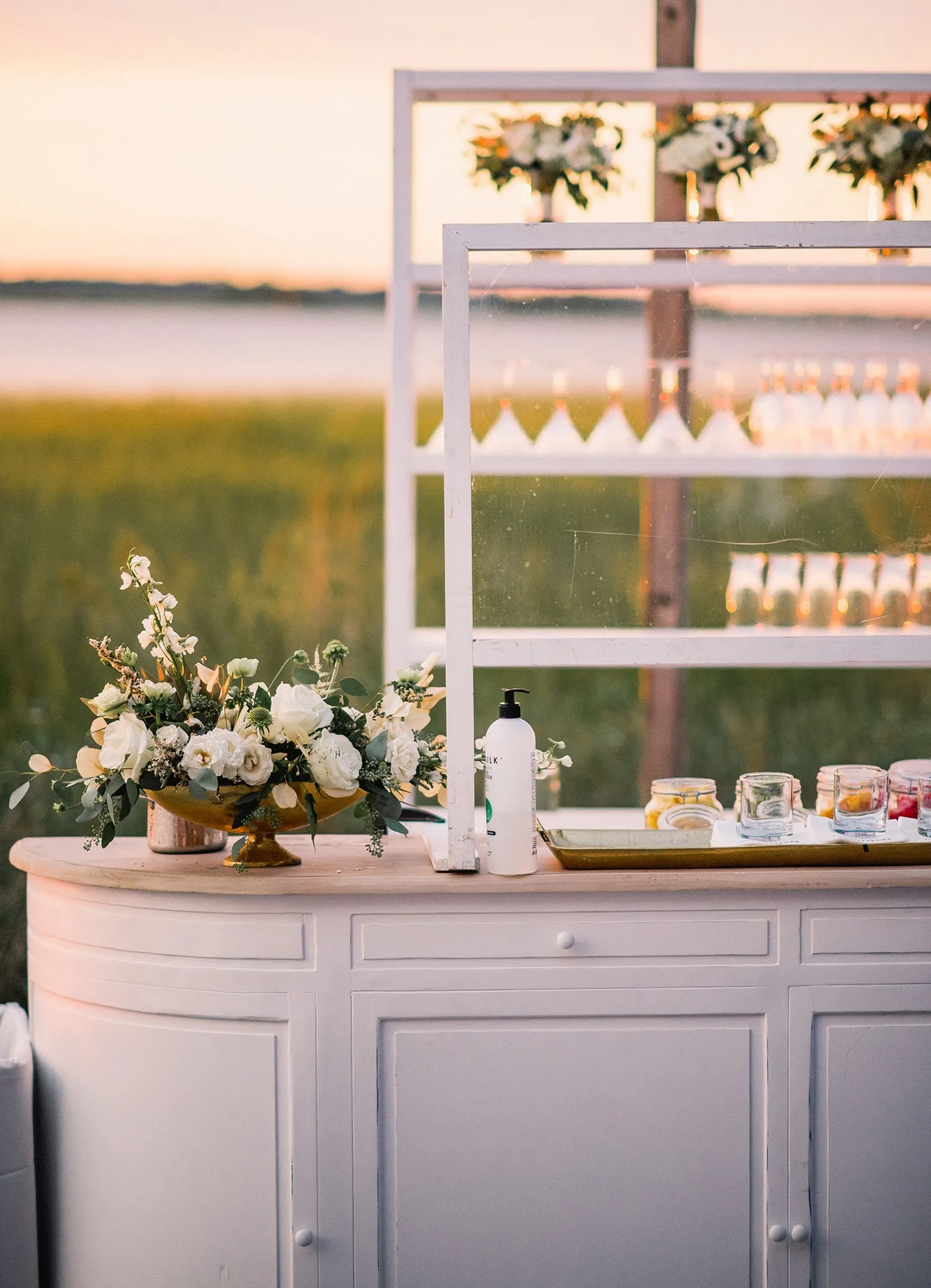
A curved bar should be evaluated within the complete cocktail-hour footprint. The same rental can feel spacious and sculptural in one venue and crowded in another depending on its orientation and proximity to other furniture.
Planners should consider not only where the bar physically fits, but how clearly its shape will read once the rest of the event is installed.
Give the Curve Enough Space to Read
The rounded profile is one of the main reasons to choose a curved bar, so avoid placing it where that defining characteristic becomes difficult to see.
If cocktail tables, floral arrangements, lounge furniture, or architectural features sit too close to the bar, the silhouette can disappear within the surrounding visual activity.
Open space around at least part of the bar allows the curve to remain legible from across the room.
Decide Which Direction the Curve Should Face
Orientation matters.
Consider the primary direction from which guests will encounter the bar. The most visually interesting side should generally address the main reception area rather than facing a wall or secondary service space.
This becomes especially important when the bar is visible from the event entrance or another major sightline.
Consider One Strong Bar Versus Multiple Bar Areas
A larger gala may incorporate more than one bar location.
From a design perspective, the bars should have a clear relationship without necessarily being identical. The same curved configuration may be repeated, or a distinctive primary bar can be supported by quieter secondary stations elsewhere in the room.
The approach should make the event feel coordinated without turning every bar into a competing focal point.
Leave Room for Supporting Furniture
A bar rarely exists by itself.
Nearby cocktail tables, shelving, stools, lounge pieces, or occasional tables all contribute to the complete composition. These elements should be considered before finalizing the bar’s position.
The goal is to create a well-defined bar environment without surrounding the curved form so tightly that it loses its visual presence.
Choose a Bar Finish That Supports the Gala Design
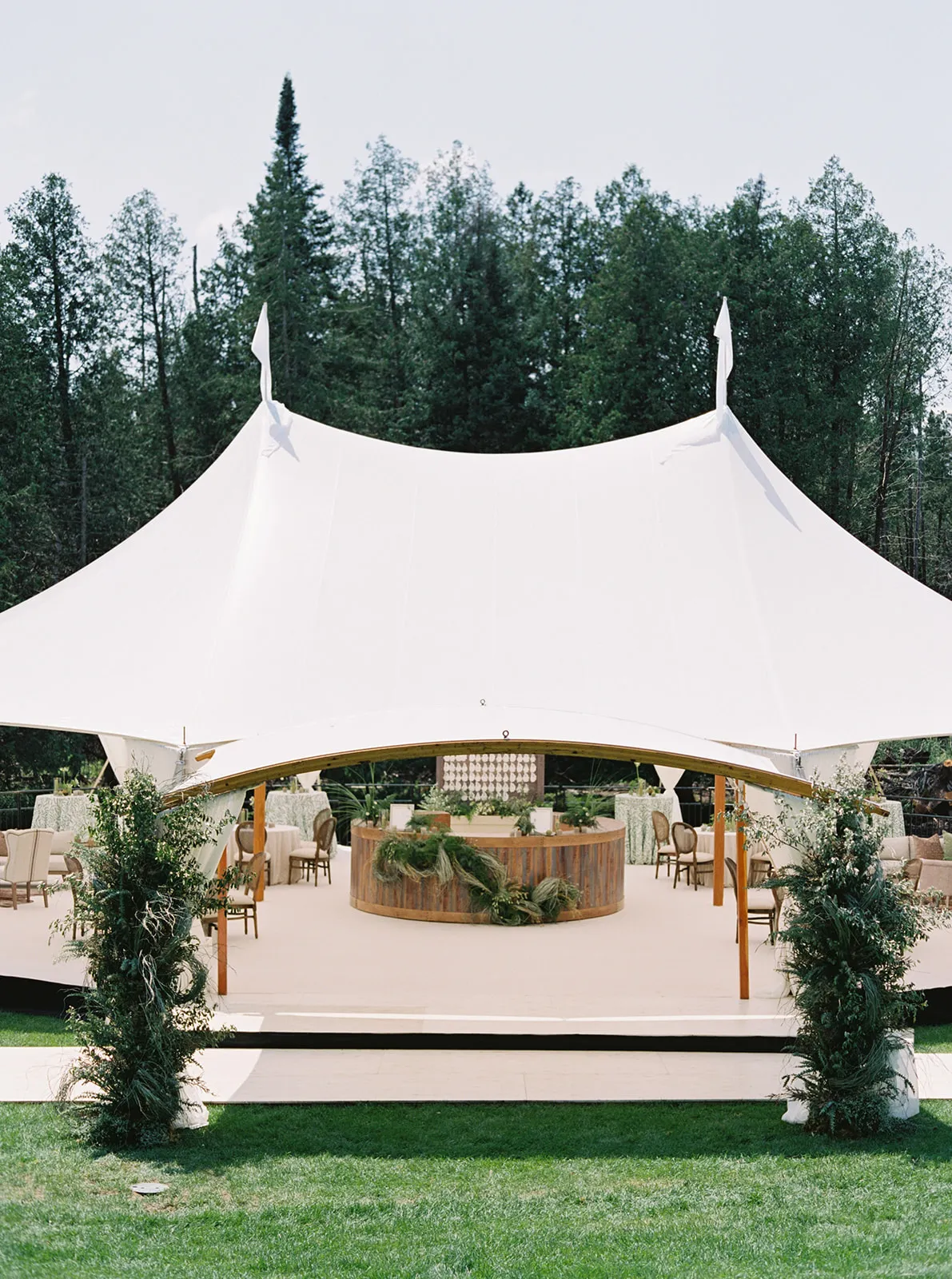
Once the shape and configuration make sense for the room, consider how the bar should relate to the event’s larger material palette.
Curved bars can feel understated or highly expressive depending on their finish. The right choice depends on whether the bar should lead the design or provide a supporting architectural element within the reception.
Decide Whether the Bar Should Lead or Support
A bar with a distinctive finish, strong color, or detailed surface can become one of the primary design moments of the cocktail hour.
When that happens, surrounding furniture can remain comparatively restrained. Neutral cocktail tables, simple stools, or quieter lounge upholstery give the bar room to hold attention.
If florals, architecture, or lounge furniture already create the primary statement, a more restrained bar may create better balance.
Connect the Bar to Existing Materials
Cohesion does not require matching every rental. Instead, look for one or two material relationships that connect the bar to the surrounding environment. A wood tone can reappear in a cocktail table. A metallic detail may connect to nearby furniture frames or tabletop pieces. A light bar can work with neutral upholstery while darker surrounding elements provide contrast.
These subtle repetitions make the bar feel integrated without creating a matched-set appearance.
Use Color With Restraint
A colored bar can create a strong focal point, particularly when the rest of the cocktail-hour palette is more restrained.
Avoid feeling obligated to repeat the same shade throughout every nearby piece. A distinctive color often has greater impact when it appears selectively.
Neutral or complementary furniture can support the bar while preserving the visual hierarchy of the room.
Confirm Product-Specific Options Before Building Around Them
Not every curved bar offers the same features. If the design depends on branding, lighting, a particular finish, or a specific configuration, confirm those capabilities for the individual rental before developing the rest of the event around them.
Curated Events can help planners review available curved and quarter-moon options alongside the surrounding rental selections so the design remains grounded in actual inventory.
Choosing a Curved Bar for Washington, D.C. Gala Venues
Washington, D.C. galas can take place in a wide range of environments, from architecturally detailed interiors and formal ballrooms to contemporary event spaces and tented settings. A curved bar should respond to those surroundings rather than introducing the same visual treatment everywhere.
The venue already contributes materials, proportions, architectural character, and sightlines. The bar should either complement those qualities or provide a deliberate contrast.
Use Restraint in Architecturally Detailed Spaces
Historic or highly detailed interiors often provide substantial visual interest before rentals are introduced.
In these settings, a curved silhouette may already provide enough distinction. Choosing a cleaner finish can allow the bar to feel intentional without competing with architectural features.
The objective is to add another design layer while allowing the room’s existing character to remain visible.
Give Contemporary Spaces More Material Contrast
Minimal or contemporary venues can often support a stronger bar treatment.
A richer finish, bolder tone, or more sculptural configuration can provide visual definition where the surrounding architecture is comparatively restrained.
The curved form can also soften clean lines and introduce movement into an otherwise linear room.
Scale the Bar Appropriately for Large Ballrooms
Scale becomes especially important in large gala spaces. A bar that feels substantial when viewed up close can appear small once seen across an expansive ballroom. Consider how the configuration looks from the entrance, dining area, lounge, and other major viewpoints.
Where the space allows, a broader curved composition may create enough visual weight to hold its own within the room.
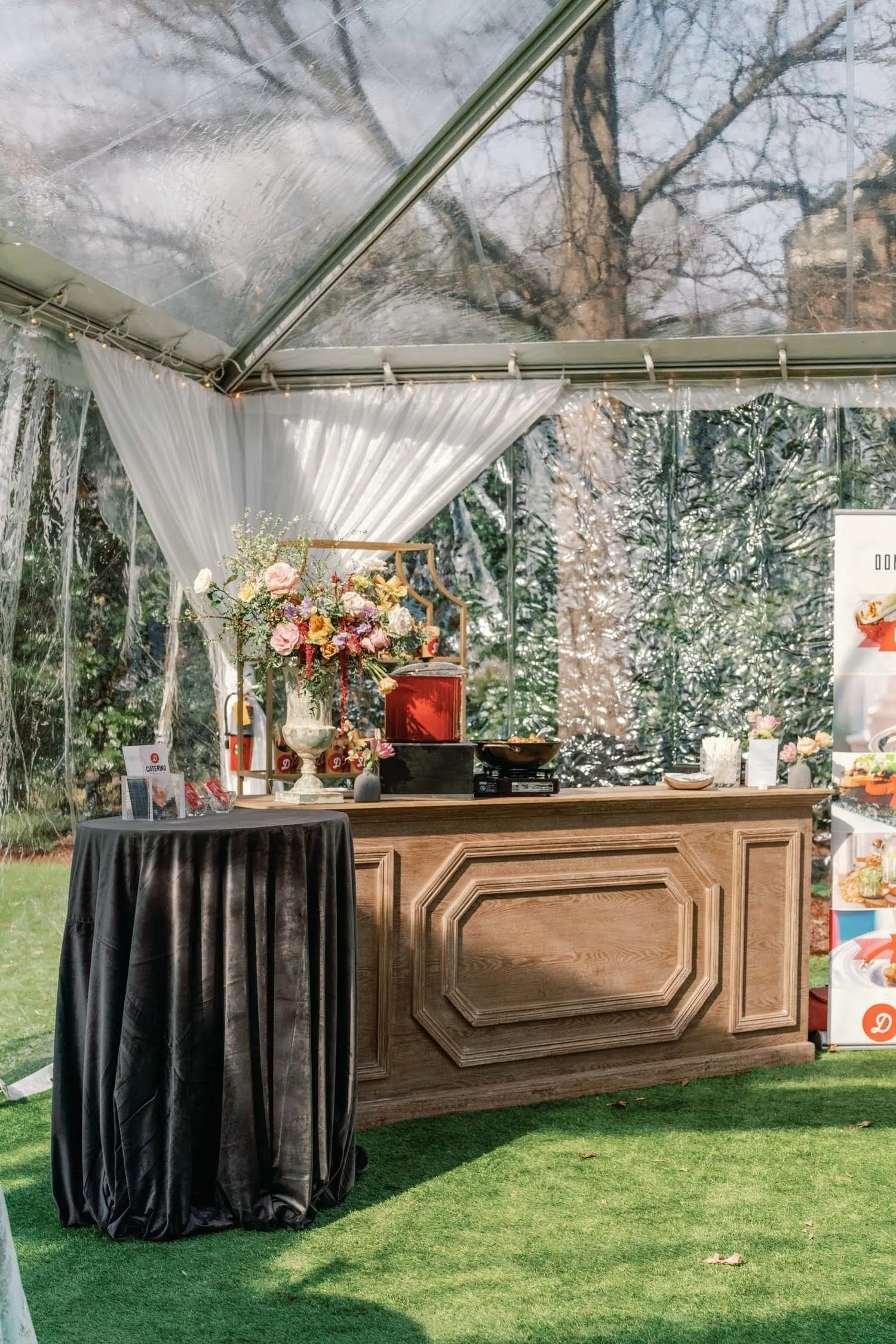
Consider Curved Bars Within Tented Gala Environments
In a tented setting, most of the visible environment is created temporarily.
The bar should therefore be considered alongside the tent structure, flooring, lighting, cocktail tables, and nearby lounge furniture from the beginning.
A curved configuration can introduce a strong architectural shape within the tent, particularly when other major rentals rely on straighter lines.
Pair Back-Bar Shelving With the Curved Bar Carefully
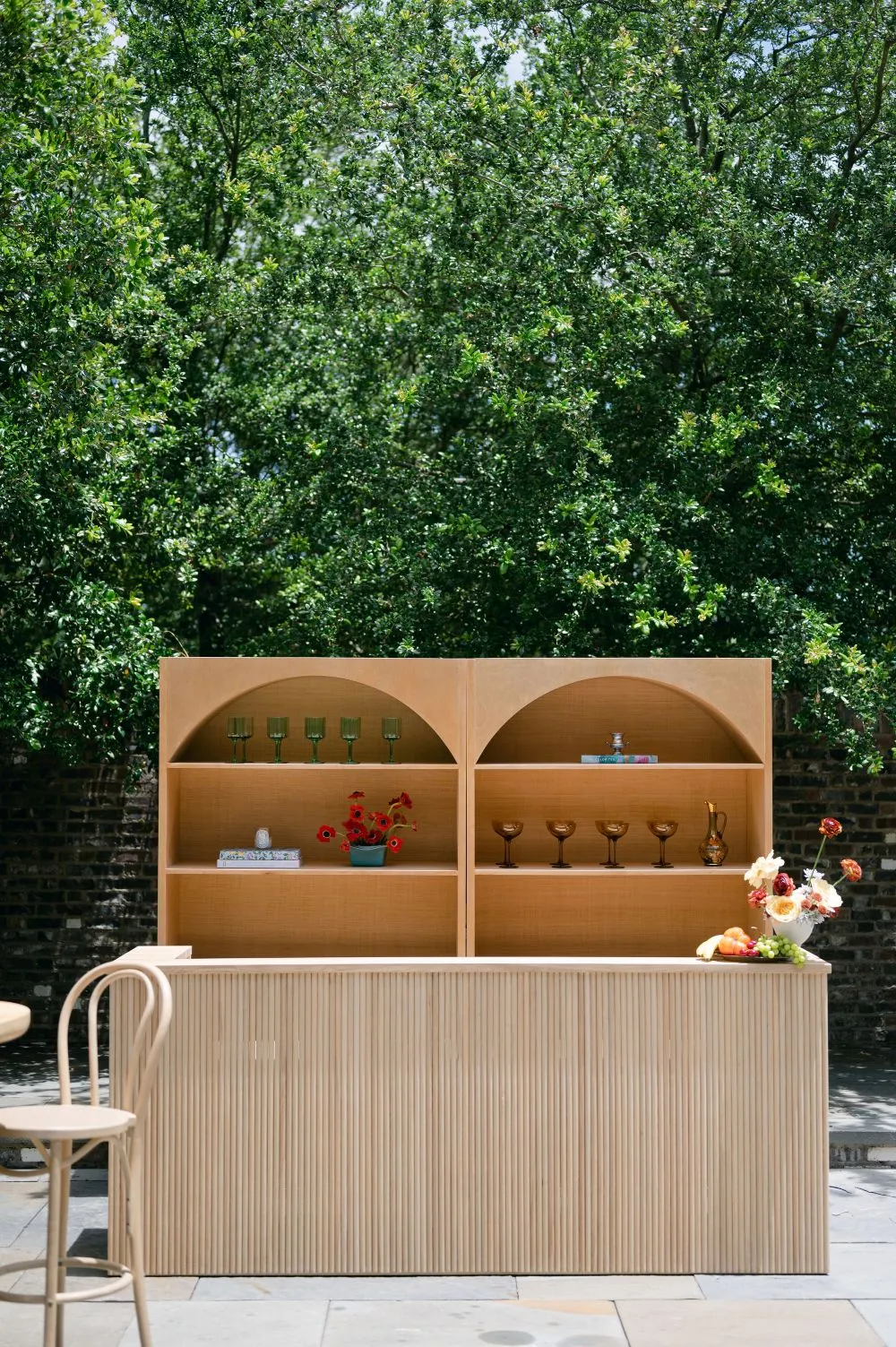
Back-bar shelving can add height and structure behind a curved bar, but it should support the composition rather than automatically accompany it.
Because the bar already introduces a strong horizontal shape, the shelving behind it can either strengthen the overall architecture or make the area feel unnecessarily busy.
Decide Whether the Bar Needs More Vertical Structure
Some cocktail-hour settings benefit from height behind the bar.
Shelving can help give the area greater visual presence within a tall ballroom, large tent, or open reception space. It can also create a clearer backdrop when the bar sits within a broad room.
In a more detailed setting, however, the bar may already have enough surrounding visual context.
Keep the Shelving Style Connected to the Bar
The bar and shelving should share some visual relationship.
That connection could come through a similar finish, complementary material, repeated tone, or comparable level of formality. Exact matching is unnecessary.
The goal is for the two elements to appear intentionally selected for the same gala.
Avoid Overloading the Bar Area
A statement bar, detailed shelving, elaborate florals, signage, and multiple decorative elements can quickly create too many competing focal points.
Decide which feature should lead.
If the curved bar itself is highly distinctive, simpler shelving may allow its shape to remain clear. If the bar is restrained, the shelving can carry more visual character.
Evaluate the Curved Bar From the Guest’s Point of View
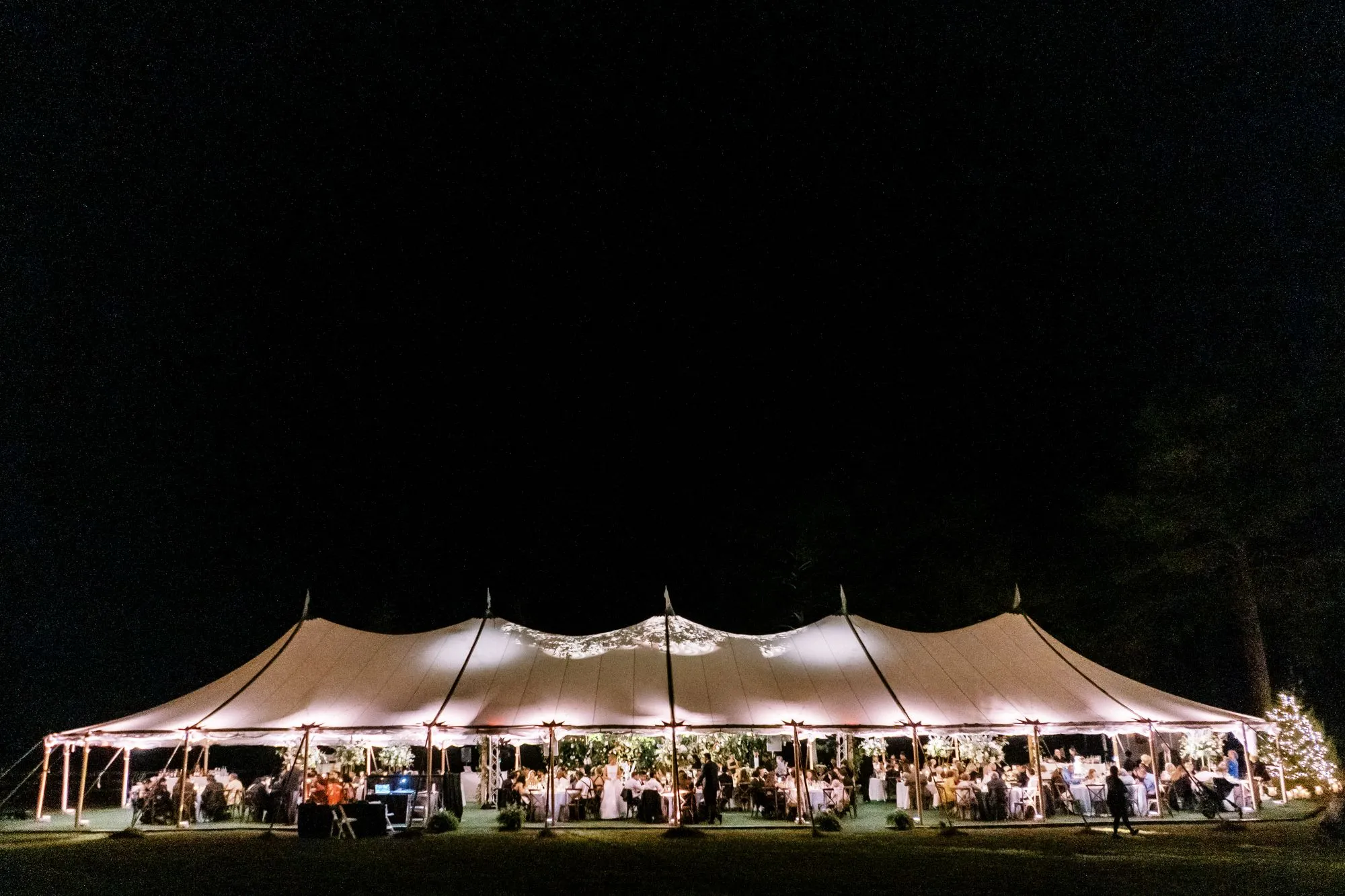
Floor plans are essential for determining whether a bar fits, but they do not show how the rental will actually be experienced. A curved bar should also be evaluated through the major views guests will encounter throughout the cocktail hour.
Check the First View Into the Cocktail Hour
Consider what guests see as they enter.
If the bar is intended to be a focal point, its shape should be recognizable from the arrival direction. Nearby furniture, florals, or architectural features should frame rather than obscure it.
This first impression can help establish the visual character of the cocktail hour before guests notice smaller details.
Look at the Bar From Across the Room
Step back from the individual rental and consider the full composition.
From a distance, guests may notice the bar primarily through its silhouette, color, and relationship to surrounding furniture. Small decorative details become less important.
Make sure the bar still has enough presence when viewed as part of the complete room.
Consider How the Bar Appears in Event Photography
Curved bars can create a strong visual foreground or backdrop in event photographs.
Their form is most effective when the surrounding area remains relatively composed. Excessive signage, florals, tables, or miscellaneous decorative pieces can make the silhouette harder to read.
Keeping the immediate setting edited allows the bar to contribute more clearly to wider event imagery.
Protect the Shape From Visual Clutter
Every additional element placed around the bar changes how its shape is perceived.
Before adding another decorative or rental piece, consider whether it strengthens the composition or simply fills available space.
A clear curved form surrounded by thoughtfully selected pieces often has more impact than a heavily decorated bar area.
Finalize the Bar Selection With Curated Events
Once the general direction is clear, planners can evaluate the curved bar within the context of the actual venue and surrounding rentals.
Providing the Curated Events team with the right information makes it easier to compare bar options and coordinate the supporting pieces as one complete composition.
Bring the Venue Floor Plan
Share the room dimensions, main entrances, architectural features, existing bars if applicable, and preliminary furniture layout.
This helps establish whether a curved configuration has enough space and where it can be positioned most effectively.
Share the Cocktail-Hour Design Direction
Provide established colors, inspiration imagery, furniture selections, floral direction, and other major design decisions.
The curved bar should reinforce those ideas rather than introduce an unrelated aesthetic late in the planning process.
Identify the Supporting Rentals Needed Around the Bar
Confirm whether the cocktail-hour area will also include:
-
Back-bar shelving
-
Cocktail tables
-
Barstools
-
Lounge furniture
-
Side tables
-
Glassware
-
Lighting
Evaluating these elements together helps planners create clearer relationships in finish, scale, and visual weight.
Confirm Product Details Before Finalizing the Design
Review the dimensions, finish, configuration, and other relevant characteristics of the specific bar being considered.
Curated Events DMV carries distinctive bar and shelving options, including quarter-moon designs that can introduce the curved profile discussed throughout this guide.
Confirming the exact rental before completing the surrounding design ensures that every decision reflects the pieces that will actually appear at the gala.
Frequently Asked Questions
When is a curved bar better than a straight bar?
A curved bar works well when the bar should become a stronger visual feature or when the room benefits from softer lines. A straight bar may be better for narrow spaces or wall-based layouts.
Do curved bars require more space?
They can require a different type of footprint because the curved silhouette needs enough surrounding space to remain visible. Always review the actual dimensions against the venue plan.
Can a curved bar work in a Washington, D.C. ballroom?
Yes. A curved bar can work particularly well in a ballroom when its scale and finish suit the room’s architecture and the configuration has enough visual presence for the space.
Can curved bars be used for tented gala cocktail hours?
Yes. Their placement should be coordinated with the tent layout, flooring, furniture, lighting, and other temporary event elements.
Should back-bar shelving match the curved bar?
Not exactly. The shelving should share a visual relationship through finish, material, color, or design character without needing to be a perfect match.
What type of cocktail tables work well with a curved bar?
Both rounded and angular tables can work. Rounded tables reinforce the curve, while more linear pieces can create intentional contrast.
Do barstools need to match the bar?
No. They should complement the bar in scale, finish, or overall style without reproducing every detail.
Can more than one curved bar be used at a large gala?
Yes, when the venue and event plan support multiple bar areas. The bars should have a consistent design relationship so the reception remains visually cohesive.
Conclusion
Choosing a curved bar for a gala cocktail hour begins with understanding the room around it. The bar’s footprint, orientation, finish, surrounding furniture, and major sightlines all influence whether its distinctive shape adds clarity to the design or simply occupies space.
When the configuration is appropriate, a curved bar can establish a strong focal point, soften an architectural setting, or create a memorable visual relationship with other gala rentals. The strongest results come from giving the shape enough space to read and selecting supporting pieces that strengthen rather than compete with it.
Curated Events can help planners compare curved and quarter-moon bar options alongside shelving, glassware, cocktail tables, seating, lighting, and other relevant rentals to create a cocktail-hour setting that feels cohesive from every major viewpoint.