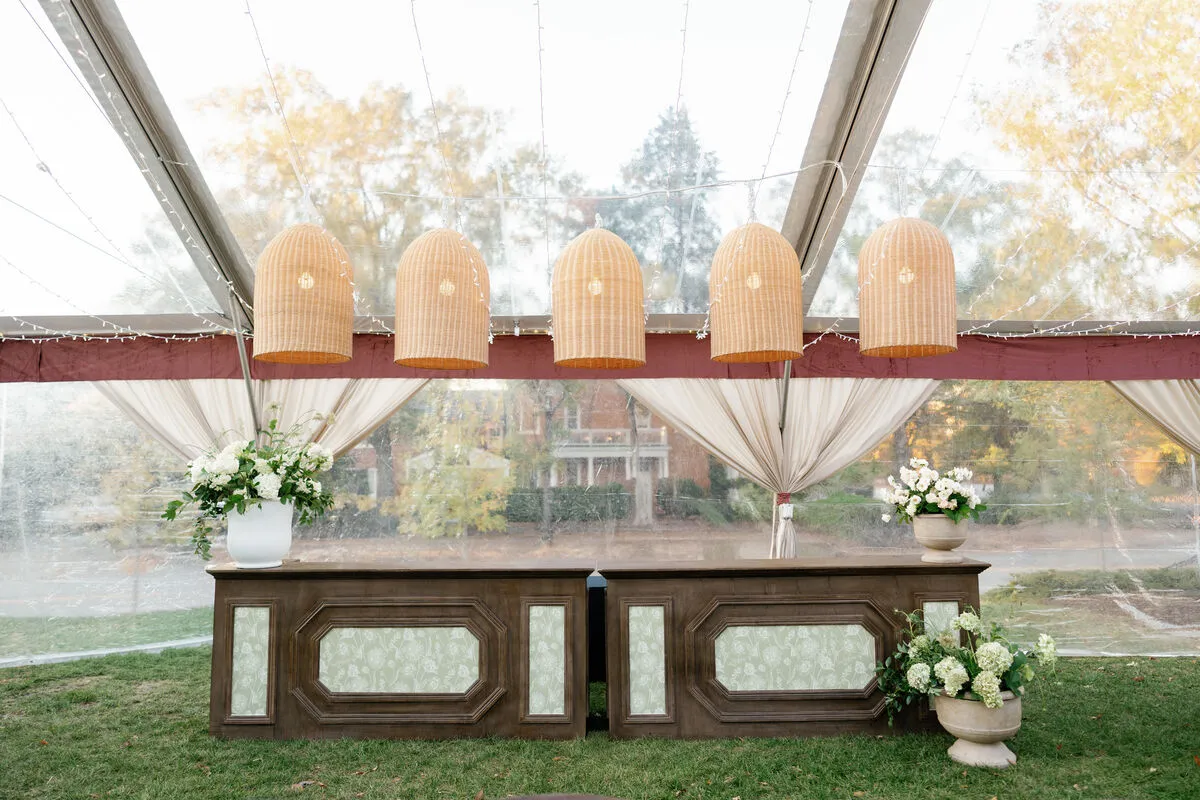
A bar naturally becomes one of the most active spaces at a wedding or social event, but its role extends well beyond beverage service. Its placement can influence how guests move through cocktail hour, while its scale, finish, lighting, and surrounding furnishings can help establish the reception’s visual character.
For fall events in Nashville, a thoughtfully designed bar can introduce seasonal depth without relying on overt autumn motifs. Warm materials, richer tones, layered lighting, and carefully selected furniture can give the space a sense of season while keeping the overall design polished and versatile.
When planning bar rentals in Nashville, the strongest approach is to consider the bar as part of the overall event environment. Rather than selecting it independently, couples and planners can consider how it relates to the venue, lounge areas, tables, linens, lighting, shelving, and how guests will experience the space throughout the evening.
What Makes a Bar Feel Like Part of the Event Design?
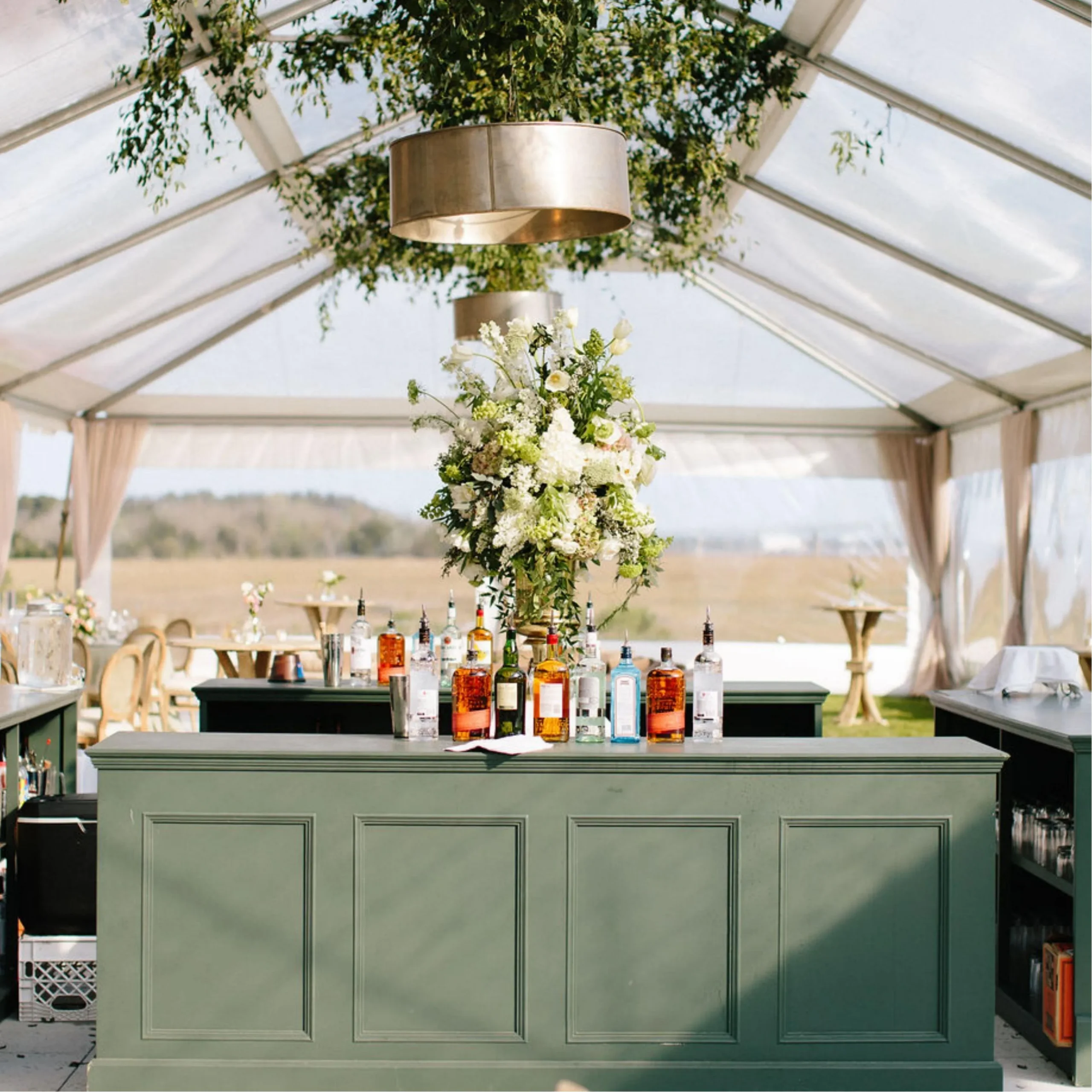
A statement bar does not need elaborate styling to make an impact. More often, its presence comes from proportion, placement, material, and the way it fits naturally within the surrounding design. The goal is to create a bar that serves its practical purpose while feeling intentional within the larger floor plan.
Give the Bar a Clear Role
Before choosing a style, it helps to determine the bar’s role in the event. At some celebrations, the bar anchors cocktail hour and becomes the first major gathering point guests encounter after the ceremony. At other times, it may remain active throughout dinner and dancing, or help connect an indoor reception to an adjoining terrace or lawn.
Its role can influence everything from location to scale. A bar meant primarily for cocktail hour may be positioned near lounge seating and standing tables, while one intended to serve guests throughout the reception needs to work comfortably with dining, dancing, entertainment, and other high-traffic areas. Understanding that purpose early makes the subsequent design decisions more deliberate.
Consider Placement Before Finish
It is easy to begin with an appealing bar style, but placement should come first. The venue footprint, guest circulation, entrances, surrounding furniture, and service requirements all affect where a bar can function comfortably. A visually striking setup can lose its effectiveness if guests have to cross the dance floor to reach it or if the area becomes crowded whenever a line develops.
Placement should allow the bar to feel accessible without dominating the entire room. Once that location is established, finish and style can be selected to suit the architecture and surrounding design.
Let Scale Match the Space
Scale affects how a bar reads within a venue. A small bar may feel lost in a large tent or ballroom, while a substantial configuration can overwhelm a more intimate cocktail setting. The appropriate size depends not only on the guest count but also on the room’s proportions and the amount of surrounding furniture. The bar should have enough visual presence to establish itself as a destination without making nearby lounge or dining spaces feel secondary.
How Should the Bar Fit Into the Cocktail-Hour Layout?
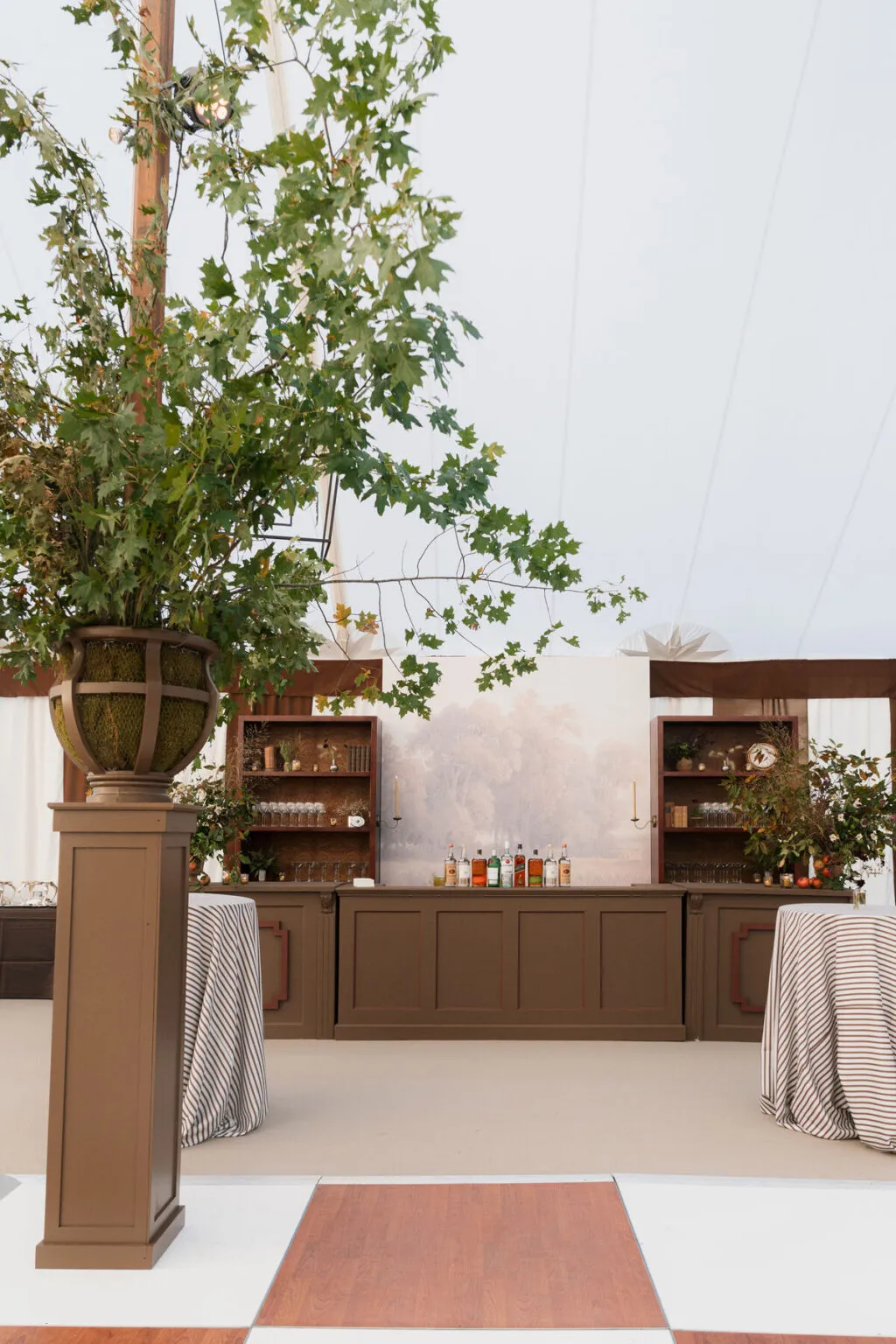
Cocktail hour works best when guests intuitively understand where to move, gather, and settle. The bar can help establish that rhythm, but only when it is considered alongside the complete layout. Rather than treating the cocktail area as a single open space, planners can consider how different activities relate to one another and how guests are likely to move between them.
Position the Bar Along Natural Guest Movement
The most effective bar location often follows the natural path guests will already take. That might be the route from the ceremony into cocktail hour, from a terrace into the reception, or between lounge seating and the dining area. The bar should feel easy to find without requiring signage or interrupting another important part of the event.
Its orientation matters as well. A bar positioned to face incoming guests creates a different first impression from one aligned along the edge of the space. Both approaches can work depending on the venue and overall composition.
Keep Circulation Comfortable
Because the bar attracts repeated traffic, the area around it needs room to breathe.
Consider its relationship to:
-
Lounge furniture
-
Cocktail tables
-
Entrances and exits
-
Dining areas
-
Dance floor
-
Entertainment
-
Service routes
-
Other gathering spaces
Guests should be able to approach and leave the bar without cutting directly through a seating group or blocking a major walkway. The same principle applies to nearby furniture. A lounge positioned close to the bar can create an appealing social zone, but enough separation should remain between the two. That guests who are sitting and those moving through the space do not compete for the same footprint.
Connect the Bar to Nearby Gathering Areas
A bar often works particularly well when it is part of a larger social composition. Lounge seating, cocktail tables, or standing areas can encourage guests to remain nearby after collecting a drink rather than dispersing immediately.
That does not mean every piece should cluster directly around the bar. Leaving visual and physical space between these elements can make the entire setting feel more intentional. The bar creates movement, while nearby furnishings give guests places to pause.
Which Bar Style Fits the Event Setting?
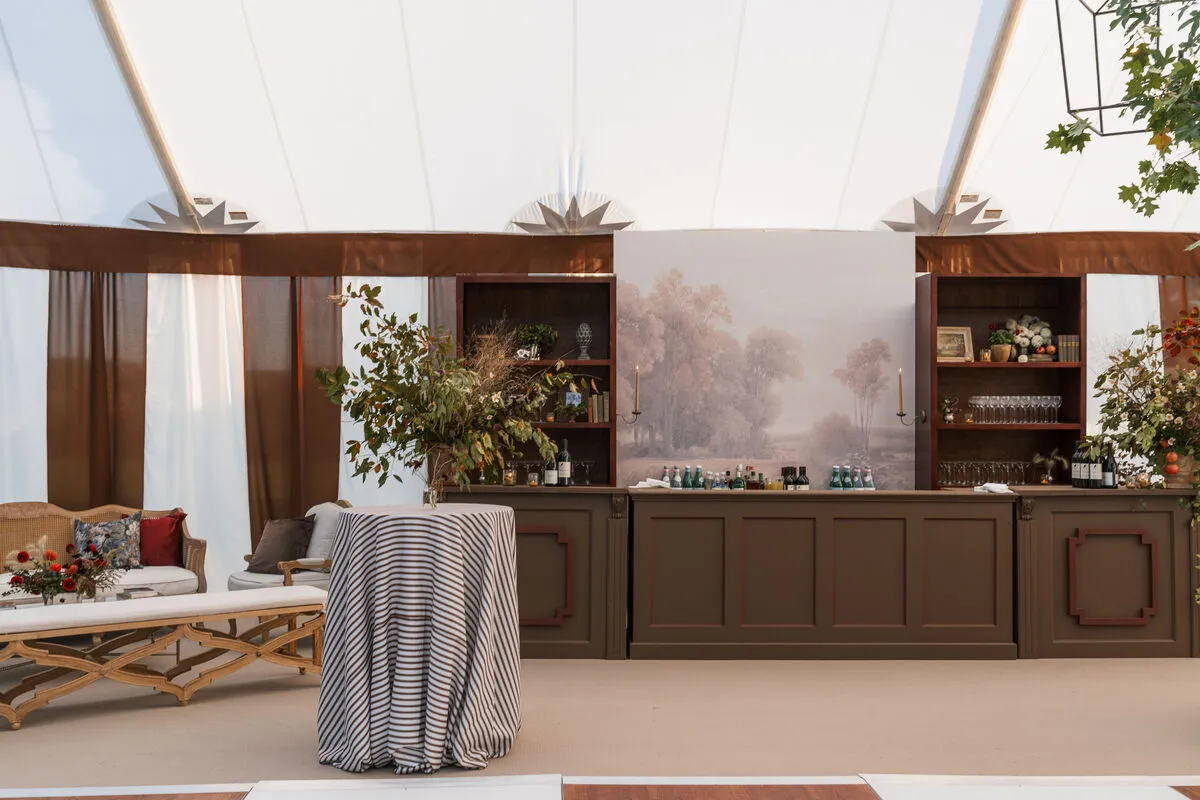
Bar design can take many forms, from clean linear structures to curved silhouettes and richly textured finishes. The strongest choice responds to the architecture and mood of the event rather than following a single seasonal formula.
Curved Bars for a More Sculptural Layout
Curved bars introduce softer geometry and can work particularly well in open spaces where the structure will be visible from several directions. Their shape can make the bar feel less like a boundary and more like a freestanding destination within the room. Curved forms may also relate naturally to rounded cocktail tables, circular lounge arrangements, or other softened architectural details. In larger venues, this type of silhouette can establish a strong focal point without requiring excessive decoration.
Linear Bars for Clean Definition
Linear bars provide a more structured visual line and can adapt easily to a variety of settings. They may work well along the edge of a reception, beneath shelving, inside a tent, or as part of a larger back-bar composition. Their straightforward geometry also creates a quiet foundation when the surrounding furnishings, florals, or lighting carry more visual complexity.
A clean-lined bar does not have to feel minimal. Material and finish can completely change its character.
Natural Wood Finishes for Warmth and Texture
Wood can add warmth to a fall event without making the design feel rustic. A refined wood finish can complement a private estate, tented celebration, garden reception, or interior with existing architectural detail. The material can also connect naturally to cocktail tables, lounge furnishings, or dining elements elsewhere in the event. Read more in Statement Bars: The Essence of High-End Private Celebrations.
The effect depends on how it is styled. Paired with tailored furniture and restrained lighting, wood can feel sophisticated rather than thematic.
Dark, Light, and Metallic Finishes
Finish can dramatically change the role a bar plays within the design. A dark bar can create contrast against lighter surroundings and establish a strong visual anchor. White or neutral finishes can provide a quieter base for florals, glassware, or architectural lighting. Metallic or reflective details can add polish and interact more noticeably with evening lighting. Rather than choosing a finish because it feels inherently “fall,” couples and planners can select one that complements the venue and broader palette.
How Can the Bar Connect to the Overall Event Design?
A bar does not need to match every surrounding rental to feel cohesive. In fact, exact repetition can sometimes make an event feel overly coordinated. A stronger approach is to identify a few materials, colors, finishes, or forms that can appear throughout the reception in different ways.
Repeat Selected Colors and Materials
Small visual connections can make separate areas feel related. A wood tone used at the bar might reappear in cocktail tables. A metallic detail could connect with lighting or tabletop finishes. A deeper upholstery color from a nearby lounge might be echoed subtly in linens or floral design.
The repetition does not need to be obvious. Often, the most cohesive environments are those where guests sense the relationship between spaces without seeing the same elements repeated exactly.
Coordinate Without Matching Everything
The bar and lounge, for example, may share a similar warmth or material direction without coming from the same collection. A sculptural bar can sit beside relatively tailored seating, while a simpler bar can provide balance to more expressive lounge furniture.
This creates hierarchy within the design. Each area has its own identity while remaining connected to the overall event.
Let One Element Take the Lead
Not every part of the cocktail setting needs to compete for attention. If the bar has a distinctive shape or finish, nearby furniture and accessories can be more restrained. If a floral installation or lounge grouping is visually dominant, a quieter bar may provide a better foundation. Establishing where the strongest visual moment should occur helps prevent the space from becoming overly layered.
How Can Shelving and Bar-Back Elements Complete the Setting?
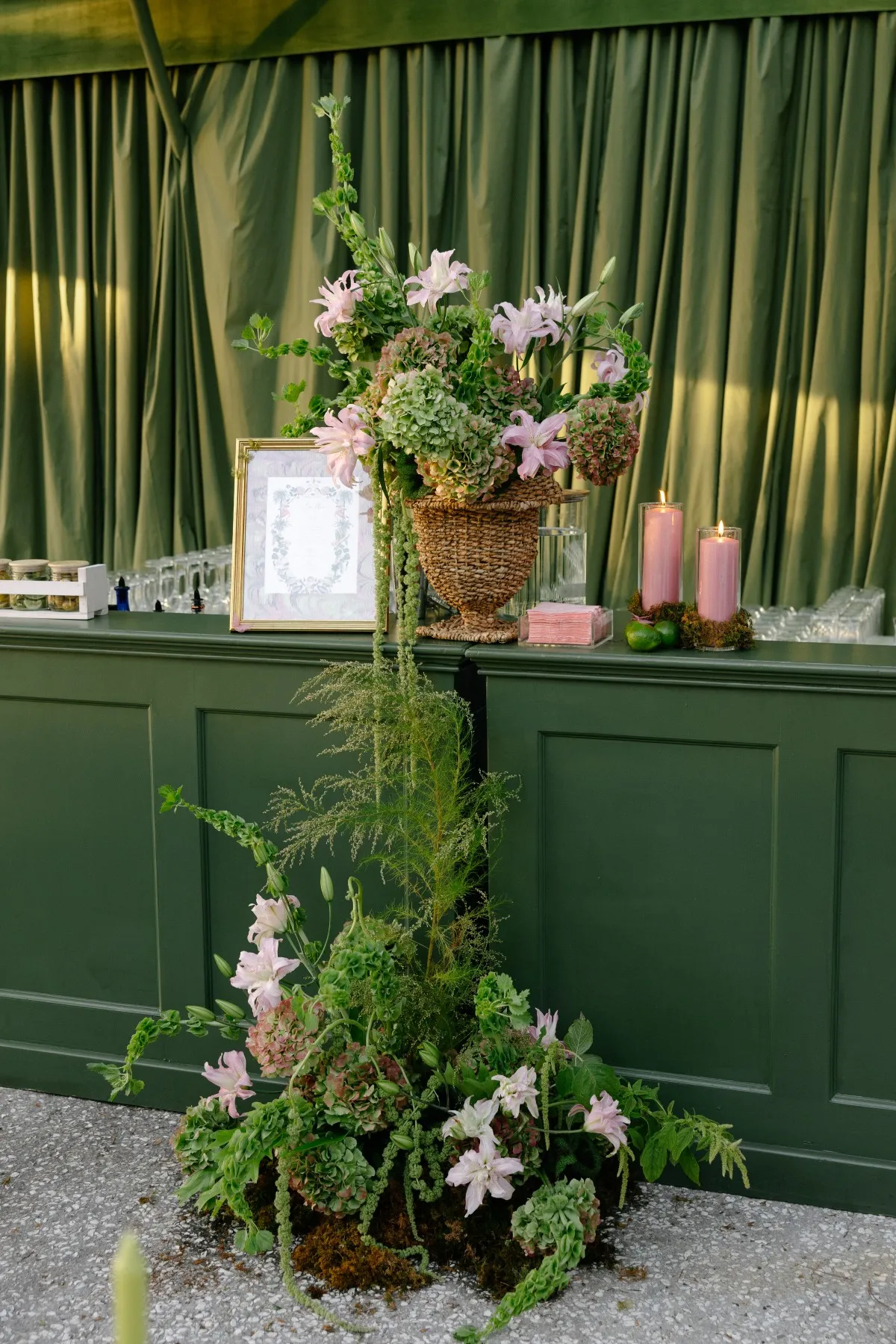
The area behind the bar is often as visually important as the bar front itself. Shelving and bar-back pieces can introduce height, create structure, and help the bar feel grounded within a larger room or tent.
Use Vertical Elements to Add Height
In expansive spaces, the bar itself may occupy only the lower portion of the visual field. Shelving, bar backs, or other vertical elements can give the area more presence while drawing the eye upward. They can also help balance tall ceilings, tent architecture, or large-scale floral installations elsewhere in the room. Vertical pieces work best when their scale feels appropriate to both the bar and the surrounding venue.
Consider What Guests See Behind the Bar
The visual backdrop should be considered when deciding where to place the bar.
Depending on the venue, guests may see:
-
Architectural features
-
Landscape or garden views
-
Tent walls
-
Shelving
-
Lighting
-
Florals
-
Drapery or other event décor
A strong existing backdrop may need very little additional styling. A quieter area may benefit from shelving or lighting that gives the bar more definition. The goal is to work with the setting rather than cover it unnecessarily.
Avoid Over-Styling the Display
Shelving does not need to be filled completely to feel intentional. Leaving visual space between objects can make the composition feel more polished and allow individual details to register more clearly. Restraint is especially useful when the bar itself already has a strong finish or silhouette.
What Details Make a Bar Feel Considered?
Once the overall structure and placement have been established, smaller elements can refine the setting. These details should support both appearance and function rather than simply adding more decoration.
Glassware Can Reinforce the Design
Glassware is primarily functional, but its shape and finish still contribute to the visual language of the bar. A consistent glassware direction can create a more composed appearance, especially when shelves or back-bar displays make those pieces visible. The selection can also relate subtly to the tabletop used elsewhere at the reception, helping connect cocktail hour with dinner. Read more in Designing a Chic Cocktail Reception With Stylish Rentals.
Lighting Changes the Bar After Sunset
Fall events frequently move through several different lighting conditions. A bar that feels bright and open during an afternoon cocktail hour can become a more intimate destination after sunset. Ambient lighting, illuminated shelving, overhead fixtures, or architectural lighting can help manage that transition.
Lighting should highlight the bar without making it feel disconnected from the surrounding lounge and reception areas. A balanced plan allows the entire event to shift together as daylight fades.
Signage Should Complement Rather Than Compete
Menus and signage can provide useful information and add personality, but they should remain visually connected to the event. Scale, typography, material, and placement all matter. A small, carefully positioned menu may complement a sculptural bar better than oversized signage that obscures the structure itself.
Leave Enough Functional Surface
Styling should never consume the entire bar. Counter space needs to remain usable, and decorative elements should not interfere with the structure’s practical purpose.
This balance is particularly important when considering florals, candles, signage, or other accessories. The bar should look finished without becoming difficult to use.
How Can a Fall Bar Feel Seasonal Without Becoming Themed?
Fall can influence event design without becoming the literal subject of it. Rather than relying on obvious seasonal motifs, a more editorial approach uses color, material, texture, and lighting to create a sense of warmth and depth.
Use Richer Tones Selectively
Fall palettes can include far more than traditional orange and red. Depending on the event, deeper or warmer tones might include:
-
Burgundy
-
Olive
-
Cognac
-
Plum
-
Chocolate
-
Warm ivory
-
Taupe
-
Deep neutrals
These colors do not all need to appear together. A single saturated tone can make an impact when surrounded by quieter neutrals, while an entirely restrained palette can still feel seasonal when texture and lighting are layered thoughtfully. You may also find What do I need to hire to serve all the drinks for my event helpful.
Introduce Warmth Through Material
Materials often communicate season more subtly than color. Wood, textured linen, upholstered seating, metallic accents, and glass can create depth when combined in measured proportions.
The bar itself may provide one of these materials, while nearby lounge furniture or cocktail tables introduce another. This allows the fall atmosphere to emerge from the composition rather than from decorative motifs.
Let Lighting Carry the Evening Transition
Lighting is one of the most effective ways to shift the mood of a fall event. Late-afternoon natural light may keep the bar feeling open and energetic during cocktail hour. As evening arrives, warmer ambient illumination can make the same setting feel more intimate. Planning for that transition from the beginning allows the bar to work equally well in daylight and after dark.
Avoid Literal Seasonal Styling
A sophisticated fall setting does not require leaves, pumpkins, harvest signage, or other obvious seasonal references. The season can be conveyed more subtly through material richness, tonal depth, warm lighting, and inviting nearby furniture. This also gives the design greater longevity and allows the venue itself to remain part of the visual story.
How Should the Bar Work With Lounge Furniture?
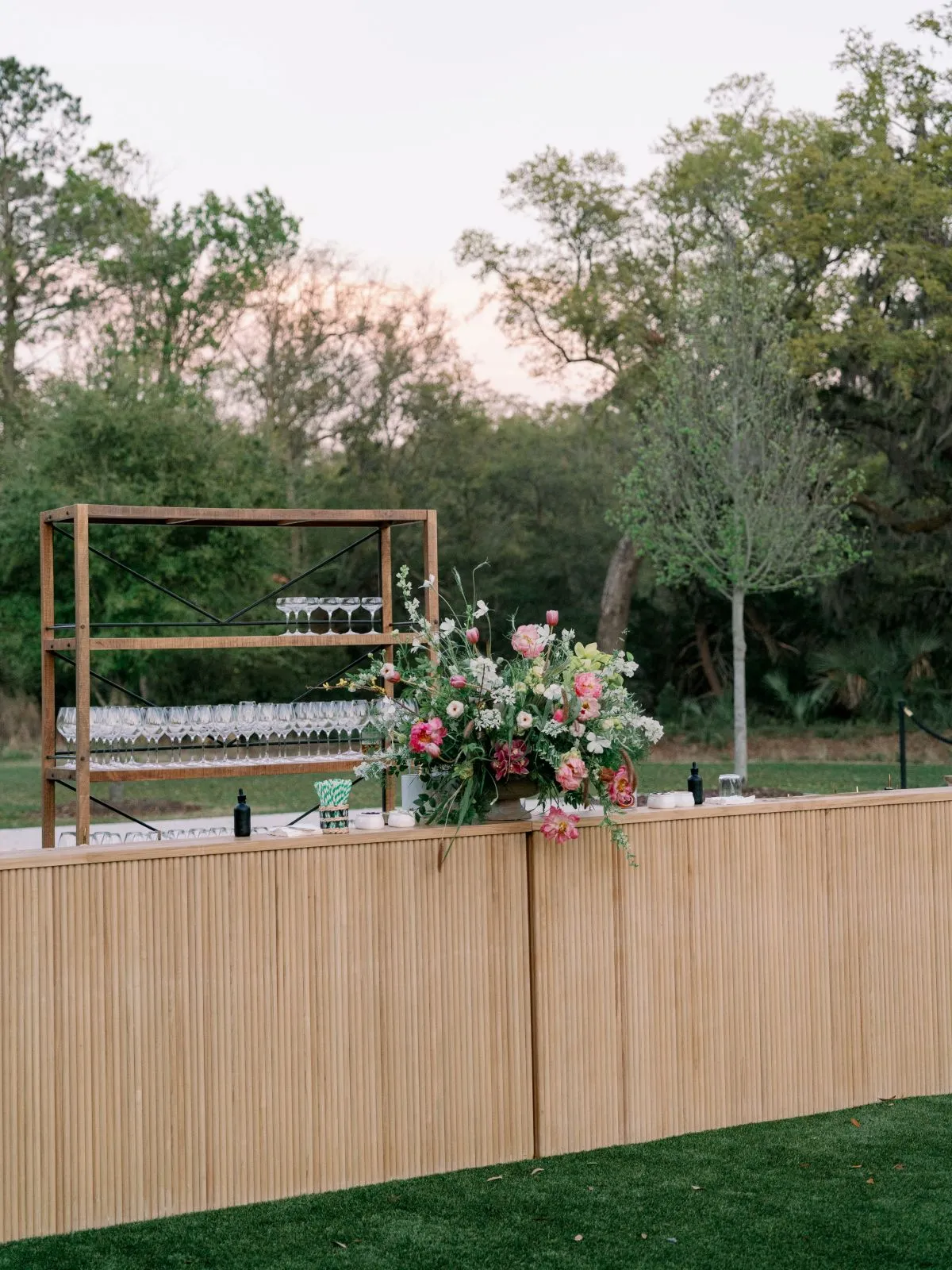
The bar and lounge often serve different functions within the same social area. The bar encourages movement, while lounge furniture encourages guests to stay. Considering them together can create a cocktail setting that feels lively without becoming congested.
Create a Social Zone Without Crowding It
Lounge furniture can be positioned close enough to the bar to feel connected while still leaving adequate circulation around both areas. A generous gap between the bar and the nearest seating allows guests to move comfortably while preserving conversation within the lounge. For larger events, several smaller seating groups may work better than one oversized arrangement directly beside the bar.
Use Shared Materials or Shapes
Visual relationships can help connect the spaces. A curved bar could relate subtly to rounded cocktail tables or softer furniture silhouettes. A wood finish might be repeated in side tables, while metallic bar details could reappear in lighting or surrounding accent pieces. These references create cohesion without requiring exact matches.
Give Each Area Its Own Function
The bar should remain easy to approach and navigate, while the lounge should feel comfortable enough for guests to settle into conversation. Trying to make both spaces serve the same role can compromise each. Instead, the two areas can work as complementary parts of the cocktail experience: one encouraging movement and interaction, the other offering a place to pause.
What Should Be Considered Before Selecting a Bar Rental?
Choosing the bar becomes easier once the venue, floor plan, and surrounding design have been established. A few practical considerations can help narrow the options before attention turns to finish and styling.
Review the Venue Footprint
Begin with the actual available space.
Consider:
-
Venue dimensions
-
Entrances and exits
-
Existing architectural features
-
Tent placement, if applicable
-
Floor or ground conditions
-
Venue restrictions
-
Nearby dining and lounge areas
Understanding the footprint prevents a bar from being selected solely on appearance when another configuration would function better in the venue.
Estimate How the Bar Will Be Used
Guest count matters, but so does the bar’s role during the event. Consider whether it will primarily serve cocktail hour or remain active throughout the reception. Larger events may also use multiple bar locations to distribute guest movement throughout the space. These questions should be addressed alongside the floor plan rather than after the bar has already been chosen.
Compare the Bar With Other Rentals
Reviewing the bar alongside lounge furniture, lighting, tables, linens, tabletop, and shelving can reveal relationships that may not be apparent when each item is viewed in isolation. Curated Events Nashville offers these categories within its broader rental collection, allowing couples and planners to consider the bar as one component of the complete event design rather than an isolated selection.
Coordinate With the Overall Floor Plan
The final bar placement should work with every major area of the reception. Dining, dancing, entertainment, lounge seating, entrances, catering requirements, and guest circulation all contribute to the decision. When these elements are planned together, the bar can become an intentional destination without interrupting the flow of the event.
Frequently Asked Questions
Where should a bar be placed at a Nashville reception?
The best location depends on the venue and overall floor plan. A bar should generally be easy for guests to reach while remaining clear of major circulation paths, dining areas, and the dance floor. Its relationship to lounge furniture, entrances, and other gathering spaces should also be considered before placement is finalized. For more detail, see our article Designing Dining and Bar Areas for Tented DC Galas.
Should the bar match the lounge furniture?
Not necessarily. The two areas can feel connected through shared colors, materials, finishes, or shapes without matching exactly. Allowing some variation often creates a more layered and considered event design.
What bar styles work well for fall events?
Curved, linear, wood-finished, dark, light, and metallic bar styles can all work for fall celebrations. The appropriate direction depends on the venue, surrounding furnishings, event palette, and the role the bar plays within the floor plan rather than the season alone.
How can a bar feel seasonal without using themed décor?
Seasonal character can come through richer color, warm materials, textured linens, layered lighting, and complementary lounge furniture. These elements can suggest fall without relying on literal autumn decorations.
Does Curated Events Nashville offer rentals beyond the bar?
Yes. Curated Events Nashville offers bars and shelving alongside lounge furniture, tables, linens, tabletop pieces, lighting, tenting, and other event rentals. Considering these categories together can help create a more cohesive reception environment. Get in touch with our Nashville showroom to start your rental order.
Conclusion
A statement bar is defined by more than its finish or decorative details. Its placement, proportion, architecture, lighting, surrounding furniture, and relationship to guest movement all influence how naturally it belongs within the event.
For a Nashville fall celebration, seasonal character can be introduced through warm materials, richer tones, layered lighting, and thoughtful connections between the bar and surrounding spaces rather than through overt themes. When the bar, shelving, lounge furniture, lighting, and other rental elements are considered as parts of the same composition, the result feels less like a standalone service station and more like an intentional part of the complete event experience.
Conclusion
In closing, a statement bar is more than a serving station, it is a focal point that sets the tone for how guests gather and connect throughout a fall event. Thoughtful design, from layered textures to seasonal garnishes, transforms a simple cocktail setup into an experience that lingers in memory long after the evening ends. We approach every detail with intention, ensuring each element works in harmony to create a moment worth celebrating. Let us partner with you to bring that vision to life.