
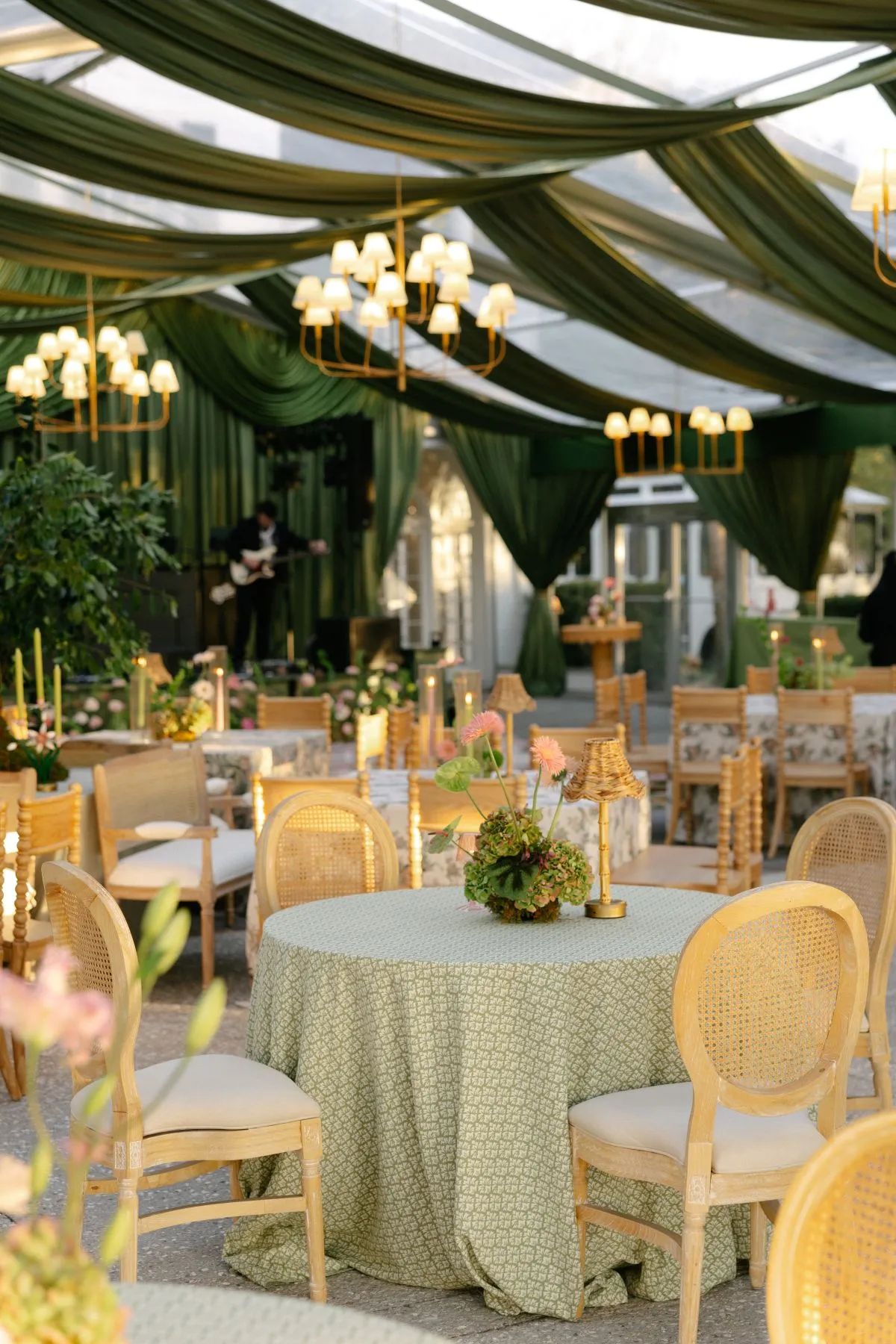
A tented wedding changes character as the day moves into evening. During an afternoon ceremony or cocktail hour, natural light may define the setting, allowing the landscape, tent material, and surrounding architecture to remain visually prominent. As sunset approaches, however, installed lighting begins to shape the environment more directly, influencing how guests experience the tables, lounge areas, bar, dance floor, and tent structure itself.
That transition is particularly important for a fall wedding in Nashville, when an outdoor celebration may move through several distinct lighting conditions over the course of a few hours. Rather than treating lighting as a finishing detail added after the tent and floor plan have been established, couples and planners can consider it as part of the overall event composition from the beginning. Curated Events Nashville offers tenting and lighting alongside furnishings and other event rentals, allowing those elements to be considered in relation to one another as the reception design develops.
How Does a Fall Tent Change After Sunset?
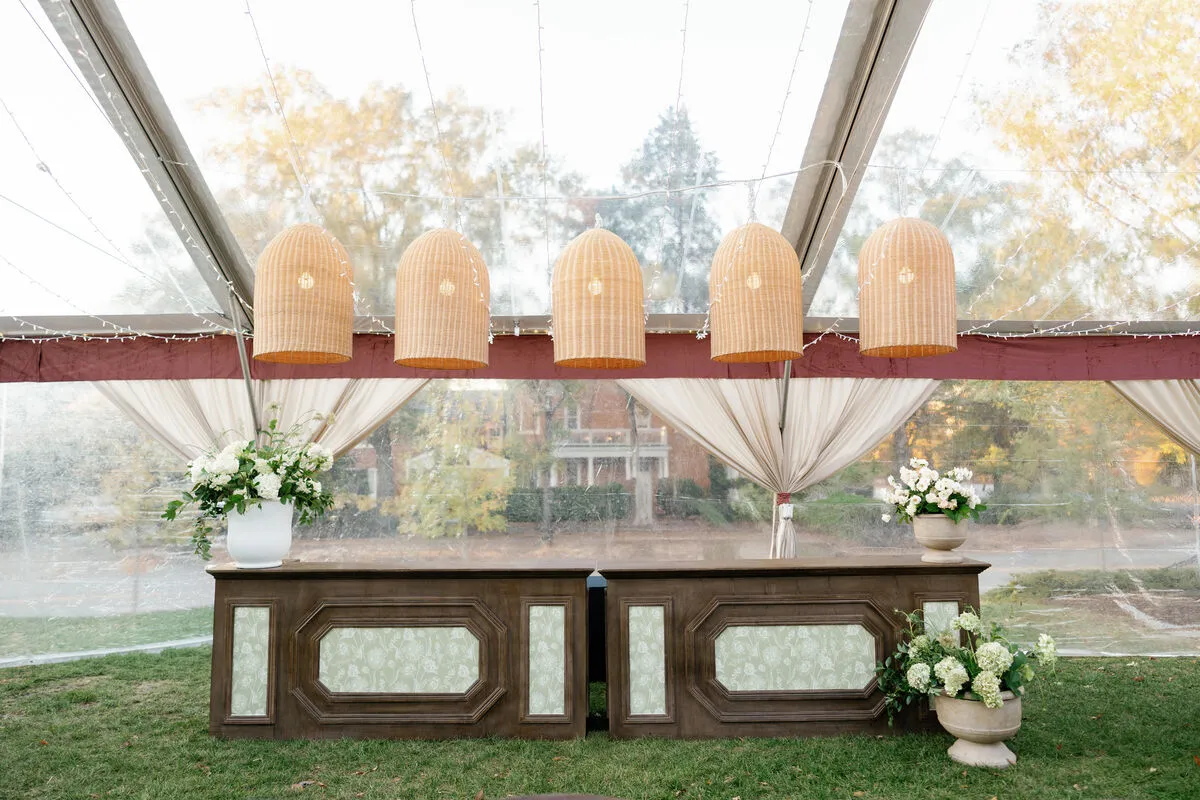
A tent can feel open and closely connected to its surroundings during daylight, then become a much more defined architectural environment once the sun goes down. The ceiling, support structure, perimeter, entrances, and internal layout become more visible as artificial lighting takes over, which means the evening experience depends on more than simply providing enough illumination for guests to see.
Plan for the Day-to-Night Transition
Fall receptions often begin while natural light is still contributing significantly to the atmosphere. During cocktail hour, the tent may feel bright and open, with views of the surrounding lawn, garden, or estate still forming part of the experience. As daylight fades, the same space begins to rely on overhead fixtures, lamps, chandeliers, and other sources to establish its mood and visual structure.
Planning for both conditions creates a more cohesive transition. Lighting does not need to overpower the daylight early in the event, but it should be ready to take on a larger role as the evening progresses. The goal is for the tent to evolve naturally rather than feel as though one environment ends abruptly and another begins after sunset.
Consider the Tent From Both Inside and Outside
Lighting changes the way a tent is perceived from more than one viewpoint. Guests seated beneath the structure experience the ceiling, tables, furnishings, and surrounding event zones, while those approaching from outside may first notice the illuminated roofline or the glow visible through open sides.
That exterior perspective can be particularly meaningful for estate, garden, and lawn celebrations where guests move between several areas throughout the evening. A thoughtfully illuminated tent can remain visually connected to the surrounding property rather than becoming an isolated room once darkness falls.
Let the Event Timeline Shape the Lighting Plan
The lighting needs of cocktail hour are not necessarily the same as those of dinner or dancing. Early in the reception, natural light may still support lounge seating and the bar, while dinner requires comfortable illumination across tables and pathways. Later, the dance floor may take greater visual priority as guests shift away from dining.
Looking at the entire event timeline makes it easier to determine which fixtures should provide a consistent foundation and which areas can change in emphasis over the course of the evening. Lighting then becomes part of how guests move through the celebration rather than a static layer applied uniformly across the tent.
How Do You Build a Layered Lighting Plan?
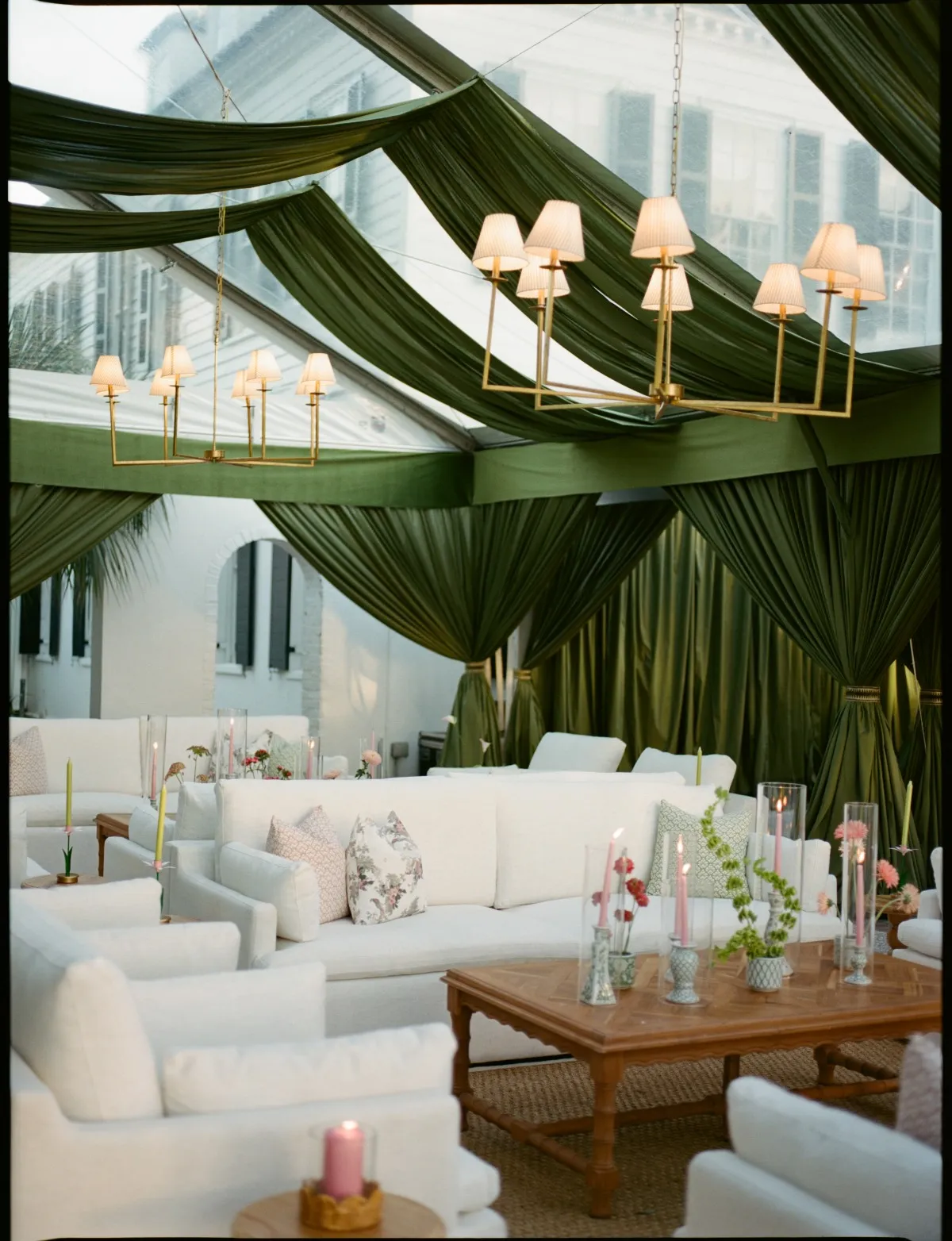
A single source rarely needs to perform every role within a tented reception. Broader ambient illumination, decorative fixtures, localized lamps, and perimeter lighting can each contribute differently, allowing the event to feel dimensional rather than evenly lit from one source.
The most effective approach usually begins with a foundation and then adds visual emphasis where it supports the floor plan and design.
Start With Ambient Lighting
Ambient lighting establishes the overall level of illumination within the tent. Depending on the design, this might come from string lighting, overhead fixtures, or another broader source that distributes light across the reception rather than concentrating it in one location.
The objective is not maximum brightness. A dining environment should feel comfortable enough for guests to see one another and appreciate the tabletop while still allowing decorative fixtures, candles, and localized lighting to create variation. When ambient illumination is too uniform, the tent can lose the sense of depth that makes individual areas feel distinct.
Add Focal Fixtures Where They Matter
Chandeliers, pendants, or other suspended fixtures can establish stronger visual moments within the tent. Their placement may emphasize a central dining area, dance floor, bar, or another gathering point depending on the floor plan.
Scale is particularly important. A fixture that works beautifully above an intimate dining table may appear too small within a larger tent, while an oversized chandelier can dominate a more restrained setting. Suspended lighting should respond to the ceiling height, tent proportions, and furniture beneath it so that it feels integrated with the architecture rather than simply attached to it.
Introduce Localized Lighting Around Lounge Areas
Lounge areas often benefit from a different lighting scale than the rest of the reception. Table lamps, floor lamps, or nearby decorative fixtures can create smaller pockets of illumination that make seating areas feel more intimate without requiring the entire tent to become darker.
This contrast is useful because lounge furniture serves a different purpose from dining or dancing. Guests tend to settle into these spaces for conversation, and localized lighting can reinforce that quieter atmosphere while still maintaining visual continuity with the broader event.
Define Entrances and Transitions
Lighting can also help clarify the places where guests move from one part of the celebration to another. Entrances, pathways, tent edges, and transitions between indoor and outdoor areas become more important after sunset, particularly when the reception spans a larger property.
These areas do not necessarily need dramatic treatment. A consistent lighting language and sufficient illumination can help guests move comfortably while also connecting the main tent to cocktail areas, lounges, gardens, or surrounding venue features.
How Should the Tent Structure Influence Lighting Choices?
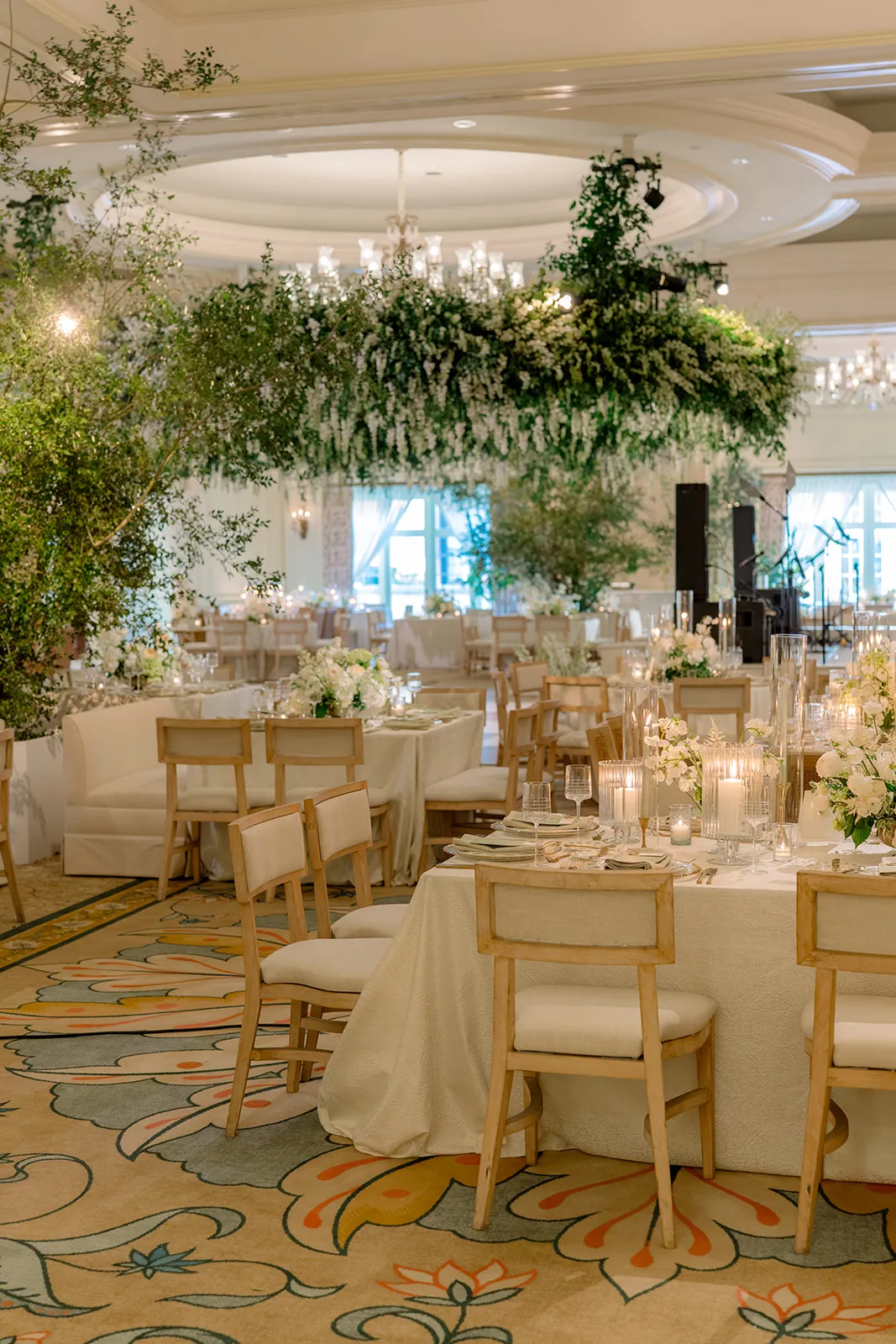
Lighting works most naturally when it responds to the structure it is illuminating. Ceiling height, roofline, support placement, tent material, and overall footprint can all influence where fixtures belong and how their scale should be handled.
Rather than treating the tent as a neutral shell, planners can use its architecture as part of the lighting design.
Consider Ceiling Height and Roofline
Different tent forms create different visual opportunities overhead. A tent with pronounced peaks may lend itself to suspended fixtures that reinforce vertical height, while a cleaner frame structure may support a more linear lighting arrangement. The roofline can also influence the direction in which the eye moves through the reception.
Fixture placement should therefore respond to the geometry above rather than being determined solely by the furniture below. When those two layers align, the room tends to feel more composed because the ceiling and floor plan appear to be part of the same design.
Use Lighting to Emphasize the Structure
Lighting can help articulate tent peaks, beams, ceiling lines, or central axes without making the structure itself overly prominent. String lighting may follow or cross the roofline, while focal fixtures can draw attention to important vertical points within the space.
This architectural approach is especially useful in larger tents, where the ceiling can otherwise feel visually distant from the event happening below. Thoughtful illumination connects the upper and lower portions of the room, making the tent feel like a complete environment rather than a roof placed over furniture.
Preserve Views Where They Matter
Some tented weddings are designed around the landscape. Open sides may frame a garden, estate, tree line, or other surrounding view, and excessive lighting can reduce that connection after sunset.
In these settings, the goal may be to illuminate the interior comfortably without turning the tent into a bright enclosure that reflects against the open perimeter. Softer lighting near the edges can allow the surrounding property to remain visible and maintain the relationship between the reception and the setting outside.
Think About the Tent as a Complete Room
The tent, flooring, furniture, tables, lounge areas, lighting, and décor should ultimately feel related. Lighting can help connect these elements by reinforcing the structure of the floor plan and giving different parts of the tent an appropriate visual weight.
A successful plan does not make every area equally bright or dramatic. It creates enough hierarchy that guests understand the room intuitively, with dining, gathering, and entertainment areas each contributing to the overall composition.
How Should Different Areas Within the Tent Be Lit?
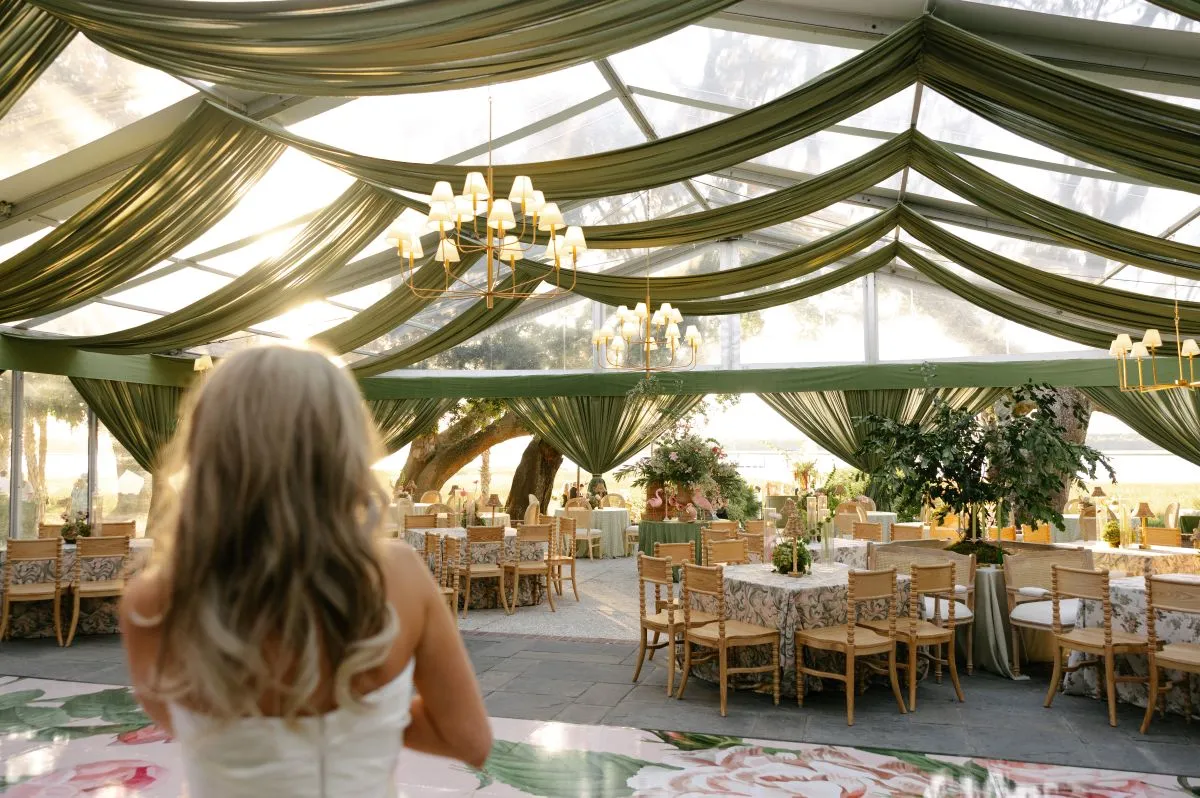
A reception tent often contains several environments within one structure. Dining tables, bars, lounges, entertainment, and guest circulation may all occupy the same footprint, but they do not need to receive identical lighting treatment.
Using light to distinguish these areas can make a large tent feel more layered while preserving a sense of cohesion across the room.
Dining Areas
Dining lighting should allow guests to see one another comfortably while also supporting the tabletop design. Linens, glassware, dinnerware, florals, menus, and metallic finishes can all change noticeably under different lighting conditions, so the table should be considered as part of the lighting plan rather than as a separate design exercise.
Overhead fixtures may provide general illumination, while candles or smaller decorative sources introduce another layer closer to guest level. The combination can create depth without making the dining area feel overly bright.
Bar and Lounge Areas
The bar naturally attracts movement, while lounge areas encourage guests to remain in one place. Lighting can reinforce those different functions while keeping the spaces visually connected.
A bar may benefit from enough illumination to establish its form and surrounding shelving, while an adjacent lounge might rely more heavily on localized lamps or softer sources. Shared fixture materials, lighting tones, or surrounding finishes can create cohesion without making both zones feel identical.
Dance Floor
The dance floor often becomes more prominent later in the evening, so its lighting can be planned with that shift in mind. A chandelier or other suspended fixture may create a visual anchor earlier in the reception, while the overall emphasis changes once dancing begins.
The specific treatment should respond to the larger event design rather than assuming every dance floor needs an elaborate lighting installation. In some receptions, architectural lighting and a strong overhead focal fixture may provide enough definition without additional decorative layers.
Entrances and Guest Pathways
The routes guests use after dark deserve the same planning attention as the spaces where they spend more time. Entrances, exits, pathways, and transitions between the tent and surrounding property should remain visually clear and connected to the larger lighting environment.
This does not mean every walkway needs to become a feature. The strongest approach is often understated, using enough illumination to guide movement while allowing the main reception areas to remain the visual focus.
How Should the Lighting Change Throughout the Evening?
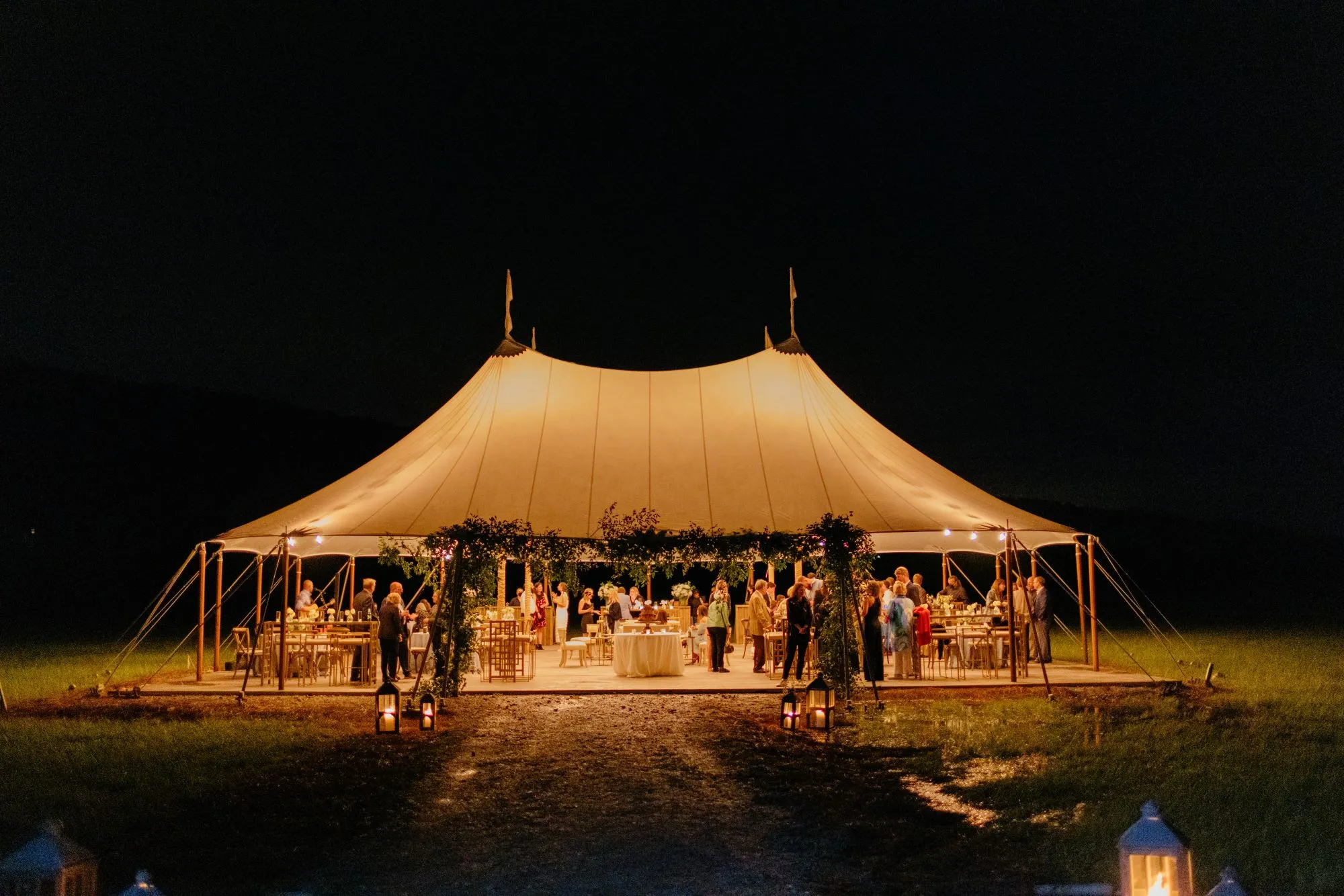
A wedding reception does not remain visually or socially static, so the lighting does not necessarily need to remain unchanged either. The progression from cocktail hour into dinner, toasts, dancing, and late-evening gathering creates opportunities for different areas of the tent to become more or less prominent.
The key is gradual transition rather than dramatic shifts that feel disconnected from the event.
Cocktail Hour
During cocktail hour, remaining natural light may still play a significant role. Installed fixtures can support rather than overpower that light, allowing guests to appreciate the venue and surrounding landscape while the tent begins to establish its evening character.
Bar and lounge areas may need more localized illumination than the rest of the space, particularly if guests are moving between indoor and outdoor areas.
Dinner
As daylight fades, the dining area becomes increasingly dependent on installed lighting. This is when overhead fixtures, candles, and other ambient sources begin to define the tablescape more strongly.
The goal should be enough illumination for comfortable dining without eliminating the contrast and depth that make an evening reception feel distinct from a daytime event.
Toasts and Key Moments
Selected moments may benefit from slightly greater visual emphasis, depending on the floor plan and event production. Toasts, a cake presentation, or another focal activity may take place in an area that needs to be clearly visible without permanently changing the entire lighting environment.
Planning those moments in advance prevents the lighting from having to be improvised during the reception.
Dancing and Late Evening
Later in the evening, guests may spend less time at dining tables and more time around the dance floor, bar, or lounge areas. The visual hierarchy of the room can shift accordingly.
This does not necessarily require an entirely new lighting scheme. Sometimes reducing emphasis in one zone while allowing another to become more prominent is enough to change the atmosphere naturally.
What Practical Details Should Be Reviewed Before Finalizing the Lighting Plan?
The most beautiful lighting concept still needs to work within the physical requirements of the tent and venue. Fixture locations, available power, cable routing, structural attachment points, and other major installations should all be reviewed before the event day.
Addressing these details early helps preserve the intended design while avoiding unnecessary changes during installation.
Confirm the Tent and Floor Plan
Lighting positions should follow the final event layout as closely as possible. Dining tables, dance floor, bar, lounge furniture, entertainment, entrances, and service areas can all influence where fixtures belong.
A chandelier centered within the tent may not make sense if the dance floor is intentionally offset, while a lighting arrangement planned before the bar location is finalized may need substantial revision later. The more stable the floor plan is, the easier it becomes to integrate the lighting with it.
Review Available Power
Lighting shares electrical capacity with other event needs, which may include entertainment, audio-visual equipment, catering equipment, or climate-related systems. The available power and distribution plan therefore need to support the complete event rather than the lighting in isolation.
This is particularly relevant at outdoor or private-property venues where permanent infrastructure may be more limited. Reviewing power requirements in advance keeps practical decisions from disrupting the design later.
Consider Installation and Cable Routing
Fixture placement also depends on how equipment can be installed safely and how cables will move through or around the space. Tent structure, flooring, guest paths, and service routes all influence these decisions.
Cable routing should be considered as part of the floor plan rather than after decorative elements have already been placed, particularly in high-traffic areas where visual clutter or obstacles would be undesirable.
Account for Other Major Design Installations
Large florals, draping, bars, staging, entertainment equipment, and other installations can occupy many of the same visual or structural areas as lighting fixtures.
Coordinating these elements early helps avoid competing placements. It also creates opportunities for the installations to reinforce one another, such as a suspended fixture positioned in relationship to a floral installation rather than independently of it.
Frequently Asked Questions
What lighting works well for a fall tented wedding?
A fall tented wedding can use several lighting layers, including broader ambient illumination, suspended focal fixtures, localized lamps, and lighting around entrances or pathways. The right combination depends on the tent structure, floor plan, event timeline, venue setting, and overall design rather than on the season alone.
Do fall weddings need warmer lighting?
Not necessarily. Warmer illumination can complement many fall palettes and materials, particularly in dining and lounge environments, but the appropriate lighting quality should respond to the complete event design. A contemporary or cooler-toned reception may call for a different approach than one built around deep textiles, wood, and warmer metallic finishes.
Does tent style affect the lighting plan?
Yes. Ceiling height, roofline, structural supports, tent material, and available installation points can all influence fixture scale and placement. Lighting tends to feel most integrated when it responds to the architecture of the tent rather than being planned independently from it.
Should lighting change during the reception?
It can. A reception often moves from natural daylight through dinner and into dancing, so different areas may become more prominent as the evening progresses. The changes do not need to be dramatic; a gradual shift in emphasis can help the lighting follow the rhythm of the event.
Conclusion
Lighting a Nashville fall tented wedding is less about filling the structure with fixtures and more about understanding how the environment will change over the course of the celebration. Natural daylight, tent architecture, dining and lounge areas, the bar, dance floor, pathways, and surrounding landscape all contribute to the way lighting should be planned.
When those elements are considered together, the tent can transition naturally from an open daytime setting into a more defined evening environment without losing its connection to the venue around it. Layered illumination then becomes part of the architecture and rhythm of the celebration, supporting how guests dine, gather, move, and experience the reception from the first transition into dusk through the final part of the evening.