
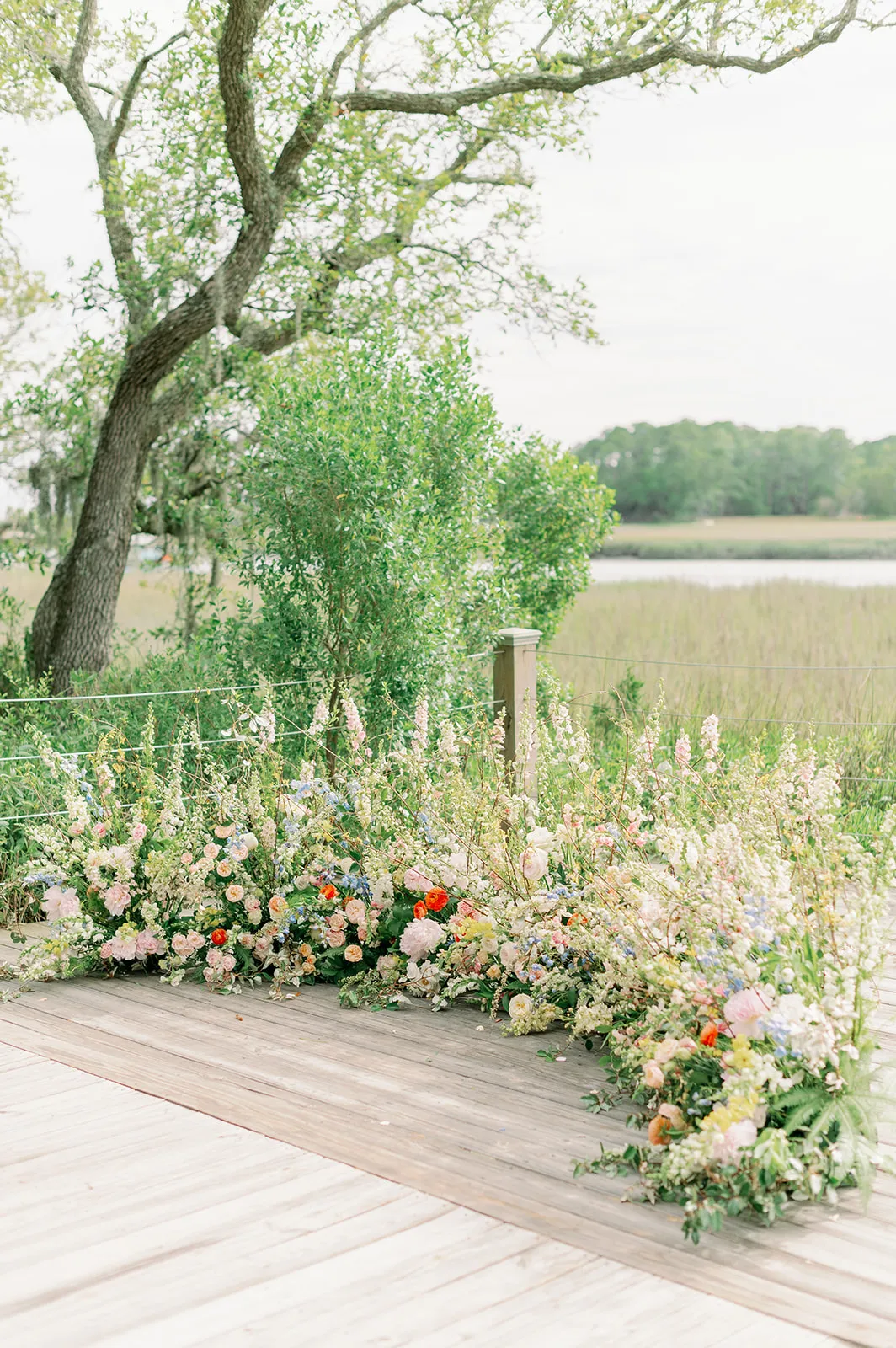
Floral centerpieces can define the character of a formal gala, but their impact depends on more than the flowers themselves. Once a ballroom, museum, tent, or private event space transitions into evening lighting, even a carefully designed arrangement can lose definition against the surrounding room.
Focused lighting, including pin spotting where appropriate, can help floral details remain visible without making the table feel overly illuminated. For planners, the objective is not simply to make centerpieces brighter. Lighting should work with the floral design, linens, tabletop pieces, guest sightlines, and the broader atmosphere of the event.
At formal Washington, D.C. galas, where dining, presentations, fundraising, awards, and guest interaction may all take place within the same environment, a considered lighting plan helps maintain visual hierarchy from the individual tablescape to the room as a whole.
Decide What the Centerpiece Lighting Needs to Accomplish
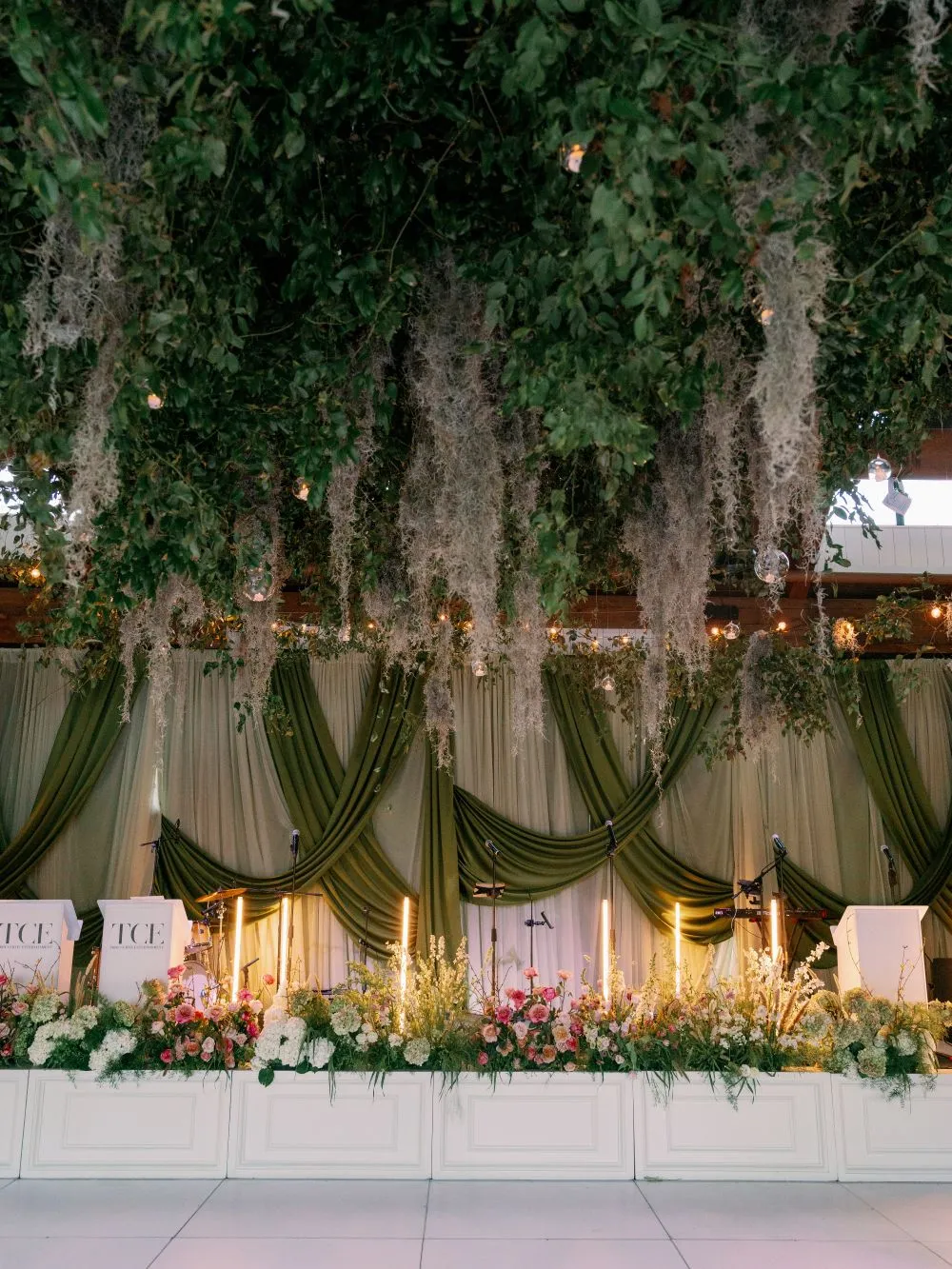
Before deciding where focused lighting should be used, planners should establish what the floral lighting is expected to contribute. Some centerpieces need additional definition after the room is dimmed, while others already have enough presence through scale, color, or surrounding light.
A clear purpose prevents lighting from becoming another decorative layer added without considering the rest of the event.
Keep Florals Visible as Ambient Light Changes
A centerpiece that appears vibrant during installation may look very different once daylight fades or the room transitions to lower ambient lighting.
Focused illumination can help maintain visibility of:
-
Floral color
-
Layered textures
-
Greenery
-
Arrangement shape
-
Small botanical details
-
Decorative elements incorporated into the florals
The goal should be to preserve the character of the arrangement rather than flatten it with excessive brightness.
This is particularly important when the design depends on subtle tonal differences or detailed floral compositions that may otherwise blend into a darker room.
Decide Whether the Florals Should Lead the Table Design
Not every centerpiece needs to be the strongest element on the table.
Some gala designs use florals as the primary visual statement, while others rely more heavily on expressive linens, distinctive tabletop pieces, candlelight, or printed details.
When florals are intended to lead, focused lighting can reinforce that hierarchy. When several other table elements already have substantial visual presence, the floral lighting may need to remain more restrained.
The lighting decision should therefore follow the tablescape hierarchy rather than automatically placing equal emphasis on every component.
Consider the Centerpiece From Across the Room
A gala centerpiece is experienced at more than one distance.
Guests sitting at the table notice individual flowers, textures, and details. From the entrance or across a ballroom, the same centerpieces become part of a larger pattern repeated throughout the room.
Planners should decide whether the floral design needs to register primarily at table level or whether it is also intended to shape the room-wide visual environment.
That distinction can influence how much lighting emphasis is appropriate.
Evaluate the Floral Design Before Planning Focused Lighting
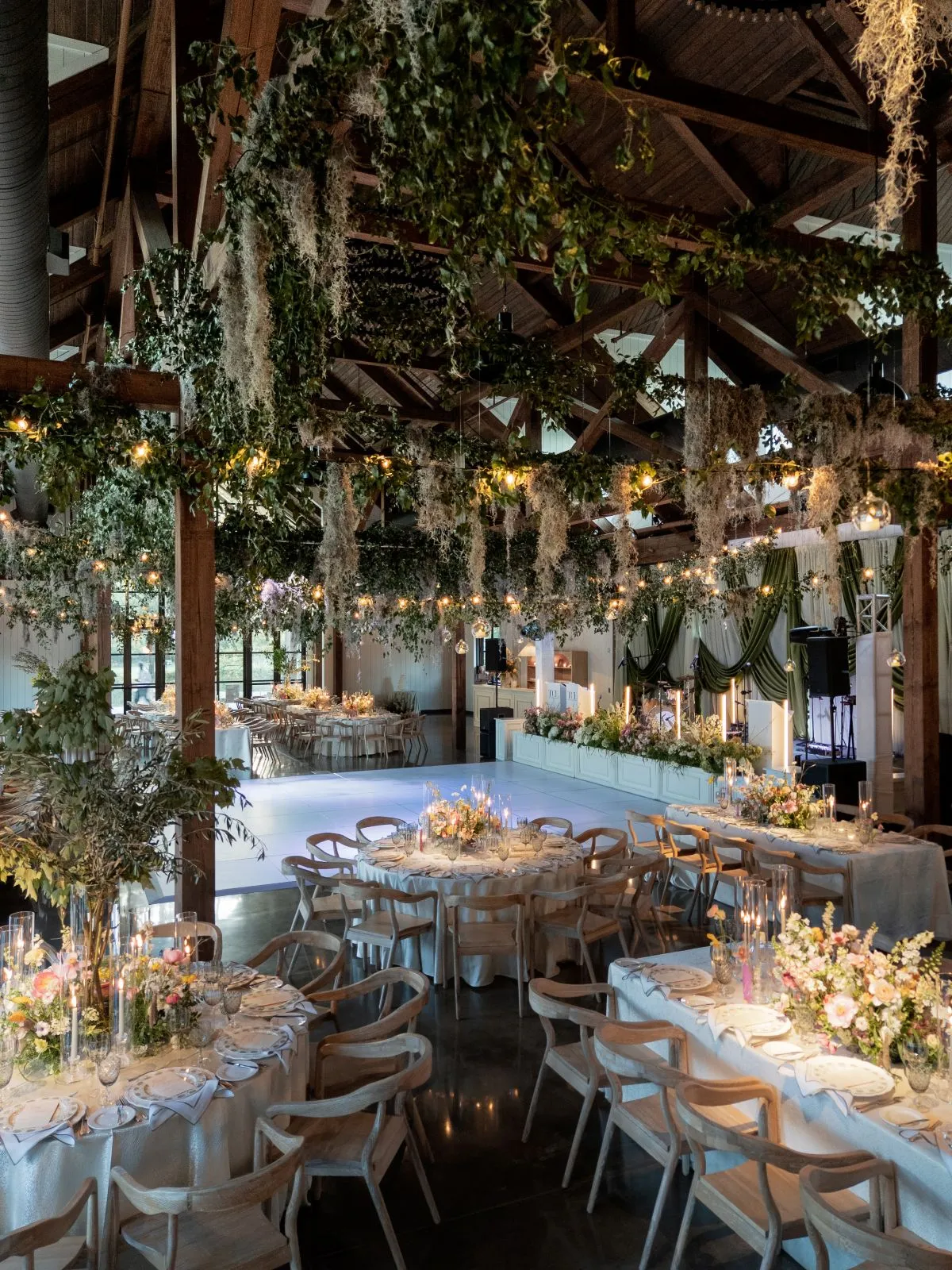
Focused lighting should be developed in response to the actual centerpiece design. Arrangement height, density, shape, and color all affect how light reaches the flowers and how shadows fall across the table.
Planning the floral and lighting concepts together helps prevent a technically functional setup from producing an awkward visual result.
Account for Centerpiece Height
Low arrangements and tall floral installations require different considerations.
A low centerpiece may be easier to illuminate without affecting guest sightlines, while a tall arrangement can intersect with a focused beam in ways that create stronger shadows or visible light paths.
Planners should consider:
-
Overall centerpiece height
-
Width at the top of the arrangement
-
Guest eye level
-
Nearby tables
-
The direction from which the arrangement will be viewed
The objective is to illuminate the floral composition without creating a distracting lighting condition for seated guests.
Consider Floral Density and Shape
An open arrangement with visible negative space interacts with light differently from a dense floral mass.
Dense centerpieces can create deeper shadows within the arrangement, while more open designs may allow light to pass through and reveal individual stems, petals, or branches.
The floral team’s design should therefore inform how much focused light is required and where that light should come from.
Rather than assuming every centerpiece needs the same treatment, planners can consider how the structure of the arrangement affects the final result.
Look at How Color Responds to Light
Floral colors can change noticeably under different event lighting conditions.
Deep greens and saturated flowers may appear richer in some settings but lose separation in low light. Pale florals may become more luminous, while reflective leaves, metallic vessels, or glass details can catch focused light more strongly.
Instead of following a simple warm-versus-cool lighting rule, planners should evaluate the specific floral palette under conditions that resemble the event.
The goal is visual consistency between what was designed and what guests will actually see.
Coordinate Pin Spots With the Rest of the Gala Lighting
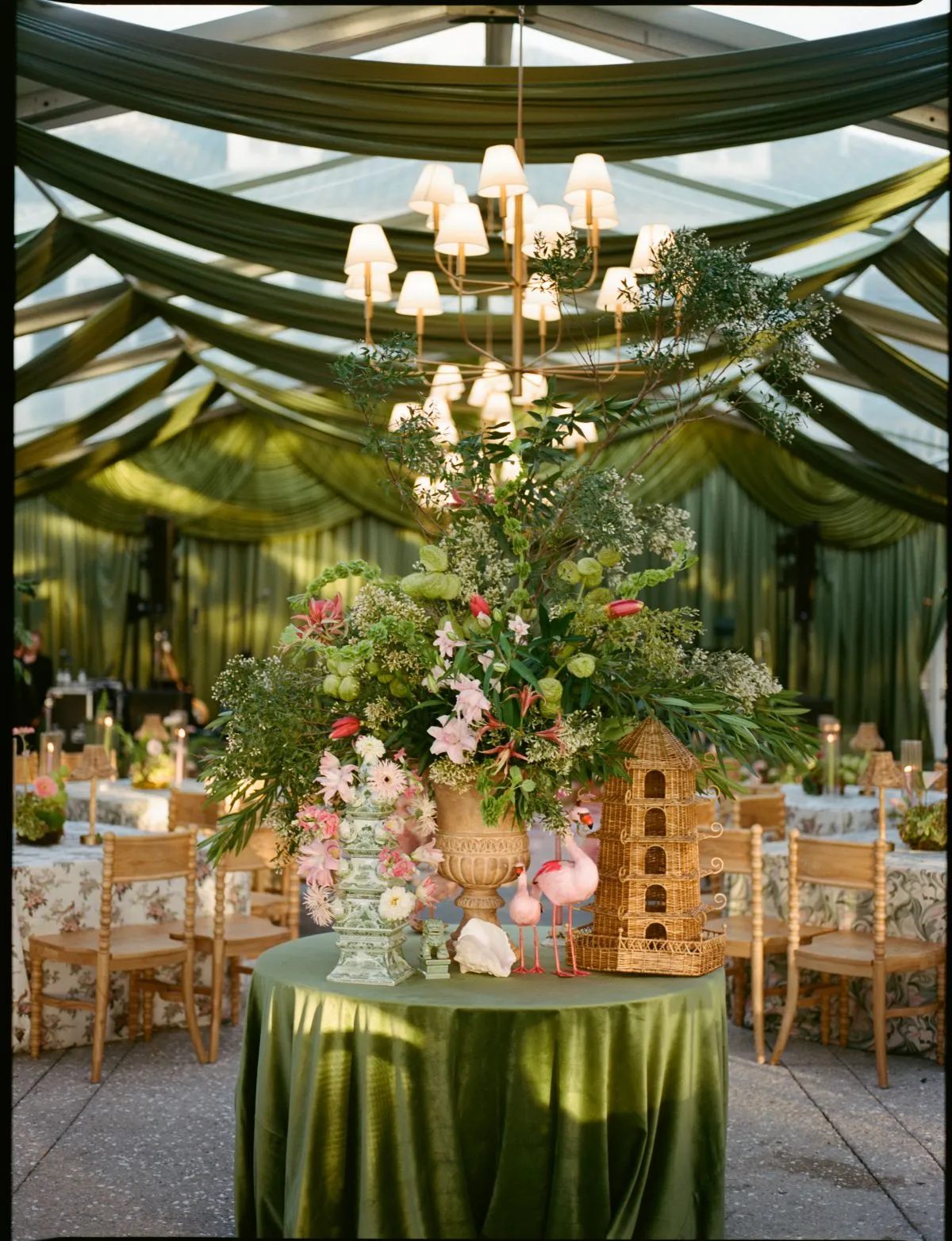
Focused lighting should never be planned in isolation. A formal gala may already include chandeliers, ambient architectural lighting, uplighting, candles, stage illumination, and decorative fixtures.
The centerpiece lighting needs to sit comfortably within that environment so that no single layer feels disconnected.
Establish the Ambient Lighting First
Before determining how much additional light the centerpieces need, planners should understand what the room will already provide.
Consider:
-
Existing venue fixtures
-
Chandeliers
-
Decorative pendants
-
Uplighting
-
Candlelight
-
Stage lighting
-
Presentation lighting
-
Other event production elements
A room with strong ambient illumination may require only subtle floral emphasis. A darker environment may need more deliberate focused lighting to keep table details visible. The broader lighting plan should provide the baseline.
Create Enough Separation Without Overlighting the Table
Focused lighting works best when it adds definition without making the centerpiece appear detached from the room around it.
If a floral arrangement becomes dramatically brighter than every surrounding element, the effect can feel more theatrical than refined.
For formal galas, the stronger approach is usually controlled separation. The flowers should remain visible and dimensional while still belonging to the same lighting environment as the linens, glassware, candles, and guests.
Keep Light Quality Consistent With the Event Design
Different lighting layers should feel related. If the ambient room lighting is soft and restrained, an extremely harsh focused beam can feel out of place. Likewise, a more dramatic event environment may support stronger contrast.
The lighting plan should respond to the formality, architecture, palette, and visual intensity already established throughout the gala. A cohesive room does not require every source to look identical, but each should support the same overall atmosphere.
Protect Guest Sightlines and Table Comfort
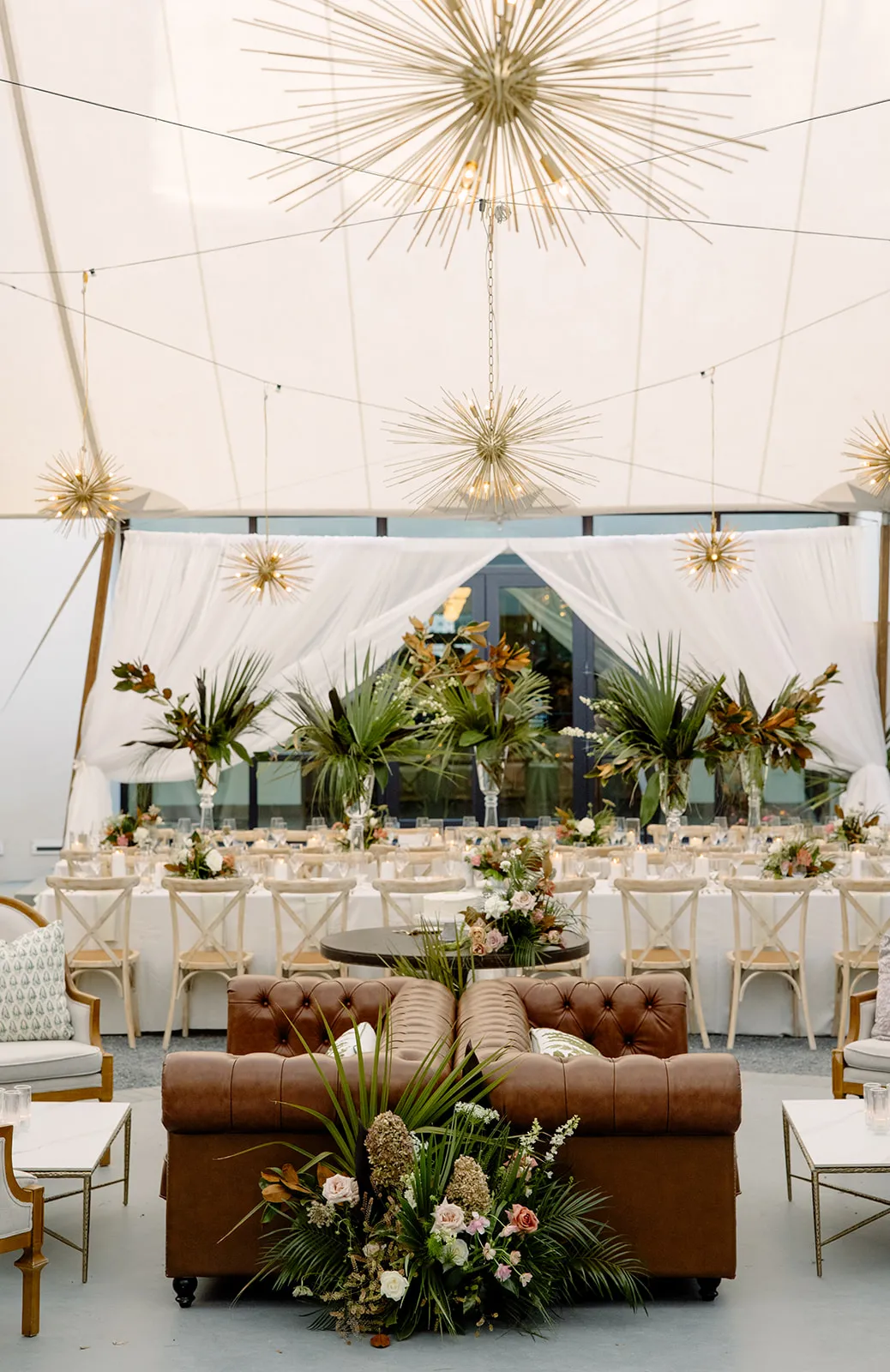
Floral lighting is designed around the centerpiece, but guests remain the priority within the dining environment.
Beam direction, fixture location, and floral height should be reviewed from seated positions rather than only from a production or installation perspective.
Avoid Direct Glare
Focused light should not become a distraction for guests seated around the table. A beam that looks correctly positioned from the edge of the room may still enter a guest’s line of sight from a particular chair. For more detail, see our article Budget-Friendly Wedding Favors to Delight Your Guests.
Testing from actual seating positions helps identify those issues before the event begins. The planner and lighting team can then adjust direction, positioning, or emphasis where needed.
Account for Tall Florals and Elevated Designs
Tall centerpieces can create additional sightline considerations because the light may need to travel through or around a large arrangement.
The relationship between the following elements should be reviewed together:
-
Centerpiece height
-
Beam direction
-
Guest eye level
-
Nearby seating
-
Adjacent tables
A tall floral feature may look exceptional from one angle but create an unwanted lighting effect from another. We cover this further in The Wedding Lighting Rental Guide.
That makes multi-angle review especially important.
Check Multiple Viewing Angles
A formal dining table should not be evaluated from a single preferred viewpoint.
Planners should look at the centerpiece from:
-
Multiple seats around the table
-
Nearby aisles
-
Adjacent tables
-
The room entrance
-
Stage or presentation areas where relevant
This provides a more accurate understanding of how the lighting will function once the room is occupied. You may also find 6 Lighting Mistakes to Avoid at Charlotte Receptions helpful.
Plan Centerpiece Lighting at Room Scale
Lighting one centerpiece successfully is only the beginning. In a large gala, the same treatment may be repeated across dozens of tables, changing how the lighting reads across the entire room. Read more in Accent Lighting Rentals that Double as Décor.
What feels subtle on a single sample table can become a dominant visual pattern when repeated at scale.
Consider How Many Centerpieces Need Focused Light
Not every table automatically needs the same lighting treatment.
Depending on the floor plan and design hierarchy, focused lighting may be used:
-
Across the main dining area
-
On selected guest-table groups
-
Around a central section of the room
-
On VIP or honoree tables
-
On specific focal surfaces
The decision should reflect what needs visual emphasis rather than simply applying the same fixture strategy everywhere.
Avoid Creating a Grid of Competing Bright Spots
Repeated pin spots can create a strong room-wide rhythm. When dozens of isolated bright areas appear across a ballroom, the lighting itself can become more visually prominent than the floral design it was intended to support.
Planners should step back from the individual tables and consider how the room reads as one composition.
From the entrance, stage, or perimeter, the illuminated centerpieces should feel connected rather than like unrelated points of brightness.
Keep the Lighting Pattern Visually Consistent
Where several similar guest tables receive focused lighting, noticeable differences in brightness, direction, or placement can disrupt the refinement of the room.
Consistency is particularly important in large formal environments because repetition makes small irregularities easier to notice.
That does not mean every table needs identical illumination. It means differences should follow the event design rather than appear accidental.
Use Focused Lighting Selectively Beyond Guest Centerpieces
Once the dining-table lighting is established, focused illumination may also support a limited number of other event details.
The key is maintaining hierarchy. If too many areas are highlighted equally, nothing feels particularly important.
Highlight a Head, Honoree, or VIP Table
An important table may warrant greater visual definition than surrounding guest seating.
Focused lighting can help create that distinction without requiring the table to use an entirely separate design concept.
The floral treatment, linen, tabletop, and lighting should still maintain a recognizable relationship to the rest of the room. The difference should feel intentional, not disconnected.
Consider Cake or Display Tables
A cake, floral installation, or specialty display may benefit from additional illumination when the surrounding area is relatively dark.
Before adding focused light, planners should determine whether the display itself needs stronger visibility.
A highly detailed cake or floral installation may benefit from greater definition, while an already prominent display may need little additional emphasis.
Use Focused Light Selectively for Auction Displays
At fundraising galas, selected auction or display areas may also benefit from additional light. The purpose here should be straightforward: make important items and information easier to see.
Focused lighting does not need to turn every auction table into a separate focal point. Instead, it can be used where the surrounding lighting would otherwise make a particular display difficult to read or appreciate.
Coordinate Lighting With Linens and Tabletop Rentals
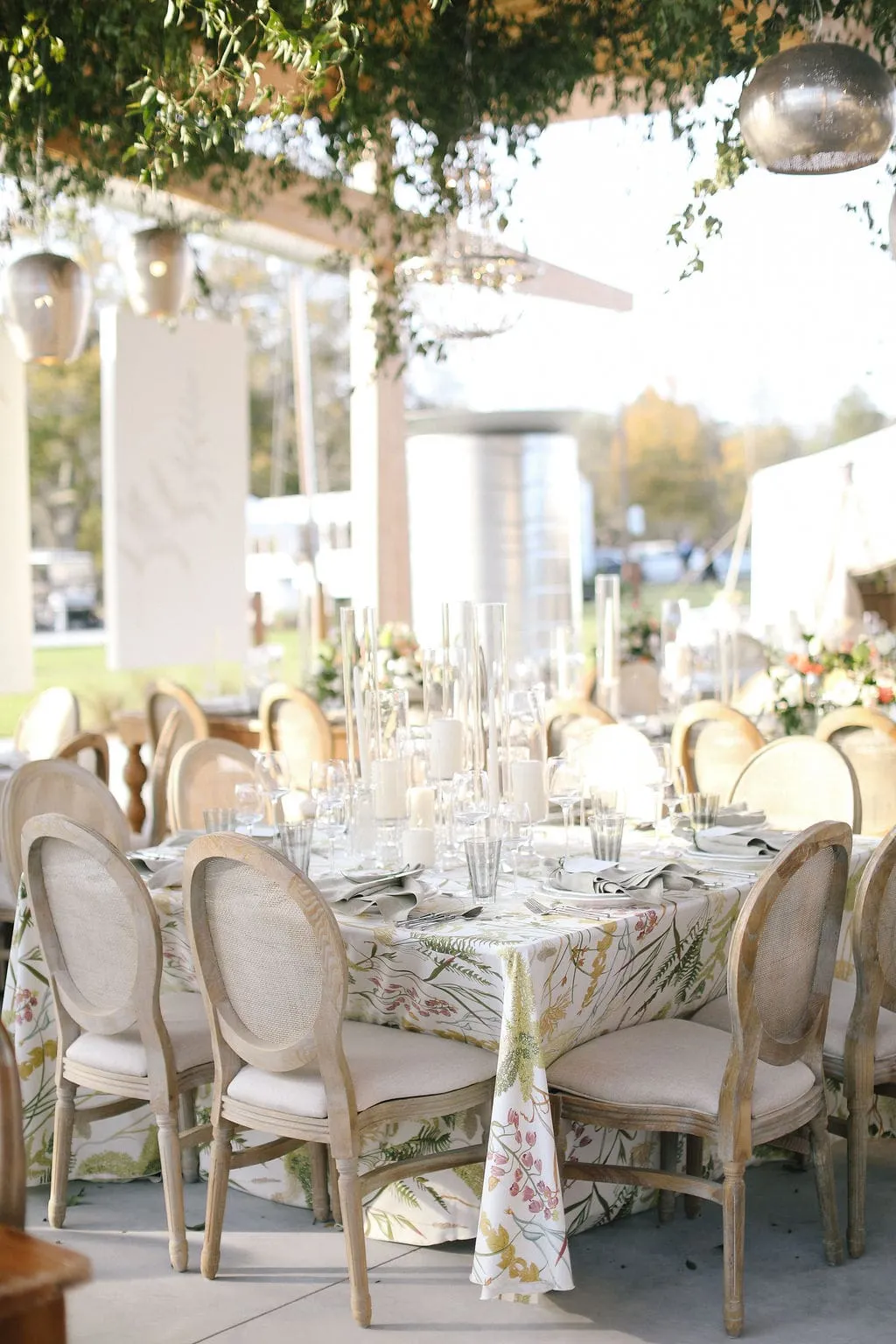
Focused lighting affects more than the flowers. It changes how table linens, glassware, flatware, chargers, plates, and other surfaces are perceived.
For a formal gala, these interactions should be considered as part of one design rather than as separate rental decisions.
Consider How Light Interacts With Table Linens
Textiles respond differently depending on color, pattern, texture, and finish. A linen with noticeable sheen may reflect focused light more strongly than a matte textile. A richly patterned tablecloth may gain additional visual intensity when illuminated beneath an equally detailed floral centerpiece.
A quieter linen can give an expressive floral design more room to lead, while a restrained centerpiece may allow a more distinctive textile to carry greater visual weight.
The strongest combination depends on which element is intended to command attention.
Watch for Reflections From Glassware and Metallic Details
Glassware, metallic flatware, chargers, candleholders, and decorative vessels can catch and redirect focused light.
These reflections can add dimension, but they can also create distractions if they become too prominent.
That is another reason the complete place setting should be evaluated alongside the lighting rather than designing the centerpiece illumination independently.
Maintain a Clear Visual Hierarchy
Formal tablescapes are most effective when the viewer can understand where the design is meant to lead.
If the centerpiece is the main statement, surrounding textiles and tabletop pieces can support it.
If the linen or tabletop selection already provides the strongest visual moment, the floral lighting may be more subtle.
The objective is not to make every component equally dramatic. It is to allow the individual layers to work together without competing.
Coordinate the Lighting Plan With the Venue and Event Team
Focused lighting depends on more than aesthetics. Venue conditions, floral specifications, table locations, guest circulation, and production requirements all affect what can be achieved.
For planners, early coordination is far more useful than treating centerpiece lighting as an installation detail addressed at the end of the process.
Confirm Venue Conditions Early
Important considerations may include:
-
Ceiling height
-
Available fixture locations
-
Venue restrictions
-
Electrical access
-
Table placement
-
Guest circulation
-
Existing lighting
-
Stage and production requirements
The technical details should be reviewed with the appropriate venue and production professionals.
Understanding those conditions early helps prevent the floral concept from depending on a lighting approach the room cannot reasonably support.
Share Floral and Floor Plan Details
The teams responsible for lighting should understand both where tables are located and what the floral arrangements will look like.
Useful information can include:
-
Table locations
-
Centerpiece heights
-
Floral dimensions
-
Focal-table positions
-
Stage location
-
Guest pathways
-
Other illuminated displays
Accurate information makes it easier to plan where focused lighting is actually needed and how it should relate to the wider room.
Frequently Asked Questions
Do all floral centerpieces need pin-spot lighting?
No. Focused lighting is most useful when a centerpiece needs additional definition within the room. Some venues and event designs already provide enough ambient or decorative light.
Can pin spots work with tall centerpieces?
Yes. The centerpiece height and beam direction need to be considered together so the arrangement can be illuminated without creating distracting light in guest sightlines.
How do planners keep pin spots from shining into guests’ eyes?
Fixture position and beam direction should be reviewed from actual seating positions. Adjustments can then be made based on table placement, centerpiece height, and surrounding sightlines.
Should centerpiece lighting match the rest of the room?
It should feel coordinated with the broader lighting environment. Focused lighting can create additional emphasis without looking disconnected from ambient, decorative, or stage lighting.
Can focused lighting be used on auction or display tables?
Yes. Selected auction or display areas may benefit from focused light when additional visibility is needed, but not every surface requires a dedicated spotlight.
When should centerpiece lighting be planned?
It should be considered once the floor plan and floral direction are developed and early enough to coordinate venue conditions, fixture placement, and the overall lighting plan.
Create a Refined Lighting Plan for a Formal DC Gala
Successful centerpiece lighting is not about making every floral arrangement brighter. It is about deciding where light can improve definition, reinforce hierarchy, and help the floral design remain part of the room after the environment transitions into evening.
For a formal Washington, D.C. gala, planners should consider centerpiece height, floral density, guest sightlines, ambient lighting, table linens, reflective tabletop pieces, and the repetition of focused light across the entire floor plan. To check availability for your date, contact our Washington, DC team.
A restrained, coordinated approach allows the flowers to receive the attention they need without overwhelming the rest of the event. Curated Events DMV can help planners bring lighting, linens, tabletop pieces, furniture, and other rental elements together around one cohesive design direction for formal galas and high-profile events. Our Washington, DC team stocks lighting and power rentals for Washington, DC events.