
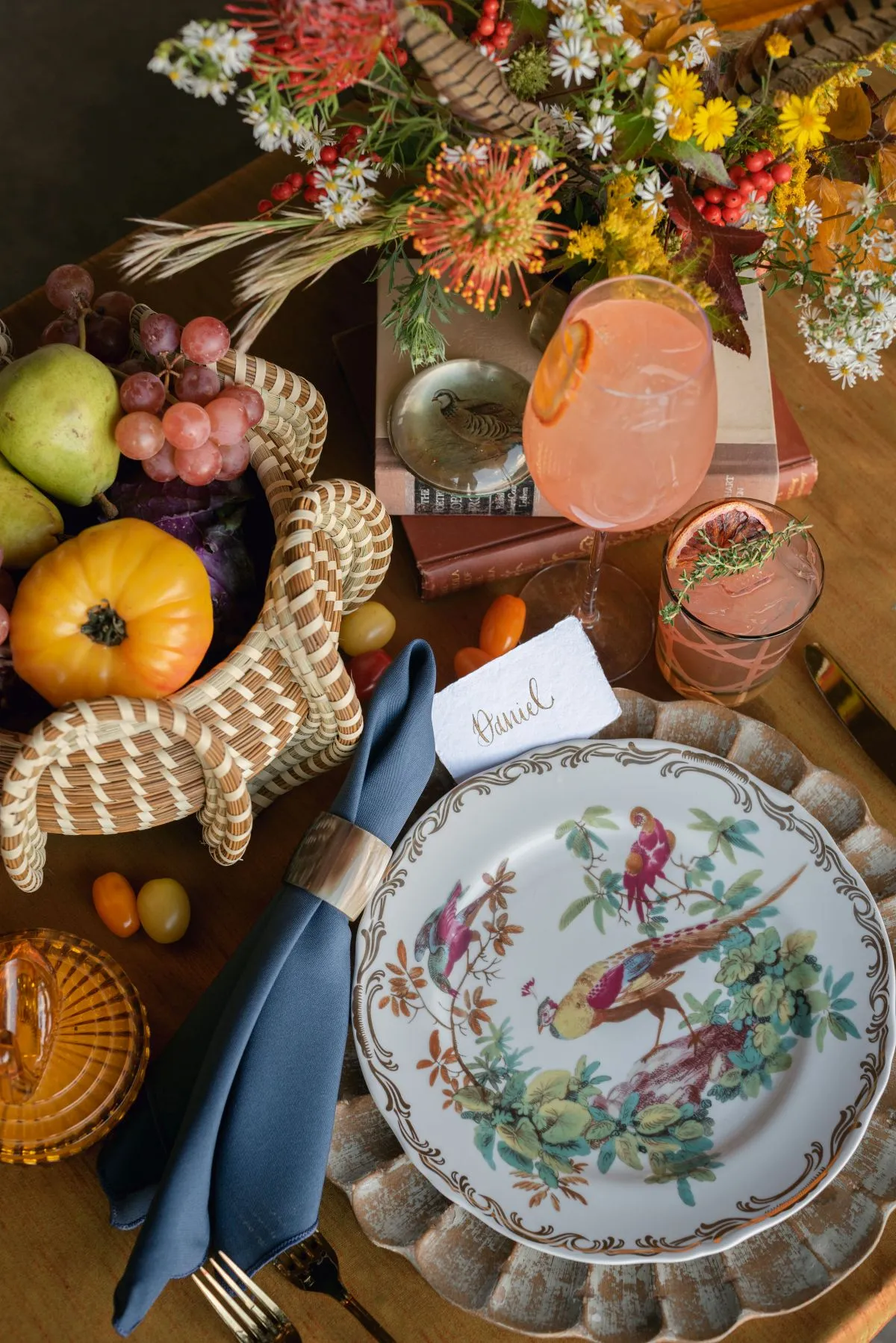
A Charleston fall wedding place setting should do more than look complete in photographs. It must also support the way dinner and beverages will actually be served.
A charger, stacked china, several utensils, and multiple glasses can create an impressive first view of the reception. Once menus, place cards, candles, florals, and serving pieces are added, however, the same arrangement can leave guests with very little usable space. Some of those pieces may not even be required by the menu.
The most effective approach is to build the setting around the service sequence. Couples and event teams can begin with the courses being served, identify the beverages that will be offered at the table, and then select the charger, china, flatware, and glassware needed to support them.
Curated Events Charleston organizes its tabletop rentals into chargers, china, flatware, and glassware, with options ranging from classic white dinnerware and polished silver flatware to patterned china, woven chargers, colored goblets, and specialty drinkware.
Using those categories as one coordinated place setting, rather than four unrelated decorative decisions, helps create a Charleston wedding tabletop that is attractive, functional, and appropriate for the meal.
Begin With the Service Plan, Not the Color Palette
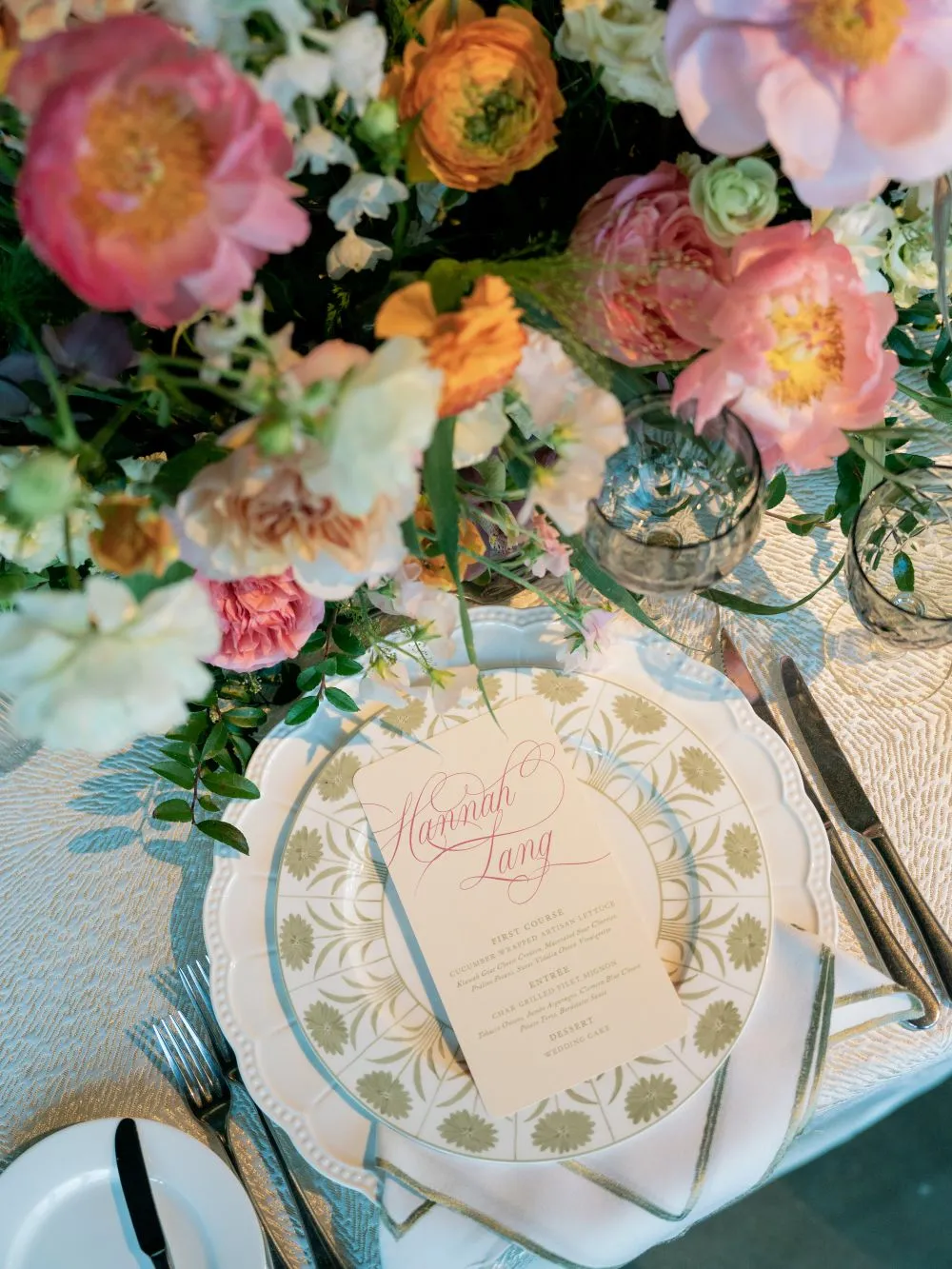
Color and pattern should not be the first tabletop decisions. Before comparing gold rims, colored goblets, or floral plates, the planner, caterer, and rental team should understand how food and beverages will reach the table.
A plated three-course dinner requires a different setting from a family-style meal. A seated wine service may call for additional stems, while a reception serving beverages primarily from the bar may need only water glassware at each guest’s seat.
Defining this sequence first prevents unnecessary pieces from taking up table space.
Map Every Course Before Selecting China
Begin by listing each part of the meal in the order it will be served. Depending on the menu, the tabletop may require:
-
A salad or first-course plate
-
A soup or pasta bowl
-
A dinner plate
-
A bread-and-butter plate
-
A dessert plate
-
A specialty dish for a particular course
A salad or first-course plate
A soup or pasta bowl
A dinner plate
A bread-and-butter plate
A dessert plate
A specialty dish for a particular course
Not every course requires its plate to be on the table when guests arrive. At a plated dinner, a salad plate or soup bowl may come from the catering team with the food already arranged. The dinner plate may also be brought out later rather than stacked at the place setting.
Family-style service creates different requirements. Serving platters and bowls will occupy the center of the table, which may reduce the amount of space available for elaborate plate stacks, numerous glasses, or wide chargers.
Curated Events Charleston’s china inventory includes complete collections as well as individual salad plates, dinner plates, serving platters, stoneware, patterned pieces, and specialty designs. This allows china to be selected according to the actual menu rather than requiring every course to use one complete formal set.
Confirm What Will Be Pre-Set at Each Seat
The arrival view matters, but a fully styled table does not need to display every item guests will use during dinner.
The event team should confirm:
-
Which plate will be present when guests enter
-
Whether the charger remains through the first course
-
If bread plates will be set in advance
-
Which utensils will already be on the table
-
Whether dessert pieces arrive later
-
When unused items will be cleared
Which plate will be present when guests enter
Whether the charger remains through the first course
If bread plates will be set in advance
Which utensils will already be on the table
Whether dessert pieces arrive later
When unused items will be cleared
A charger topped with one salad plate may provide enough visual structure before dinner. Stacking a dinner plate, salad plate, bowl, napkin, menu, and place card can conceal the charger and create unnecessary work if most of those pieces must be removed before service begins.
The pre-set arrangement should establish the reception’s design while leaving the caterer a practical sequence for serving and clearing each course.
Review Beverage Service Separately From Dinner
The beverage plan should be considered independently from the food menu.
Start by identifying what will be served directly at the dining table. Water is generally available throughout the meal, but wine, champagne, cocktails, and other beverages may be handled differently.
Questions to resolve include:
-
Will red or white wine be poured during dinner?
-
Is one type of wine being served, or will guests choose?
-
Will there be a seated champagne toast?
-
Will the toast occur before dinner, during speeches, or later?
-
Will cocktails be carried from the bar rather than pre-set?
-
Are coffee or after-dinner drinks being served at the table?
Will red or white wine be poured during dinner?
Is one type of wine being served, or will guests choose?
Will there be a seated champagne toast?
Will the toast occur before dinner, during speeches, or later?
Will cocktails be carried from the bar rather than pre-set?
Are coffee or after-dinner drinks being served at the table?
The answers determine whether each guest needs one water goblet, a water and wine glass, or a larger combination. Specialty bar glasses do not need to appear at the dinner table unless a specific beverage will be served in them there.
Construct the Place Setting From the Center Out
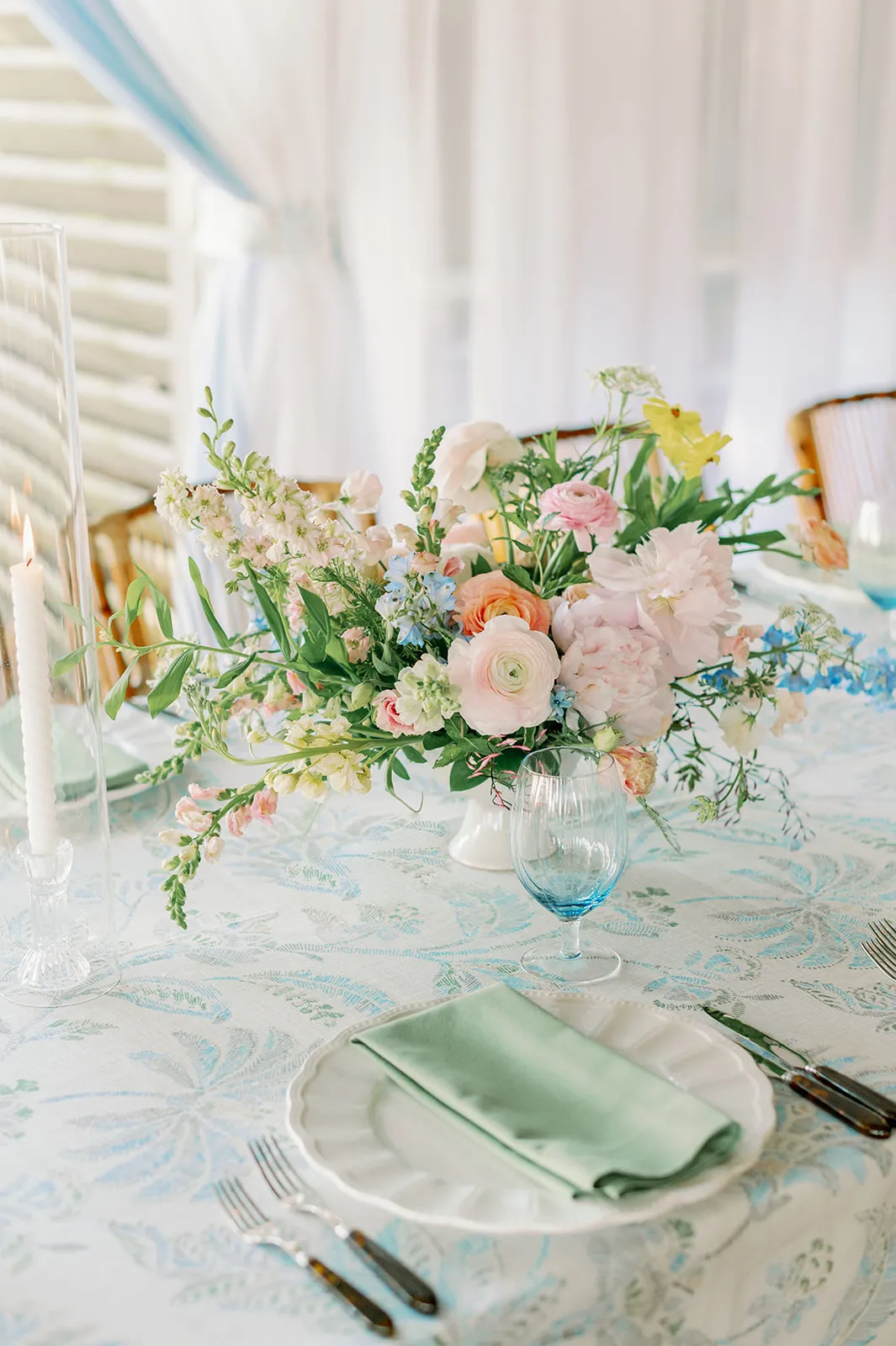
Once the service sequence is clear, the place setting can be assembled from its center. The charger or primary plate establishes the guest’s individual dining area. China, flatware, glassware, menus, and napkins can then be positioned around that central point.
This order makes it easier to judge scale and prevent neighboring settings from overlapping.
Decide Whether a Charger Serves a Practical Design Role
A charger can create a visual boundary around each place setting and keep the table from looking empty before dinner service begins. It can also introduce material, color, or pattern beneath simpler china.
A charger is not automatically necessary, however. Before adding one, consider whether it provides a clear benefit.
The event team should confirm:
-
Whether it remains during the first course
-
How its diameter compares with the dinner plate
-
Whether it leaves enough room for flatware and glasses
-
If a placemat or substantial plate already fills the same role
-
Whether its finish competes with the china
Whether it remains during the first course
How its diameter compares with the dinner plate
Whether it leaves enough room for flatware and glasses
If a placemat or substantial plate already fills the same role
Whether its finish competes with the china
Curated Events Charleston’s charger inventory includes wood, glass, metallic, rattan, wicker, water hyacinth, floral, scalloped, swirl, and patterned designs. Published options include the Natural Rattan, Woven Water Hyacinth, Hammered Copper, Emma Gold, Garden Party, Alabaster Swirl, Amalfi, and Tuscan Flower chargers.
A woven charger can add controlled texture beneath classic china, while a glass or gold-rimmed design may support a more formal setting. When the china already carries a strong floral or geometric pattern, a restrained charger usually provides better balance.
Layer China According to the Course Sequence
Plate layering should reflect service rather than create height for its own sake.
A formal setting may use coordinating pieces from one collection. A more varied design might pair classic dinnerware with a patterned salad plate that is removed after the first course. Both approaches can work when the plate stack follows the menu.
When layering china:
-
Keep decorative rims visible rather than covering them completely.
-
Use a patterned salad plate over a quiet dinner plate for a controlled accent.
-
Avoid combining several unrelated patterns within one place setting.
-
Check how much of the charger remains visible beneath the plate.
-
Remove pieces that do not correspond with a course.
Keep decorative rims visible rather than covering them completely.
Use a patterned salad plate over a quiet dinner plate for a controlled accent.
Avoid combining several unrelated patterns within one place setting.
Check how much of the charger remains visible beneath the plate.
Remove pieces that do not correspond with a course.
An individual accent plate can bring more distinction to the table than using a heavily patterned collection for every piece. Curated Events Charleston also lists assorted salad and dessert plates, including Blue Emma, Lady Willow, Jardin, Green Deco, Blue and White Geometric, Cabbage, and Riva designs.
Add Only the Flatware the Menu Requires
Flatware should be assigned to a specific course.
A salad fork is useful when a separate first course requires it. A soup spoon belongs at the table when soup is being served. Dessert utensils may be positioned above the plate, but they can also arrive with dessert if the original setting is becoming crowded.
The place setting may include:
-
Dinner fork
-
Salad or first-course fork
-
Dinner knife
-
Soup spoon
-
Teaspoon
-
Dessert fork or spoon
-
Steak knife or another specialty utensil
Dinner fork
Salad or first-course fork
Dinner knife
Soup spoon
Teaspoon
Dessert fork or spoon
Steak knife or another specialty utensil
Not every wedding needs all of them.
Curated Events Charleston’s flatware collections include polished and brushed silver, brushed gold, rose gold, black, bamboo-inspired, wood-handled, amber, malachite, mother-of-pearl, and patterned options. Published collections include Arezzo Brushed Silver, Arezzo Rose Gold, Brushed Gold, Black Modern, Gold Gatsby, Lucca Gold, Lucca Silver, Rhodes Amber, Rhodes Malachite, Mother of Pearl, and Wordsworth.
The finish should complement the setting, but function remains the priority. A long row of unused utensils can make the table look more formal than the meal actually is while reducing the space between guests.
Assign Every Glass a Specific Job
Glassware often takes up more tabletop space than expected. Three glasses may look balanced on a wide sample table but become crowded when repeated across a narrow banquet table with florals and candles.
Each glass should correspond to a drink that will be served at the seat.
Use the Water Glass as the Visual Anchor
The water glass is generally used throughout dinner and can establish the position of the remaining glassware.
It should be placed consistently at every setting and scaled appropriately to the charger and china. A very large goblet may dominate a smaller table, while a narrow glass can disappear beside substantial plates and florals.
The water glass can either remain quiet or become the main glassware statement.
A clear goblet allows patterned china, metallic flatware, or a distinctive charger to lead. A colored or cut-glass water goblet can introduce the principal tabletop color while the wine stems remain clear.
Add Wine and Toast Glasses Only When Needed
A wedding place setting does not automatically need separate red-wine, white-wine, and champagne glasses.
If one wine will be offered during dinner, one compatible wine glass may be sufficient. Where guests can select between red and white wine and both are being poured at the table, separate shapes may support the service plan.
A champagne flute or coupe should be added when a seated toast is planned. It does not necessarily need to remain at the table from the beginning of cocktail hour through the end of dinner. Depending on the schedule, toast glasses may be placed shortly before speeches or filled and distributed by the service team.
Curated Events Charleston carries champagne flutes and coupes alongside red- and white-wine glasses, water goblets, and complete glassware patterns. The Ribbed Collection, for example, includes a champagne coupe, red-wine glass, white-wine glass, water goblet, and rocks glass.
The glassware arrangement should support service without creating a display of stems that guests may never use.
Keep Barware at the Bar Unless It Belongs With Dinner
Martini glasses, rocks glasses, highballs, mint-julep cups, Moscow mule cups, pilsners, and other specialty vessels contribute to the beverage program, but they rarely need to appear at every dining seat.
Curated Events Charleston’s specialty selection includes martini glasses, highballs, rocks glasses, pilsners, mint-julep cups, copper Moscow mule cups, Irish coffee mugs, and champagne coupes.
These pieces should remain at the bar unless:
-
A signature drink will be served directly at the table.
-
An after-dinner beverage is part of the seated service.
-
A specialty glass has a confirmed role in a toast or course.
-
The caterer has planned a coordinated tableside beverage presentation.
A signature drink will be served directly at the table.
An after-dinner beverage is part of the seated service.
A specialty glass has a confirmed role in a toast or course.
The caterer has planned a coordinated tableside beverage presentation.
Bar glassware can relate to the dinner setting through color, pattern, or shape without duplicating it exactly. A green goblet at dinner may coordinate with green cocktail glassware, for example, while still allowing the bar program to maintain its own identity.
Choose One Tabletop Element to Lead the Autumn Design
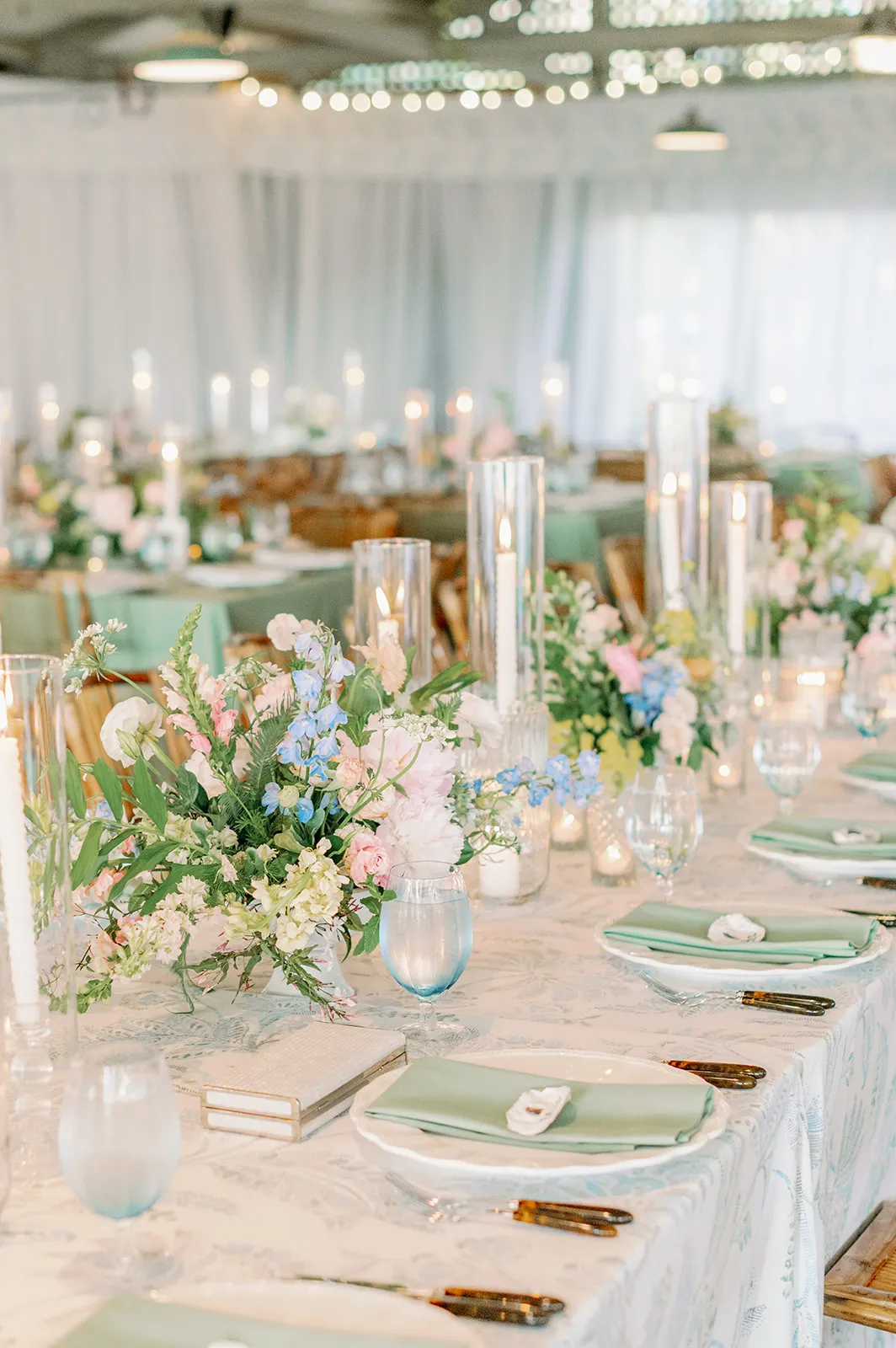
A successful autumn place setting does not require a statement charger, patterned plate, colored goblet, and distinctive flatware all at once. One category should establish the design direction. The remaining pieces can provide contrast and support. This creates a clearer visual hierarchy and helps the table feel seasonal without relying on predictable orange-and-brown decoration.
Let Colored or Patterned Glassware Lead
Colored glassware is an effective way to introduce autumn depth while preserving relatively quiet china and flatware.
Curated Events Charleston lists glassware patterns such as Lily Amber, Marla Green, Marla Ginger, Beckett Green, Isle Blue, Peacock Blue, Grey Smokey, Light Pink, Tortoise Shell, Hand Cut, Metropolitan, and Waldorf Gold Rim.
A single colored water goblet may provide enough visual interest. Clear wine stems can then keep the glass arrangement from becoming too dense.
For a Charleston fall wedding:
-
Amber or ginger glass can add warmth without requiring orange linens.
-
Green glass can complement garden settings and foliage-led florals.
-
Smoky grey can create contrast within a formal or contemporary table.
-
Indigo or blue can bring depth to a waterfront setting without becoming nautical.
-
Cut or ribbed glass can add dimension while remaining neutral.
Amber or ginger glass can add warmth without requiring orange linens.
Green glass can complement garden settings and foliage-led florals.
Smoky grey can create contrast within a formal or contemporary table.
Indigo or blue can bring depth to a waterfront setting without becoming nautical.
Cut or ribbed glass can add dimension while remaining neutral.
The selected color should remain distinct against the table’s base and visible beneath evening illumination.
Make China the Main Pattern
Patterned china can create a strong focal point at each seat, particularly when it appears as a salad or first-course plate.
Curated Events Charleston’s collections include Garden Party, Dragonfly, Lotus, Summer Sage, Slate Floral, Marigold Magic, Corrine, Lorraine Blue, Lorraine Rose, Plantation China, and other patterned designs.
When china leads the design:
-
Keep the charger quieter than the plate.
-
Use clear or lightly detailed glassware.
-
Choose flatware that supports the plate’s rim or accent color.
-
Coordinate florals with the pattern’s overall character rather than copying every color.
-
Limit additional patterns within the same setting.
Keep the charger quieter than the plate.
Use clear or lightly detailed glassware.
Choose flatware that supports the plate’s rim or accent color.
Coordinate florals with the pattern’s overall character rather than copying every color.
Limit additional patterns within the same setting.
A floral salad plate over classic white dinnerware can provide a more controlled effect than layering several fully patterned plates.
Use Flatware Finish as the Controlled Accent
Flatware can define the place setting without adding another broad field of color or pattern.
Brushed gold may introduce warmth against white or stoneware china. Polished silver can sharpen a setting that already includes colored glassware. Black flatware can create definition against pale plates, while bamboo-inspired or wood-handled designs can bring material contrast to a garden setting.
The finish does not need to match every metallic object on the table. A mix of related metals can feel more layered than repeating one identical gold tone through the flatware, charger, candleholders, and plate rims.
Distinctive handles, such as mother-of-pearl, amber, malachite, or wood, work best when the other tabletop categories remain disciplined.
Use the Charger to Frame Rather Than Compete
The charger is the largest visible piece at the guest’s place and can easily overpower the plate above it.
A woven or rattan charger can frame simple china and add texture to a tented garden reception. A glass or metallic charger may support formal rimmed dinnerware. A floral or scalloped charger can become the primary statement when the china is otherwise restrained.
The charger should remain visible after the full place setting is assembled. If only a narrow edge can be seen, a highly detailed design may not justify its visual complexity.
Adapt the Place Setting to the Charleston Reception Setting
The venue should influence the tabletop’s level of detail, but it should not replace the service plan as the organizing principle.
Charleston weddings take place in historic interiors, courtyards, garden tents, estate settings, and waterfront properties. Each environment presents a different visual background for the china, glassware, charger, and flatware.
Use Controlled Detail in Historic Interiors
Historic Charleston rooms and courtyards may already include brick, plaster, carved wood, ironwork, formal flooring, fireplaces, or architectural color.
A place setting in this environment often benefits from controlled detail rather than several competing patterns.
Suitable approaches may include:
-
Classic white china with a gold or platinum rim
-
One patterned salad plate over quieter dinnerware
-
Cut or gold-rimmed glassware
-
Polished or brushed flatware
-
A disciplined glass or metallic charger
Classic white china with a gold or platinum rim
One patterned salad plate over quieter dinnerware
Cut or gold-rimmed glassware
Polished or brushed flatware
A disciplined glass or metallic charger
The tabletop should complement the room without attempting to reproduce every existing finish. A lighter plate can also provide useful separation from dark wood, brick, or deeply colored interiors.
Add Definition Inside Tented Garden Receptions
A pale tent interior can make a tabletop appear flat when every piece is clear, white, and minimally detailed.
Colored glassware, patterned china, or a natural-material charger can give each setting more definition. The strongest element should be selected according to the wider visual environment.
A woven charger may relate to the garden without requiring botanical china. A green or amber goblet can introduce color while the plates remain classic. Alternatively, floral china can become the primary accent, supported by clear stems and restrained flatware.
The goal is not to apply a garden reference to every rental category. One connection to the setting is usually more effective than several overlapping botanical or natural motifs.
Give Waterfront Tables Enough Visual Weight
Waterfront settings often contain pale skies, reflected light, broad views, and open lawns. An entirely white-and-clear place setting can lose definition against that background. Deeper green, indigo, amber, smoky grey, or gold elements can anchor the tabletop while allowing the surrounding property to provide the primary sense of place.
A refined waterfront setting might use:
-
Indigo or blue-patterned china with clear glassware
-
Amber or green goblets with classic dinnerware
-
A darker charger beneath pale plates
-
Gold or brushed-silver flatware as a controlled accent
-
Clear tabletop pieces around one deeper focal color
Indigo or blue-patterned china with clear glassware
Amber or green goblets with classic dinnerware
A darker charger beneath pale plates
Gold or brushed-silver flatware as a controlled accent
Clear tabletop pieces around one deeper focal color
Literal nautical symbols are not necessary. Color, transparency, and material can establish a relationship with the Lowcountry setting more subtly.
Test How Much Table Space Each Guest Actually Has
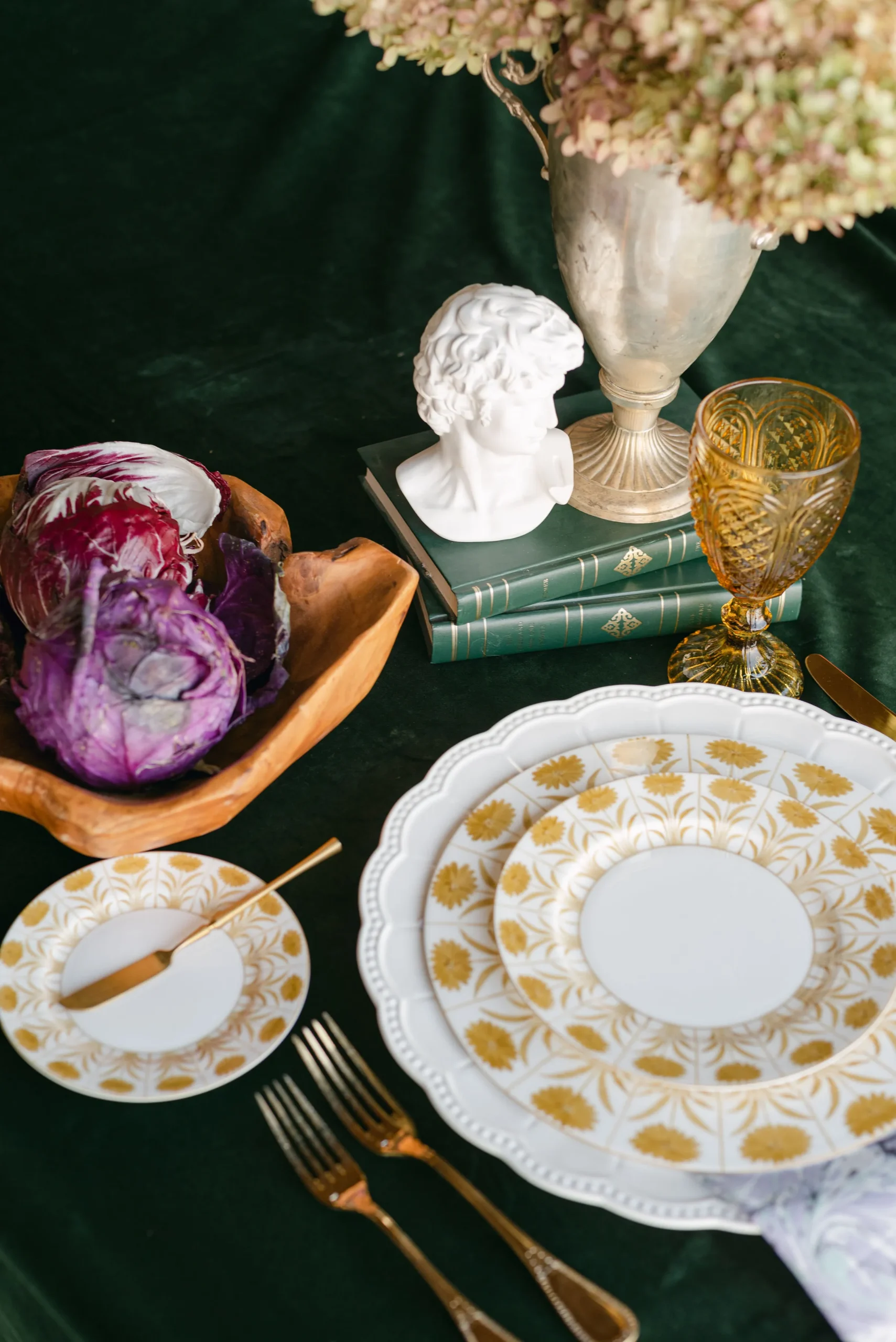
A sample place setting can appear spacious when displayed alone. Once several settings are placed around the intended table, their chargers, utensils, and glasses may overlap or leave insufficient room for florals and service pieces.
The arrangement should therefore be tested at full table capacity.
Measure the Completed Place Setting
Assemble every item planned for the guest’s arrival:
-
Charger
-
Pre-set china
-
Flatware
-
Water and wine glasses
-
Toast glass, when applicable
-
Napkin
-
Menu
-
Place card
-
Any individual favor or tabletop detail
Charger
Pre-set china
Flatware
Water and wine glasses
Toast glass, when applicable
Napkin
Menu
Place card
Any individual favor or tabletop detail
Check the total width from the outer fork to the outer knife or spoon. Adjacent place settings should not overlap, and guests should be able to lift a glass or use utensils without disturbing the setting beside them.
Pull the chairs into their expected positions. A setting that looks generous before chairs are placed may feel substantially tighter once guests are seated.
Check the Remaining Centerline
After guest space has been established, evaluate what remains in the middle of the table.
The centerline may need to accommodate:
-
Floral arrangements
-
Candles
-
Table numbers
-
Serving platters
-
Shared bowls
-
Water service
-
Condiments or other meal-specific pieces
Floral arrangements
Candles
Table numbers
Serving platters
Shared bowls
Water service
Condiments or other meal-specific pieces
Family-style service requires more open space than a fully plated dinner. Oversized chargers, wide glassware arrangements, and several pre-set plates may need to be reduced so serving pieces can be placed safely.
Round and rectangular tables should be tested separately. A layout that works on a broad round table may not translate to a narrower banquet or community table.
Examine Sightlines From a Seated Position
Tabletops are often styled from above, but guests experience them from a seated position.
Sit at the sample table and check whether:
-
The glassware blocks the view across the table.
-
Menus and place cards remain readable.
-
Plate stacks feel too tall.
-
The floral footprint competes with the glassware.
-
Guests can reach the water glass comfortably.
-
The setting allows easy conversation.
The glassware blocks the view across the table.
Menus and place cards remain readable.
Plate stacks feel too tall.
The floral footprint competes with the glassware.
Guests can reach the water glass comfortably.
The setting allows easy conversation.
This view can also reveal whether decorative details that look prominent from above are nearly invisible during dinner.
Build a Full Tabletop Sample Before Confirming the Rentals
China, glassware, chargers, and flatware should not be approved independently when the goal is one complete place setting.
A full sample shows how the pieces interact at their actual scale. It can reveal color conflicts, proportion issues, overcrowding, and service problems before the reception is installed.
Bring the Menu and Beverage Plan to the Review
The sample should begin with the proposed menu and beverage sequence.
Provide information about:
-
The number and type of courses
-
Plated, buffet, or family-style service
-
Bread service
-
Wine service
-
A champagne toast
-
Dessert presentation
-
Coffee or after-dinner beverages
-
Any specialty course or drink
The number and type of courses
Plated, buffet, or family-style service
Bread service
Wine service
A champagne toast
Dessert presentation
Coffee or after-dinner beverages
Any specialty course or drink
This information allows each tabletop item to be tied to a function. Pieces with no defined role can be removed before they become part of the final order.
Assemble One Complete Guest Setting
Build the setting on the intended table type rather than on an unrelated display surface.
Include:
-
The selected charger
-
All pre-set china
-
Required flatware
-
Planned glassware
-
The napkin treatment
-
Menu and place card
-
Representative candles
-
An approximate floral footprint
-
The selected chair
The selected charger
All pre-set china
Required flatware
Planned glassware
The napkin treatment
Menu and place card
Representative candles
An approximate floral footprint
The selected chair
The complete arrangement should be assessed as one composition. A charger may look appropriate alone but appear oversized once the glasses and flatware are added. A patterned plate may seem quiet in a product image but dominate the setting when repeated at every seat.
Review the Setting From Several Distances
Examine the table from:
-
Close range
-
A normal standing position
-
A seated position
-
Across the room
-
The expected reception entrance
Close range
A normal standing position
A seated position
Across the room
The expected reception entrance
Viewing several place settings together is also important. Repetition can strengthen a subtle piece, but it can make a bold pattern or colored glass arrangement feel busier than expected.
Photographs from multiple angles provide a useful installation reference and make it easier to compare alternate combinations.
Document the Final Tabletop Sequence
Once the sample has been approved, the selections should be recorded according to both the place setting and the service sequence.
This documentation helps the planner, caterer, venue, and rental team understand which pieces are pre-set, which arrive with a course, and which will be removed during dinner.
Create a Place-Setting Inventory
The inventory should identify the selected:
-
Charger
-
Dinner plate
-
Salad or first-course plate
-
Bread-and-butter plate
-
Bowl or specialty dish
-
Dinner fork
-
Salad fork
-
Knives and spoons
-
Dessert utensils
-
Water glass
-
Wine glass or glasses
-
Champagne flute or coupe
-
Napkin
-
Menu and place-card position
Charger
Dinner plate
Salad or first-course plate
Bread-and-butter plate
Bowl or specialty dish
Dinner fork
Salad fork
Knives and spoons
Dessert utensils
Water glass
Wine glass or glasses
Champagne flute or coupe
Napkin
Menu and place-card position
Product names and quantities should be recorded clearly, particularly when several china or glassware patterns are being combined.
Separate Pre-Set Pieces From Service Pieces
The tabletop plan should specify what guests will see when they enter and what will be delivered later.
For example:
-
The charger, salad plate, flatware, water goblet, and one wine glass may be pre-set.
-
The dinner plate may arrive with the entrée.
-
The salad plate may be cleared before the dinner course.
-
Champagne coupes may be placed before speeches.
-
Dessert plates and utensils may arrive with dessert.
The charger, salad plate, flatware, water goblet, and one wine glass may be pre-set.
The dinner plate may arrive with the entrée.
The salad plate may be cleared before the dinner course.
Champagne coupes may be placed before speeches.
Dessert plates and utensils may arrive with dessert.
This prevents the table from becoming overcrowded at the beginning of the reception and gives the service team a clear sequence.
Confirm Variations Between Tables
Some weddings use a different tabletop arrangement for the couple’s table, head table, or another focal dining area.
Any variation should be documented rather than treated as an informal substitution.
Record:
-
Which tables use an accent charger or patterned plate
-
Whether the couple has different glassware
-
Any alternate children’s or vendor settings
-
Where specialty china will appear
-
How the variation connects to the main guest tables
Which tables use an accent charger or patterned plate
Whether the couple has different glassware
Any alternate children’s or vendor settings
Where specialty china will appear
How the variation connects to the main guest tables
Variations should follow a deliberate pattern. Random substitutions can weaken the repetition that makes the room feel cohesive.
Review the Tabletop With Curated Events Charleston
Curated Events Charleston presents chargers, china, flatware, and glassware as related tabletop categories and offers both complete collections and individual accent pieces.
Reviewing the categories together makes it easier to determine which item should lead the design and which pieces should remain supporting elements.
Compare Complete Collections and Individual Accent Pieces
A complete china or glassware collection can create consistency throughout the meal. An individual accent plate or colored goblet can introduce distinction without requiring every piece to carry the same pattern.
During the review, compare:
-
A full coordinated china collection
-
Classic dinnerware with a patterned salad plate
-
Clear versus colored water goblets
-
Matching versus mixed glassware
-
Quiet chargers beneath patterned plates
-
Statement chargers beneath classic china
-
Polished, brushed, or colored flatware finishes
A full coordinated china collection
Classic dinnerware with a patterned salad plate
Clear versus colored water goblets
Matching versus mixed glassware
Quiet chargers beneath patterned plates
Statement chargers beneath classic china
Polished, brushed, or colored flatware finishes
The decision should be based on the full setting and service plan rather than on the appeal of one item viewed alone.
Coordinate With the Planner and Caterer
The planner and caterer should review the approved place setting before quantities are finalized.
They can confirm:
-
Which plates correspond to each course
-
Whether the proposed utensil arrangement supports service
-
How many glass types are required
-
What will be placed before guest arrival
-
Which pieces will be removed or added later
-
Whether family-style platters have sufficient space
Which plates correspond to each course
Whether the proposed utensil arrangement supports service
How many glass types are required
What will be placed before guest arrival
Which pieces will be removed or added later
Whether family-style platters have sufficient space
If the menu or beverage plan changes, the tabletop should be reviewed again. A new course may require another plate or utensil, while the removal of a seated wine service could reduce the glassware needed at each seat.
Finalize the Setting as a Complete Composition
Before approval, the setting should meet four requirements:
-
Every piece has a functional or clearly defined visual role.
-
One tabletop category leads the design.
-
Guests have sufficient space to dine comfortably.
-
The setting relates to the Charleston venue without relying on a generic seasonal theme.
Every piece has a functional or clearly defined visual role.
One tabletop category leads the design.
Guests have sufficient space to dine comfortably.
The setting relates to the Charleston venue without relying on a generic seasonal theme.
Photographing the final sample provides the installation team with a reference for plate order, utensil position, glass placement, napkin treatment, and spacing.
Frequently Asked Questions
How many glasses should be placed at each wedding seat?
The number should reflect the beverage service. Water plus one wine glass may be sufficient for many dinners. A second wine stem or champagne glass should be added only when that beverage will be served at the table.
Does every Charleston wedding place setting need a charger?
No. A charger can frame the setting and add color or texture, but it is not essential when another plate, placemat, or table surface already creates enough visual structure.
Which flatware pieces are needed for a plated dinner?
The menu determines the flatware. A dinner fork and knife may be joined by a salad fork, soup spoon, teaspoon, or dessert utensil when the confirmed courses require them.
When should dessert plates and utensils be added?
They may be delivered with dessert rather than placed at the table from the beginning. This can preserve space and keep the original arrangement from becoming overcrowded.
How can a tabletop feel seasonal without using orange and brown?
Autumn depth can come from amber or green glassware, copper or gold finishes, botanical china, smoky tones, textured chargers, and deeper indigo or malachite accents.
What glassware works well for a seated champagne toast?
Either flutes or coupes may be used, depending on the design and service plan. The event team should confirm whether the glasses will be pre-set or placed shortly before the toast.
How should tabletop rentals be adjusted for family-style dining?
Reduce unnecessary plate stacks and glassware so the center of the table can accommodate platters and serving bowls. The caterer should confirm the required serving space before the setting is finalized.
What should be included in a complete tabletop sample?
The sample should include the charger, pre-set china, flatware, glassware, napkin, menu, place card, representative florals and candles, the intended table, and the selected chair.
Let the Meal Determine the Final Place Setting
A Charleston fall wedding tabletop should be centered on the dining experience. The menu determines the china and utensils. The beverage plan determines the glasses. The table dimensions determine how many pieces can fit comfortably at each seat.
Design remains important, but it becomes clearer when one category is allowed to lead. Colored glassware can introduce autumn depth, patterned china can provide a focal point, distinctive flatware can act as a controlled accent, or a charger can frame an otherwise restrained setting. The other pieces should support that choice rather than compete with it.
By developing the place setting course by course, couples and event teams can avoid unnecessary stacks, unused glasses, crowded guest space, and decorative elements that interfere with service.
Curated Events Charleston’s selection of chargers, china, flatware, glassware, and specialty tabletop pieces allows the full setting to be viewed as a single composition. The result is not simply a table that looks complete before guests arrive, but one that continues to function through every course and toast of the reception.