
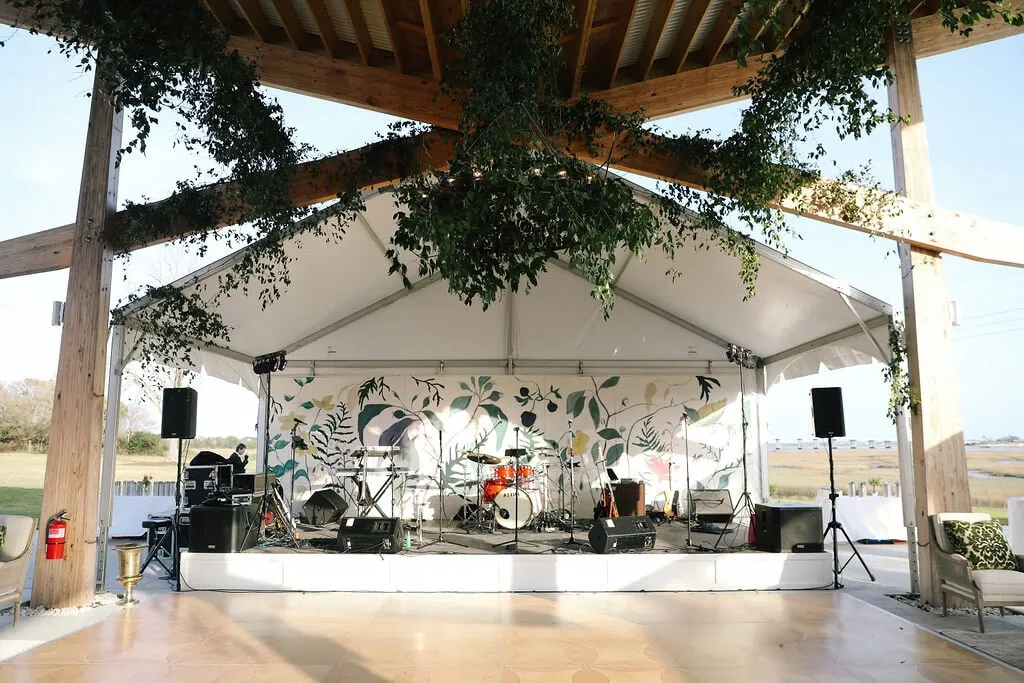
An outdoor dance floor does more than give guests a place to dance. It creates a natural gathering point, anchors the entertainment area, shapes the reception layout, and helps define the energy of the event once the music begins.
For Chesapeake weddings, corporate events, galas, private parties, fundraisers, and social celebrations, the dance floor should feel connected to the full event environment. Including it early in the plan for summer event rentals in Chesapeake helps coordinate its size and placement with the tent, tables, lounge furniture, bars, lighting, linens, entertainment, and guest pathways.
Curated Events Chesapeake offers dance floor rentals that can support a wide range of outdoor event styles, from classic receptions to modern celebrations and coastal-inspired gatherings. With the right finish, size, and placement, a dance floor can become one of the most memorable design and entertainment elements of the event.
Treat the Dance Floor as the Event’s Energy Anchor
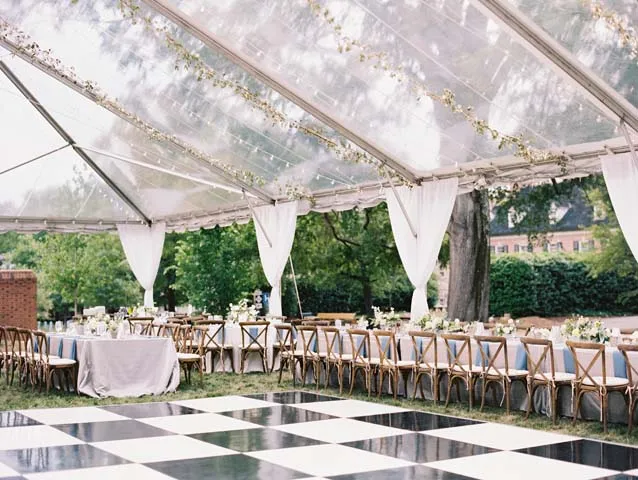
A dance floor is often where the event shifts from formal structure to celebration. At a wedding, it may hold the couple’s first dance, parent dances, wedding party moments, and late-night dancing. At a corporate event or gala, it may support entertainment, awards celebrations, or an after-dinner social atmosphere. At a private party, it may become the place where guests gather, celebrate, and stay engaged.
Because of that role, the dance floor should be considered early in the event plan. Its size, finish, and location can influence how guests move through the space, where entertainment is placed, how nearby seating feels, and how the event transitions from one moment to the next.
Define the Main Event Moment First
Before choosing a dance floor, consider what it needs to support. A wedding reception may need a floor that feels polished for formal dances and inviting for open dancing later in the evening. A corporate event may need a floor that works with a band, DJ, presentation moment, or branded celebration. A milestone party may need a floor that feels energetic, social, and easy for guests to approach.
The main event moment should guide the decision. If the dance floor will be used for a first dance, speeches, or a featured performance, it should feel prominent and photo-ready. If it is mainly for casual dancing later in the event, it may need to feel more integrated with the bar, lounge, and entertainment areas.
Decide Whether the Dance Floor Should Be Central or Secondary
Some events work best when the dance floor sits at the center of the layout. This is common for wedding receptions, galas, and social events where dancing is a major part of the experience. A central dance floor allows guests to gather around the action, watch formal moments, and join in naturally once the music begins.
Other events may call for a more secondary placement. For example, a corporate reception may place the dance floor near entertainment or a lounge area while keeping dining, networking, or presentation zones separate. A private party may position the dance floor near the bar to encourage a more relaxed flow.
The right placement depends on how much emphasis dancing should have within the event.
Consider How Guests Will Gather Around It
The dance floor does not function alone. Guests often gather around the edges before joining in, watch special dances from nearby tables, or move between the floor, bar, and lounge seating throughout the event.
For that reason, the area around the dance floor matters almost as much as the floor itself. There should be enough room for guests to stand, photographers and videographers to move, and servers or event staff to pass without interrupting the moment.
A well-placed dance floor creates energy without creating congestion.
Choose a Dance Floor Finish That Matches the Event Style
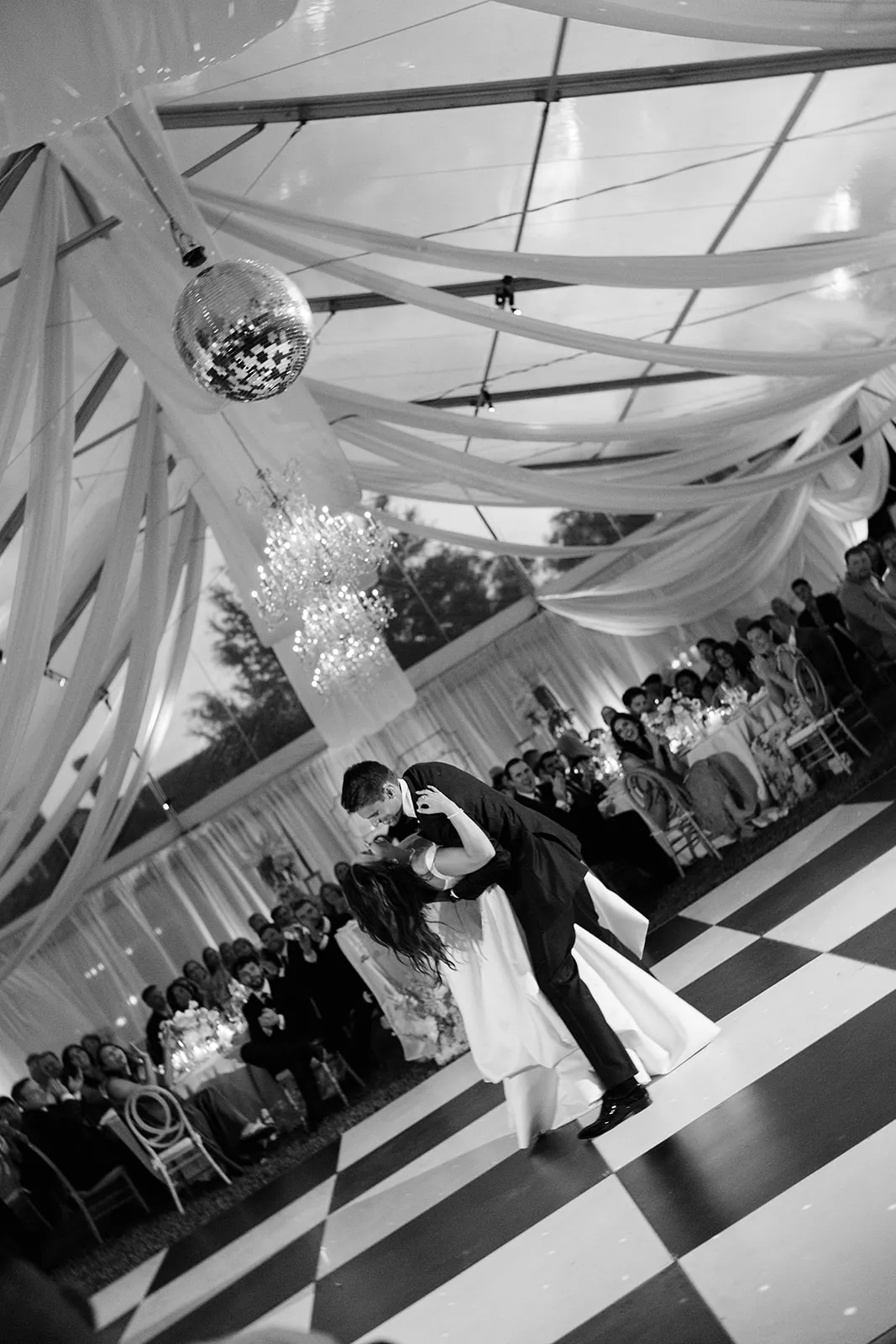
The finish of the dance floor can influence the entire look of the event. A white floor creates a clean and elevated effect, while a wood finish brings warmth and classic appeal. A black or black-and-white floor can make the space feel more dramatic, and a driftwood-inspired finish can support a softer outdoor design.
Choosing the finish should be a design decision, not just a functional one. The floor will appear in first dance photos, wide reception images, guest dancing shots, and videos. It should complement the wedding palette, corporate style, or celebration theme.
White Dance Floors for Clean, Elevated Event Designs
A white dance floor works well for weddings and events with a refined, bright, or modern design direction. It can make the reception feel crisp and polished, especially when paired with soft florals, elegant lighting, neutral linens, and formal table settings.
For tented outdoor events, a white floor can help brighten the space and create a clear focal point. It can also support a wide range of wedding styles, from classic and romantic to modern and minimal.
Because white has a strong visual presence, the surrounding design should be considered carefully. Chairs, linens, florals, and lighting should work with the clean look of the floor rather than competing with it.
Cherry Wood Dance Floors for Warm, Classic Settings
A cherry wood dance floor can bring warmth to an outdoor event. It works especially well for traditional receptions, estate-style celebrations, garden events, and gatherings that use wood tones, candlelight, neutral linens, or classic furniture.
This type of floor can help the dance area feel grounded and inviting. It pairs naturally with warm lighting, upholstered lounge furniture, wood chairs, and timeless tabletop choices.
For events where the design is elegant but not overly modern, a wood floor can provide a balanced and familiar look.
Black and White Laminate Floors for High-Contrast Designs
A black, white, or black-and-white laminate dance floor can work well for events with a bolder design direction. It may suit modern receptions, editorial weddings, branded corporate events, milestone parties, or evening celebrations where the dance floor is intended to make a visual statement.
High-contrast flooring can create a more dramatic focal point. It can also work beautifully with black chairs, metallic accents, clean white linens, modern lighting, and structured floral design. Read more in Your Guide to Selecting Event Flooring Options Effectively.
When using a bold floor finish, keep the rest of the design intentional. The floor should feel like part of the event concept, not an isolated statement.
White Driftwood Floors for Soft Coastal or Natural Looks
A white driftwood dance floor can be a strong choice for Chesapeake events with a softer outdoor style. It can support coastal-inspired weddings, relaxed garden receptions, waterfront-adjacent celebrations, and events that use natural textures. You may also find Dance Floor Rentals for Outdoor Summer Weddings in Chesapeake helpful.
This finish can feel lighter than a traditional wood floor while still adding texture and warmth. It pairs well with woven accents, neutral linens, soft florals, wood chairs, lounge furniture, and understated tabletop details.
For hosts who want the dance floor to feel polished but not overly formal, a driftwood-inspired look can help bridge elegance and ease.
Size the Dance Floor Around the Guest Experience, Not Just Attendance
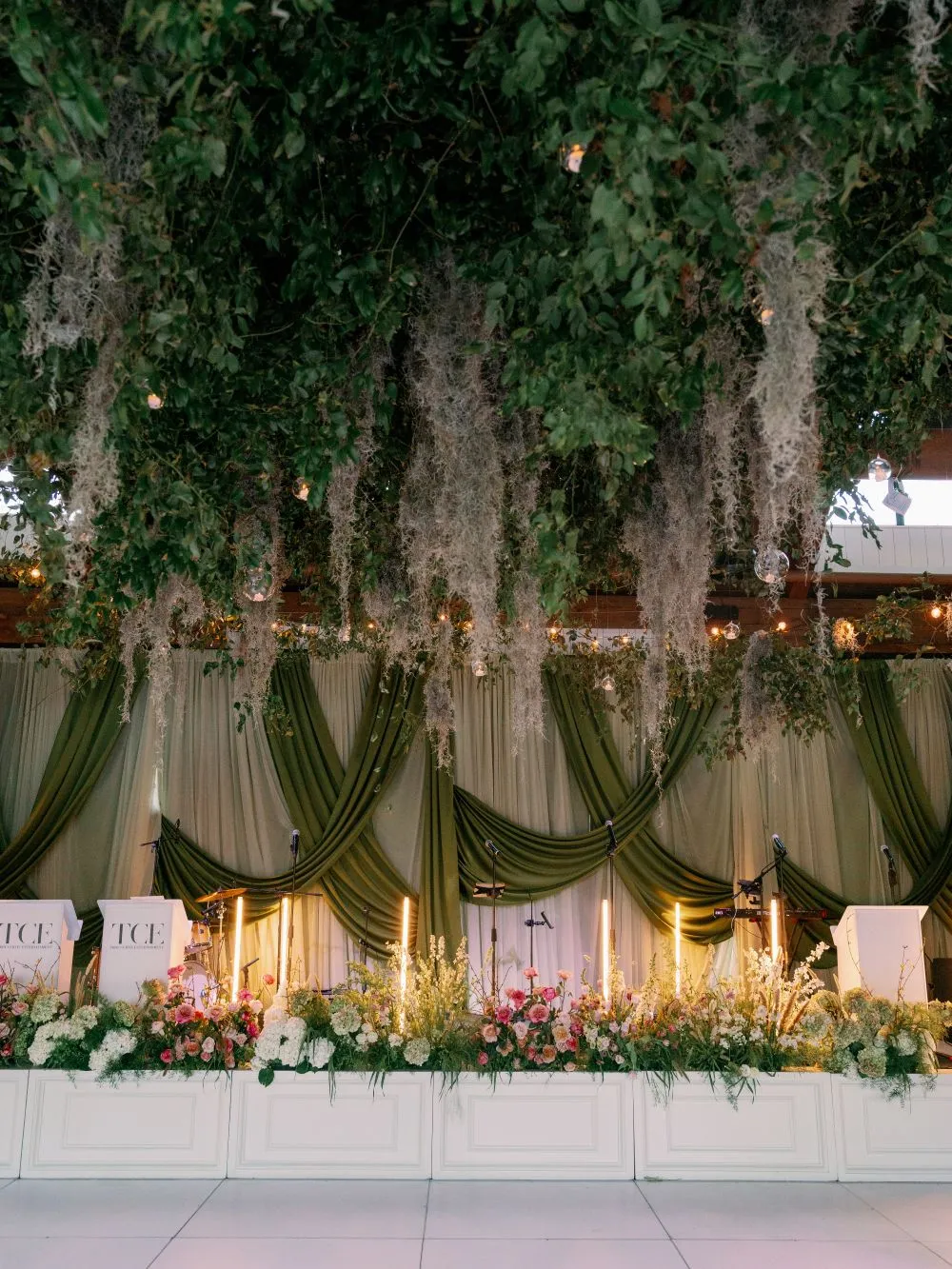
Dance floor sizing should not be based only on the total number of guests. Not everyone will dance at the same time, and different events require different types of movement. A wedding with group dances may need a different approach than a corporate reception with a short entertainment segment or a private party with open dancing throughout the evening.
The best size supports the expected dancing crowd, the featured moments, and the overall energy of the event. A floor that is too small can feel crowded during key moments, while a floor that is too large may make the event feel less lively if only a small group is dancing.
Estimate How Many Guests Will Dance at One Time
Start by thinking realistically about the crowd. Some guest lists are highly dance-oriented, while others may use the floor mainly for formal moments and occasional dancing.
A strong dance floor plan accounts for the number of guests likely to dance at the same time. For weddings, this might include the couple, wedding party, family, and friends during high-energy portions of the reception. For corporate and social events, the dancing crowd may build gradually after dinner, speeches, or entertainment.
The goal is to create a floor that feels active and comfortable without looking empty or overcrowded.
Adjust for Wedding Traditions and Featured Moments
Weddings often include dance floor moments that require more intentional planning. The first dance, parent dances, wedding party entrances, bouquet toss, anniversary dance, cultural dances, and group dances may all take place on or around the dance floor.
These moments should be considered before finalizing the size and placement. A first dance may need a polished, open area for photography and video. Cultural or family dances may require more room for movement. A wedding party entrance may need a clear path from the dining area to the floor.
When these moments are included in the plan early, the floor feels better suited to the event.
Adjust for Corporate and Social Event Programming
Corporate events, galas, and private celebrations may use the dance floor differently than weddings. It may support an awards moment, live band performance, DJ set, fundraising announcement, branded celebration, birthday entrance, or formal presentation transition. For more detail, see our article Can You Use a Dance Floor Rental Outdoors in 2025.
For these events, the floor may need to serve more than one purpose. It could act as an open performance area early in the evening and become a dance floor later. It could also support guest participation, entertainment, or photo moments.
The sizing should reflect how the floor will be used across the full timeline.
Leave Room Around the Floor for Watching and Movement
The space around the dance floor should allow guests to gather comfortably. This is especially important during first dances, speeches, performances, and high-energy moments when guests may want to watch before joining in.
Photographers and videographers also need room to capture the floor from different angles. Entertainment teams may need access to equipment. Servers may need to move around the perimeter without crossing through the dance area.
A dance floor works best when the surrounding space supports movement as well as dancing.
Place the Dance Floor Where It Supports the Room’s Natural Flow
Placement can determine whether the dance floor feels inviting or disconnected. Even a beautiful floor may go underused if it is too far from the music, blocked by tables, hidden from guests, or separated from the bar and lounge areas. You may also find 2025’s Hottest Luxury Event Dance Floor Styles Revealed helpful.
For outdoor Chesapeake events, the dance floor should be placed where it supports the natural rhythm of the event. It should connect with entertainment, remain visible to guests, and feel easy to approach once the celebration shifts into dancing.
Connect the Dance Floor to the Entertainment
The dance floor should be positioned near the entertainment source, whether the event includes a DJ, band, speakers, stage, or performance setup. This helps the energy feel intentional and gives guests a clear sense of where the dancing will happen.
If the entertainment is too far from the floor, the event can feel disjointed. If the floor is placed too close without enough surrounding room, it may feel crowded. The best placement creates a strong connection while still leaving room for equipment, performers, and guest movement.
Keep the Bar Close, But Not Crowded
Bar placement can have a major influence on dance floor activity. When the bar is nearby, guests naturally move between drinks, conversation, and dancing. This can help keep the energy of the event active.
However, the bar should not sit directly on the edge of the dance floor if it creates crowding. Guests waiting for drinks should not block dancers, photographers, or service paths. A thoughtful layout keeps the bar close enough to support the social flow while giving both areas enough space to function.
Balance the Dance Floor With Dining Tables
At wedding receptions and seated events, the dance floor should feel accessible from the dining area. Guests should be able to see key moments and move easily from dinner to dancing when the music begins. We cover this further in Charleston Beach Wedding Dance Floor Rentals: What to Know.
The floor should not interrupt dinner service or make nearby tables feel too tight. Guests seated closest to the dance floor should still have enough room to dine comfortably, and servers should be able to move around the space without crossing through the center of the action.
A balanced layout lets the event transition naturally from meal service to celebration.
Use Lounge Areas to Support the Dance Floor
Lounge furniture near the dance floor can make the area feel more inviting. Guests who are not dancing can sit nearby, watch, talk, and still feel connected to the celebration.
A lounge area can also soften the edges of the dance space. Instead of leaving the floor isolated in the center of the layout, lounge seating can create a more complete social zone. Sofas, accent chairs, coffee tables, and side tables can help guests stay engaged between songs or during slower moments.
The lounge should support the dance floor without blocking access to it.
Coordinate the Dance Floor With Lighting and Décor
Lighting and décor can help the dance floor feel like an intentional focal point. They can define the area, create atmosphere, guide guest attention, and support the transition from dinner to dancing.
The key is to enhance the floor without making the space feel crowded. The best design choices frame the dance area while keeping movement clear.
Use Lighting to Mark the Dance Area
Lighting can help guests understand where the dance floor is and when the event has shifted into a more celebratory phase. Overhead lighting, soft washes, perimeter lighting, and focused lighting can all make the floor feel more defined.
For weddings, lighting can make the first dance feel more intimate and photo-ready. For corporate and social events, it can help create a more energetic atmosphere once entertainment begins.
The lighting should match the event mood. Soft and warm lighting may support a romantic reception, while more dramatic lighting may fit a gala, corporate celebration, or late-night party.
Keep Décor From Blocking Movement
Décor should frame the dance floor, not intrude into it. Floral installations, arches, signage, lounge furniture, and decorative accents can all help define the area, but they should not block access or reduce usable space.
If the dance floor is surrounded by too many decorative pieces, guests may hesitate to use it. Large arrangements should be placed where they enhance the setting without interfering with dancing, photography, or service movement.
A clean perimeter makes the floor more approachable.
Create a Visual Transition From Dinner to Dancing
The dance floor often becomes more important as the event progresses. During dinner, it may feel like part of the room design. Later, it becomes the center of the celebration.
Lighting, music, and furniture placement can help create this transition. After dinner, the lighting can shift, music can change, and guests can be encouraged to move toward the floor. If the dance floor has been placed well, this transition feels natural rather than forced.
A strong event design anticipates this change in energy.
Plan for Photos and Video Around the Floor
The dance floor appears in many important event images. At weddings, it is visible in first dance photos, parent dance moments, guest dancing shots, and wide reception images. At corporate events and galas, it may appear in performance photos, award moments, and social coverage.
Because of this, the floor finish, surrounding lighting, nearby furniture, and décor should all be considered from a photography perspective. A polished dance floor can make these images feel more elevated and cohesive.
Dance Floor Planning Mistakes to Avoid
The dance floor can become one of the strongest features of an event, but only when it is planned carefully. Common mistakes usually happen when the floor is selected too late, placed without considering guest behavior, or chosen without regard to the overall design.
Avoiding these issues can help the event feel more cohesive and engaging.
Choosing the Finish Before Defining the Event Mood
A dance floor finish should support the mood of the event. Choosing it before the overall style is clear can lead to a mismatch with the tent, tables, chairs, linens, lighting, and décor.
A formal wedding, modern gala, coastal celebration, and private party may each call for a different look. Once the design direction is clear, the right finish becomes easier to select.
Making the Floor Too Small for Key Moments
A dance floor that is too small can feel crowded during important moments. First dances, group dances, cultural dances, performances, and high-energy portions of the event may all need more room than expected.
The size should account for how the floor will be used throughout the event, not just how many people may dance casually at one time.
Placing the Dance Floor Too Far From the Action
If the dance floor is too far from the music, bar, dining area, or guest seating, people may be less likely to use it. It should feel like a natural part of the event, not a separate zone that guests have to seek out.
Strong placement connects the floor to entertainment, nearby seating, and social areas. This helps guests move toward it naturally as the event energy builds.
Frequently Asked Questions
What type of dance floor works best for an outdoor Chesapeake event?
The best dance floor depends on the event style, setting, guest count, and surrounding rentals. A white floor can work well for clean, elevated designs, while a cherry wood floor may suit classic or traditional events. A black or black-and-white floor can support a modern or high-contrast look, and a white driftwood floor can complement coastal or natural event designs.
How do I choose between a white, wood, black, or driftwood dance floor?
Choose the finish based on the event’s design direction. White often feels polished, bright, and formal. Wood feels warm and classic. Black or black-and-white creates a stronger visual statement. Driftwood feels softer, natural, and coastal-inspired. The finish should coordinate with nearby chairs, linens, lighting, florals, bars, and lounge furniture.
How large should my outdoor dance floor be?
The dance floor size should be based on how many guests are expected to dance at one time, not only the total guest count. It should also account for first dances, group dances, entertainment, cultural traditions, and the amount of space needed around the floor for guests to watch and move comfortably.
Can a dance floor be used under a tent?
Yes. A dance floor can be used under a tent and should be planned as part of the full tent layout. Its placement should work with dining tables, entertainment, bars, lounge areas, lighting, guest movement, and photography. When planned early, the dance floor can become a natural focal point inside the tented space.
What rentals should be planned around the dance floor?
Lighting, bars, lounge furniture, tables, chairs, linens, tabletop rentals, entertainment setups, and décor should all be considered around the dance floor. These rentals help frame the area, support guest movement, and make the floor feel connected to the rest of the event design.
Conclusion
Choosing the right outdoor dance floor for a Chesapeake event is about more than selecting a surface for dancing. The dance floor helps define the event’s energy, direct guest movement, support entertainment, and create a visual focal point for important celebration moments.
The best dance floor plan considers finish, size, placement, surrounding rentals, guest behavior, and the overall design direction. Whether the event is a wedding reception, corporate gala, fundraiser, private party, or social celebration, the dance floor should feel integrated into the full event environment.
Curated Events Chesapeake can help hosts and planners choose a dance floor that works with the tent, tables, chairs, lighting, lounge furniture, bars, linens, tabletop, and décor so the final event feels polished, cohesive, and ready for guests to celebrate. Ready to plan? Request a quote from Curated Events Norfolk.