
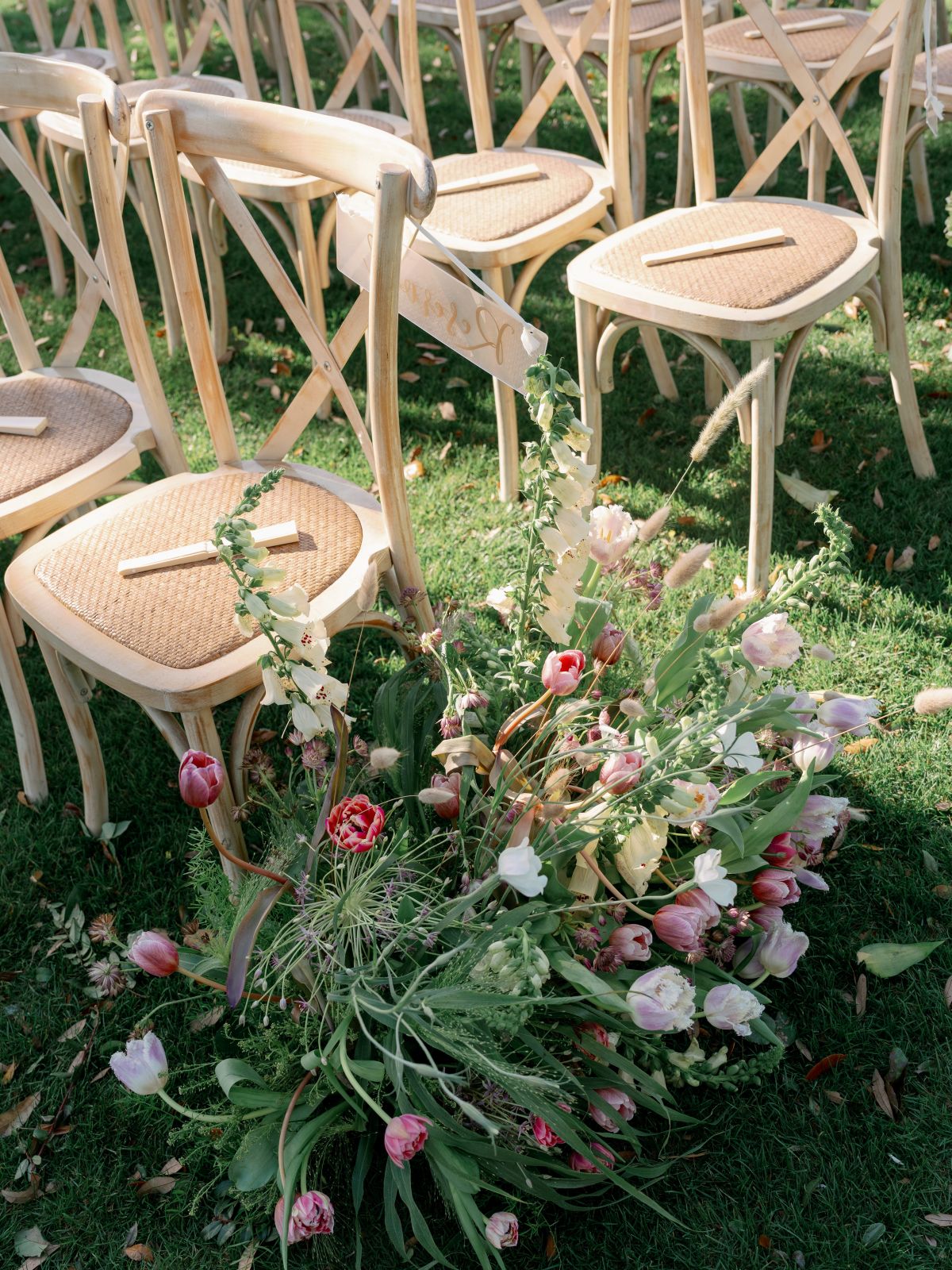
Outdoor events throughout Chesapeake and the surrounding Hampton Roads region can take place in many different settings, from landscaped lawns and private properties to tented venues and waterfront locations. Each environment presents its own seating considerations, and the chair that works well for one event may not be the best fit for another.
The right outdoor chair should complement the event’s design while supporting its layout, guest experience, and venue conditions. Planners must consider the ground surface, seating duration, chair dimensions, delivery route, and the relationship between the chairs and surrounding rentals. These decisions are particularly important when seating will be placed on grass, sand, gravel, or a combination of outdoor surfaces.
Curated Events Chesapeake offers a broad collection of folding chairs, cross-back chairs, Chiavari seating, acrylic chairs, specialty styles, children’s seating, and coordinating barstools. The local team also provides tables, linens, tents, flooring, lounge furniture, lighting, and tabletop rentals that can be planned alongside the seating.
This guide explains how to select outdoor event chairs for Chesapeake-area lawns and coastal settings without relying on one-size-fits-all assumptions about how a particular chair will perform.
Evaluate the Venue Surface Before Selecting Outdoor Chairs
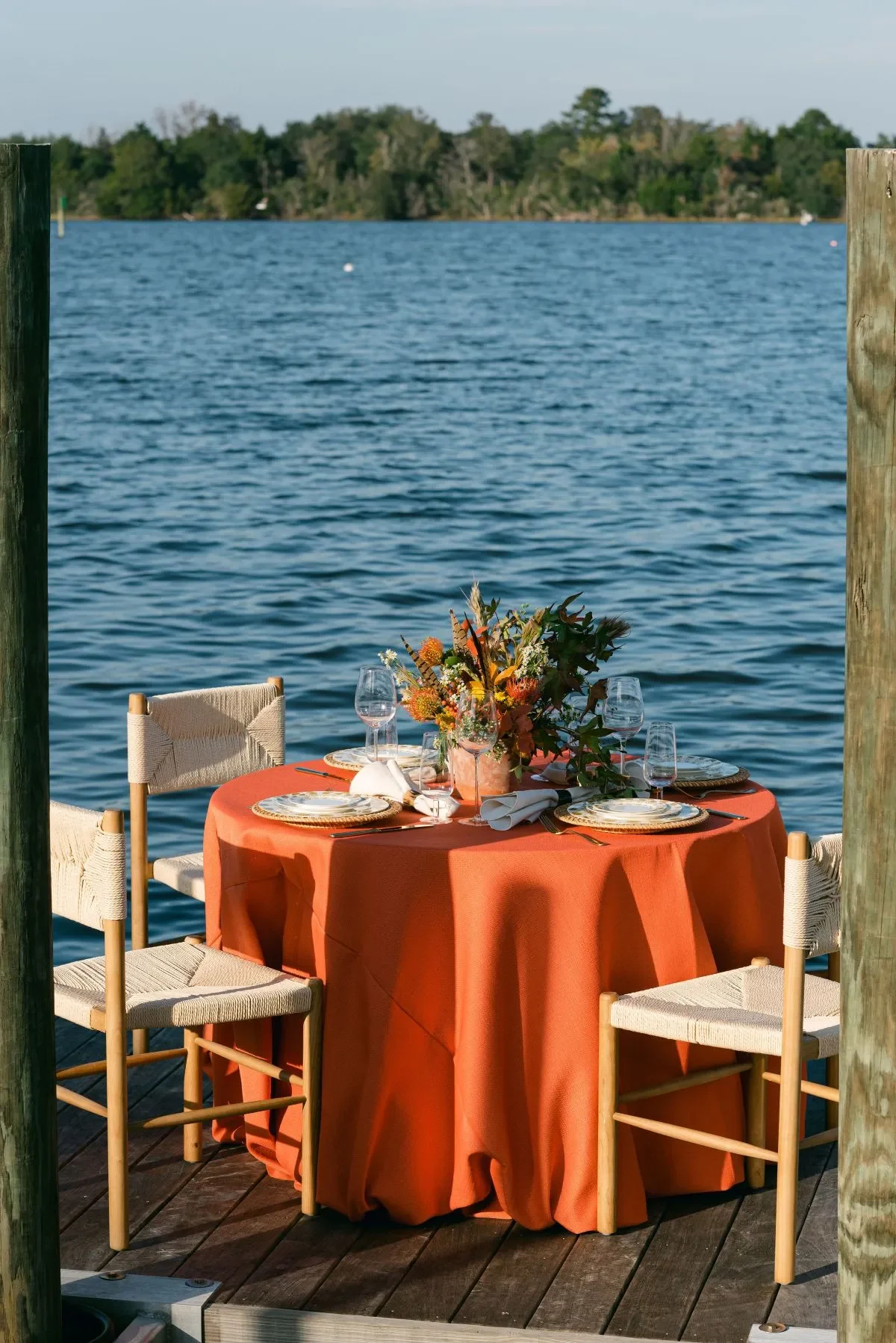
The condition of the ground affects how chairs can be positioned, how guests enter the seating area, and whether additional rentals may be needed. When planning summer event rentals in Chesapeake, the seating decision should account for grass, sand, gravel, patios, tent flooring, surface transitions, delivery access, and the relationship between the chairs and the complete event layout.
Grass, compacted sand, loose sand, gravel, patios, and tent flooring all behave differently under the weight of chairs and guests. Many venues also contain more than one surface, which means the seating plan must account for transitions between areas.
Inspect Grass for Softness, Slope, and Uneven Areas
A lawn may look level in photographs while containing subtle slopes, soft patches, irrigation areas, exposed roots, or uneven sections. These conditions can affect row alignment and the way chairs sit once guests are seated.
Before finalizing the ceremony or dining layout, identify the most level portion of the property. Walk the complete event footprint rather than evaluating only the central area. The planner should also review the path guests will take from parking, transportation drop-off, or the cocktail area to their seats.
If chairs will be arranged in ceremony rows, check whether the slope changes across the width of the seating area. A slight incline may be manageable when all guests face the same direction, but an uneven side-to-side grade can make rows appear misaligned and affect guest comfort.
Ground conditions can also change after rain or irrigation. The venue and rental team should be informed if the lawn is known to retain water or become soft under repeated foot traffic.
Treat Sand as a Venue-Specific Planning Condition
Sand should not be treated as a standard Chesapeake venue surface or as a material that every rental chair is designed to accommodate. Coastal and waterfront settings are more common across the broader service region, which includes the Eastern Shore and Outer Banks in addition to greater Hampton Roads.
For events where seating will be placed directly on sand, review the specific site rather than assuming that a chair will remain level or stable. Important considerations include:
- Whether the sand is loose, deep, wet, or compacted
- How far the ceremony area is from the delivery point
- Whether the venue permits rental furniture directly on the beach
- How the aisle and seating rows will be established
- Whether flooring or another defined surface is needed
- How guests with limited mobility will reach the seating area
- How chairs will be collected after the event
No chair should be described as sand-proof or engineered to anchor itself into the surface unless the manufacturer or rental provider confirms that specification. The venue conditions and intended placement should be discussed with the Curated Events team before a chair is selected.
Account for Mixed Outdoor Surfaces
Many events do not remain on one surface. Guests may attend a ceremony on grass, cross a gravel path, enter a tent with flooring, and then move to a reception held on a patio.
These transitions should be included in the event plan. Chairs that are appropriate for one part of the venue may not necessarily be used in another area, particularly when the ceremony and reception have different layouts or design requirements.
Determine whether the same chairs will remain in one location or be moved during the event. Chair relocation should never be assumed. It requires a defined schedule, adequate staff, and a clear route between spaces.
Using separate chair styles for the ceremony and reception can sometimes be more practical and visually intentional than planning a mid-event transition. The two selections do not need to match exactly, but they should share a connection through color, material, silhouette, or the surrounding rental design.
Schedule a Site Review for Complex Layouts
A site review can help identify issues that are difficult to evaluate through venue photographs or floor plans. This is particularly useful for properties with multiple levels, narrow gates, long carrying distances, waterfront access, or variable ground conditions.
During the review, confirm:
- The usable dimensions of the seating area
- The direction guests will face
- The location and width of aisles
- The ground condition beneath each row
- Nearby trees, landscaping, or structures
- The delivery and staging route
- The distance from the loading area
- The location of any tenting or flooring
- The planned position of tables, bars, and lounge areas
The Curated Events Chesapeake area page positions the local team as an event rental partner offering both inventory and expert consultation, making venue conditions an appropriate part of the rental discussion.
Choose a Chair Style From the Chesapeake Rental Collection
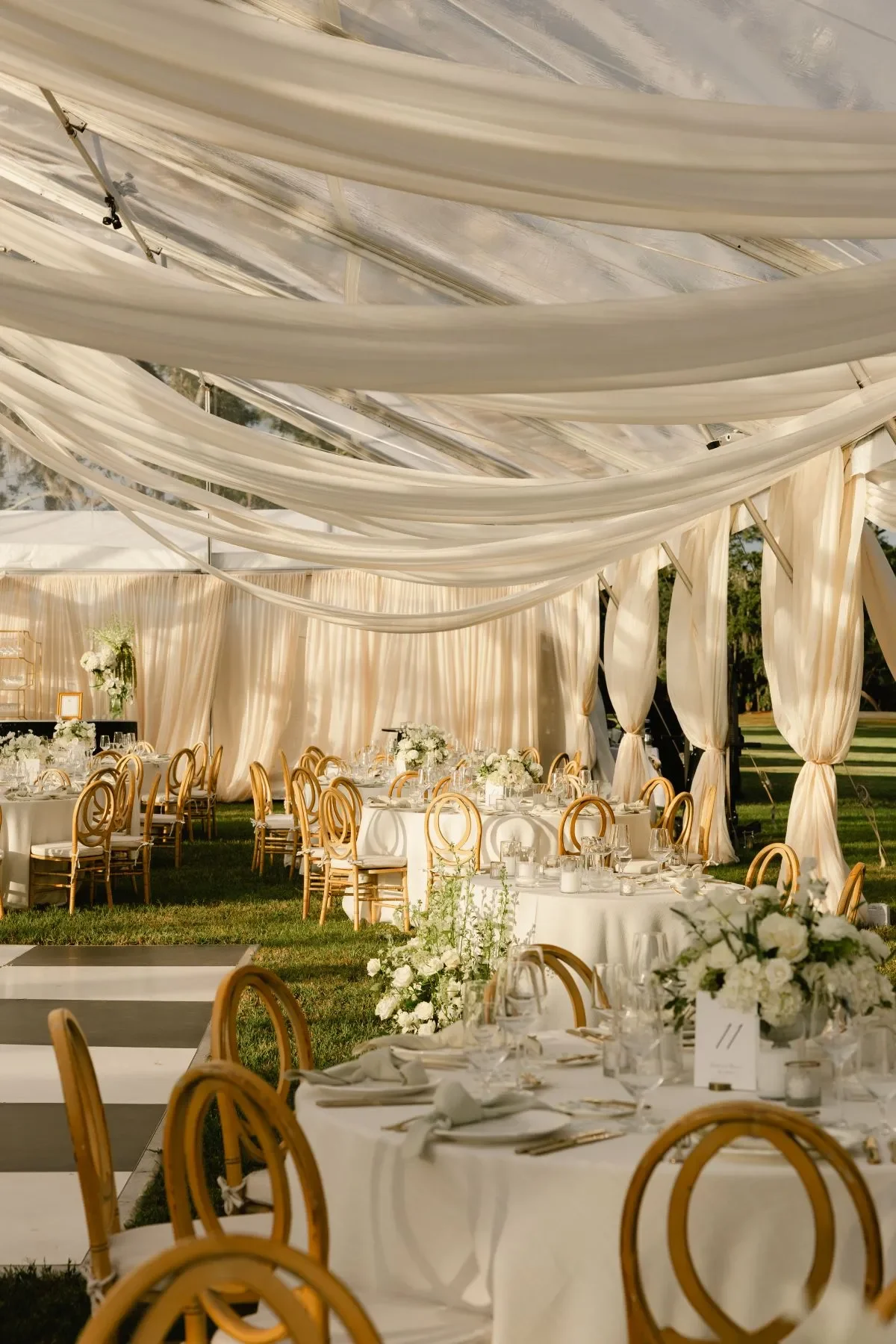
Curated Events Chesapeake carries a wide selection of chairs and barstools across folding, Chiavari, cross-back, stacking, acrylic, specialty, and children’s seating categories.
The most appropriate option depends on the event format, the surrounding design, the amount of time guests will remain seated, and the conditions at the venue. Rather than identifying one chair as universally best for grass or sand, compare the available styles within the context of the complete event.
Padded Folding Chairs for Flexible Outdoor Layouts
Folding chairs are commonly used for ceremonies, presentations, graduations, and other events that require clearly organized rows. Their familiar silhouette can support layouts ranging from understated outdoor ceremonies to structured corporate gatherings.
The Chesapeake inventory currently includes options such as:
- White Resin Padded Folding Chair
- Black Resin Padded Folding Chair
- Natural Wood Padded Palmer Folding Chair
- Natural Wood Padded Kestell Folding Chair
- Fruitwood Folding Chair with Brown Pad
- Fritz Cane Folding Chair
- Oliver Green Folding Chair
These selections provide several approaches to outdoor design. White chairs can create a clean ceremony setting, while natural wood and fruitwood finishes may feel more connected to gardens, lawns, and tented environments. Cane or colored folding chairs can introduce additional texture or a more distinctive design direction.
A padded seat may be beneficial when guests will remain seated for an extended ceremony or presentation. The specific chair should still be evaluated against the venue surface, row spacing, and event format rather than chosen solely because it folds.
Cross-Back and Vineyard Chairs for Natural Settings
Cross-back and vineyard-style chairs can complement venues where landscaping, wood tones, tenting, or architectural details form a major part of the event design.
Current Chesapeake options include the Oakwood Cross Back Chair, White Resin Cross Back Chair, and Amber Vineyard Chair.
An oakwood or amber finish can reinforce a natural palette, while a white cross-back chair offers the recognizable silhouette in a lighter finish. These chairs can be considered for garden ceremonies, tented dinners, private-estate events, and receptions using farm or community tables.
Their visual suitability does not establish that they are specifically engineered for sand, soft ground, or changing weather conditions. Placement should still be confirmed according to the surface and venue requirements.
Chiavari Chairs for Formal Outdoor Events
Chiavari chairs remain a familiar option for formal ceremonies, wedding receptions, galas, and seated corporate events. Their narrow profile and open back can create a refined arrangement without adding substantial visual weight around a table. You may also find Luxury Ways to Decorate Wedding Chairs helpful.
Curated Events Chesapeake lists natural, gold, silver, clear, white, and fruitwood Chiavari options, as well as selected coordinating barstools.
The finish can be coordinated with the broader design:
- Natural or fruitwood for warm, landscape-led settings
- Gold for formal or traditional events
- Silver for cooler palettes and polished tabletop designs
- Clear for modern or visually light arrangements
- White for ceremonies and bright tented receptions
When using Chiavari seating outdoors, review the cushion selection, seating duration, layout, and ground condition with the rental team. The chair should also be considered alongside the table height, linen drop, and spacing between place settings.
Acrylic and Specialty Chairs for Design-Led Events
Acrylic and specialty chairs can give an outdoor event a more distinctive visual identity. These pieces are especially relevant when the chair itself is intended to contribute to the design rather than function as a neutral background element.
The Chesapeake chair catalog includes options such as:
- Clear Acrylic Phantom Chair
- Genoa Acrylic Chair
- Natural Geometric Chair
- Natural Thonet Chair
- Black and Rattan Thonet Chair
- Woven Rope Chair
- White Diamond Chair
- Black Diamond Chair
Acrylic chairs can reduce visual interruption in a setting with architectural details, statement linens, or prominent florals. Thonet and rattan-influenced styles can introduce a hospitality-inspired look, while geometric, rope, and diamond chairs may suit contemporary weddings, brand gatherings, or social events with a stronger furniture direction.
Several product pages provide chair dimensions that can assist with layout planning. For example, Curated Events publishes measurements for the Natural Geometric, Natural Thonet, Black and Rattan Thonet, and Woven Rope chairs.
Specialty chairs may require more space than streamlined folding or Chiavari seating, so their dimensions should be reviewed before calculating rows or seats per table.
Barstools for Cocktail and Hospitality Areas
Outdoor events may include cocktail tables, bars, registration stations, and hospitality installations in addition to traditional seated areas. Barstools can support these spaces while extending the furniture design beyond the ceremony or dining arrangement.
The Chesapeake collection includes cross-back, Chiavari, Thonet, Penelope, Quinn, and other barstool styles in multiple finishes.
A coordinating barstool can connect a cocktail area to the dining chairs, while a contrasting style can help distinguish a lounge or hospitality zone. Confirm the height of the stools in relation to the selected bar or cocktail tables and leave enough space for guests to move around them comfortably.
Match the Seating to the Event Format
Outdoor seating should reflect how guests will use the space. A brief ceremony, plated dinner, corporate presentation, and networking reception each create different requirements for chair style, comfort, spacing, and placement.
The event agenda should therefore be established before the final seating selection is made.
Plan Ceremony Seating Around Rows and Sightlines
Ceremony chairs should be arranged to give guests a clear view of the focal point while preserving enough space for entrances, exits, photography, and event staff.
Begin by identifying the ceremony axis. This may be an arbor, waterfront view, landscaped feature, tent opening, or architectural backdrop. Position the center aisle and rows in relation to that point rather than simply filling the available lawn.
Consider:
- The number of chairs per row
- Center and side aisle widths
- Space between rows
- Reserved seating
- Accessibility routes
- The position of photographers and videographers
- The path used by the wedding party or speakers
- The location of sound equipment
Chair width affects the total footprint. A specialty chair that is several inches wider than a folding chair can add considerable width across a large row. Reviewing published dimensions or consulting the rental team helps prevent a layout from extending beyond the most level portion of the lawn.
Coordinate Dining Chairs With the Table Layout
Dining chairs should be selected alongside the tables rather than afterward. Table shape, dimensions, linen treatment, place-setting width, and chair size all influence how many guests can be seated comfortably.
Round tables create a different spacing pattern from rectangular, farm, or community tables. Chairs with broad backs or arms may require more room, while narrower Chiavari or folding styles can create a more compact arrangement.
Curated Events Chesapeake offers tables, chairs, linens, and tabletop rentals that can be reviewed as one coordinated composition. The company’s current linen categories include standard linens, napkins, runners, draping, skirting, sashes, cuffs, and tailored treatments.
During the planning process, check how the chair looks both pushed beneath the table and occupied by a guest. A design that appears spacious in an empty floor plan may feel crowded once place settings, centerpieces, and service paths are added.
Use Flexible Seating for Corporate and Social Events
Corporate functions, presentations, graduations, community events, and social gatherings may require seating that supports several phases of an agenda.
Folding or stacking chairs can create structured audience rows for speeches, training sessions, or recognition programs. Cocktail tables and barstools can support registration and networking, while lounge furniture can provide less formal conversation areas. We cover this further in The Wedding Lounge And Furniture Rental Guide.
The layout should make it clear where guests are expected to sit and where they are free to circulate. Avoid placing casual furniture so close to the primary audience area that conversations interfere with the formal program.
For events that transition from a presentation into a reception, consider whether the same furniture arrangement can remain in place or whether separate event zones will function more efficiently.
Add Lounge Seating for Conversational Areas
Lounge furniture can extend the seating plan beyond the ceremony or dining arrangement, but it should not replace primary seating for guests who are expected to attend a meal or program.
A lounge grouping may include a sofa or settee, individual chairs, a coffee table, and side tables. These areas work well near cocktail stations, bars, tent perimeters, or post-ceremony gathering spaces.
Curated Events Chesapeake maintains a separate lounge furniture collection that includes soft seating and coordinating tables. Current pieces include designs such as the Riley Rattan Chair and Lawrence Chair in Moss.
Position lounge seating on an appropriate surface and maintain clear circulation around each grouping. Guests should be able to enter and leave the area without crossing directly through another conversation or blocking a service route.
Coordinate the Chairs With the Complete Event Design
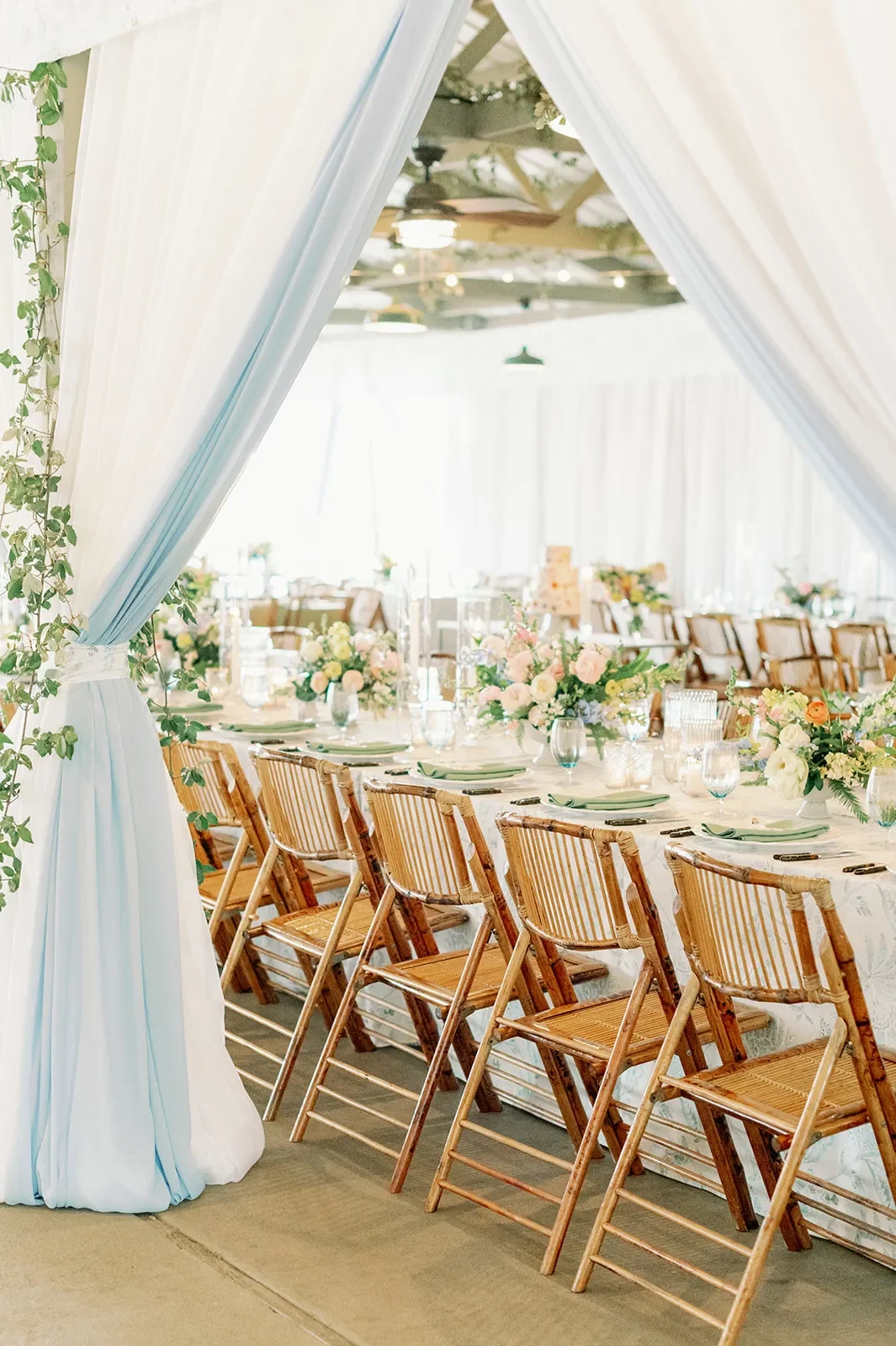
Chairs are one of the most repeated visual elements at an event. Their material, color, and silhouette can influence the appearance of the ceremony, dining area, tent, and photographs.
Curated Events Chesapeake offers chairs alongside tents, tables, linens, lounge furniture, lighting, bars, and tabletop rentals, allowing the seating to be considered as part of a broader design system. See the full collection of Norfolk lounge furniture rentals at Curated Events.
Connect Chair Materials and Finishes to the Venue
The venue can help guide the chair finish without dictating an exact style.
Natural wood and cross-back chairs may complement gardens, private estates, sailcloth tents, and landscape-led settings. Acrylic chairs can create a lighter visual presence in contemporary venues or spaces where the surroundings should remain prominent. Chiavari chairs can support formal receptions, while rattan and woven designs may suit relaxed waterfront or hospitality-inspired environments.
Black and white chairs can create a more structured visual effect for corporate functions, modern ceremonies, or high-contrast designs.
Look for a relationship between the chair and at least one other part of the event, such as the tables, bar, linen palette, lounge furniture, or venue architecture. The chair does not need to match every element, but it should not feel disconnected from the setting.
Pair Dining Chairs With Tables and Linens
The dining chair, table, and linen should be viewed together. A full-length linen conceals much of the table structure and places greater visual emphasis on the chair back. A farm or community table remains visible and therefore requires a stronger relationship between its finish and the chair.
Consider how the chair color interacts with:
- The table finish
- The linen color and texture
- The charger and tabletop pieces
- The floral palette
- Nearby bars or lounge furniture
- The tent or venue interior
Curated Events Chesapeake carries hundreds of linen styles through its local wedding and social event offerings, along with tabletop categories that include chargers, china, flatware, and glassware.
A showroom consultation can be useful when several finishes need to be compared together.
Maintain Continuity From Ceremony to Reception
Ceremony and reception chairs do not need to be identical. The ceremony may call for lightweight visual repetition in rows, while the reception may use a more detailed dining chair.
Continuity can be maintained through:
- Similar wood tones
- Repeated black, white, or clear finishes
- Related chair-back shapes
- Coordinated linen and floral colors
- Shared materials between chairs, tables, and bars
- Repeated woven or rattan details
When the same chairs are intended for both areas, establish who will relocate them, when the move will occur, and how the transition will affect guests. Moving chairs during cocktail hour requires labor, timing, and a clear route.
Unless the transition has been arranged in advance, it may be more effective to reserve separate seating for each area.
Use Tents and Flooring to Create a Defined Setting
Tenting and flooring can create a more controlled environment when the venue has variable ground conditions or when the reception needs a defined visual structure.
A tent can help organize dining, lounge, and hospitality zones, while flooring may provide a more consistent surface in selected areas. These options should be evaluated according to the site and event plan rather than treated as automatic requirements for every lawn or coastal gathering.
Curated Events Chesapeake offers tenting and event flooring within its local rental categories.
The chair layout should be included in the tent floor plan so spacing, circulation, and placement can be reviewed before installation.
Plan Chair Placement, Delivery, and Setup in Advance
Outdoor chair rentals involve more than choosing a style and quantity. The delivery route, staging area, layout, setup responsibilities, and post-event collection plan must also be confirmed.
Curated Events Chesapeake serves greater Hampton Roads, Williamsburg, the Northern Neck, the Eastern Shore, the Outer Banks, and northeastern North Carolina. Delivery planning can therefore vary significantly according to the venue and event location.
Confirm the Delivery Route to the Event Site
Provide the rental team with accurate information about access to the property and the event footprint.
Relevant details may include:
- Designated loading areas
- Narrow gates or doorways
- Stairs and elevators
- Gravel or unpaved roads
- Long carrying distances
- Soft ground
- Restricted delivery hours
- Security or venue check-in procedures
- Distances between the ceremony and reception
- Parking limitations for delivery vehicles
A site that appears straightforward from the street may require chairs to be carried a significant distance across a lawn or through a building. These conditions should be disclosed before the delivery plan is confirmed.
Reserve Space for Chair Staging
Chairs may need to be staged before they are installed, particularly when the event includes multiple seating areas or setup cannot begin immediately after delivery.
Choose a staging location that is accessible to the setup team but does not interfere with guest arrival, catering, or other installations. The area should also be appropriate for the rental items and protected according to the venue’s requirements.
After the event, chairs may need to be returned to an agreed collection point or prepared according to the pickup instructions. Confirm these expectations before the event day.
Confirm Who Will Set Up and Break Down the Chairs
Do not assume that delivery automatically includes chair placement or breakdown. Setup responsibilities should be discussed when the order is created.
The venue, planner, rental team, or another event crew may be responsible for arranging rows and tables, depending on the services requested and the event agreement.
Confirm:
- Who will place each chair
- Whether the rental team needs an approved floor plan
- Who will straighten rows before guest arrival
- Whether chairs will be moved during the event
- Who will prepare the chairs for pickup
- When the breakdown can begin
Clear responsibilities prevent delays and reduce the likelihood that chairs are arranged inconsistently.
Finalize the Layout Before Installation
Provide a completed seating plan before the setup team arrives. For ceremonies, include the number of rows, chairs per row, aisle widths, reserved seating, and focal point. For receptions, show the table shapes, chair count per table, service aisles, and any locations where specialty seating will be used.
Avoid making major placement decisions after the chairs have already been distributed across the event site. Last-minute changes can slow setup and create uneven spacing.
The plan should be reviewed with the venue, planner, caterer, and rental provider so operational routes and guest seating do not conflict.
Finalize Outdoor Chair Rentals With Curated Events Chesapeake
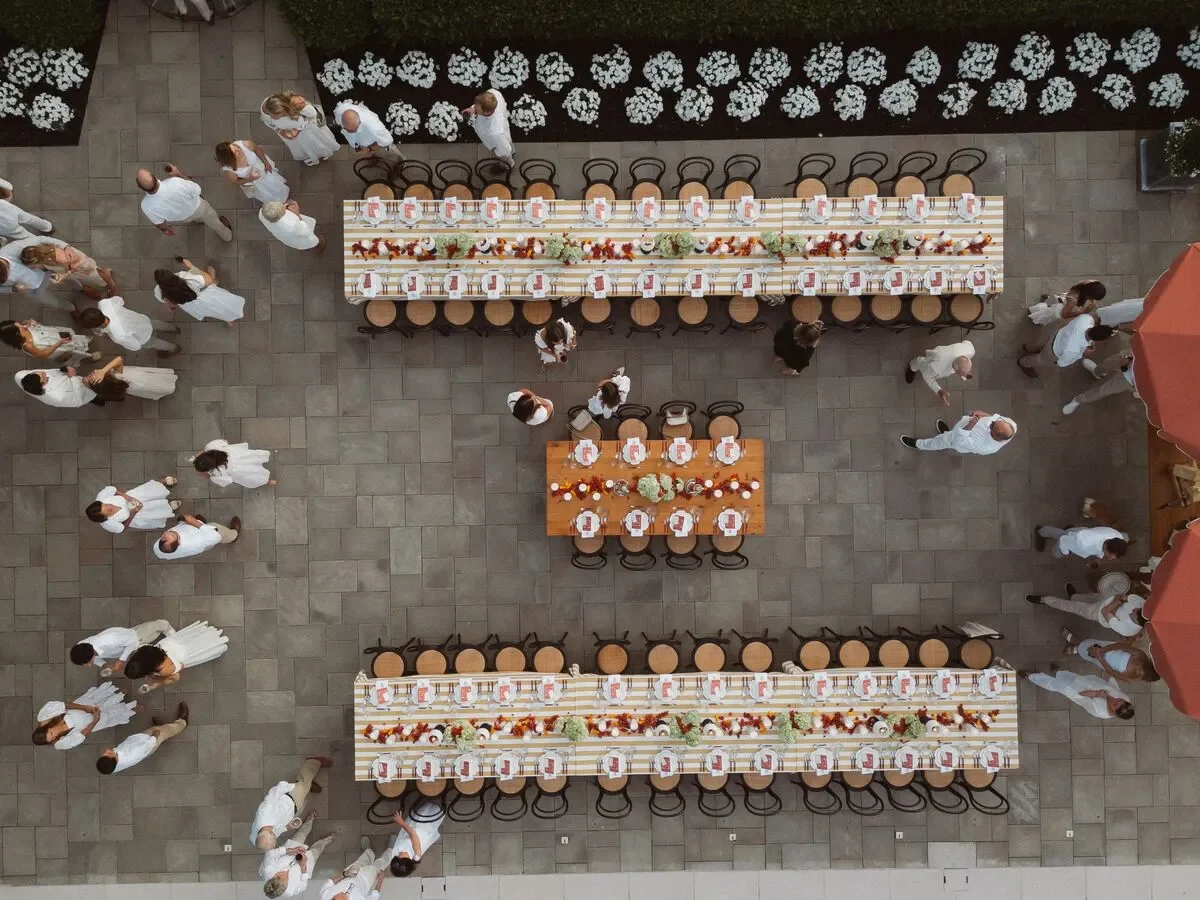
Once the venue surface, event format, guest needs, and design direction have been reviewed, the seating selection can be finalized with the local Curated Events team.
Curated Events Chesapeake’s current chair catalog includes folding, Chiavari, cross-back, acrylic, specialty, stacking, children’s, and barstool options, supported by related rental categories and professional consultation.
Browse the Current Chesapeake Chair Catalog
Begin by comparing chair categories rather than choosing only from photographs found outside the local inventory. Product availability and styles differ by Curated Events location, so selections should be made through the Chesapeake catalog.
Create a shortlist based on:
- Event format
- Venue surface
- Seating duration
- Desired finish
- Table style
- Overall event palette
- Required quantity
- Chair dimensions
- Setup and delivery considerations
Avoid assigning technical characteristics to a chair unless they are published or confirmed by the local team.
Prepare the Relevant Event Details
Before requesting recommendations, gather the information that affects the chair plan:
- Event date
- Venue name and location
- Estimated guest count
- Ceremony, dining, or presentation format
- Ground surface
- Preferred chair styles
- Table shapes and quantities
- Linen selections
- Venue access information
- Setup and breakdown requirements
- Photographs or measurements of the event area
This information allows the rental specialist to evaluate the chair as part of the complete event rather than as an isolated product.
Submit a Coordinated Rental Wishlist
Products in the Chesapeake catalog can be added to a quote request for review by the local team.
Include chairs alongside any related tables, linens, tents, flooring, lounge furniture, bars, or tabletop pieces. A coordinated wishlist gives the rental specialist a clearer understanding of the event design and helps identify selections that should be reviewed together.
Frequently Asked Questions
Which event chairs work well for outdoor ceremonies on grass?
Several chair styles may be considered for a grass ceremony, including padded folding, cross-back, vineyard, and Chiavari chairs. The appropriate option depends on the lawn condition, slope, event design, guest count, and seating duration. The venue surface should be reviewed before the selection is finalized.
Can rental chairs be placed directly on sand?
Whether chairs can be placed directly on sand depends on the venue rules, sand condition, chair selection, and installation plan. Do not assume that a chair is designed to remain stable on loose or uneven sand. Discuss the specific waterfront or coastal site with the venue and Curated Events Chesapeake before confirming the rental.
What is the difference between folding, cross-back, and Chiavari chairs?
Folding chairs provide a versatile profile for ceremonies, presentations, and organized audience layouts. Cross-back chairs introduce a recognizable wood-inspired or garden-oriented silhouette. Chiavari chairs have a narrow, formal profile frequently used for ceremonies, galas, and seated receptions. The best option depends on the event’s design and functional requirements.
Should ceremony and reception chairs match?
They do not have to match. Separate chair styles can be used when each one suits its location and purpose. Maintain visual continuity through related colors, finishes, materials, or surrounding rentals. When the same chairs will be moved between the ceremony and reception, the transition must be arranged in advance.
How should chair quantities be calculated for an outdoor event?
Start with the confirmed guest count and seating format. Include required seats for the ceremony, dining tables, speakers, staff, children, or other designated groups. Confirm whether chairs will remain in one location or whether separate quantities are required for different event areas.
Does Curated Events Chesapeake offer chair setup and breakdown?
Setup and breakdown requirements should be discussed directly with the Chesapeake team when the order is prepared. Do not assume that standard delivery automatically includes chair placement. Provide a finalized layout and confirm which party is responsible for each stage of installation and collection.
Can I view chair samples at the Chesapeake showroom?
The Chesapeake showroom and design center allows planners and hosts to compare available rental samples and coordinate chairs with other event elements. Contact the team before visiting to discuss the styles you are considering and confirm sample availability.
What venue information is needed before reserving outdoor chairs?
Provide the venue address, event surface, layout dimensions, delivery access, carrying distance, stairs or gates, event schedule, guest count, and setup requirements. Photographs and site plans can also help the rental team understand the location.
Conclusion
There is no single chair that is automatically best for every Chesapeake lawn, waterfront property, or coastal event. The right choice depends on how the venue is arranged, how guests will use the seating, how long they will remain seated, and how the chairs relate to the complete event design.
Begin with the site rather than the chair catalog. Review the ground, guest routes, available space, delivery access, and event agenda before narrowing the selection. From there, chairs can be coordinated with tables, linens, tents, flooring, lounge furniture, bars, and other rentals to create a setting that feels intentional and appropriate for the location. We cover this further in Elegant Chair and Furniture Rentals: Selecting Elegant Chairs and Furniture for Your Event.
With a broad Chesapeake inventory and consultation from the local team, Curated Events can help planners develop an outdoor seating plan that balances function, guest comfort, and a cohesive visual direction. To check availability for your date, contact our Norfolk team.