
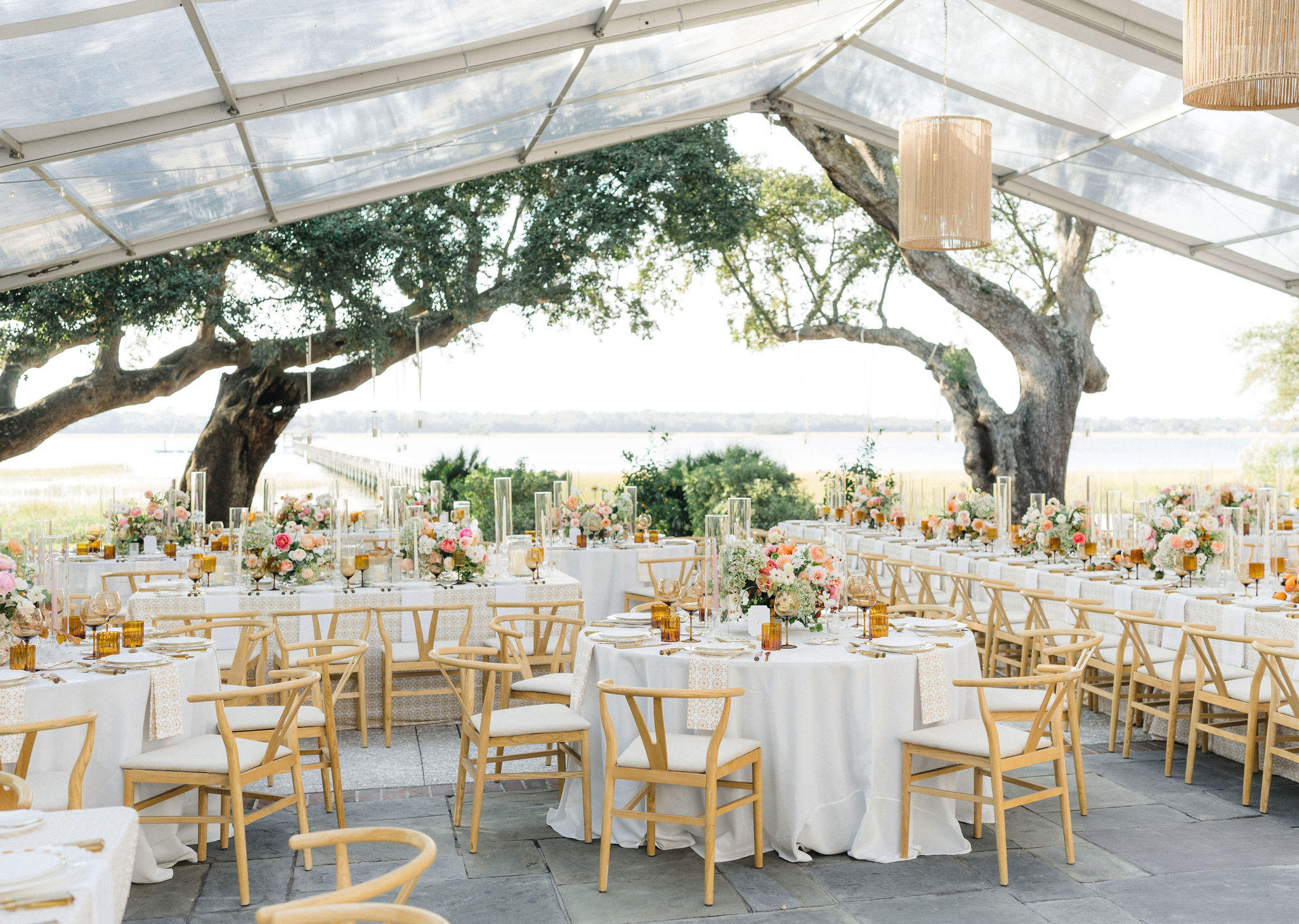
A tent gives an outdoor event structure, but lighting determines how that environment feels once daylight begins to fade. The right lighting plan helps guests navigate the space, see the details on the table, recognize important focal points, and move naturally between dining, conversation, presentations, and entertainment. You may also find The Ultimate Guide to Luxury Tent Rentals for Memorable Outdoor Celebrations helpful.
Effective tent lighting is not created by selecting one chandelier or covering the ceiling with strings of bulbs. It requires several lighting layers, each serving a specific purpose within the event layout. Ambient lighting establishes the overall atmosphere, decorative fixtures draw attention to key areas, and targeted lighting supports activities such as dining, beverage service, and presentations.
Curated Events Chesapeake offers tent options ranging from clear and white frame tents to garden, sailcloth, and structure tents. Its local lighting inventory includes café-light strands, chandeliers, rattan pendants, drum fixtures, carriage lights, can lights, and decorative shades that can be considered alongside bars, lounge furniture, tables, linens, and other rentals.
This guide explains how to create a layered lighting plan that responds to the tent structure and supports each part of an evening event in Chesapeake.
Read the Tent Structure Before Choosing the Lighting
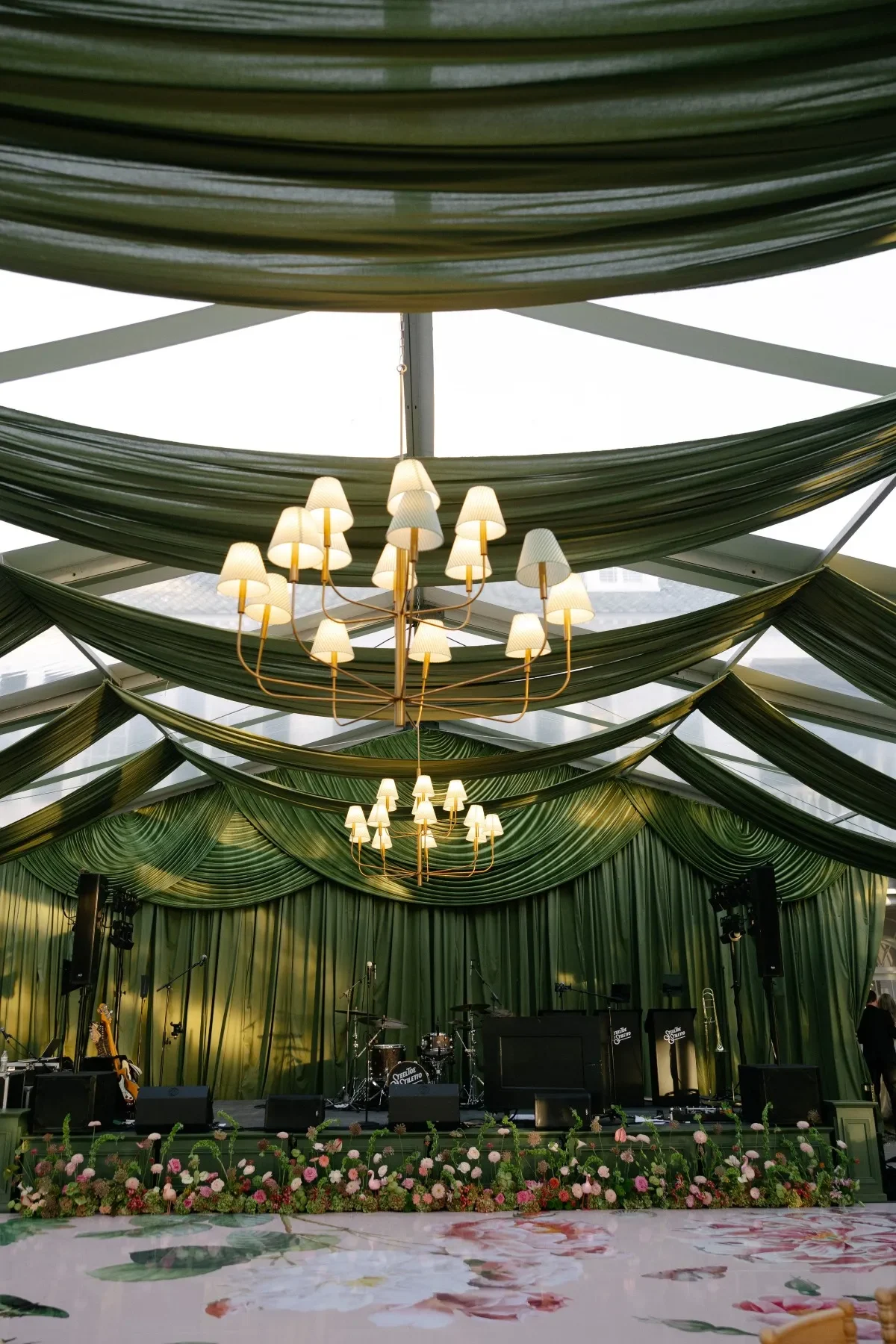
The tent itself establishes the framework for the lighting design. Its ceiling material, peak height, support locations, dimensions, and entrances all affect where fixtures may be placed and how the completed installation will appear.
Lighting should be planned alongside the tent and floor plan rather than added after the furniture, draping, florals, and other design elements have been finalized. Coordinating lighting with the broader selection of summer event rentals in Chesapeake helps align fixture placement with dining tables, bars, lounges, stages, dance floors, entrances, service areas, and guest pathways.
Identify the Tent Style and Its Visual Character
Each tent style creates a different architectural environment. Curated Events Chesapeake currently offers clear and white frame tents, garden tents, sailcloth tents, and structure tents.
A sailcloth tent may already have a soft, sculptural quality created by its canopy and peaks. In this setting, a restrained arrangement of café lights or selected pendants may support the existing architecture without overwhelming it.
Clear-roof tents allow the evening sky and surrounding landscape to remain visible. Lighting within these tents should account for reflections and the fact that fixtures can be seen from both inside and outside the structure.
White frame and structure tents can provide a more neutral backdrop. Their repeated bays and defined support points may lend themselves to a structured arrangement of chandeliers, pendants, or café-light strands.
The fixture selection should reinforce the character of the chosen tent rather than attempting to transform it into a completely different type of environment.
Note the Peak Height and Support Locations
Lighting placement should follow the tent’s structural rhythm. Peaks, poles, beams, and repeated bays can help establish where overhead fixtures will look balanced and intentional.
A chandelier positioned beneath a central peak may create a strong focal point, while smaller pendants repeated through several bays can establish visual continuity across a longer tent. Café lights may follow structural lines or span between approved attachment points to create an ambient canopy.
The planned fixture locations must also account for dining tables, bars, stages, dance floors, and other rentals beneath them. A decorative pendant should not hang where it blocks a stage view, interferes with a tall centerpiece, or creates an awkward relationship with the furniture below.
Decide Which Tent Features Should Remain Visible
The ceiling and structure may be part of the event’s visual appeal. A clear roof can frame the evening sky, while a sailcloth canopy or sculptural center pole may contribute to the setting before any decorative lighting is introduced.
Lighting should help reveal these features rather than conceal them beneath excessive installations. A few carefully positioned fixtures can give the eye places to focus while allowing the tent architecture to remain visible.
When draping, suspended florals, or other overhead décor is also planned, determine which element should carry the greatest visual weight. Lighting can frame or illuminate a floral installation, but both features should not compete for the same ceiling space without a coordinated plan.
Map Entrances and Open Sides
The main entrance should remain easy to recognize as daylight changes. This is particularly important for tents with several openings or sides that connect to a lawn, terrace, venue building, or secondary event area.
The lighting plan should establish a clear transition into the primary guest environment. Decorative fixtures near the entrance, visible café-light lines, or a well-defined illuminated focal point inside the tent can help orient guests as they arrive.
Open sides also affect the way the tent appears from a distance. When the interior is visible from surrounding areas, its lighting composition becomes part of the larger venue design rather than something experienced only after guests enter.
Build the Lighting Plan in Three Distinct Layers
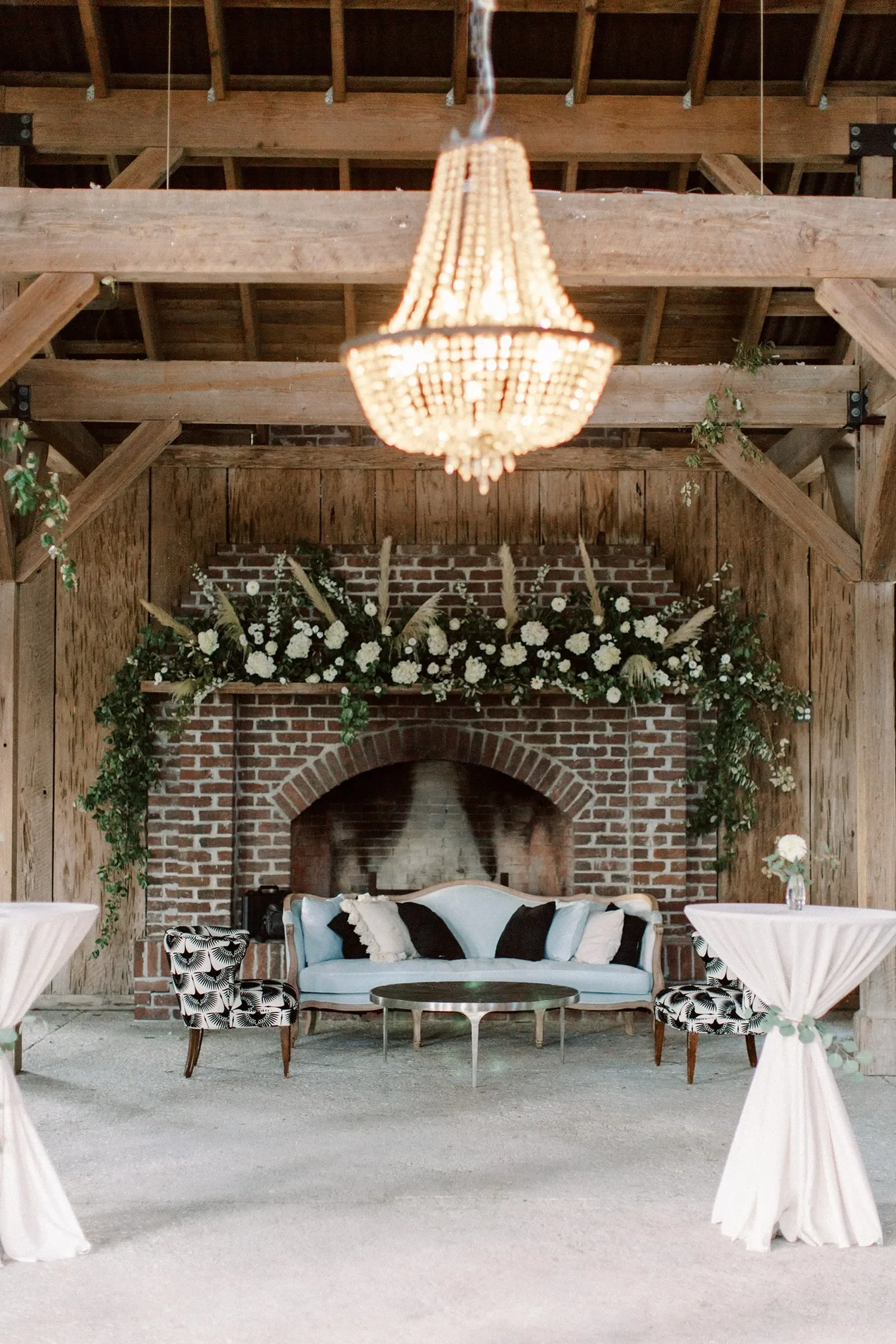
A successful tent rarely depends on one fixture type. Broad ambient light may make the space usable but visually flat, while decorative chandeliers alone may leave tables, bars, or service areas inadequately defined.
A layered plan combines ambient, decorative, and functional lighting so the tent feels atmospheric while still supporting the activities taking place inside it.
Establish an Ambient Canopy
Ambient lighting provides the broad foundation across the tent. It allows guests to understand the space, move between areas, and experience the overall environment without relying on one concentrated fixture.
Curated Events Chesapeake carries café-light strands with both black and white cords, providing options that can relate to different tent interiors and event palettes.
The pattern should respond to the tent architecture. Strands might run in repeated parallel lines, follow the perimeter, or span between bays, depending on the structure and approved installation plan.
The cord finish also contributes to the visual effect. A white cord may recede against a pale canopy, while black cord can create a more defined graphic pattern overhead. This detail should be considered during the design process rather than treated as purely technical.
Add Decorative Fixtures at Key Focal Points
Decorative fixtures establish hierarchy. Instead of placing chandeliers or pendants evenly across every part of the tent, identify where a stronger visual moment would have the greatest impact.
Possible focal points include:
- A central dining arrangement
- A head or executive table
- The primary bar
- A dance floor
- A lounge grouping
- A stage or presentation area
One statement chandelier may be more effective than several unrelated fixtures distributed throughout the ceiling. In a larger tent, repeated pendants can establish rhythm while still directing attention toward selected zones.
Curated Events Chesapeake’s current collection includes the Courtney Antique Brass Chandelier, Courtney Black Chandelier, Empire Crystal Chandelier, Tiffany Acrylic & Gold Pendant, and several natural-fiber pendants and drum fixtures.
Introduce Targeted Light Where Tasks Occur
Some areas need more definition than ambient lighting provides. Bars, buffet stations, dining tables, podiums, and service areas all involve activities that require guests or staff to see clearly.
Targeted lighting should be directed where it supports a task without making that area feel disconnected from the broader atmosphere. A bar may benefit from lighting that reveals its façade and glassware, while a dining area needs enough illumination for menus, place settings, and food service.
The Chesapeake inventory includes Silver Can Lights and carriage-style fixtures that can be considered as part of this more focused layer.
Technical presentation or performance lighting should be coordinated with the appropriate production provider. Rental lighting can help visually connect the stage or dance floor to the rest of the tent, but it should not be expected to replace specialized audiovisual or entertainment equipment.
Preserve Contrast Instead of Lighting Everything Equally
A tent does not need to be uniformly bright from one side to the other. Lighting every surface at the same intensity can remove depth and make individual event zones difficult to distinguish.
Controlled contrast allows important areas to stand out. The bar might have a stronger decorative presence, while lounge areas feel softer and more intimate. Dining areas can remain warm and usable, and the dance floor can become more visually prominent later in the evening.
The objective is not darkness for its own sake. Entrances, circulation routes, and service areas still need appropriate visibility. Contrast should create hierarchy without compromising the way guests and staff move through the event.
Assign a Lighting Purpose to Every Event Zone
A useful lighting plan begins with the floor plan. Before choosing individual fixtures, divide the tent according to how each area will be used and determine what lighting role is needed there.
This prevents decorative fixtures from being placed only where they look attractive on a ceiling diagram. Every lighting decision should relate to the guest experience, event schedule, or operation of the space beneath it.
Make the Entrance Easy to Recognize
The entrance is the first point where lighting begins directing the guest experience. It should be visible from the approach and clearly connected to the illuminated interior.
A defined overhead fixture, carriage-style light, or visible line of café lights can help establish the threshold. Once guests enter, they should be able to identify the registration table, cocktail area, dining arrangement, or next point in the event sequence.
Avoid overcrowding the entrance with fixtures, florals, signage, and rental furniture. A clear visual path is usually more effective than adding several competing decorative elements.
Keep Dining Areas Atmospheric but Usable
Dining lighting should support both the design and the practical requirements of a meal. Guests need enough light to see menus, place settings, food, and one another, while the atmosphere should remain appropriate for an evening celebration.
Ambient café lighting can provide continuity across the complete dining area. Decorative fixtures may then be positioned above a head table, central table, or selected arrangement that deserves greater visual emphasis.
Fixture placement should account for centerpieces and suspended florals. A chandelier that appears correctly positioned on a floor plan may conflict with a tall floral installation once both are viewed in elevation.
The lighting should also relate to the tabletop. Metallic fixtures can echo flatware or charger details, while natural pendants may connect with wood tables, woven chairs, or textured linens. Curated Events Chesapeake offers lighting, furniture, linens, and tabletop rentals that can be reviewed as part of one event design.
Give the Bar a Distinct Visual Identity
The bar is often one of the most active guest areas during an evening event. Lighting can help guests locate it and make the installation feel like a deliberate part of the design rather than a service counter placed at the edge of the tent. For more detail, see our article High-End Tent Draping Ideas to Enhance Any Evening Event.
A pendant or chandelier can create a focal point over the bar, while nearby carriage fixtures or targeted light may reveal shelving, glassware, or the bar façade. The lighting should be bright enough to support service without becoming noticeably harsher than the surrounding environment.
The fixture style can also connect the bar to the furniture and palette. A natural-fiber pendant may relate to a wood or rattan-led design, while black or brass fixtures may complement a more tailored bar configuration.
Curated Events Chesapeake offers bars, shelving, lighting, furniture, and glassware within its local rental inventory, allowing these elements to be coordinated rather than selected independently.
Use Lower, More Intimate Light Around Lounges
Lounge areas are intended for conversation and typically benefit from a softer visual character than the main dining or presentation zones.
Pendants, decorative shades, carriage-style fixtures, or ambient light from the surrounding tent may help establish this distinction. The lighting should make side tables and seating visible without eliminating the sense of intimacy that makes lounge furniture useful.
Curated Events Chesapeake carries soft seating and coordinating lounge tables that can be considered alongside the lighting selection.
Position lounge areas so they remain connected to the larger event while avoiding direct conflict with speakers, stages, or high-traffic service routes.
Increase Definition Around the Stage or Dance Floor
A stage or dance floor should read as a destination within the tent. It often requires more visual emphasis than a standard dining or lounge area, particularly when the event transitions from a formal program into entertainment.
Rental chandeliers, pendants, or café-light patterns can frame the area and connect it to the event design. Technical lighting for speakers, performers, or audiovisual presentations should be developed with the production provider.
Curated Events Chesapeake offers dance floors in several finishes, including black-and-white laminate, cherry wood, white, and white driftwood. The surrounding lighting should be selected with the floor finish and nearby furniture in mind so that the entertainment zone does not appear disconnected from the rest of the tent. For more detail, see our article Tent Lighting Guide for Charleston Autumn Weddings.
Select Fixtures That Match the Event’s Design Language
Lighting fixtures remain visible throughout the event, including before sunset when their illumination may be less noticeable. Their form, finish, material, and scale should therefore relate to the tent, furniture, linens, bars, and tabletop selections. For more detail, see our article Tent Lighting and Decor Ideas for a DC Event Ambiance.
Curated Events Chesapeake’s current lighting collection spans formal chandeliers, natural-fiber pendants, tailored drum fixtures, carriage lights, café-light shades, and can lights.
Use Chandeliers for a Formal or Architectural Focal Point
Chandeliers can give a tent a strong visual center and introduce a more architectural quality to the ceiling.
The Courtney Antique Brass Chandelier can relate to warm metallic accents, wood furniture, or traditional tabletop details. The Courtney Black Chandelier provides stronger contrast and may suit modern, tailored, or monochromatic designs. The Empire Crystal Chandelier can support a more formal environment and introduce a reflective element beneath the tent canopy.
A chandelier should have a defined relationship with what sits beneath it. Centering one above a head table, dance floor, bar, or primary dining installation gives it a clear purpose.
Fixture scale also matters. A small fixture may disappear within a wide tent bay, while an oversized piece may feel too dominant above an intimate table. Dimensions, suspension height, and viewing distance should be evaluated as part of the installation plan.
Bring Natural Texture Into the Tent With Pendants
Natural-fiber fixtures can introduce warmth and texture without relying on additional ceiling décor. They are particularly effective in garden-inspired, waterfront, sailcloth, and tented-estate settings.
Curated Events Chesapeake currently lists options such as the Basket Rattan Pendant, Pear Rattan Pendant, Sisal Rope Pendant, Tiered Rattan Pendant, and Seagrass Wrapped Drum.
These fixtures can relate to rattan seating, natural wood bars, woven details, neutral linens, and landscape-driven palettes. They may be repeated over a bar or dining zone or used individually to distinguish a lounge or focal table.
Natural texture should still be used selectively. When the event already contains several woven furniture styles, prominent wood grains, and layered linens, one repeated pendant design may create more cohesion than mixing several different natural fixtures.
Use Black, Bronze, and Acrylic Fixtures for a More Tailored Look
A streamlined fixture can bring structure to a tent without creating the ornament associated with a crystal chandelier or the casual texture of rattan.
The Jade Brushed Black Drum and Jade Brushed Bronze fixtures offer darker, more architectural finishes, while the Tiffany Acrylic & Gold Pendant combines a clear material with a warmer metallic detail.
These options may suit corporate dinners, modern weddings, formal social events, and layouts with clean furniture lines. Their finish can be repeated through bars, chair frames, flatware, or tabletop accents to create continuity across the event.
Introduce Pattern Through Decorative Shades
Decorative shades allow pattern or color to appear overhead without requiring another large suspended installation.
The Chesapeake inventory includes Greer Fern, Olive Stripe, copper or rose-gold, and white lighting shades.
A patterned shade can repeat a linen, floral motif, or lounge accent in a controlled way. For example, botanical patterning may reinforce a garden-led palette, while a striped shade can introduce a more tailored or hospitality-inspired detail.
Because a shade carries its own pattern, the surrounding ceiling treatment should remain disciplined. Too many different fixtures, shade designs, and suspended décor elements can make the tent feel visually fragmented.
Design the Lighting for the Shift From Daylight to Evening
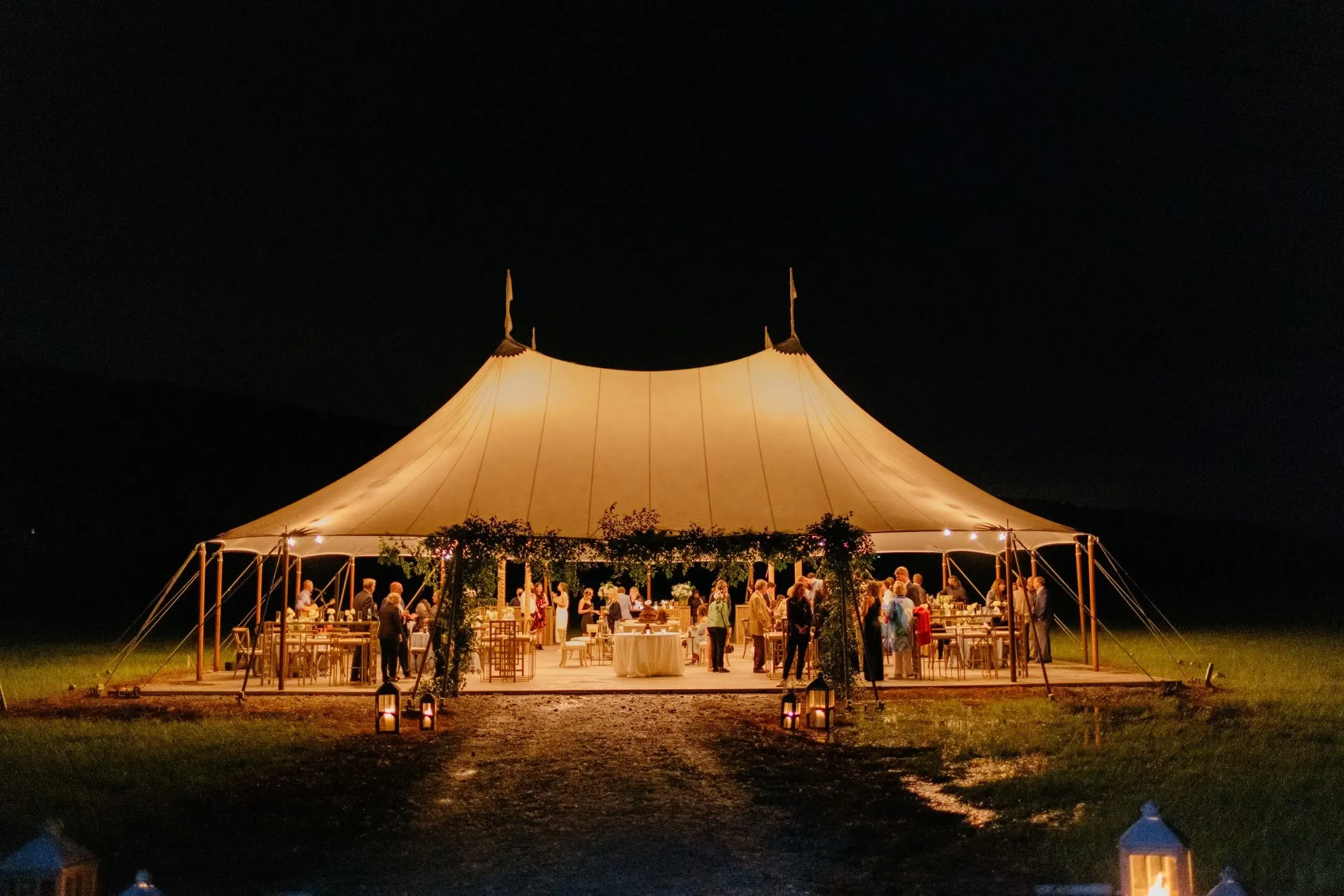
Many Chesapeake tented events begin in daylight and continue after sunset. The lighting must therefore work as both a daytime ceiling design and an evening illumination plan.
Fixtures should look intentional before they are lit, and the transition between natural and artificial light should be considered as part of the event timeline.
Establish Which Fixtures Should Be Visible Before They Are Lit
Chandeliers, pendants, cords, shades, and supporting hardware remain visible during the day. Their materials and spacing influence how the tent looks long before the lighting begins shaping the atmosphere.
A collection of natural pendants may contribute texture during an afternoon reception, while a black chandelier can create contrast against a white canopy even before sunset. Café-light lines also form a visible ceiling pattern and should therefore be arranged with the same care as any other overhead installation.
Review fixture selections in relation to daytime photography, sightlines, and the complete tent design rather than evaluating them only for the amount of light they produce.
Determine When Each Lighting Layer Becomes Active
The ambient, decorative, and functional layers may not all need to become prominent at the same time.
Ambient lighting can begin establishing the tent environment as daylight softens. Decorative focal fixtures may become more noticeable as dinner begins, while the entertainment or dance area may receive greater emphasis after the formal program.
Coordinate this transition with the planner, tent team, and relevant production professionals. The goal is to avoid a period when the tent suddenly feels dark because the lighting plan was evaluated only under full nighttime conditions.
Review How the Tent Material Changes After Sunset
Tent materials respond differently once natural light disappears. A clear roof may reflect the illuminated interior, while a white canopy can diffuse light across the ceiling. Sailcloth may take on a warmer appearance as fixtures become more prominent.
These differences affect how bright, reflective, or intimate the tent feels after dark. The fixture count and placement should be considered in relation to the actual tent material rather than transferred from an unrelated event photograph.
The surrounding venue also matters. A tent near an illuminated building may feel different from one positioned on a dark lawn or waterfront property.
Conduct an Evening Lighting Check
Before guests enter the tent, review the lighting in conditions that resemble the actual event environment.
Confirm that:
- The entrance is easy to identify
- Dining tables are visible and usable
- The bar can operate comfortably
- Lounge areas feel distinct but connected
- Stages and dance floors are clearly defined
- Circulation routes remain visible
- No fixture creates distracting glare
- Dark areas have not developed between event zones
This check should focus on the experience and visual balance rather than encouraging unqualified adjustments to electrical or structural components. Any technical changes should be handled by the responsible professionals.
Coordinate Lighting With the Tent Installation and Power Plan
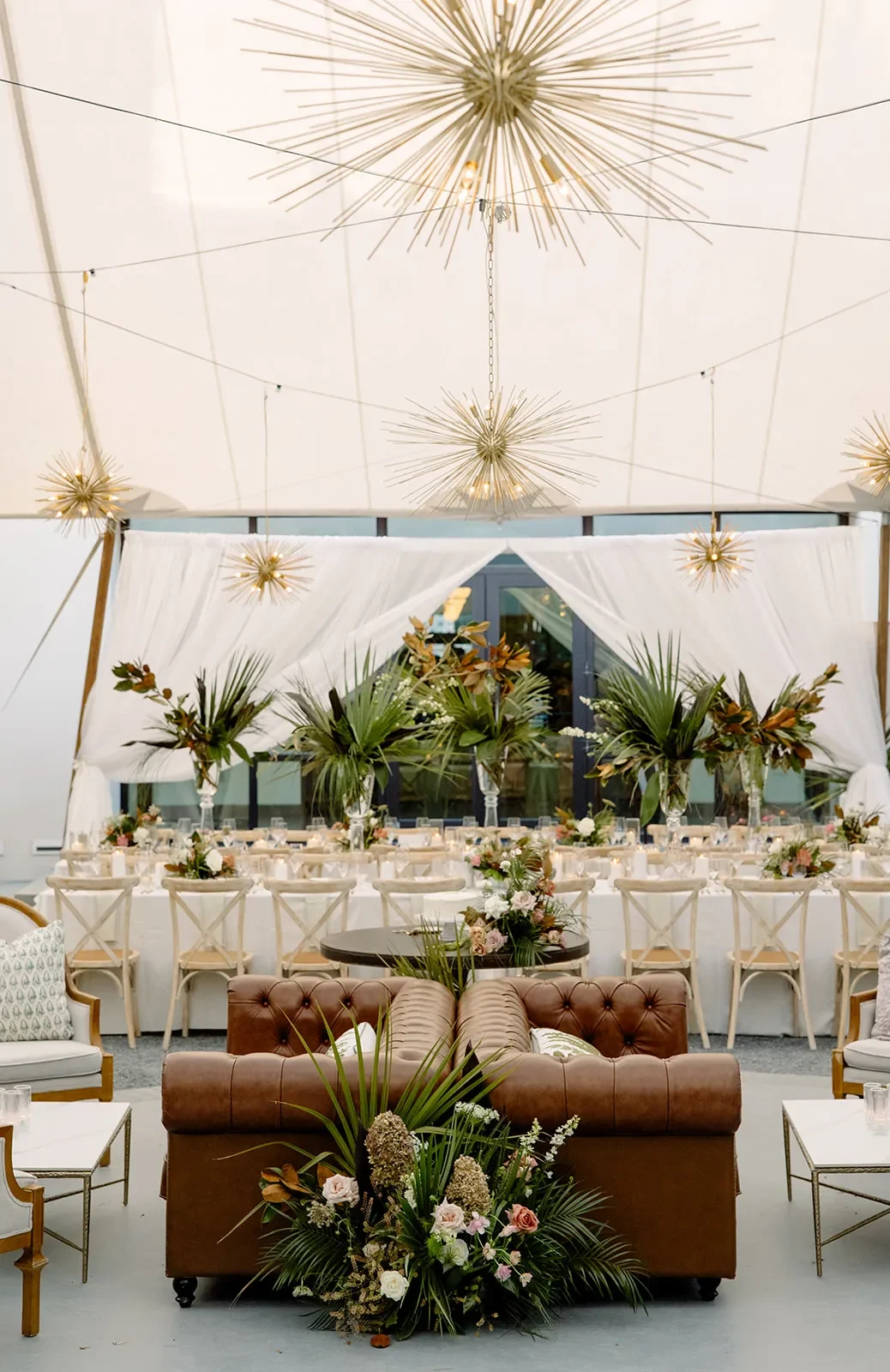
Tent lighting requires structural coordination, electrical planning, and a defined installation sequence. These responsibilities should remain with the qualified tent, lighting, rental, and production teams involved in the event.
Finalizing the decorative concept early allows these professionals to determine how it can be installed safely and appropriately within the selected structure.
Finalize Overhead Fixtures Before Tent Installation Begins
Overhead elements should be identified before installation whenever possible. This includes chandeliers, pendants, café-light strands, shades, draping, suspended florals, and any other ceiling treatment.
An approved plan allows teams to coordinate the relationship among tent supports, attachment locations, fixture heights, and the furniture below. It also reduces the risk that one suspended element occupies space required by another.
Fixture locations should appear on the event floor plan or an accompanying overhead plan. This makes it easier to evaluate whether each light is centered over the intended zone and whether repeated fixtures follow a consistent pattern.
Confirm Installation Requirements With the Tent Team
Not every fixture can be placed in every tent style or location. Weight, attachment method, clearance, suspension height, and the tent’s structural configuration must be reviewed by the professionals responsible for installation.
Clients and planners should communicate the desired visual result without assuming that decorative fixtures can be attached wherever they appear most attractive. The tent team can determine which locations are appropriate and whether the lighting plan needs to be adjusted.
Curated Events Chesapeake positions its local offering as a full-service rental operation spanning tents, lighting, furnishings, tabletop pieces, and other event equipment, which allows related requirements to be evaluated together.
Review Power Alongside Other Event Systems
Lighting is only one part of an outdoor event’s electrical plan. Climate-control equipment, catering appliances, sound systems, presentations, and entertainment may also require power.
Provide the relevant professionals with a complete list of systems rather than evaluating the tent lighting in isolation. This allows electrical needs, equipment locations, and installation responsibilities to be reviewed accurately.
Avoid estimating requirements based on a generic number of bulbs or fixtures. The actual plan depends on the selected equipment, tent dimensions, venue infrastructure, and other systems operating during the event.
Keep Cables and Controls Away From Guest Routes
Cable routing and control locations should be incorporated into the layout before tables, bars, lounges, and service stations are placed.
Primary entrances, dining aisles, bar queues, dance-floor access, and catering paths should remain clear. Controls and operational equipment should also be accessible to the appropriate team without becoming prominent within the guest environment.
Planning these routes early helps preserve both the appearance and function of the completed tent.
Extend the Lighting Plan Beyond the Main Tent Interior
Guests may move between the tent and an adjoining building, terrace, ceremony site, restroom route, or exterior lounge. The lighting plan should acknowledge these immediate transitions so the tent does not appear visually isolated from the rest of the event.
The objective is not to redesign every area of the property. It is to create a deliberate relationship between the illuminated tent and the spaces guests use before, during, and after entering it.
Identify the Primary Transition Out of the Tent
Determine which opening guests will use most often after dark. This may lead to restrooms, an indoor venue space, transportation, a ceremony lawn, or an exterior bar.
The transition should not move abruptly from a carefully illuminated tent into an undefined dark area. Clarify which provider or venue team is responsible for the adjoining route and how its lighting will relate to the tent entrance.
Include Any Exterior Bar or Lounge Area in the Visual Plan
A bar or lounge positioned immediately outside the tent should feel connected to the interior environment.
This connection may be established through a repeated fixture finish, similar café-light treatment, coordinated furniture materials, or consistent lighting intensity. Exact matching is not necessary, but the two areas should not appear as unrelated installations.
Curated Events Chesapeake offers bars, lounge furniture, lighting, and other rentals that can be reviewed together when these zones cross the tent boundary.
Distinguish Rental Lighting From Venue Lighting
Confirm which existing paths, structures, entrances, and exterior areas are illuminated by the venue. Do not assume that nearby walkways or service routes are covered simply because the main tent lighting has been planned.
Create a clear division of responsibility among the venue, rental company, planner, and production provider. This helps identify gaps before installation and prevents two teams from planning overlapping equipment for the same area.
Keep Service Areas Visually Separate
Catering and back-of-house areas require enough light for staff to work, but they should not compete with the guest-facing tent.
Position functional service lighting where it supports food preparation, equipment access, glassware staging, and used-item collection. Where possible, these areas should remain outside the primary guest sightlines or be visually separated through the layout.
The caterer, venue, planner, and lighting professionals should coordinate these requirements so service routes remain practical without disrupting the intended atmosphere.
Frequently Asked Questions
Are Café Lights Enough for an Entire Tented Reception?
Café lights can provide an effective ambient foundation, but they may not fully address every area of the event. Dining tables, bars, stages, lounges, entrances, and service zones may benefit from additional decorative or targeted lighting.
The right combination depends on the tent dimensions, layout, event schedule, and surrounding venue conditions.
How Many Lighting Layers Should an Event Tent Include?
Most effective plans consider three general layers: ambient lighting across the tent, decorative fixtures at focal points, and targeted light for areas where specific activities occur.
Not every zone needs a separate fixture. The layers should work together so the tent remains cohesive rather than appearing divided into several unrelated lighting installations.
Can Chandeliers or Pendants Be Installed in Every Tent Style?
No fixture should be assumed to work in every tent or location. Tent structure, suspension points, fixture weight, clearance, and installation requirements must be reviewed by the appropriate professionals.
Choose fixtures for their visual direction, then confirm whether and where they can be incorporated into the selected tent.
Should the Dining Area and Dance Floor Use Different Lighting?
They can use different levels or types of lighting while remaining part of the same overall design.
Dining areas generally require a balance of atmosphere and visibility, while a dance floor or entertainment zone may need stronger visual definition. Repeating a fixture finish, café-light pattern, or other design detail can connect the two areas.
When Should Tent Lighting Be Selected During the Planning Process?
Lighting should be considered after the tent type and preliminary floor plan are established but before overhead décor, installation details, and power requirements are finalized.
Early coordination gives the tent, floral, lighting, and production teams time to review how their work will share the ceiling and structural supports.
How Should Lighting Be Coordinated With Draping or Suspended Florals?
Lighting, draping, and suspended florals should be shown on one coordinated overhead plan. Their attachment locations, heights, dimensions, and visual priorities need to be reviewed together.
Decide whether the fixture will illuminate, frame, or remain separate from the floral installation rather than allowing both elements to compete for the same focal point.
What Event Details Does Curated Events Chesapeake Need to Recommend Lighting?
Provide the event date, venue, tent style and dimensions, floor plan, event schedule, entrance locations, functional zones, and design direction.
Include any confirmed furniture, bar, linen, tabletop, floral, or overhead décor selections that may affect the fixture recommendations.
Can Tent Lighting Be Coordinated With Bars, Lounges, and Tabletop Rentals?
Yes. Coordinating these rentals can help establish repeated finishes, materials, and focal points throughout the tent.
Curated Events Chesapeake carries lighting alongside bars, lounge furniture, linens, tabletop pieces, chairs, tables, and tenting, allowing the selections to be reviewed within one event design. Ready to plan? Request a quote from Curated Events Norfolk.
Conclusion
An effective tent lighting plan does not depend on using the greatest number of fixtures. It begins with understanding the structure, establishing an ambient foundation, identifying the event’s most important zones, and introducing decorative and functional light where each will have a clear purpose.
When the lighting follows the tent architecture and supports the floor plan, the environment can transition naturally from daylight into evening. Dining remains comfortable, bars and stages become easy to identify, lounge areas feel more intimate, and the complete event retains a consistent visual direction.
Curated Events Chesapeake offers tenting, café lights, chandeliers, pendants, shades, furnishings, and related rentals that can be considered together from the beginning of the planning process. Coordinating these elements early helps create an evening tent environment in which every fixture contributes to the way the event looks, functions, and feels. See the full collection of Norfolk tent rentals at Curated Events.