A self-serve beverage station can make refreshments easier to access during an outdoor ceremony, corporate meeting, private celebration, or reception. Its success, however, depends on more than placing a dispenser on a table. The station must be prepared for the period when demand will be highest, positioned where guests can approach without creating congestion, and arranged so the catering team can replenish it without interrupting service.
The most effective setup begins with three questions: When will guests use the station? How many people are likely to arrive at once? How will beverage containers, drinkware, and backup supplies move through the space?
Curated Events Chesapeake offers cold-beverage service rentals that include 5- and 12-gallon Cambro dispensers, glass and stainless-steel punch bowls, beverage tubs, and champagne buckets. These pieces can be paired with tables, bars, linens, and drinkware according to the event format and the beverage-service plan.
This guide explains how to create a cold beverage station that remains clear, accessible, and operational from the first pour through the final refill.
Give the Station One Clear Service Role
A beverage station is easier for guests to understand when it performs one primary function. Combining water, bottled refreshments, punch, coffee, cocktails, and unrelated service items on one surface can create a crowded setup with no clear starting point.
Begin by identifying the exact period of the event the station will support. Once that role is established, the equipment, capacity, and placement decisions become more precise.
Provide Water Before an Outdoor Ceremony
A pre-ceremony water station can serve guests before they enter the seating area, particularly when they must walk from parking, transportation, or another part of the venue.
Place the station along the natural arrival route but outside the processional aisle and primary ceremony entrance. Guests should be able to collect water without blocking those who are moving directly toward their seats.
The station should also be positioned where used drinkware will not accumulate around the ceremony rows. Confirm whether guests may carry beverages into the seating area and establish a clearing plan with the venue or service team.
Offer Arrival Refreshments After Check-In
Corporate events, fundraisers, and private celebrations may include registration, credential pickup, escort displays, or guest-book stations. In these cases, position refreshments after the arrival process rather than placing both functions at the same table.
Separating check-in from beverage service prevents guests from stopping in the entrance while holding forms, badges, gifts, or personal items. It also allows the beverage station to serve people moving in one direction rather than receiving traffic from several sides.
If the event begins with a networking period, the arrival station can direct guests naturally toward cocktail tables, lounge seating, or the main gathering area.
Create a Nonalcoholic Alternative to the Main Bar
A separate station for water, tea, lemonade, punch, or another caterer-prepared beverage can reduce unnecessary traffic at a staffed bar. Guests who want a nonalcoholic option should not have to enter the same line as those ordering prepared drinks.
The station should remain visually connected to the reception without sitting directly beside the bar queue. Allow enough distance for each service point to form its own approach and exit.
Keep the selection focused. Offering one or two clearly identified nonalcoholic refreshments is often easier to understand and maintain than placing several unrelated containers on the same surface.
Support a Defined Meeting or Program Break
For a corporate meeting, presentation, or training session, activate the beverage station around a scheduled break rather than placing it beside the audience throughout the program.
Position it where attendees can exit the seating area, collect a drink, and return without crossing the stage sightline or gathering in a doorway. When the break is short, the station may need more than one dispensing point because most attendees will arrive within the same few minutes.
The layout should also accommodate the return route. Guests leaving the station should not have to reverse through the incoming line to reenter the meeting space.
Plan for the Rush Instead of the Total Guest Count
Total attendance is only one part of capacity planning. The more important question is how many people will use the station during its busiest service window.
A station serving 150 guests gradually over several hours operates differently from one expected to serve the same number immediately before a ceremony or during a 15-minute meeting break. Peak demand should determine the number of containers, dispensing points, and station locations.
Identify the Busiest Service Window
Review the event schedule and determine when the largest group is likely to arrive. Peak use commonly occurs:
- Immediately after check-in
- Before an outdoor ceremony
- At the beginning of cocktail hour
- During a scheduled program break
- After a presentation concludes
- During a transition between event spaces
Estimate how long that window will last. A shorter period creates greater pressure on each dispensing point and may justify dividing the station into two locations.
The station should be fully stocked before the rush begins. Refilling a container while the main guest group is waiting can interrupt flow and create spills around the service surface.
Estimate Demand by Beverage Category
Do not treat all beverage demand as one total. Separate the expected use of water, punch or another prepared drink, bottled or canned refreshments, and beverages available through the staffed bar.
Water may receive the heaviest demand before an outdoor ceremony, while another refreshment may become more popular during cocktail hour. At a corporate event, bottled drinks may serve the arrival period while water remains available throughout the program.
Breaking the menu into categories helps determine whether each beverage requires its own dispenser, tub, or station location.
Determine How Many Guests One Station Can Accommodate
The volume of a dispenser does not reveal how quickly a station can serve guests. Service speed also depends on:
- The number of dispensing points
- How quickly guests can fill a cup
- Whether drinkware is easy to reach
- The amount of space in front of the station
- The number of beverage options
- Whether containers can be replenished during use
A large container may reduce refill frequency, but it does not necessarily shorten a queue if guests can access only one spout. In some layouts, two smaller service points may move people more efficiently than one larger station.
Ask the caterer or beverage-service team how the selected drinks will be prepared and replenished before finalizing the equipment quantity.
Divide Demand When One Table Would Create a Queue
Use more than one beverage point when guests will approach from different directions or when one line would interfere with another event function.
Two stations may be appropriate when:
- Ceremony guests enter through more than one route
- A meeting releases all attendees simultaneously
- The reception occupies a large tent or venue
- One station would obstruct registration
- The event includes separate indoor and outdoor areas
- The beverage point would otherwise compete with the buffet or bar
The two stations do not need to offer different menus. Repeating the same high-demand beverage in separate locations may be the more effective way to distribute traffic.
Select the Vessel by Service Method
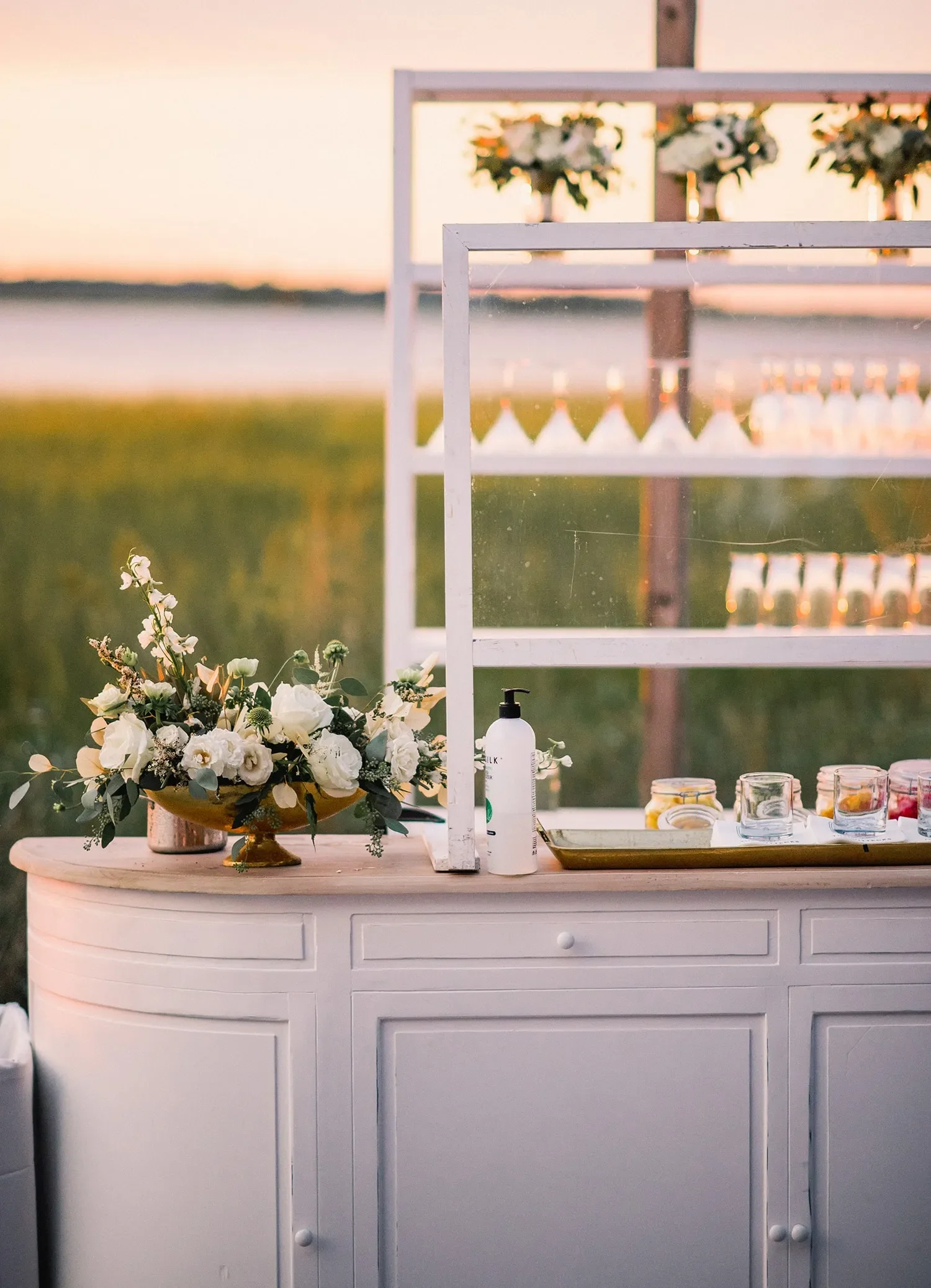
Choose the beverage container according to what will be served, how guests will receive it, and how the equipment will be replenished. A presentation-led punch bowl serves a different purpose from a high-capacity dispenser or a tub filled with bottled drinks.
Curated Events Chesapeake’s cold-beverage inventory includes multiple formats, allowing the vessel to be selected according to the service plan rather than appearance alone.
Use a 5-Gallon Dispenser for a Smaller Service Point
The 5-gallon Cambro beverage dispenser may be considered for a secondary station, a smaller gathering, or a service period with moderate demand. It can also provide a separate dispensing point for water when another beverage is being served from a different container.
Before selecting it, confirm:
- The anticipated number of servings
- The size of the cups or glasses
- Whether it will be refilled
- Who will handle replenishment
- Where backup beverage will be held
- Whether the supporting table can accommodate the filled container
A smaller dispenser can be useful when the event needs several distributed water points rather than one central station.
Use a 12-Gallon Dispenser for Higher-Volume Service
Curated Events Chesapeake also lists a 12-gallon Cambro beverage dispenser for cold-beverage service. Its larger capacity may reduce the number of refills needed during a concentrated service period.
Greater capacity also creates practical considerations. The supporting surface must be appropriate for the filled equipment, and the service team needs a safe method for preparing, positioning, or replacing the container.
Do not place a large dispenser on a narrow cocktail table solely because the table fits the event design. Confirm the complete equipment footprint and operating plan first.
Choose a Punch Bowl for Guest-Facing Presentation
A punch bowl may suit a station where the beverage vessel is intended to remain visible as part of the setup.
The Chesapeake inventory includes a 3-gallon glass punch bowl and a 3-gallon hammered stainless-steel double-wall punch bowl.
The glass option can keep the beverage visible, while the hammered stainless-steel bowl introduces a different material and presentation. Selection should still begin with the caterer’s service method.
Confirm whether the drink will be served by staff or accessed by guests, which serving pieces are required, and how the bowl will be refilled. The station needs enough working space around the bowl for service without placing it close to the edge.
Reserve Champagne Buckets for a Specific Service Purpose
The Chesapeake collection includes standard silver champagne buckets and an extra-large silver champagne bucket. The extra-large model is listed at 14 inches high, with a 14-inch outer ring and 10-inch inner circle.
Use these pieces when the beverage plan calls for a defined bottled-beverage presentation. They should not be added simply as decorative containers without confirming how they will function during service.
Consider who will access the bottles, where opened beverages will go, and whether the bucket will be positioned on a station, service table, or another approved surface.
Create a One-Way Guest Path Through the Station
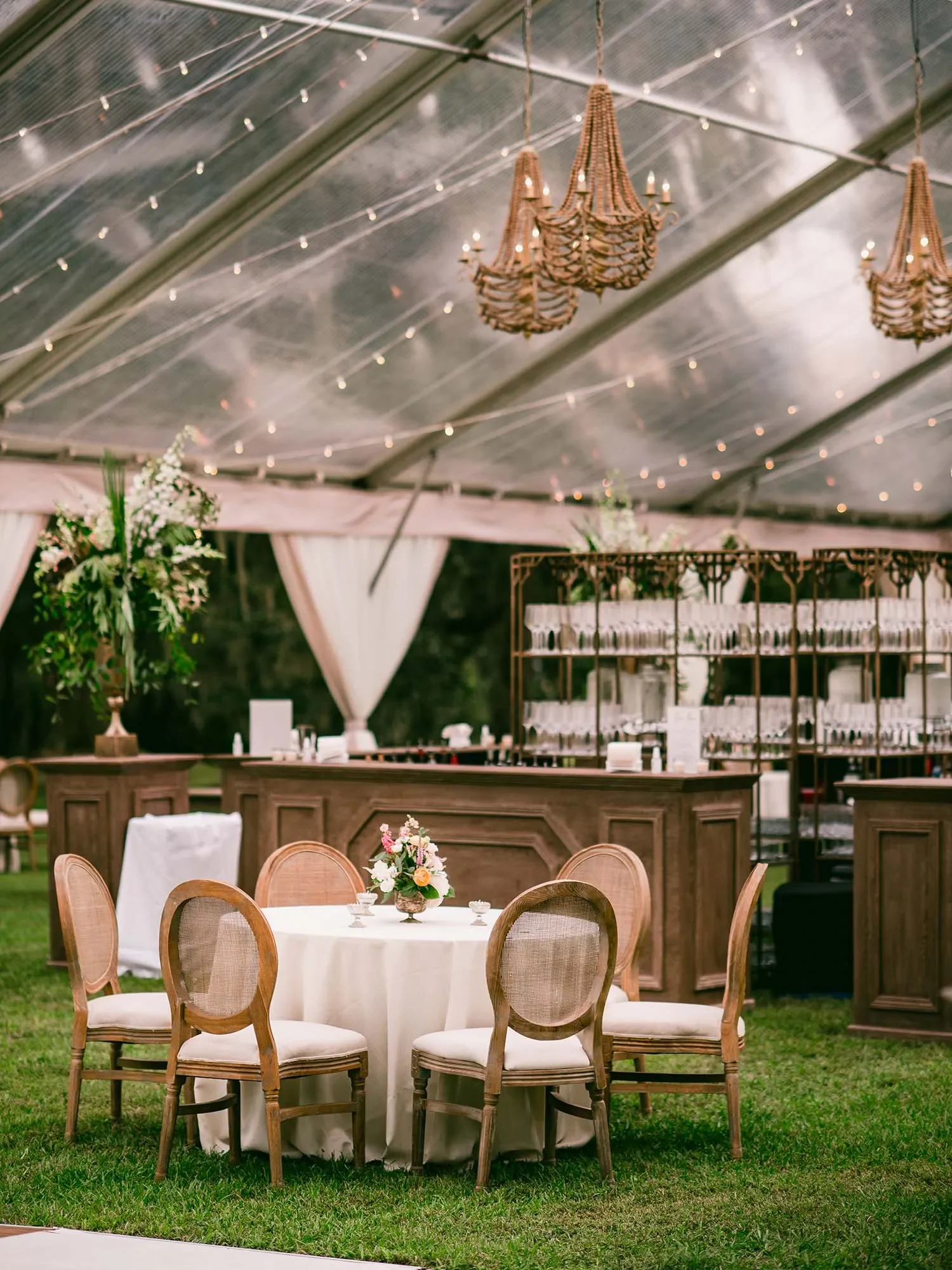
A beverage station should communicate its service sequence without requiring instructions. Guests should be able to recognize where to begin, collect a beverage, and exit without crossing those who are still waiting.
Organize the station according to the guest’s movement rather than arranging every item symmetrically for appearance.
Start With Drinkware
Place the appropriate cups or glassware at the beginning of the service path. Guests should not need to reach back across a dispenser, tub, or punch bowl after selecting a drink.
Keep the drinkware in a clearly defined area that can be replenished from the service side. Avoid placing several different glass styles together unless the beverage plan requires them and guests can easily identify which one to use.
Curated Events Chesapeake offers glassware within its broader tabletop inventory, but the exact selection should be coordinated with the beverage format and catering plan.
Position the Most Popular Beverage First or at a Separate Point
The most popular beverage can determine how the entire station moves. Placing it first may speed service when most guests want the same option, but it can also cause the line to stop immediately and block access to the remaining containers.
Consider a separate water dispenser when water is expected to receive substantially more demand than the other refreshments. This allows guests seeking only water to bypass the complete beverage display.
For events with two stations, repeat the most popular option at both locations rather than expecting everyone to approach one container.
Move Napkins and Supporting Items Toward the Exit
Place napkins and any caterer-approved supporting items after the beverage containers. This allows guests to collect what they need before leaving without holding extra items while pouring.
Keep the dispensing area clear. Decorative objects, large arrangements, or signage should not occupy the space where guests need to position a glass or reach a container.
The station can still reflect the event design through the selected table, bar, linen, and vessel without compromising its working surface.
Leave a Clear Exit Away From the Queue
The end of the station should release guests into an open area rather than directing them back through the line.
A one-way arrangement is especially important near:
- Ceremony entrances
- Tent openings
- Meeting-room doors
- Registration areas
- Narrow patios
- Buffets and bars
Review both the approach and the exit on the floor plan. A station that appears well-positioned from the front may still create congestion if guests have nowhere to go after receiving a drink.
Choose a Surface That Can Support the Complete Setup
The table or bar must accommodate the filled containers, drinkware, serving pieces, and operating space required by the service team. Its working dimensions are more important than its appearance. You may also find Corporate Events Bar Rentals: Creating Inviting Spaces helpful.
Curated Events Chesapeake offers banquet tables, cocktail tables, community tables, and finished bars, but the equipment footprint should be confirmed before selecting among them.
Use a Banquet Table for an Equipment-Heavy Station
A banquet table may be the most practical option when the station includes several dispensers, a large beverage tub, or substantial drinkware.
The Chesapeake table inventory includes 8-foot Queen and King banquet tables, along with folding dining tables and other standard formats.
A longer surface allows the service sequence to spread horizontally, creating a clearer progression from drinkware to beverages and supporting items. It can also provide more room for replenishment when the rear remains accessible.
When using a linen, choose it after the table dimensions and equipment placement have been confirmed. Avoid excess fabric around an outdoor service point where guests and staff will move frequently. You may also find Bar Rentals That Work for Indoor and Outdoor Celebrations helpful.
Use a Finished Bar When the Station Is a Major Guest-Facing Feature
A finished bar may be appropriate when the cold-beverage station is intended to function as a prominent hospitality feature. You may also find Luxury Bar & Beverage Station Rentals for Celebrations in Savannah helpful.
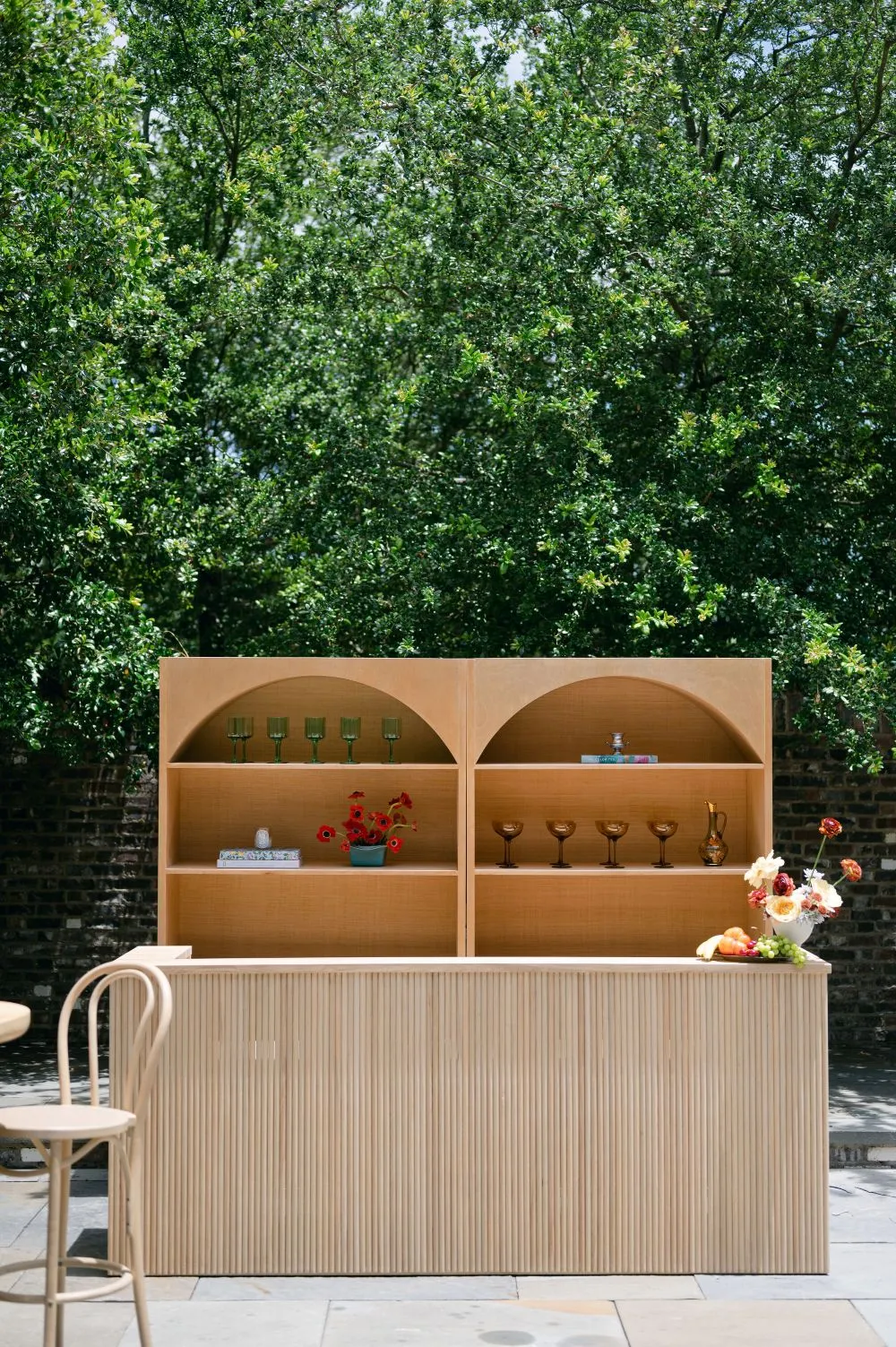
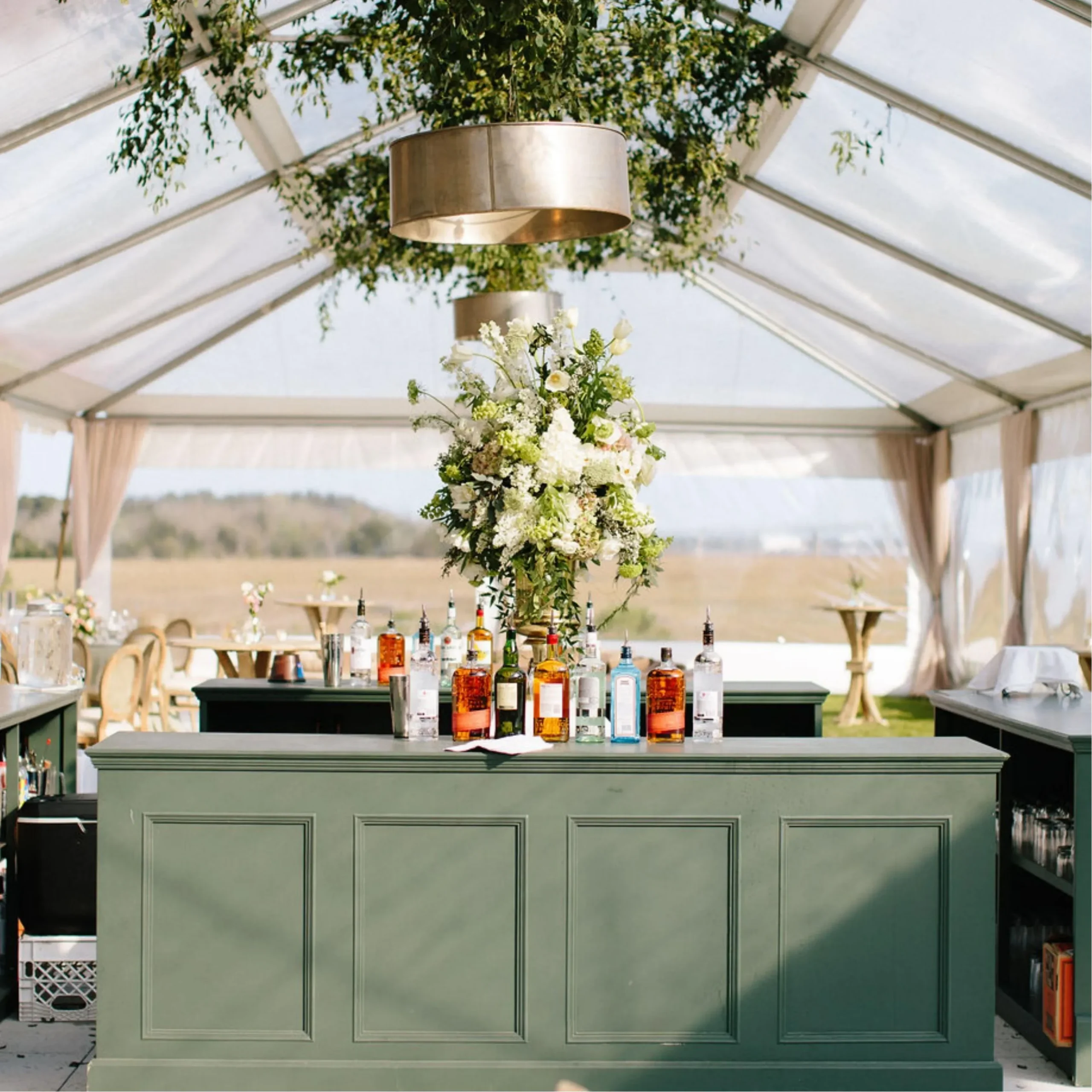
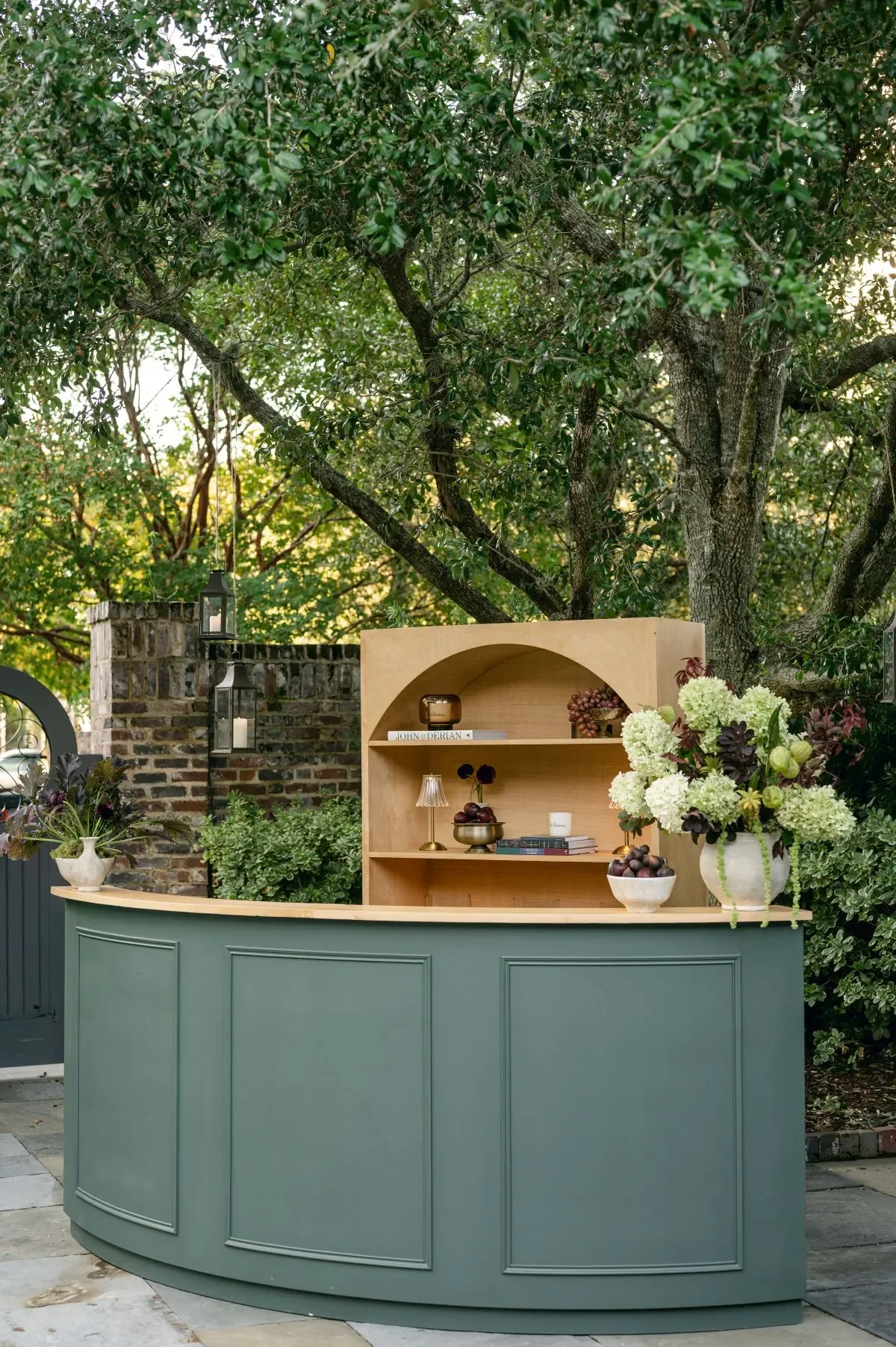
The current Chesapeake bar collection includes pieces such as the Finn Slat Bar, Briar Burl Bar, Chelsea Bar in Natural, Michael Bars in black and white, Chet Bars in hunter green and white, the White Luxe Bar, and curved or circular configurations.
Choose the bar according to the event’s visual direction, but confirm that its working surface and service access suit the selected beverage equipment. A decorative façade does not automatically make a bar suitable for every dispenser or tub.
Keep the focus on cold-beverage service rather than expanding the station into a full bar installation.
Use a Smaller Table Only for a Limited Setup
A cocktail or pedestal table may support a small water point, limited bottled-beverage display, or another compact service format when the equipment size and weight are appropriate.
Curated Events Chesapeake’s current table collection includes the Rattan Cocktail Table, Penelope Cocktail Table, Alister Elm Cocktail Table, Morton Cocktail Table, and Gold Pedestal Hightop Cocktail Table.
These smaller surfaces should not be selected for large dispensers or several heavy containers without approval. There must also be enough room for guests to place a cup while pouring.
Confirm the Container Footprint Before Selecting the Surface
Review the width, depth, and base of each dispenser, tub, bowl, or bucket. The complete base should sit securely on the supporting surface with clearance from the edge.
Also account for:
- Drinkware
- Serving utensils
- Napkins
- Signage
- Space for a guest to pour
- Space for staff to refill
- Any required collection point
Sketching the equipment footprint before placing the rental request can reveal whether the station needs a wider table, a second surface, or two separate locations.
Place the Station According to Chesapeake Venue Conditions
The beverage station should remain convenient to guests while supporting the weight, access, and service requirements of the selected equipment. Within a coordinated plan for summer event rentals in Chesapeake, its position should account for guest arrival, tent entrances, bar and buffet lines, catering routes, surface conditions, and the amount of space needed for guests to approach and leave without creating congestion.
Outdoor venues and tented locations may include lawns, patios, gravel routes, building transitions, and restricted catering access. Review only the conditions that directly affect beverage service before confirming placement.
Select a Level and Appropriate Surface
Place the station on a level surface approved by the venue and rental team. Filled dispensers, punch bowls, and beverage tubs can become substantial pieces of equipment and should not be positioned where uneven ground affects the table or bar.
At an outdoor venue, inspect the specific station footprint rather than assuming that the surrounding lawn or patio is uniform.
The service team should also have stable footing while refilling the equipment and carrying replacement beverages.
Follow the Catering Route
Trace the route between catering staging and the proposed station location.
Consider:
- Distance from the preparation area
- Stairs or elevators
- Narrow gates
- Tent entrances
- Lawn or gravel paths
- Doorway widths
- Other vendor installations
- Guest routes that may become active later
A visually appealing location may not be practical if filled or replacement containers must travel through the main guest area.
Keep the Station Visible From the Guest Area
Guests should be able to locate the station without entering a back-of-house zone or walking around the exterior of the event.
Position it within sight of the area it serves while keeping it outside the central activity. A ceremony water station should be visible from the arrival path, while a meeting-break station should be recognizable when attendees leave the program space.
Use the station’s table, bar, linen, and vessels to establish its identity rather than relying on an obstructive display.
Avoid Competing Queues
Do not place the beverage station directly beside another feature that already attracts concentrated traffic.
Common conflict points include:
- Registration
- The staffed bar
- The start of a buffet
- The main tent entrance
- Stage access
- Restroom routes
- Narrow transitions between spaces
Allow enough distance for each line to form independently. When space is limited, use multiple small beverage points rather than one large station that blocks the event’s primary route.
Assemble the Chesapeake Rental Request Around Function
A useful rental request should explain how the station will operate. Listing containers without the service window, supporting surface, and expected demand makes it difficult to evaluate whether the pieces will work together.
Curated Events Chesapeake allows clients to add products to an online cart, provide their event details, and submit the resulting wishlist for a custom quote.
List the Cold-Beverage Containers
Start with the equipment required by the confirmed beverage plan. Depending on the event, this may include:
- A 5-gallon Cambro dispenser
- A 12-gallon Cambro dispenser
- A 3-gallon glass punch bowl
- A 3-gallon hammered stainless-steel punch bowl
- A galvanized or stainless-steel beverage tub
- A standard or extra-large silver champagne bucket
These products are currently represented within the Chesapeake cold-beverage service collection.
List the quantity of each item and identify which beverage or station location it will support.
Identify the Supporting Table or Bar
Include the intended supporting surface in the same request. Specify whether guests will approach from one side, both ends, or several sides.
The rental team should understand whether the station requires rear service access and how the equipment will be distributed across the surface.
When the bar or table has not yet been selected, provide the number and approximate dimensions of the containers so an appropriate option can be reviewed.
Add Only the Necessary Supporting Rentals
List the drinkware, linens, napkins, and service pieces required by the caterer without adding unrelated décor or tabletop items.
Curated Events Chesapeake offers a broader beverage-service collection as well as glassware and other tabletop categories that can be coordinated with the cold-beverage station.
The supporting pieces should help the station operate clearly. They should not reduce the pouring surface or make replenishment more difficult.
Provide the Operational Details
Include:
- Event date
- Chesapeake-area venue
- Estimated attendance
- Purpose of the station
- Service start and end times
- Expected peak-use window
- Beverage categories
- Number of locations
- Caterer or beverage-service provider
- Person responsible for refills
- Venue surface
- Delivery and catering access details
This information helps distinguish a short pre-ceremony station from an all-evening refreshment point or concentrated corporate break setup.
Submit the Items as One Coordinated Request
Add the containers, supporting surface, and related rentals to one wishlist rather than submitting them as unrelated products.
Explain in the event details which items belong to the beverage station and how the station will be used. The Curated Events Chesapeake process allows products to be selected through the local catalog and submitted with the event information for review. To check availability for your date, contact our Norfolk team.
Treat the preliminary list as the beginning of the consultation. Final placement, quantities, equipment suitability, and service responsibilities should be confirmed with the rental, venue, and catering teams.
Frequently Asked Questions
What Is the Difference Between a Cold Beverage Station and a Staffed Bar?
A cold beverage station generally provides a limited selection of self-serve refreshments from dispensers, punch bowls, tubs, or similar equipment. A staffed bar involves active beverage preparation or service by bartenders.
The two can operate at the same event. A separate cold station can provide water or nonalcoholic refreshments without adding guests to the staffed bar queue.
Should Water Have Its Own Station?
Water may benefit from a separate station when it will receive substantially more demand than the other beverages or when guests need access before the main reception begins.
A dedicated water point can also reduce congestion at the bar or punch station. The decision should reflect the event schedule, venue layout, and expected arrival pattern.
When Should an Event Use a 5-Gallon Versus a 12-Gallon Dispenser?
A 5-gallon dispenser may suit a smaller service point, secondary location, or moderate-demand period. A 12-gallon dispenser may be appropriate when more capacity is needed between refills.
The choice should also consider the number of dispensing points, supporting surface, refill process, and peak-use window. Capacity alone does not determine how quickly guests can move through the station.
Can a Punch Bowl Be Used for Self-Service?
A punch bowl may support self-service when the caterer confirms the serving method and provides the appropriate service pieces. The layout must give guests enough room to pour or ladle the beverage without reaching across other equipment.
For higher-volume or faster-moving service, staffed assistance or a dispenser may be more practical.
When Is a Beverage Tub More Practical Than a Dispenser?
A beverage tub is appropriate when drinks are offered in bottles or cans rather than poured into cups. It allows guests to select an individual beverage and move away from the station without waiting for a container to fill.
The tub still requires an appropriate supporting surface, a replenishment plan, and a separate location for collecting used bottles or cans.
How Can Two Stations Reduce Guest Congestion?
Two stations can divide guests who are arriving from different directions or reduce pressure during a concentrated service period.
They are particularly useful for large tents, multiple venue areas, short meeting breaks, and events where one station would obstruct registration, bar service, or buffet access.
Who Should Refill and Maintain the Station?
Assign the station to a specific member of the catering or event-service team. That person should monitor beverage levels, restock drinkware, handle spills, and keep used items away from clean supplies.
The responsibility should be established before the event rather than left to whoever notices that the station needs attention.
What Event Information Should Be Included in the Rental Request?
Provide the event date, venue, attendance, station purpose, service period, expected peak demand, beverage categories, number of locations, equipment list, supporting surface, caterer information, and refill plan.
Venue surface and access details should also be included when the station will be positioned outdoors or at a distance from catering staging.
Conclusion
An effective cold beverage station is not defined by elaborate garnishes, numerous drink options, or excessive décor. It succeeds because guests immediately understand how to use it and the service team can maintain it without crossing the line.
Begin with one clear service purpose, then plan around the busiest period rather than the total attendance alone. Select the dispenser, bowl, tub, or bucket according to the beverage format, place it on a surface that supports the complete setup, and preserve a separate replenishment route behind the guest-facing station.
Curated Events Chesapeake offers cold-beverage equipment, tables, bars, linens, and related rentals that can be submitted as one coordinated request. When those elements are selected around capacity and flow, the station can remain organized and accessible throughout the event. See the full collection of Norfolk bar rentals at Curated Events.