
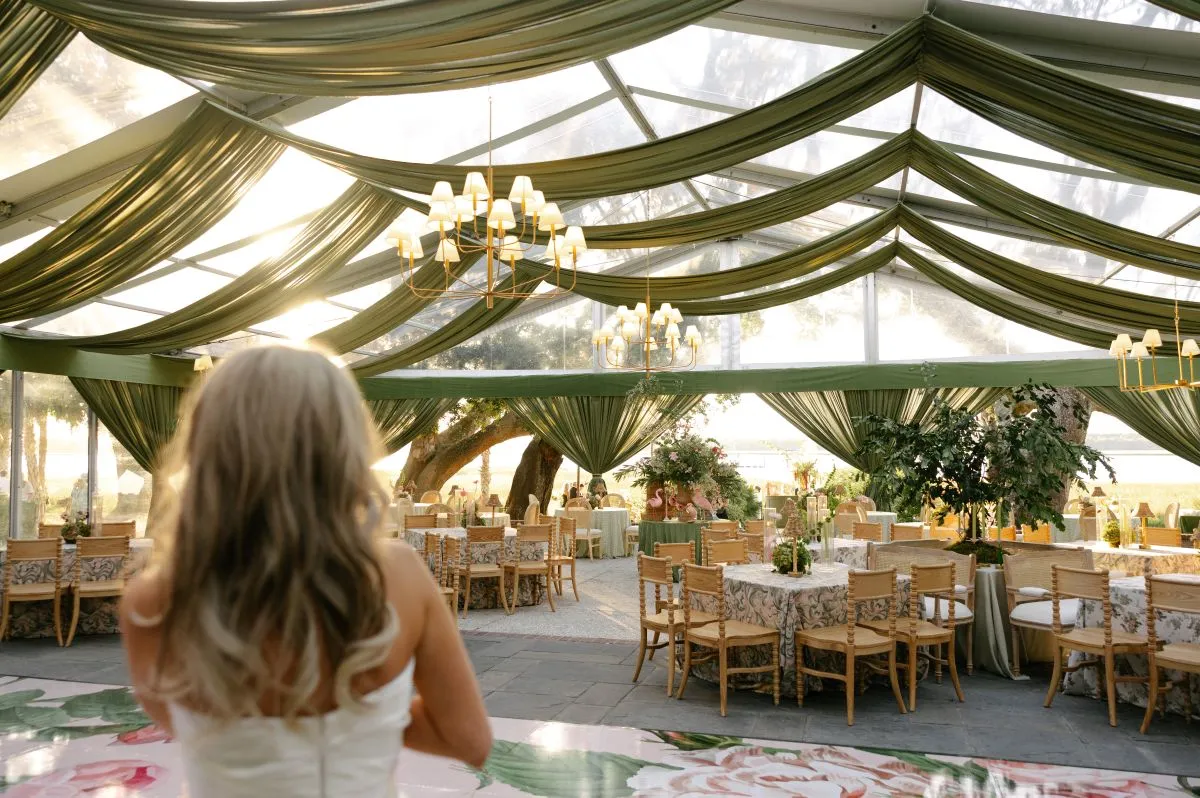
A Charleston fall wedding can move through several distinct lighting conditions in a single evening. Guests may arrive while the tent is filled with late-afternoon daylight, sit down to dinner as the sun begins to fade, and gather on the dance floor after the surrounding property has become dark.
Because the environment changes throughout the reception, the tent lighting should not be treated as one fixed arrangement. The level and focus that work during dinner may feel too bright for dancing, while lighting designed only for atmosphere may leave menus, pathways, or formal moments difficult to see.
An effective plan follows the event timeline. It introduces artificial light before the tent becomes noticeably dark, preserves comfortable visibility during dinner, directs attention toward speeches and formal dances, and then shifts the visual energy toward the stage and dance floor.
The following guide explains how to coordinate these transitions while keeping guest routes, bars, service areas, and tent entrances functional throughout a Charleston fall evening.
Build the Lighting Plan Around the Reception Timeline
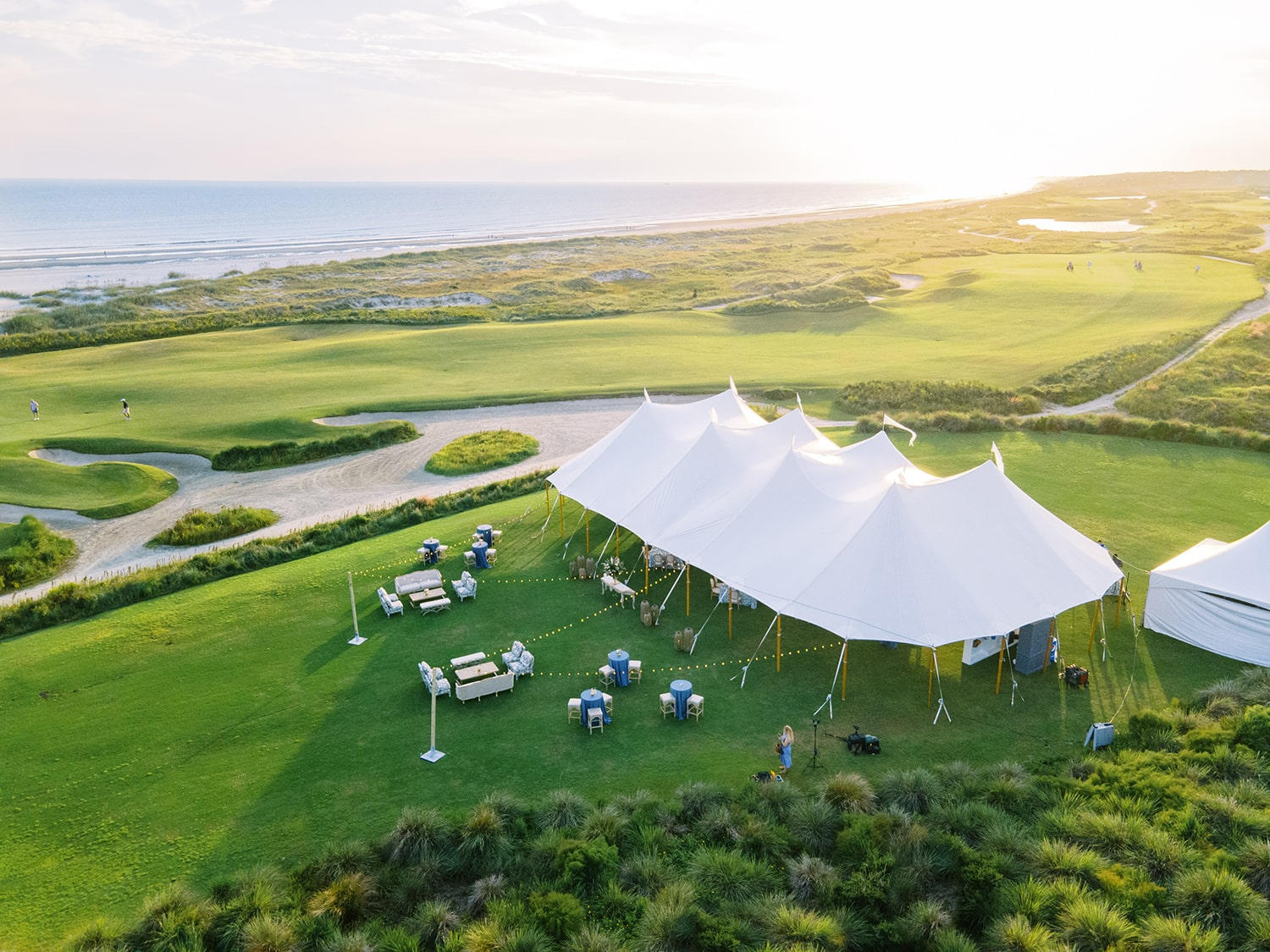
Lighting decisions should begin with the event schedule rather than a list of preferred fixtures. The planning team needs to understand when each activity will occur, where it will take place, and how much natural light will be available at that point.
A timeline-based plan helps prevent one lighting level from being used for every part of the reception.
Mark When Natural Light Will Begin to Fade
The published sunset time provides a useful reference, but it does not indicate exactly when the interior of the tent will begin to feel dim.
Available daylight may decrease earlier when the tent is:
-
Surrounded by mature trees
-
Positioned beside a large building
-
Installed beneath an opaque roof
-
Enclosed by sidewalls
-
Oriented away from the remaining evening light
-
Located under heavy cloud cover
Surrounded by mature trees
Positioned beside a large building
Installed beneath an opaque roof
Enclosed by sidewalls
Oriented away from the remaining evening light
Located under heavy cloud cover
The tent should therefore be evaluated according to its actual position on the property. A garden tent with open sides may retain daylight longer than a tent placed close to a historic structure or dense landscaping.
The lighting plan should identify the point at which artificial light needs to begin supporting the space, not merely the moment when the sun officially sets.
Assign a Lighting Scene to Each Major Moment
Map the lighting requirements to the reception schedule. Important stages may include:
-
Guest arrival
-
Cocktail hour
-
The couple’s entrance
-
Dinner service
-
Toasts
-
Formal dances
-
Open dancing
-
Guest departure
Guest arrival
Cocktail hour
The couple’s entrance
Dinner service
Toasts
Formal dances
Open dancing
Guest departure
Each period requires a different balance of atmosphere and visibility.
During arrival, the lighting may only need to supplement natural daylight and make the tent feel welcoming. Dinner requires consistent visibility across guest tables. Toasts and formal dances need clearer focal emphasis, while open dancing can shift more attention toward the entertainment zone.
Thinking in scenes helps the lighting support the event’s progression rather than remain unchanged from beginning to end.
Identify Which Lights Must Remain Constant
Not every part of the lighting plan should change.
Certain areas need dependable visibility throughout the reception, including:
-
Tent entrances and exits
-
Routes to restrooms
-
Bar fronts and menus
-
Service stations
-
Pathways between reception zones
-
Transitions between indoor and outdoor areas
-
Transportation or departure routes
Tent entrances and exits
Routes to restrooms
Bar fronts and menus
Service stations
Pathways between reception zones
Transitions between indoor and outdoor areas
Transportation or departure routes
These functional layers should remain stable even when the dining area becomes softer or the dance-floor atmosphere becomes more energetic.
Prepare the Tent Before Daylight Disappears
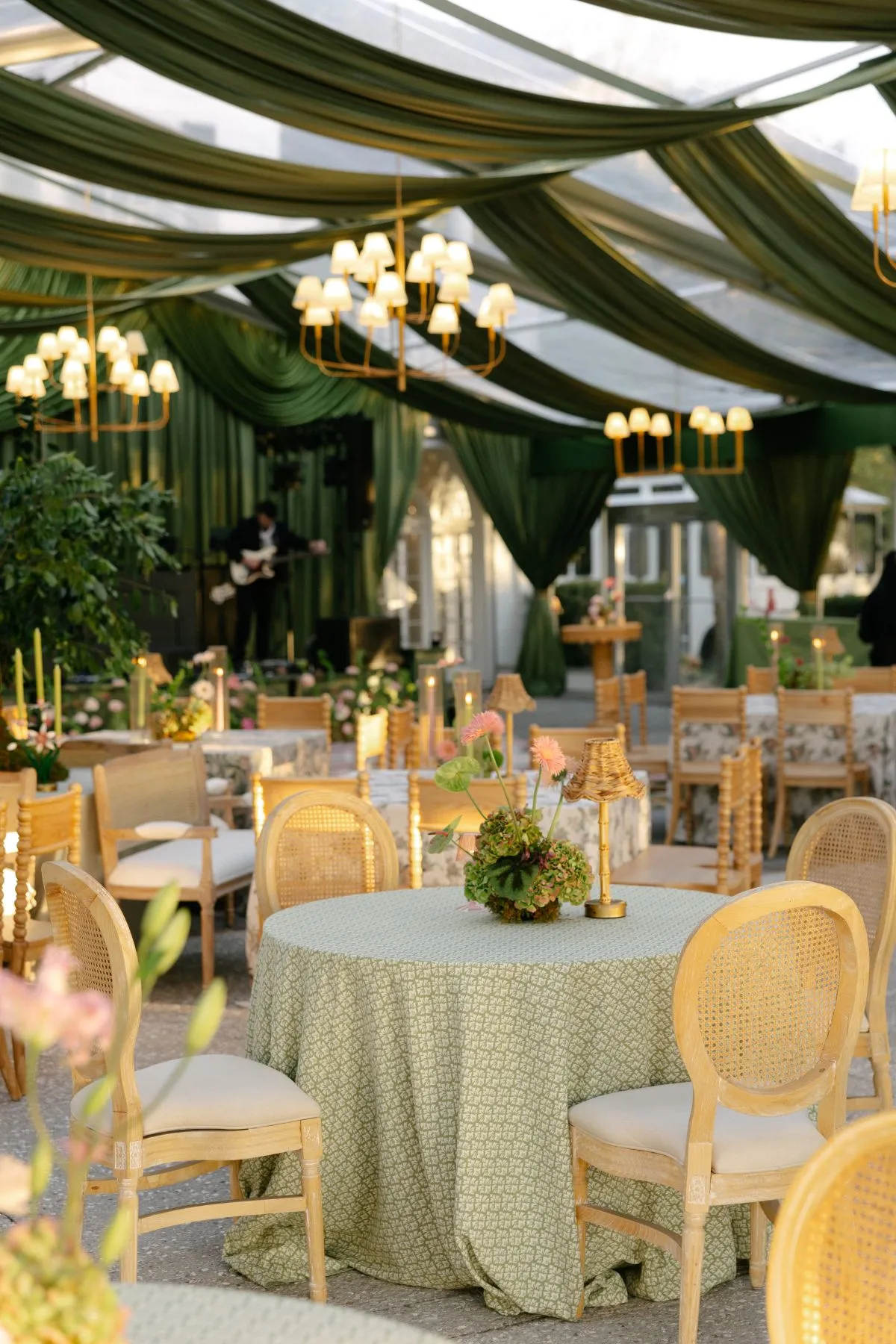
The transition from daylight to evening should feel gradual. Waiting until the tent appears dark before activating the main lighting can create a period of uneven visibility and make the change feel abrupt.
The lighting should already be contributing to the environment before guests become aware that natural light is fading.
Bring Ambient Lighting Up Gradually
Broad lighting sources, such as market strings, chandeliers, pendants, or other overhead fixtures, can begin supporting the tent while daylight is still present.
At first, these fixtures may be more decorative than functional. As the natural light decreases, their contribution becomes more noticeable without requiring a sudden change in the appearance of the reception.
This gradual approach also gives the planning and production teams time to identify areas that need adjustment before the tent becomes fully dependent on artificial light.
Check the Darkest Areas First
The middle of the tent may retain sufficient light while the perimeter, corners, or heavily draped areas become dim.
Review spaces such as:
-
Bars positioned near sidewalls
-
Lounge areas along the tent perimeter
-
Tent corners
-
Service routes behind guest seating
-
Entrances located away from the central reception
-
Areas beneath dense fabric or structural elements
Bars positioned near sidewalls
Lounge areas along the tent perimeter
Tent corners
Service routes behind guest seating
Entrances located away from the central reception
Areas beneath dense fabric or structural elements
These zones may need lighting support before the main dining area appears dark. Addressing them early creates a more even transition and prevents isolated sections from feeling disconnected from the rest of the event.
Test the View From Outside the Tent
For open-sided or clear-sided tents, consider how the reception will appear to guests approaching after sunset.
The illuminated tent should read as a welcoming destination on the property. Entrances, steps, and connecting pathways should be easy to recognize, while the interior should feel visually connected rather than appearing as a collection of bright fixtures surrounded by darkness.
Reviewing the tent from the outside also helps identify glare, exposed equipment, and areas where the interior lighting may not be distributed evenly.
Create a Comfortable Dinner Lighting Scene
Dinner lighting needs to create atmosphere without sacrificing visibility. Guests should be able to see their food, menus, place settings, and table companions while the tent retains a warm evening character.
This requires evaluating the lighting at guest level rather than focusing only on how the ceiling looks.
Use the Ceiling Layer to Establish Overall Warmth
Overhead lighting helps connect the dining area as one continuous environment.
Depending on the tent and event design, the ceiling layer may include:
-
Market-string arrangements
-
Chandeliers
-
Pendants
-
Carriage-style fixtures
-
A coordinated combination of overhead pieces
Market-string arrangements
Chandeliers
Pendants
Carriage-style fixtures
A coordinated combination of overhead pieces
Curated Events Charleston offers chandeliers, pendants, carriage lights, market strings, lamps, and other lighting options that can be planned in relation to the tent structure and reception layout.
The ceiling design should provide enough general illumination to prevent tables from feeling isolated. At the same time, the arrangement should respond to the tent’s dimensions, peaks, poles, and bays rather than being placed solely for decoration.
Keep Guest Faces Visible Across the Table
A table may look attractive from a distance while still being uncomfortable for conversation.
Review the lighting from a seated position and check whether guests can see one another without:
-
Harsh fixtures directly above their faces
-
Deep shadows created by tall centerpieces
-
Bright bulbs producing glare across the table
-
Decorative lighting overpowering the place settings
-
Strong contrast between one side of the table and the other
Harsh fixtures directly above their faces
Deep shadows created by tall centerpieces
Bright bulbs producing glare across the table
Decorative lighting overpowering the place settings
Strong contrast between one side of the table and the other
Centerpiece height and density should be considered alongside the lighting. A substantial arrangement may block or redirect overhead illumination, leaving parts of the table darker than expected.
The goal is not to illuminate every face uniformly. It is to provide enough soft, balanced visibility for guests to dine and interact comfortably.
Prevent the Dining Tables From Becoming the Darkest Area
Lighting the tent ceiling or perimeter does not guarantee sufficient visibility at table level.
A reception can appear warm and inviting in wide photographs while guests struggle to read menus or distinguish details on their place settings. Overhead fixtures, lamps, candlelight, and nearby accent sources should be considered together to determine whether the dining surface receives enough usable illumination.
Candlelight may contribute warmth and movement, but it should not automatically be treated as the table’s only light source. The full dinner scene should be tested under the actual evening conditions.
Give Formal Moments Their Own Lighting Cue
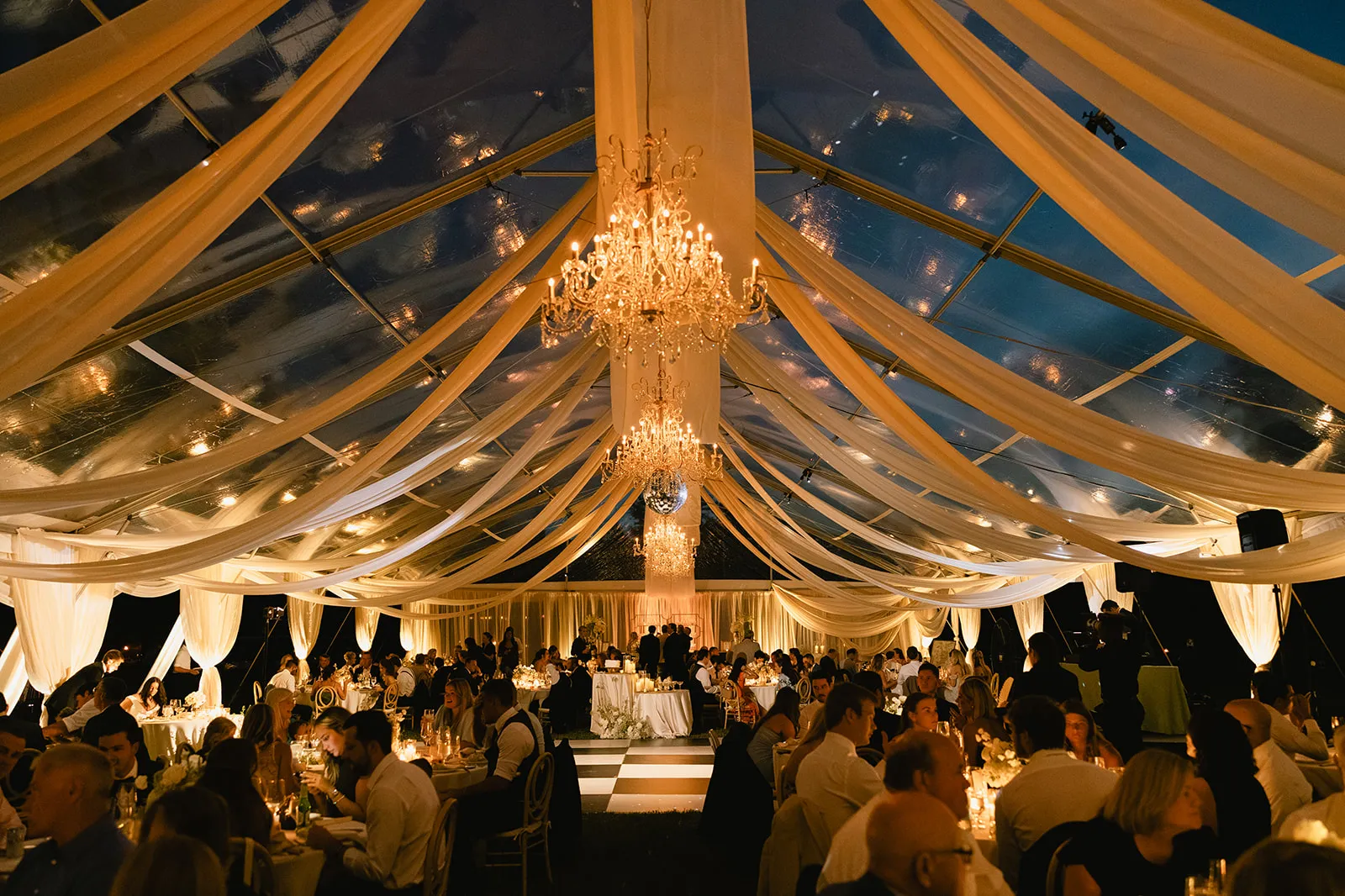
Entrances, speeches, cake cutting, and formal dances require clearer visual focus than ordinary dinner conversation. The lighting should guide attention toward these activities without making the tent feel like a theatrical production or leaving the surrounding guests disconnected from the moment.
Identify Where Each Formal Moment Will Occur
Confirm the exact location of each planned activity, including:
-
The couple’s entrance
-
The first dance
-
Parent dances
-
Toasts and speeches
-
Cake cutting
-
Special performances
-
Any ceremonial or cultural traditions
The couple’s entrance
The first dance
Parent dances
Toasts and speeches
Cake cutting
Special performances
Any ceremonial or cultural traditions
Do not assume that every moment will occur on the dance floor.
Speeches may be delivered beside the couple’s table, the cake may be displayed in another part of the tent, and introductions may begin at an entrance far from the stage. Each location should be evaluated according to its available lighting and surrounding sightlines.
Keep the Speaker and Couple Equally Visible
During toasts, attention is often divided between the person speaking and the couple receiving the remarks.
Lighting only the microphone position may leave the couple in shadow. Lighting only the couple may make the speaker appear visually disconnected from the moment.
Review the scene from guest tables and through the expected photography angles. Both areas should remain clear enough that guests can follow the exchange without having to choose between them.
Coordinate Lighting Cues With the Timeline
A lighting change should occur before the formal moment begins.
The planner, entertainment team, photographer, and lighting provider should know when the couple is entering, when a speaker is approaching the microphone, and when the first dance is about to start.
Changing the lighting after an announcement has already been made can interrupt the moment and create inconsistent photographs. A coordinated cue allows the transition to feel deliberate and keeps attention where it belongs.
Shift the Tent From Dinner to Dancing
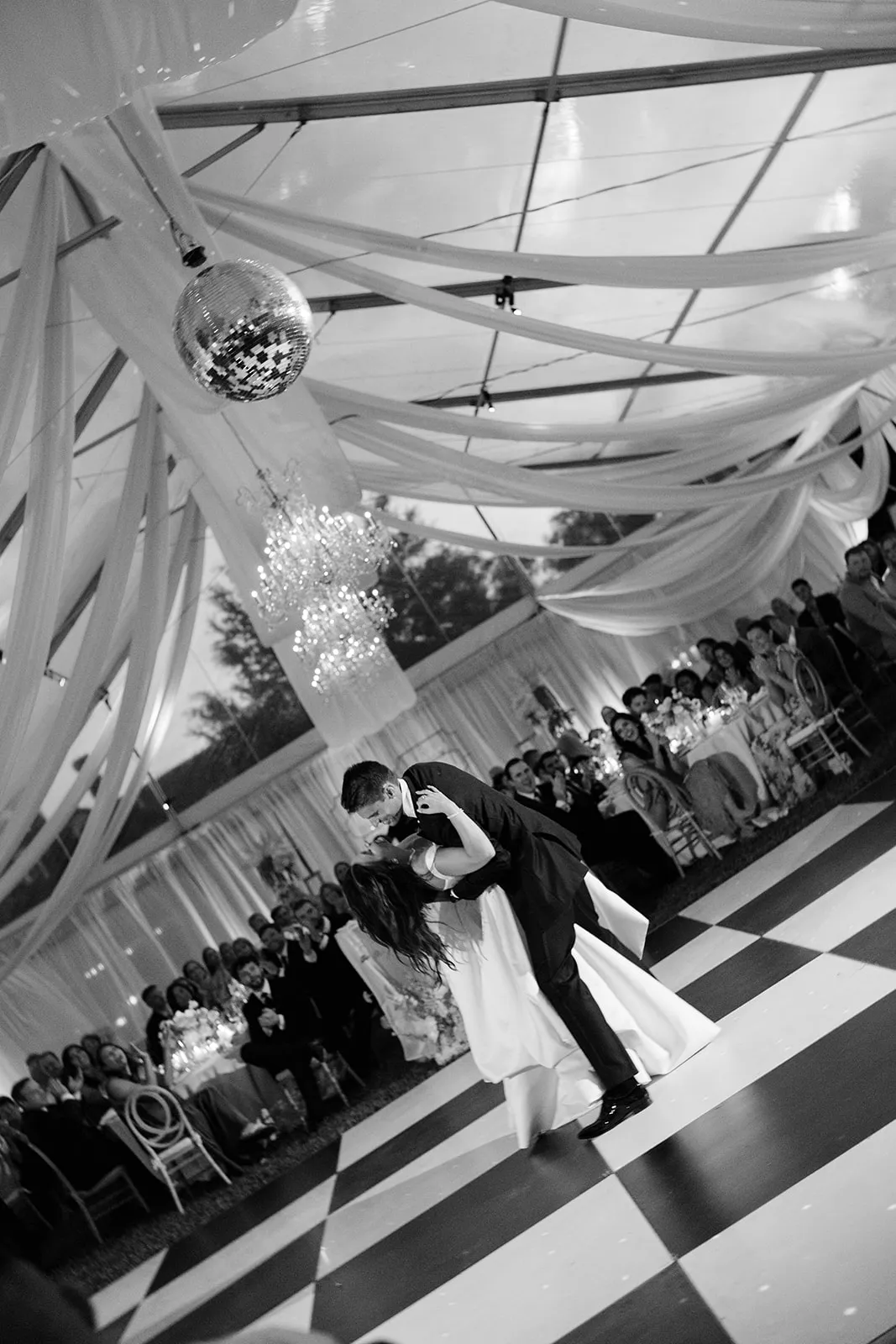
The transition from dinner to open dancing should create a noticeable change in energy. However, it should not rely on simply making the entire tent darker.
The visual emphasis can move toward the stage and dance floor while the dining area, pathways, and service zones retain enough light to function.
Reduce Dining Emphasis Without Darkening the Tables Completely
After dinner, the tables no longer need to remain the strongest visual feature in the tent.
The lighting around them may become softer so the entertainment area feels more prominent. Guests who remain seated should still be able to:
-
See their drinks and personal belongings
-
Speak with nearby guests
-
Move between tables
-
Locate the bar and exits
-
Recognize the dance floor
See their drinks and personal belongings
Speak with nearby guests
Move between tables
Locate the bar and exits
Recognize the dance floor
The dining area should recede into the background rather than disappear.
An overly dark table area can divide the reception between guests who are dancing and those who remain seated. Maintaining a low but usable level of illumination keeps both groups connected to the celebration.
Strengthen the Stage-to-Dance-Floor Connection
Once dancing begins, the lighting should make the relationship between the entertainment and dance floor immediately clear.
This is particularly important in a large tent where some tables may sit farther from the stage. The visual emphasis should direct guests toward the central activity and help the dance floor feel like the natural destination after dinner.
The transition may involve reducing emphasis elsewhere, increasing focus around the entertainment zone, or changing how decorative lighting is used. The exact approach should match the installed equipment and approved event design.
Preserve a Distinction Between Atmosphere and Visibility
Entertainment lighting may become more dynamic during open dancing, but it should not replace the steady light needed for practical movement.
Bars, exits, pathways, and tent edges still need reliable illumination. Guests should not have to pass through darkness to move between the dance floor and another part of the reception.
A successful dancing scene allows the center of the tent to feel more energetic while the surrounding areas remain comfortable and understandable.
Keep Service and Circulation Lighting Consistent
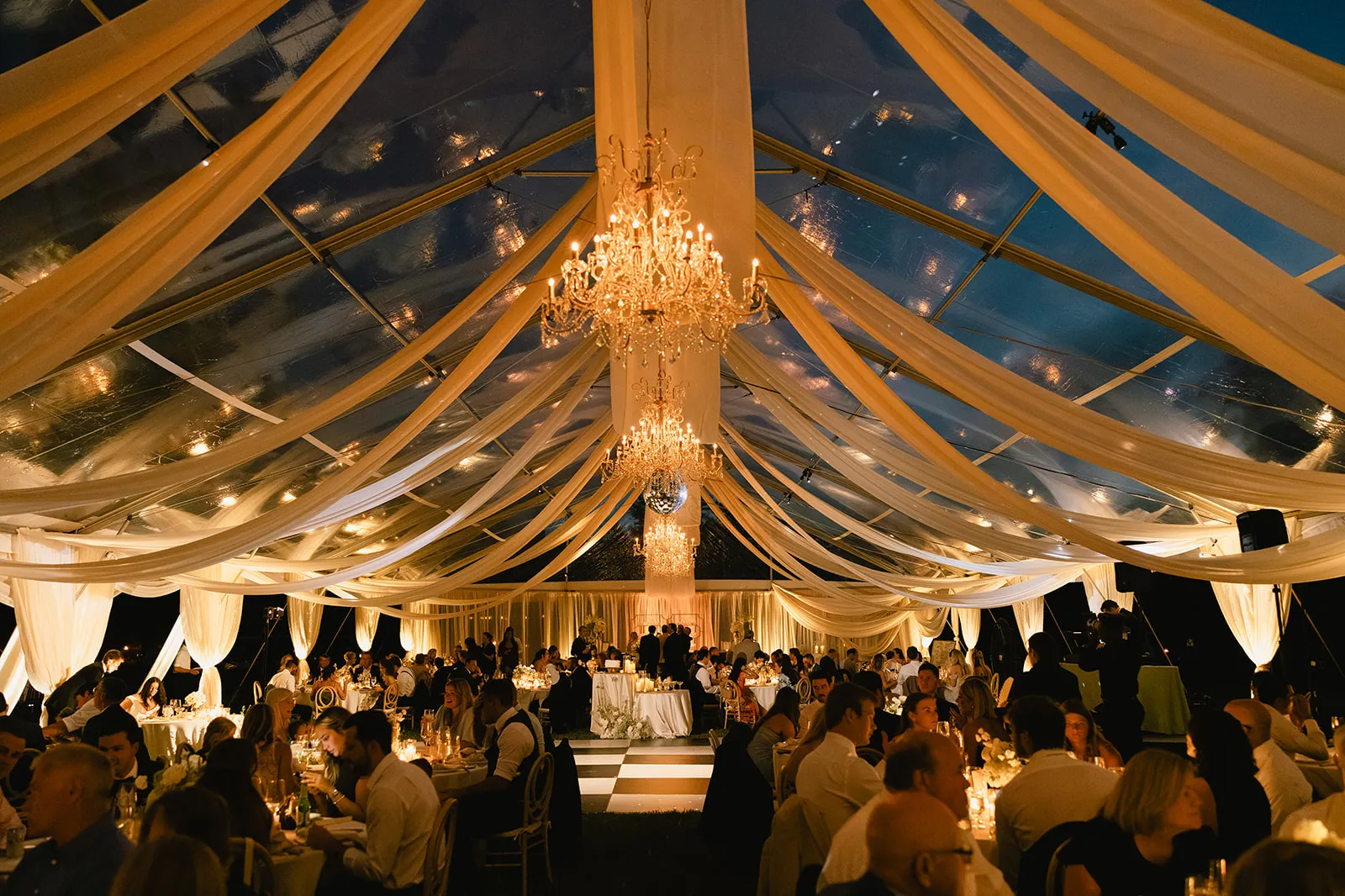
The mood of the reception may evolve, but operational routes must continue to work from guest arrival through departure. Steady lighting around bars, service areas, and connecting pathways prevents the atmosphere from interfering with the practical use of the tent.
Maintain Visibility Around Bars and Service Stations
The bar should remain easy to locate and approach after the lighting changes for dancing.
Guests need enough visibility to:
-
Read a displayed menu
-
Recognize the service opening
-
Understand where a line begins
-
See the countertop
-
Move away without colliding with nearby furniture
Read a displayed menu
Recognize the service opening
Understand where a line begins
See the countertop
Move away without colliding with nearby furniture
Similarly, dessert stations, water stations, and other guest-facing service areas should not become difficult to use after the dining lights are lowered.
Protect Routes Between Reception Zones
Identify the primary routes connecting:
-
Dining and dancing
-
The tent and restrooms
-
The reception and cocktail area
-
Indoor and outdoor spaces
-
The tent and transportation area
-
The bar and guest seating
Dining and dancing
The tent and restrooms
The reception and cocktail area
Indoor and outdoor spaces
The tent and transportation area
The bar and guest seating
These routes should remain visually consistent even when the atmosphere inside the main tent changes.
Particular attention should be given to transitions where guests move from a bright interior to a darker exterior. Steps, changes in flooring, and pathway turns should be easy to recognize.
Avoid Glare Along Main Guest Paths
A pathway can be sufficiently bright while still being uncomfortable if fixtures shine directly toward approaching guests.
Evaluate lighting from the direction in which guests will travel. Check entrances, bar approaches, and routes toward the dance floor for exposed bulbs, strong reflections, or fixtures positioned at eye level.
The goal is to make movement intuitive without turning functional lighting into another competing focal point.
Plan for Tent Sidewalls and Changing Fall Conditions
Sidewalls and other weather-related adjustments can change how light behaves inside the tent. The lighting plan should be reviewed under both the preferred setup and the approved contingency plan.
This prevents a weather adjustment from unintentionally creating glare, heavy shadows, or blocked fixtures.
Test the Lighting With Sidewalls Open and Closed
Open tent sides allow some light to escape into the surrounding property. Closing the tent may contain or reflect more of that light, changing the overall brightness.
Clear, white, and opaque sidewalls may each affect the interior differently. They can alter the background behind:
-
Guest tables
-
Bars
-
Stages
-
Lounge areas
-
Decorative installations
-
Photography locations
Guest tables
Bars
Stages
Lounge areas
Decorative installations
Photography locations
A scene that feels balanced with open sides may appear brighter or flatter after the tent is enclosed. The planned lighting should work under the conditions most likely to be used during the event.
Check Reflections Before the Event
Reflective materials may respond differently after sunset and after sidewalls are installed.
Potential reflective surfaces include:
-
Clear sidewalls
-
Mirror-front bars
-
Glass tabletops
-
Polished dance floors
-
Metallic décor
-
Glossy chargers or tabletop pieces
Clear sidewalls
Mirror-front bars
Glass tabletops
Polished dance floors
Metallic décor
Glossy chargers or tabletop pieces
Review these surfaces from important guest and photography angles. A fixture reflected directly into the camera or across a guest table can become more noticeable than the design element it was intended to illuminate.
Keep Backup Layout Changes From Blocking Fixtures
Fall-weather preparations may introduce heaters, sidewalls, or other equipment into the tent.
Confirm that these additions do not:
-
Block a chandelier or pendant
-
Create large shadows over guest tables
-
Interfere with a pathway light
-
Conceal the bar or stage
-
Restrict access to lighting controls or equipment
-
Alter an important guest sightline
Block a chandelier or pendant
Create large shadows over guest tables
Interfere with a pathway light
Conceal the bar or stage
Restrict access to lighting controls or equipment
Alter an important guest sightline
The contingency plan should be reviewed as a complete event setup rather than treated as a separate collection of weather-related additions.
Lighting-Timeline Mistakes to Catch Before the Wedding
Many tent-lighting problems result from timing and coordination rather than the fixture selection itself.
Waiting Until the Tent Looks Dark
If the lighting begins contributing only after natural light has disappeared, guests may experience a period of reduced visibility. Activating the ambient layer earlier creates a smoother transition and gives the planning team time to identify gaps.
Using One Lighting Level All Evening
A lighting level that works for dinner may feel too bright during dancing. A scene designed for dancing may be too dim for menus, speeches, and table conversation.
The lighting should respond to the reception activities while preserving the functional areas that require consistent visibility.
Changing the Atmosphere but Forgetting Guest Routes
Reducing the dining emphasis without protecting pathways, bars, exits, and exterior connections can make the reception difficult to navigate.
Every planned scene should include both its decorative purpose and the essential lighting that must remain unchanged.
Frequently Asked Questions
When should tent lighting be turned on for a fall wedding?
The main ambient lighting should begin contributing before the tent becomes noticeably dark. The timing depends on the event date, tent orientation, roof material, surrounding trees or buildings, sidewall use, and weather conditions.
Should dinner and dancing use the same lighting?
Not necessarily. Dinner requires comfortable visibility at guest tables, while dancing may use stronger emphasis around the entertainment zone. Bars, pathways, exits, and service areas should remain consistently visible during both periods.
Do string lights provide enough illumination for dinner?
That depends on the tent dimensions, fixture spacing, layout, output, and other lighting sources in the design. String lights may establish the primary ambiance, but the complete arrangement should be tested at table level after sunset.
How do tent sidewalls affect lighting?
Sidewalls can contain, reflect, or diffuse light differently than an open tent. They may also change the background behind bars, stages, and guest tables. The lighting should be reviewed with the planned sidewall configuration in place.
Who should review the lighting timeline?
The planner, rental or lighting provider, venue, entertainment team, photographer, and catering team should review the scenes and transitions relevant to their responsibilities.
Let the Lighting Follow the Charleston Fall Evening
Effective tent lighting should evolve as the wedding moves from daylight into the evening.
The plan should anticipate when natural light will fade, introduce ambient lighting gradually, and provide comfortable visibility during dinner. It should also give speeches and formal dances clear visual focus before redirecting attention toward the stage and dance floor.
Throughout those changes, bars, pathways, exits, service stations, and transitions between reception areas should remain easy to use.
Curated Events Charleston offers chandeliers, pendants, carriage lights, lamps, market strings, and related event-lighting rentals that can be coordinated with the tent layout and reception schedule. By considering the entire evening rather than one static setup, couples and planners can create a tent that feels welcoming at arrival, comfortable during dinner, and energetic once dancing begins.
