
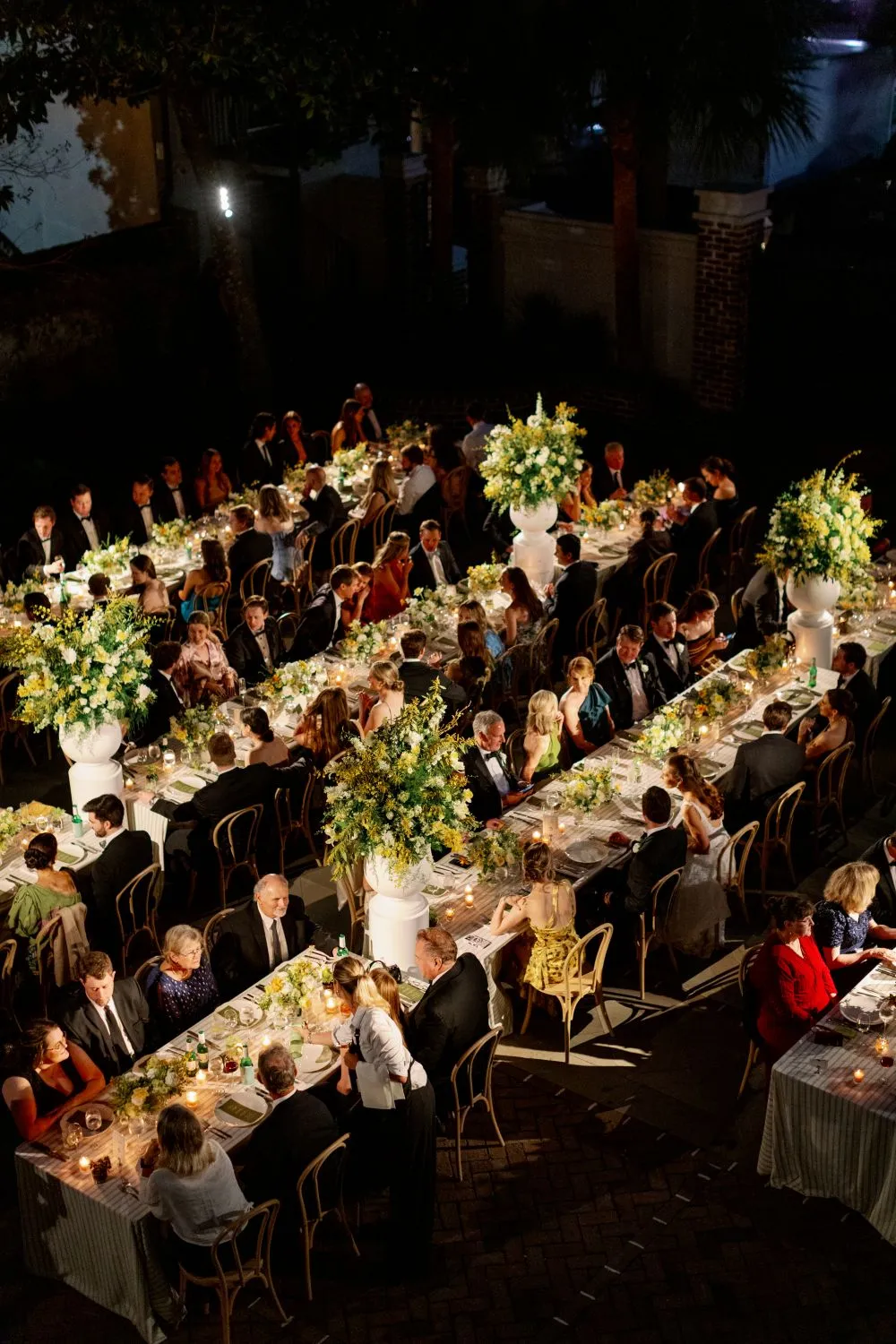
Autumn weddings in Charleston often move through several distinct settings. A ceremony may take place beneath live oaks, followed by cocktails on a terrace and dinner beneath a sailcloth tent. At another venue, guests may transition from a historic courtyard into a formal interior before returning outside for dancing. Once daylight begins to fade, lighting becomes the element that connects these spaces and gives each part of the celebration a clear purpose.
The most effective event lighting rentals for Charleston autumn weddings do more than brighten a venue. They reveal architectural details, define dining and lounge areas, support guest movement, and influence how linens, florals, tabletop pieces, bars, and furniture appear throughout the evening.
Curated Events Charleston offers lighting alongside tents, lounge furniture, bars, tables, chairs, linens, dance floors, and tabletop rentals. Its lighting collection includes market strings, café strands, carriage lights, table lamps, chandeliers, drum fixtures, woven pendants, and sculptural statement pieces. This range allows couples and their event teams to develop a layered lighting plan rather than relying on one fixture type throughout the venue.
Let the Charleston Wedding Venue Shape the Lighting Plan
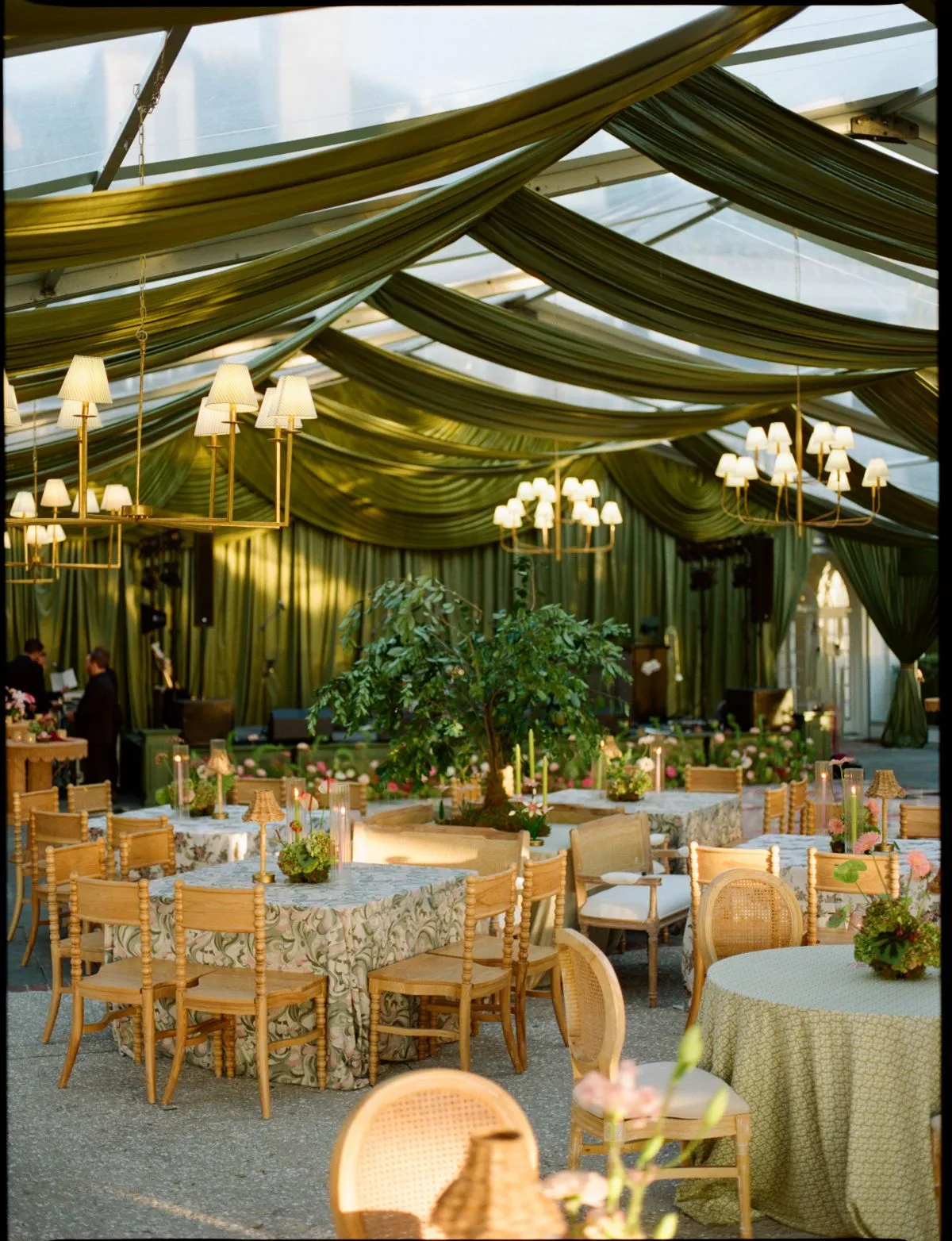
Charleston wedding venues are known for their architecture, established landscapes, waterfront views, and indoor-outdoor layouts. The lighting plan should respond to these features instead of covering them with a standard installation that could be used at any venue.
Curated Events has provided rentals for celebrations at Lowcountry venues, including Boone Hall, The Gadsden House, the Gibbes Museum of Art, The Island House, Lowndes Grove, Mingo Point, The Sanctuary at Kiawah Island Golf Resort, the Ocean Course, and the Thomas Bennett House. Each setting presents different opportunities for using light to reinforce the character of the property.
Historic Homes, Courtyards, and Museum Spaces
Historic Charleston properties already contain strong visual elements, such as detailed façades, columns, staircases, fireplaces, garden walls, and formal rooms. Lighting should reveal those details rather than compete with them.
Traditional chandeliers, antique-brass finishes, shaded table lamps, and carriage lights can complement spaces with established architectural character. A chandelier may create a focal point above a central table, while carriage lights can add definition to a bar, entrance, or covered terrace. Smaller lamps can bring warmth to consoles and lounge groupings without filling the entire room with the same level of light.
Restraint is important in these venues. Concentrating decorative fixtures around selected areas allows the original architecture to remain visible while giving the wedding its own visual identity.
Garden, Estate, and Live-Oak Settings
Garden and estate weddings often require lighting to establish boundaries that walls and ceilings would ordinarily provide. A dining area on a lawn may feel clearly defined during the day but become visually disconnected once the surrounding landscape darkens.
Market or café lighting can create an overhead plane that identifies the reception footprint while preserving the outdoor character of the property. Chandeliers or woven pendants can then mark important areas within that footprint, such as a head table, central bar, lounge arrangement, or dance floor.
The goal is not to illuminate every tree or garden border equally. Instead, the lighting should create a sequence of brighter gathering spaces and softer transitions, allowing guests to remain connected to the landscape.
Waterfront and Island Wedding Venues
Waterfront settings on Kiawah Island, Johns Island, Daniel Island, and other areas around Charleston can have broad views but fewer architectural elements to frame the reception. Lighting can provide that missing structure after sunset.
Warm overhead strands can define a tented dining area, while pendants or chandeliers establish focal points inside the reception. Woven, shell-inspired, or sculptural fixtures may complement a coastal location when they are used selectively and coordinated with the wider rental design.
A waterfront wedding does not need to adopt a literal nautical theme. Natural textures, tailored furnishings, warm metallic finishes, and understated references to the surrounding environment usually create a more refined Lowcountry result.
Build the Reception With Multiple Layers of Light
A successful wedding lighting plan rarely depends on one fixture. Market strands may provide broad illumination, but they do not necessarily create focal points. Chandeliers make a visual statement, but they may not provide enough light for every table or transition area. Table lamps make lounge furniture feel inviting, but they cannot illuminate an entire tent.
Layering several types of lighting allows each part of the reception to serve its purpose while remaining connected to the overall design.
Establish Ambient Light Across the Main Reception
Ambient lighting provides the general level of illumination needed for dining, conversation, and movement. In an outdoor or tented reception, this role is often filled by market strings or café strands.
The arrangement of the strands should follow the floor plan rather than being decided independently. Parallel lines can emphasize a long dining layout, while crossed or radiating strands may create a more centralized effect. Inside a tent, lighting can follow the roofline, span between support points, or help distinguish the dining area from the dance floor.
Curated Events Charleston lists black and white market strings as well as white café lighting strands among its lighting inventory, giving event teams options for coordinating the visible cable and fixture finish with the tent and surrounding décor.
Add Statement Lighting Over Important Areas
Statement fixtures direct attention. They can identify the visual center of the reception, reinforce the selected design style, and give larger spaces a more intentional sense of scale.
A chandelier may be positioned over the dance floor, head table, central bar, or entrance into the reception. In a longer tent, several repeated fixtures can create rhythm above the dining layout. A grouped installation of smaller pendants may work better than one oversized chandelier when the design calls for texture rather than formality.
Statement lighting should be coordinated with floral installations, draping, tent poles, table placement, and ceiling height. A fixture that looks appropriately scaled in a showroom or product image may appear too small in a tall structure tent or too dominant above an intimate dinner arrangement.
Use Localized Lighting for Bars and Lounge Areas
Secondary spaces often lose their visual impact after dark when all lighting is concentrated above the dining tables or dance floor. Bars, lounge groupings, and side tables require their own layer of light.
Carriage lights can frame a bar or create symmetry on shelving and service surfaces. Table lamps can make a sofa grouping feel more intimate while giving guests enough light to see drinks, menus, and nearby details. Pendants may be used to identify a bar or lounge area within a larger tent.
Choose a Fixture Style That Supports the Autumn Wedding Design
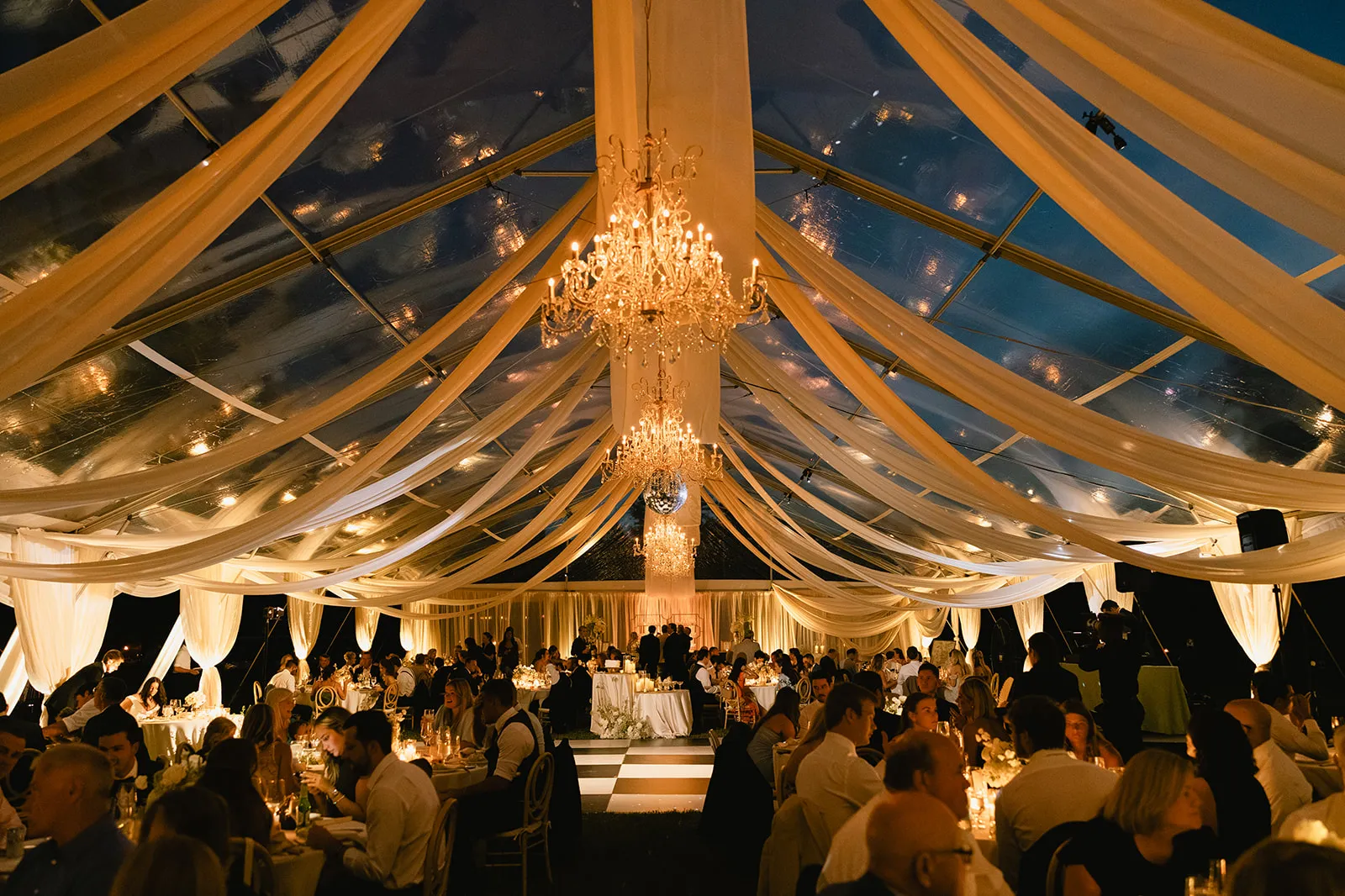
An autumn wedding does not need to depend on pumpkins, artificial leaves, burlap, or other literal seasonal decorations. Warmth can be introduced more subtly through fixture materials, metallic finishes, shade colors, linen textures, and the quality of the light itself.
The right fixture style should relate to the venue and the broader rental plan. A crystal chandelier creates a different atmosphere from a woven pendant, even when both produce warm light.
Traditional Fixtures for Formal Charleston Settings
Crystal, antique-brass, patina, and candlestick-style chandeliers are well suited to formal rooms, historic homes, structured tents, and wedding designs influenced by classic interiors.
These fixtures can be paired with ivory or champagne linens, traditional chairs, metallic flatware, clear glassware, and composed floral arrangements. Repeating an antique-brass or brushed-gold finish through smaller details can help the lighting feel integrated without requiring every item to match exactly.
Curated Events Charleston’s inventory includes antique-bronze-and-crystal, antique-brass, gold-patina, brass-stem, and traditional chandelier designs.
Woven and Organic Fixtures for Garden Receptions
Rattan, wicker, bamboo, jute, sisal, and seagrass fixtures introduce visible texture and work particularly well in garden, estate, and tented lawn settings.
These materials can complement wood tables, neutral linens, layered greenery, muted florals, and relaxed lounge furniture. They create an organic look without reducing the event to a generic rustic theme.
Scale and repetition are important when using woven pieces. A group of pendants may create a strong installation above a bar or dining area, while one smaller fixture may disappear inside a large tent. Curated Events’ Charleston collection includes basket, rattan, wicker, rope, seagrass, bamboo, and open-weave lighting styles in several forms and dimensions.
Sculptural Fixtures for Modern Wedding Designs
Modern Charleston weddings can use lighting to create contrast against traditional architecture. Black wagon-wheel chandeliers, double-ring fixtures, radial pendants, drum shades, gold wire forms, and starburst designs can introduce clean lines or a stronger contemporary focal point.
These fixtures are particularly effective when the rest of the design is controlled. A sculptural chandelier above the dance floor may need little additional ceiling décor. A black fixture can create definition inside a white tent, while a gold pendant can connect to flatware, bar hardware, or tabletop accents.
The fixture should remain part of a complete design composition rather than functioning as an isolated trend.
Coastal-Inspired Fixtures Without a Themed Look
Shell, woven, and natural-fiber fixtures can reflect Charleston’s coastal setting without turning the reception into a beach-themed event.
An oyster-shell pendant may work above a bar, while a sea-urchin-inspired fixture could create a sculptural focal point in a tent or covered terrace. Hanging-shell designs can add movement and texture when used in a controlled installation.
Curated Events Charleston carries oyster-shell, sea-urchin, hanging-shell, rattan, wicker, and other natural-texture lighting pieces. The strongest results come from pairing these fixtures with tailored linens, refined tableware, and restrained coastal references.
Plan Lighting Around the Charleston Wedding Tent
Lighting and tenting should be planned together. The tent style affects ceiling height, hanging locations, visible structural elements, fixture scale, and the way the interior relates to the surrounding property.
Curated Events Charleston offers clear and white frame tents, garden tents, sailcloth tents, and structure tents in a range of dimensions. These different formats require different lighting approaches.
Lighting a Sailcloth Tent
A sailcloth tent is defined by its sweeping roofline, translucent material, and visible support poles. The lighting should support those qualities instead of concealing them.
Chandeliers can be positioned at central support points or above designated focal areas, while café strands may extend along or across the roof structure. The placement of fixtures should be reviewed alongside the table layout so that chandeliers do not fall awkwardly between dining arrangements or interfere with floral installations.
Because the ceiling itself contributes to the atmosphere, an overly dense installation can distract from the tent’s shape. A smaller number of well-scaled fixtures often creates a more balanced result.
Lighting a Clear or White Frame Tent
White frame tents provide a neutral foundation for traditional chandeliers, modern pendants, market strands, and suspended installations. Their clean interior can support a wide range of design directions.
Clear tents require additional visual discipline because the structure, cables, fixtures, and reflections remain visible. During an autumn evening, the transparent roof can preserve a connection to surrounding trees, historic façades, or the night sky, but poorly coordinated equipment can become more noticeable than it would beneath an opaque canopy.
Fixture placement should frame the strongest exterior views and keep unnecessary visual clutter away from major sightlines.
Lighting Garden and Structure Tents
Larger garden and structure tents may contain several functional zones within one footprint. Lighting can help distinguish dining areas, bars, lounges, stages, and dance floors without requiring physical dividers.
Repeated pendants or chandeliers can create rhythm above long rows of tables. A different fixture type may identify the bar, while table lamps bring a lower, more intimate layer of light to lounge furniture around the perimeter.
The spacing should be developed from the full floor plan. Even an attractive fixture arrangement can feel disconnected when it does not correspond with the tables, furniture, and guest circulation below it.
Coordinating Decorative Fixtures With Tent Infrastructure
Before final selections are made, the event team should confirm the available hanging points, ceiling height, fixture dimensions, and relationship between lighting and other suspended elements.
Floral installations, greenery, draping, speakers, and decorative lighting may all compete for the same overhead space. Developing these elements together can prevent blocked sightlines, crowded ceiling treatments, and fixtures that hang at an uncomfortable height above tables or circulation areas.
The lighting plan should also account for how the tent will be accessed during setup and how equipment will be positioned without disrupting major design features.
Coordinate Lighting With Linens, Tabletop, Bars, and Lounge Rentals
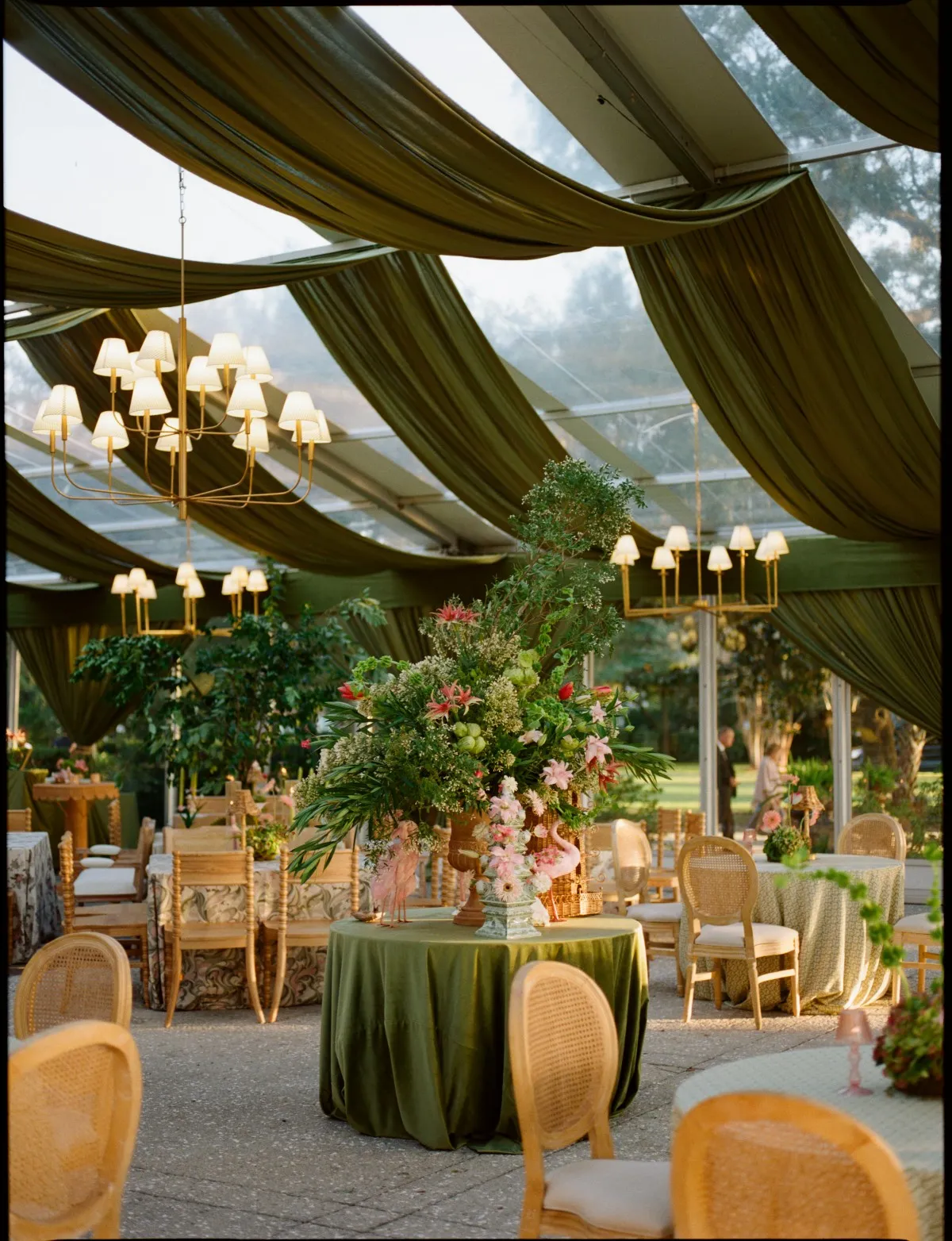
Lighting changes the way every other rental selection appears. A linen chosen in daylight may look deeper or warmer under evening illumination. Glassware and metallic tabletop pieces may reflect nearby fixtures, while dark furniture can disappear if it is placed beyond the main lighting footprint.
Curated Events Charleston offers lighting alongside linens, bars and shelving, lounge furniture, tables, chairs, dance floors, tents, and tabletop goods, allowing these categories to be reviewed as parts of one design.
Consider How Light Changes Linen Colors and Textures
Autumn wedding palettes in Charleston can extend beyond predictable orange and brown. Olive, burgundy, champagne, muted rose, ochre, ivory, moss, plum, and warm neutral tones can create seasonal depth without relying on literal fall motifs.
Lighting influences how these colors are perceived. Warm light may enrich an olive velvet linen or add dimension to champagne satin, while strongly colored lighting can distort the intended shade. Patterned and textured linens also respond differently depending on the direction of the light.
When possible, major linen and lighting decisions should be reviewed together so the evening environment supports the original palette.
Use Lighting to Support Tabletop Details
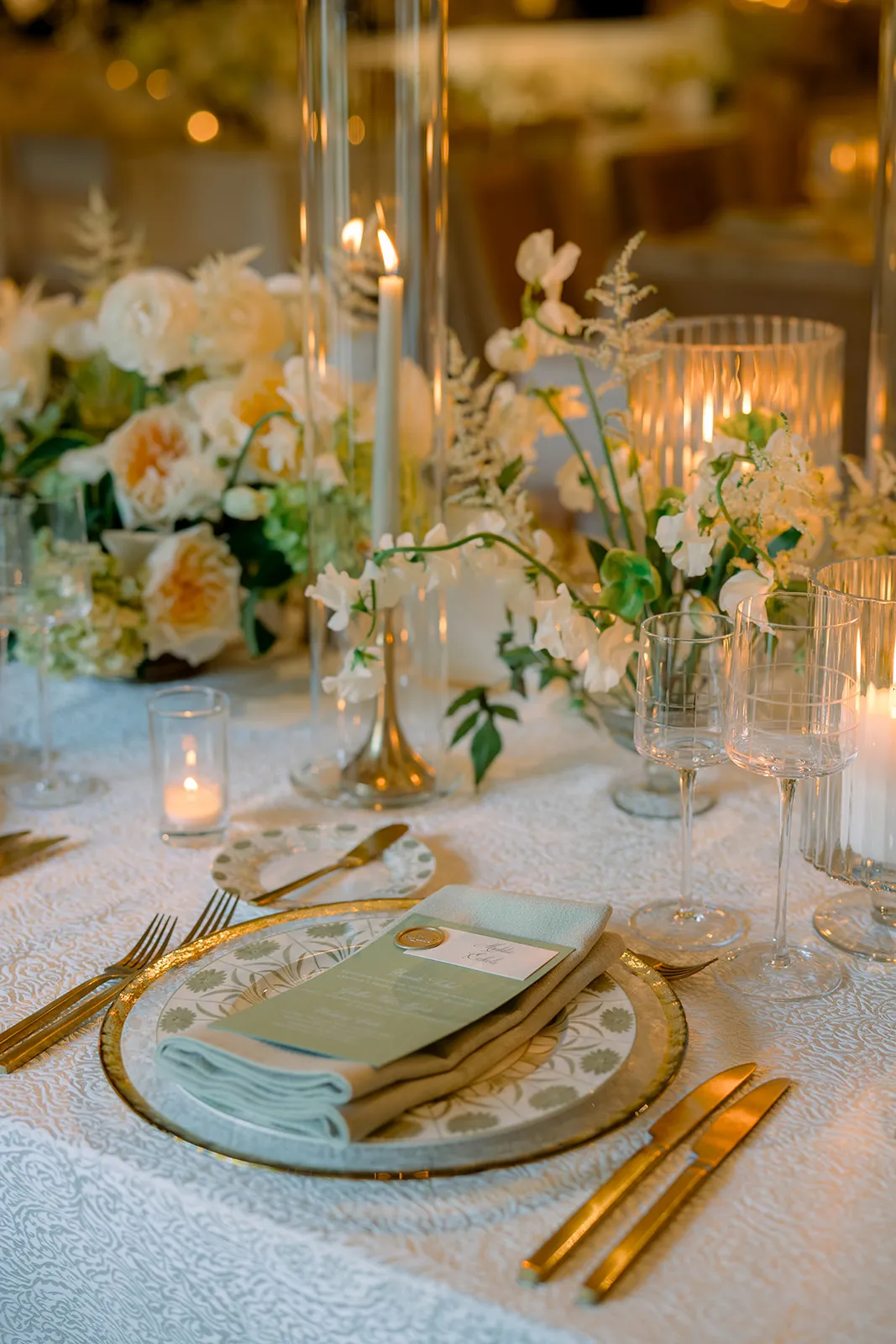
Glassware, flatware, chargers, china, candles, florals, and menus should remain visible throughout dinner. Overhead fixtures need to provide sufficient illumination without flattening the table or overpowering candlelight.
A chandelier or pendant can draw attention to a central table, but its position should not interfere with floral arrangements or prevent guests from seeing one another. On long tables, several smaller fixtures may distribute light more evenly than one central piece.
Metal finishes can also be repeated selectively. A brushed-gold chandelier may relate to gold flatware or a bar detail, while a black pendant can connect to chair frames, candleholders, or shelving.
Give the Bar Its Own Lighting Identity
The bar is both a functional service area and a major visual element within the reception. It should remain easy to locate after dark and feel connected to the surrounding furniture and décor.
Carriage lights can be placed on or near shelving, while pendants can define the bar from above. Table lamps may provide a softer option for side counters or nearby lounge areas.
The lighting finish should be considered alongside the bar surface, shelving, glassware, menu design, and hardware. A coordinated installation makes the bar feel like an intentional destination rather than a service station placed at the edge of the reception.
Make Lounge Areas Feel Intentional After Dark
Lounge furniture is often positioned around the perimeter of a tent, beneath a covered terrace, or near the transition between dining and dancing. These locations can become too dark when the lighting plan focuses only on the center of the reception.
Table lamps, nearby pendants, and strategically placed carriage lights can give lounge areas a more intimate scale. A lamp placed on a side table also helps the surrounding upholstery, rug, and accent furniture remain visible.
Curated Events Charleston’s large rental inventory includes lounge seating, tables, lighting, rugs, and decorative accessories that can be coordinated to create complete conversation areas.
Design the Transition From Ceremony to Evening Reception
Many Charleston weddings unfold across multiple parts of a property. Guests may move from an outdoor ceremony to a courtyard cocktail hour, enter a tent for dinner, and later transition to a separate dancing area.
Lighting should guide this movement without making every space equally bright. A clear progression helps guests understand where the celebration is moving next while allowing each phase to have its own atmosphere.
Identify Which Areas Will Be Used After Dark
The lighting plan should account for more than the primary reception space. Ceremony exits, cocktail areas, tent entrances, walkways, bars, lounge areas, restrooms, and transportation points may all remain in use after sunset.
Mapping these areas against the wedding timeline helps distinguish places that need decorative lighting from those that require only practical illumination. It also prevents attractive but isolated spaces from becoming unusable later in the evening.
Guest-facing areas should be coordinated with catering and operational routes so practical event lighting does not dominate the visual design.
Create a Clear Arrival Into the Reception
The entrance into the reception establishes the first evening view of the event. A chandelier, pendant grouping, carriage-light arrangement, or illuminated bar may serve as the feature that draws guests into the space.
The first visible fixture should relate to the strongest design element inside the tent or room. It may frame the head table, reveal the dance floor, or direct attention toward a statement bar.
Not every area must be revealed at the same intensity. Allowing lounge spaces and perimeter details to emerge gradually can make the reception feel more layered.
Shift the Lighting Focus as the Celebration Progresses
During cocktail hour and dinner, lighting should support conversation, food service, and visibility across the tables. As dancing begins, the visual emphasis may move toward the dance floor, bar, or entertainment area.
Dining tables should not be left completely dark once the formal meal ends, especially when some guests continue using those areas. Lounge spaces should also retain enough localized light to remain comfortable throughout the reception.
Any planned changes should be coordinated with the planner, venue, and relevant production professionals so the transition feels deliberate.
Confirm Venue, Power, and Installation Requirements Early
Decorative lighting must be supported by a workable technical plan. Venue rules, tent structure, electrical access, ceiling treatments, equipment placement, and setup schedules can all affect which lighting ideas are feasible.
These requirements should be reviewed before the visual plan is considered final.
Review Venue Rules and Access Conditions
Historic properties, museums, private homes, resorts, and outdoor venues may each have different restrictions regarding walls, ceilings, trees, covered structures, and existing electrical systems.
The event team should confirm where fixtures may be suspended, which areas must remain untouched, and whether freestanding or table-based lighting would be more appropriate in certain locations.
Loading access and setup windows also matter. A complex chandelier installation or suspended arrangement may require more coordination than lamps or carriage lights placed on existing surfaces.
Coordinate Power Requirements With the Full Layout
Lighting is one part of the event’s broader electrical plan. Catering equipment, entertainment, heating or cooling, and other production needs may rely on the same infrastructure.
The venue, tenting team, planner, and appropriate technical professionals should review the complete layout and determine how power will reach each area safely. Couples should not be expected to calculate loads or resolve technical requirements independently.
Cables, equipment, and connections should also be planned around guest circulation and primary photography angles whenever possible.
Finalize Lighting Before Ceiling Installations Are Completed
Lighting should be coordinated with overhead florals, greenery, draping, speakers, and other suspended décor before installation begins.
The fixture height must work with the objects below it. A chandelier above a dining table will require a different clearance than one centered over a dance floor. Large floral installations may also change how much of the fixture remains visible.
A complete reflected-ceiling plan can help event professionals understand how each suspended element relates to the tent structure and floor plan.
Create a Cohesive Lighting Selection With Curated Events Charleston
Curated Events Charleston describes itself as a full-service event company with an emphasis on design, aesthetics, and a broad range of rentals. Its wedding inventory includes multiple tent styles, bars, lounge furniture, lighting, and tabletop goods, making it possible to treat the reception as a single, cohesive environment.
A lighting consultation should therefore begin with the venue, floor plan, and overall design direction rather than with an isolated list of fixtures.
Begin With the Venue and Reception Floor Plan
Before comparing chandeliers or pendants, identify the areas that require light and the purpose each area will serve.
The event team should understand the tent type, ceiling height, table configuration, bar location, lounge placement, dance-floor position, and routes guests will use throughout the evening. These details determine both the quantity and scale of the fixtures needed.
A floor plan also helps separate statement-lighting opportunities from spaces that require quieter supporting illumination.
Compare Fixtures as Part of the Full Rental Design
Lighting should be reviewed alongside the tables, chairs, bars, linens, lounge furniture, and tabletop selections that will surround it.
Repeated finishes can create cohesion, but exact matching is not always necessary. A black chandelier may provide intentional contrast against soft linens and natural wood, while woven pendants may connect neutral textiles to a garden setting.
Curated Events Charleston’s lighting inventory ranges from traditional crystal and brass chandeliers to modern black fixtures, natural woven pendants, shell-inspired designs, carriage lights, and table lamps. This variety supports formal, garden-inspired, coastal, modern, and mixed design directions.
Confirm the Final Scope With the Event Team
Once selections have been narrowed, the complete plan should be shared with the planner, venue, tent provider, florist, and any production professionals involved in the installation.
Fixture dimensions, quantities, placement, hanging requirements, power coordination, delivery access, and setup responsibilities should be confirmed before the wedding. If the tent, floral plan, guest count, or floor layout changes, the lighting arrangement may also need to be reviewed.
This collaborative process helps preserve the intended visual result while ensuring the lighting works within the practical requirements of the venue.
Frequently Asked Questions
What types of event lighting rentals work well for Charleston autumn weddings?
Market and café strands can provide broad ambient light, while chandeliers and pendants create focal points above dining tables, dance floors, bars, and entrances. Carriage lights and table lamps can add localized illumination to bars, shelving, and lounge areas. The right combination depends on the venue, tent style, floor plan, and overall wedding design.
How should lighting be selected for a historic Charleston wedding venue?
Start with the property’s existing architecture. Traditional chandeliers, antique-brass finishes, shaded lamps, and carriage lights may complement formal interiors and courtyards. Fixture placement should highlight architectural details without covering or competing with them. Venue rules should also be reviewed before planning suspended installations.
What lighting works best inside a sailcloth wedding tent?
Chandeliers or pendants can establish focal points, while café strands provide broader illumination across the dining area. The fixtures should follow the shape and support structure of the tent and be coordinated with tables, tent poles, florals, and the dance floor.
How can lighting be coordinated with wedding linens and tabletop rentals?
Review fixture finishes and light quality alongside linen colors, textures, glassware, flatware, chargers, and floral arrangements. Warm lighting can enrich autumn tones, while strongly colored lighting may alter the intended palette. Fixture placement should also keep tabletop details visible without blocking guest sightlines.
What should be confirmed before hanging lighting fixtures?
Confirm the venue or tent’s approved hanging points, ceiling height, fixture dimensions, structural limitations, electrical access, and setup schedule. Lighting should also be coordinated with florals, draping, speakers, and other suspended elements.
How can bars and lounge areas be illuminated without making them too bright?
Use localized fixtures such as carriage lights, table lamps, or selected pendants. These can make menus, drinks, shelving, and furniture visible while maintaining a softer atmosphere than the main dining area.
Does Curated Events Charleston offer lighting with other wedding rental categories?
Curated Events Charleston offers lighting alongside tents, bars, lounge furniture, tables, chairs, linens, dance floors, and tabletop goods. Reviewing these categories together can help create a more cohesive reception design.
Bring Warmth and Definition to a Charleston Autumn Wedding
Lighting has the greatest impact when it responds to the venue, tent, floor plan, and complete rental design. For a Charleston autumn wedding, that may mean using market strands to establish a dining area beneath a sailcloth tent, chandeliers to bring scale to a formal reception, woven pendants to complement a garden setting, or carriage lights and table lamps to give bars and lounges a more intimate presence.
Rather than relying on generic fall decorations, couples can use fixture materials, finishes, scale, and placement to introduce seasonal warmth. When event lighting rentals are coordinated with linens, tabletop pieces, tents, bars, and lounge furniture, every part of the reception remains visually connected after daylight fades.
With a diverse lighting inventory and complementary wedding rental categories, Curated Events Charleston can help couples develop a layered environment suited to the architecture, landscapes, and indoor-outdoor character of Lowcountry celebrations.